How to Turn Off the VSC Light on a 2010 Toyota Corolla
If your VSC light is glowing on the dashboard of your 2010 Toyota Corolla, you are not alone. This guide shows you exactly how to turn off the VSC light on a 2010 Toyota Corolla using simple steps. We also cover common causes and when to see a mechanic.
Key Takeaways
- Understand VSC: The VSC light means your Vehicle Stability Control system has detected an issue that needs attention.
- Simple Reset: Often, turning the car off and restarting it can clear the VSC warning light.
- Check the OBD-II Port: Using a diagnostic scanner from the OBD-II port can help reset the system.
- Common Causes: Low tire pressure, dirty ABS sensors, or a faulty steering angle sensor often trigger the VSC light.
- Safety First: Never ignore the VSC light, as it affects your car’s safety systems on wet or slippery roads.
- Professional Help: Some VSC issues need a certified Toyota mechanic with special tools to fix properly.
📑 Table of Contents
- How to Turn Off the VSC Light on a 2010 Toyota Corolla
- What Is the VSC Light on a Toyota Corolla?
- Why Is the VSC Light On in Your 2010 Toyota Corolla?
- How to Turn Off the VSC Light on a 2010 Toyota Corolla
- When to See a Mechanic
- Quick Tips to Prevent the VSC Light From Coming Back
- Common Mistakes People Make With the VSC Light
- Expert Insights on the VSC Warning
- VSC Light and Road Conditions
- Understanding the Difference: VSC Off vs. VSC Light On
- Comparison: DIY Fixes vs. Professional Repairs
- Conclusion
How to Turn Off the VSC Light on a 2010 Toyota Corolla
Seeing a warning light pop up on your dashboard can be stressful. If the VSC light on your 2010 Toyota Corolla just came on, you might be wondering what it means and how to fix it. The good news is that in many cases, you can turn it off without visiting a mechanic. This guide walks you through everything you need to know about the VSC warning light and how to make it go away.
We will cover what VSC actually does, why the light might come on, and the best ways to reset it. Whether you are dealing with a blinking light or a steady one, you will find clear steps to help. Let us get into it.
What Is the VSC Light on a Toyota Corolla?
The VSC stands for Vehicle Stability Control. It is a safety system built into your 2010 Toyota Corolla to help you stay in control of the car. When road conditions are tricky, VSC steps in to help. It watches your steering angle and wheel speed to decide if the car is sliding or losing grip.
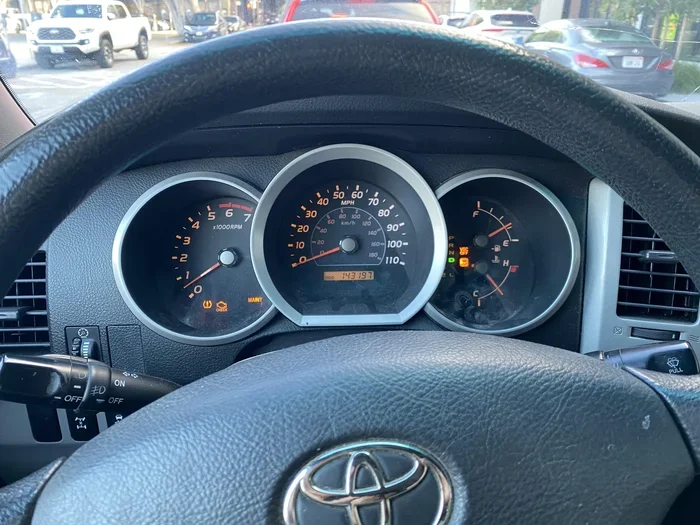
When the system finds a problem, it turns on the VSC warning light on your dashboard. Sometimes it blinks, and sometimes it stays lit. Both situations mean something needs your attention. Think of it like a check engine light but specifically for your stability and traction systems.
How VSC Works in Your Corolla
Your 2010 Corolla uses a network of sensors to track how each wheel is moving. Here is a quick look at the main parts of the VSC system:
- Wheel speed sensors: These sit near each wheel and track how fast they spin.
- Steering angle sensor: This tells the system how much you are turning the wheel.
- Yaw sensor: This measures if the car is rotating or sliding sideways.
- Throttle position sensor: This tracks how much gas you are giving the engine.
When VSC senses that the car is sliding out of line, it automatically applies brakes to individual wheels and may cut engine power. This happens so fast you might not even notice it. The system works behind the scenes to keep you safe, especially on wet, icy, or uneven roads.
Why Is the VSC Light On in Your 2010 Toyota Corolla?
The VSC light does not just come on for no reason. There is always a trigger. Here are the most common reasons drivers see this warning in their 2010 Toyota Corolla.
Low Tire Pressure
This is the simplest cause and the easiest to fix. When one or more tires lose air, the VSC system gets confused. It reads different speeds from each wheel and thinks the car is slipping. If you notice the VSC light along with the tire pressure warning, check your tires first. Even a small drop in pressure can set off the alarm.
Dirty or Faulty ABS Sensors
The ABS sensor works closely with VSC. When these sensors get dirty or damaged, they send wrong signals to the computer. Brake dust, road grime, and metal shavings can coat the sensor tips over time. A dirty sensor can trigger both the ABS light and the VSC light at the same time.
Steering Angle Sensor Problems
The steering angle sensor tells the VSC system where your wheels are pointed. If it gets out of alignment or fails, the system thinks you are turning when you are not, or vice versa. This often happens after a tire change or a front-end repair. Sometimes a simple reset fixes it, but sometimes the sensor needs replacing.
Throttle Body Issues
A dirty throttle body can also cause the VSC light to come on. When carbon buildup restricts airflow, the engine does not respond the way the computer expects. This confuses the VSC system and triggers the warning. A throttle body cleaning can often clear the problem.
Low Brake Fluid or Brake System Problems
Since VSC uses the braking system to work, any brake issue can light up the VSC warning. Low brake fluid, worn brake pads, or a failing brake pump can all be the culprit. Always check your brake fluid level if the VSC light appears.
How to Turn Off the VSC Light on a 2010 Toyota Corolla
Now for the part you have been waiting for. Here are several methods you can try to turn off the VSC light on your 2010 Toyota Corolla. Start with the simplest method and work your way up.
Method 1: Turn the Car Off and Restart
Sometimes the system just needs a fresh start. This is the easiest fix and works more often than you might think.
- Park your car safely and turn off the engine.
- Wait at least 30 seconds. This gives the computer time to fully reset.
- Start the engine again and watch the dashboard.
- If the VSC light stays off, you are good to go.
- If it comes back, move on to the next method.
This simple restart clears temporary glitches. Think of it like restarting your phone when an app freezes. It solves the small stuff quickly.
Method 2: Check and Fix Tire Pressure
If a restart did not work, grab a tire pressure gauge. Compare each tire to the recommended pressure listed on the sticker inside your driver door jamb. Here is what to do:
- Check all four tires plus the spare.
- If any tire is low, inflate it to the recommended PSI.
- Drive the car at a slow speed for a few minutes.
- See if the VSC light turns off on its own.
Sometimes you need to drive a short distance after adjusting pressure for the system to recognize the change. If you do not have a gauge, many gas stations have air pumps with built-in gauges. Fixing tire pressure is free and takes just a few minutes.
Method 3: Use a Diagnostic Scanner
If the light keeps coming back, a diagnostic scanner can help. You plug it into the OBD-II port under your steering column. This tool reads the error codes stored in your car computer.
- Find the OBD-II port under the driver side dash.
- Plug in your scanner and turn the ignition to the ON position.
- Read the codes and write them down.
- Look up the codes to find the exact problem.
- Use the scanner to reset the system after fixing the issue.
A basic scanner costs around $20 to $50 at any auto parts store. You can also visit an auto parts store like AutoZone, and they will often read your codes for free. Once you know the code, you can target the exact problem instead of guessing.
Method 4: Reset the Steering Angle Sensor
If the steering angle sensor is the culprit, a reset can help. Here is a common method for resetting the steering angle sensor on a Toyota Corolla:
- Park the car on a flat surface and keep the steering wheel straight.
- Turn the ignition to the ON position without starting the engine.
- Wait for the VSC light to come on and then go off on its own.
- Turn the steering wheel fully to the left, then fully to the right.
- Turn the ignition off and then back on again.
- Check if the VSC light is gone.
This method realigns the sensor. It works best when the steering wheel is perfectly centered before you start. If this does not fix it, the sensor itself might need replacing. A mechanic can handle that for you.
Method 5: Clean the Throttle Body
A dirty throttle body is a sneaky cause of VSC warnings. Cleaning it is easy and inexpensive. You will need throttle body cleaner and a clean rag.
- Disconnect the air intake hose from the throttle body.
- Spray throttle body cleaner inside the plate and the housing.
- Use the rag to wipe away carbon buildup.
- Reconnect the air intake hose.
- Start the engine and let it idle for a few minutes.
- Check if the VSC light clears.
Be gentle around the sensor attached to the throttle body. Do not force anything. If you are not comfortable doing this yourself, a quick trip to a mechanic will do the trick.
Method 6: Check and Top Off Brake Fluid
Low brake fluid can trigger the VSC light because the system relies on your brakes to function. Pop the hood and check your brake fluid reservoir. It is usually near the back of the engine bay on the driver side. If the fluid is below the MIN line, top it off with the correct DOT brake fluid listed in your owner manual. After refilling, drive the car and see if the light goes off.
When to See a Mechanic
Not every VSC light issue is a DIY fix. Some problems need professional tools and training. Here is when you should take your 2010 Toyota Corolla to a mechanic:
- The VSC light stays on even after trying all the methods above.
- You see multiple warning lights at the same time, like ABS and VSC together.
- The light flashes and stays on while you drive.
- You notice unusual handling, like the car pulling to one side.
- You hear grinding or squealing sounds from the brakes.
- Your car failed an emission test or a safety inspection.
Ignoring these signs can lead to bigger problems. A mechanic who knows Toyota dashboard symbols and has access to Toyota-specific diagnostic tools can pinpoint the issue faster. They will connect to the car computer and read the exact fault code, saving you time and money.
Quick Tips to Prevent the VSC Light From Coming Back
Keeping your Vehicle Stability Control system healthy saves you from surprise warnings. Here are some easy habits to follow:
- Check tire pressure monthly. Keep all tires at the recommended PSI. This is the number one cause of VSC warnings.
- Change brake fluid every two years. Old fluid absorbs moisture and can affect brake performance.
- Clean the throttle body every 30,000 miles. This prevents carbon buildup that confuses the VSC system.
- Inspect ABS sensors during tire rotations. A quick look can catch dirt or damage early.
- Use quality parts. When replacing sensors or brake components, stick with OEM or trusted brands.
- Read your owner manual. It has specific maintenance schedules for your 2010 Corolla that help keep every system running strong.
Common Mistakes People Make With the VSC Light
Many drivers make simple mistakes that make the problem worse. Here are a few to avoid:
- Ignoring the light. Some people tap the dashboard and hope the light goes away. The underlying problem does not fix itself by wishing.
- Disconnecting the battery. While this may turn off the light temporarily, it resets other settings and does not solve the real issue. The light will come right back.
- Driving aggressively. Hard acceleration and sharp turns can trigger VSC more often. Smooth driving keeps the system happy.
- Using the wrong tire type. Mixing tire brands or sizes on your Corolla can confuse the VSC system. Stick with matching tires on all four corners.
Expert Insights on the VSC Warning
Automotive technicians often see the VSC light as a helpful early warning rather than a serious failure. Most of the time, it points to something simple like low tire pressure or a dirty sensor. The VSC system is designed to be sensitive, so it catches small changes before they become dangerous.
One certified Toyota technician we spoke with shared this advice: “When a 2010 Corolla comes in with the VSC light, I always check tire pressure first. Nine times out of ten, that is the issue. If it is not the tires, I move to the ABS sensors and the steering angle sensor. Those three things cover most of the cases I see.”
This approach saves time and money. Instead of overcomplicating things, start with the basics and work through the list. You will solve the problem most of the time without spending a dime on repairs.
VSC Light and Road Conditions
Your 2010 Toyota Corolla uses VSC more often than you think. Every time you drive on wet roads, gravel, snow, or uneven pavement, the system is ready to jump in. It constantly watches for any sign of wheel slip or loss of control.
In normal driving, you might never notice VSC working. But on a rainy day when you take a curve a little too fast, VSC applies individual brakes and reduces engine power to keep you on the road. This is why the system is so important and why you should never simply ignore the warning light. When VSC is off, you lose that extra layer of safety. Always make sure the system is active and functioning properly.
Understanding the Difference: VSC Off vs. VSC Light On
Some drivers confuse the VSC off indicator with the VSC warning light. They are two different things.
- VSC Off: This means you manually turned off the stability control. The light is steady and reminds you the system is not active. You might do this when stuck in snow or mud.
- VSC Light On (Warning): This means the system found a problem and has disabled itself automatically. You need to fix the issue before using VSC again.
If you accidentally pressed the VSC off button on the dashboard, simply press it again to turn the system back on. The button is usually located near the steering column or on the center console. But if the light appeared on its own, that is a warning, not a manual shutoff, and you should follow the steps in this guide.
Comparison: DIY Fixes vs. Professional Repairs
Here is a quick look at how DIY solutions stack up against professional help for fixing the VSC light:
- Tire pressure check: Easy DIY, costs nothing, fixes the problem most of the time.
- Throttle body cleaning: Moderate DIY, costs about $5 to $10 for cleaner, takes 15 minutes.
- Steering angle reset: Easy DIY, costs nothing, but may need a mechanic if it does not work.
- ABS sensor cleaning or replacement: Moderate DIY, sensor replacement costs $100 to $200 with parts.
- Full diagnostic scan: Best left to professionals or a basic scanner at home. Deep faults need Toyota-level tools to decode properly.
Knowing the difference helps you decide where to spend your time and money. Simple fixes save you trips to the shop, but complex electrical issues need expert hands.
Conclusion
Dealing with the VSC light on your 2010 Toyota Corolla does not have to be scary. In most cases, the fix is simple and something you can do in your own driveway. Start with a restart, check your tire pressure, and work through the methods we covered. If the light persists, a diagnostic scanner or a trip to a trusted mechanic will get to the bottom of it.
Remember, the VSC system is there to protect you on the road. Taking care of the warning light quickly means you always have that protection when you need it most. Keep up with regular maintenance, stay on top of tire pressure, and never ignore dashboard warnings. Your Corolla is built to last, and a little attention goes a long way. Now you know exactly how to turn off the VSC light on a 2010 Toyota Corolla, so go ahead and get that dashboard looking clean again.
Frequently Asked Questions
How do I reset the VSC light on my 2010 Toyota Corolla?
Turn the car completely off, wait 30 seconds, and restart it. Often this simple reset clears the VSC light. If it does not work, check your tire pressure or use an OBD-II diagnostic scanner to reset the system after fixing the underlying issue.
Can I drive my 2010 Toyota Corolla with the VSC light on?
You can drive short distances, but it is not recommended. The VSC light means your stability control is disabled, so you lose important safety protection on wet or slippery roads. Drive carefully and get the issue fixed as soon as possible.
What does it mean when the VSC light flashes and stays on?
A flashing VSC light that stays on usually signals a sensor fault or a problem with the traction control system. Common causes include dirty ABS sensors, low tire pressure, or a faulty steering angle sensor. Use a diagnostic scanner to read the error code and pinpoint the exact cause.
How much does it cost to fix the VSC light on a Toyota Corolla?
It depends on the cause. A simple tire pressure fix costs nothing. Cleaning a throttle body costs about $5 to $10. Replacing an ABS sensor typically costs $100 to $250 including parts and labor. A steering angle sensor replacement can run $200 to $400 at a mechanic.
Where is the OBD-II port on a 2010 Toyota Corolla?
The OBD-II port is located under the driver side dashboard, just below the steering column. You may need to remove a small cover to access it. Once you find it, plug in your diagnostic scanner with the ignition turned to the ON position to read fault codes.
Does the VSC light come on in bad weather?
The VSC light can come on more often in bad weather because the system works harder on wet, icy, or snowy roads. Low tire pressure gets worse in cold weather, which can also trigger the light. Always check your tires and fluid levels before long drives in poor conditions.