How Far Can a Camry Go on a Full Tank of Gas Today
So how far can a Camry go on a full tank? The answer depends on your model year, engine type, and driving habits. Most modern Toyota Camrys deliver between 400 and 600 miles on a full tank, thanks to excellent fuel efficiency and large tank capacity. In this guide, we break down everything you need to know about how far a Camry can go on a full tank, including real-world MPG data and practical tips.
There is something incredibly satisfying about knowing exactly how far your car can go before you need to stop for gas. If you drive a Toyota Camry or are thinking about buying one, understanding your fuel range is essential. Whether you are commuting through busy city streets or heading out on a long highway road trip, the question how far can a Camry go on a full tank matters more than most people realize.
The Toyota Camry has earned its reputation as one of the most reliable sedans on the road. It offers a perfect blend of comfort, fuel economy, and durability. But the actual driving range you get depends on several factors, including your specific model, engine type, and driving conditions. In this article, we will walk through everything you need to know about your Camry’s fuel capacity, gas mileage, and how to squeeze every last mile out of a full tank.
We will also compare different Camry generations, explore real-world MPG data, and share practical tips that can help you extend your range. By the end, you will have a clear picture of what to expect from your Camry and how to plan your fuel stops with confidence. Let us dive right in.
Key Takeaways
- Tank Size Matters: A full Camry tank typically holds 15 to 18 gallons, which directly impacts your total driving range.
- MPG Varies by Model: Hybrid Camrys achieve up to 52 MPG combined, while V6 models hover around 32 MPG highway.
- Highway vs City: Highway driving extends your range significantly compared to city commuting.
- Low Fuel Light Warning: Most Camrys have roughly 2 to 3 gallons left when the low fuel light comes on.
- Maintenance Helps: Regular tune-ups and proper tire pressure can improve your fuel range by up to 10%.
- Longevity Factor: A well-maintained Camry can easily last 200,000+ miles, making fuel efficiency over time a major value.
📑 Table of Contents
- Understanding the Toyota Camry Fuel Tank Size
- Camry MPG: City vs Highway Driving Range
- Factors That Affect How Far Your Camry Can Go
- Real-World Driving Range by Camry Model Year
- What Happens When the Low Fuel Light Comes On?
- Tips to Maximize Your Camry’s Fuel Range
- How Does the Camry Compare to Other Sedans?
- Conclusion
Understanding the Toyota Camry Fuel Tank Size
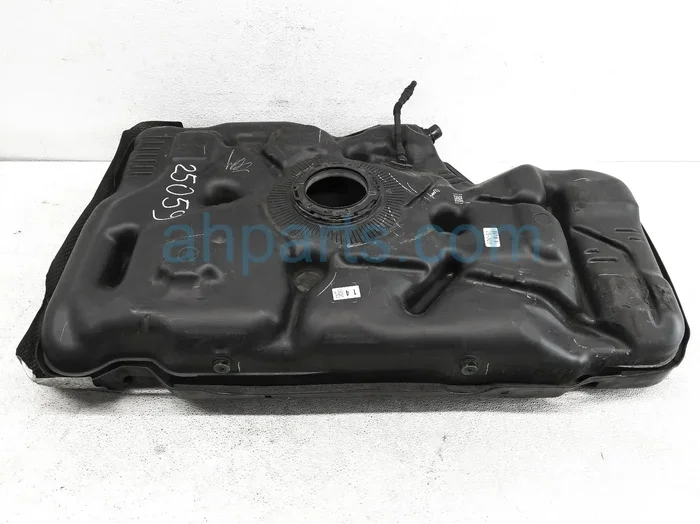
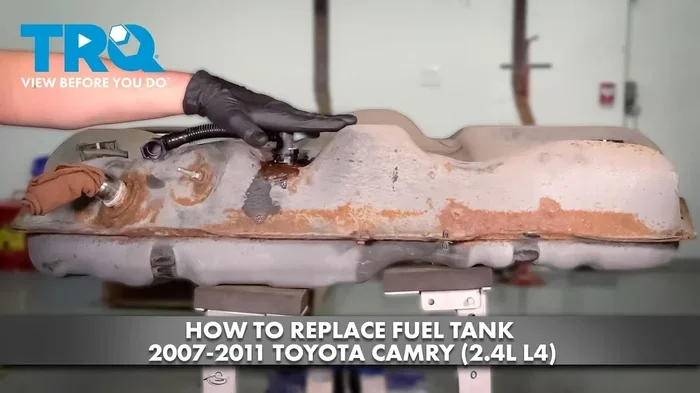
The foundation of your driving range starts with the fuel tank. A larger tank means more gas, which naturally means more miles between fill-ups. The tank size on a Camry has varied across generations, but most modern models carry between 15 and 18 gallons.
Tank Capacity Across Camry Generations
Here is a quick look at how the tank capacity has changed over the years:
- 2012–2017 Camry: 15.8 gallons
- 2018–2023 Camry: 16 gallons (hybrid) and 15.8 gallons (gasoline)
- Older models (pre-2012): 16 to 18 gallons depending on trim
So when you ask how many gallons is a full tank of gas for a Camry, the answer is typically around 16 gallons for recent models. This is a solid amount of fuel and gives you a meaningful range before you need to refuel.
If you are curious about how far you can push a tank past the empty light, you might want to check our guide on how far a car can go on empty. It covers the same concept across all vehicle types, not just Camrys.
Camry MPG: City vs Highway Driving Range
Fuel economy is where the Camry truly shines. The miles per gallon rating determines how efficiently your car uses fuel, and it has a massive impact on your total range. Let us break this down by engine type.
Gasoline Engine MPG
The standard 2.5-liter four-cylinder engine on most Camry trims delivers a respectable fuel economy rating. Here is what you can expect:
- City MPG: 28 to 32 mpg
- Highway MPG: 39 to 41 mpg
- Combined MPG: 32 to 35 mpg
With a 16-gallon tank and a combined MPG of 34, you are looking at roughly 544 miles of range under ideal conditions. That is a serious distance and one of the reasons the Camry remains so popular for long commutes and road trips.
Hybrid Camry MPG
The hybrid versions take fuel efficiency to another level. The Camry Hybrid delivers outstanding numbers:
- City MPG: 51 to 53 mpg
- Highway MPG: 53 mpg
- Combined MPG: Up to 52 mpg
With the same 16-gallon tank, a hybrid Camry can travel an estimated 832 miles on a full tank under optimal conditions. That is genuinely impressive and shows why the hybrid powertrain has become such a compelling option.
Factors That Affect How Far Your Camry Can Go
Real-world driving range is rarely the same as the numbers printed on the window sticker. Several factors influence how many miles you actually get per tank. Understanding these can help you set realistic expectations and plan your trips better.
Driving Style
Your driving habits play a huge role. Aggressive acceleration, hard braking, and speeding all reduce fuel efficiency. Smooth, steady driving is the best way to maximize your range. If you like to lead the pack at high speeds on the highway, expect your gas mileage to drop by 10 to 20 percent compared to moderate driving.
Terrain and Road Conditions
Flat highways are your best friend when it comes to range. Hilly or mountainous terrain forces your engine to work harder, burning more fuel. Stop-and-go city traffic is also tough on fuel economy, which is why city MPG is always lower than highway MPG.
Vehicle Load and Accessories
Carrying heavy cargo or towing a trailer reduces your range. Even roof racks and cargo carriers create aerodynamic drag that hurts fuel efficiency. Keeping your Camry light and streamlined helps you get the most out of every gallon.
Weather Conditions
Cold weather can reduce your fuel range by up to 12 percent, according to the Department of Energy. Winter blends of gasoline also contain slightly less energy. On the flip side, using your air conditioning in summer also costs fuel, though typically less than the impact of cold temperatures.
Maintenance and Tire Pressure
This is a big one that many drivers overlook. Underinflated tires create rolling resistance, which forces your engine to burn more fuel. Regular oil changes, clean air filters, and properly functioning fuel injectors all contribute to better gas mileage. A well-maintained Camry will consistently outperform a neglected one in terms of range.
Real-World Driving Range by Camry Model Year
Let us look at some practical numbers. The table below shows estimated total range on a full tank for popular Camry model years and trims. These are based on EPA ratings and a 16-gallon tank capacity.
| Model Year | Engine Type | Combined MPG | Est. Range (Miles) |
|---|---|---|---|
| 2020–2023 | 2.5L Gasoline | 34 mpg | ~544 miles |
| 2020–2023 | Hybrid (2.5L 4-cyl) | 52 mpg | ~832 miles |
| 2015–2019 | 2.5L Gasoline | 33 mpg | ~528 miles |
| 2015–2019 | V6 (3.5L) | 28 mpg | ~448 miles |
| 2012–2014 | 2.5L Gasoline | 31 mpg | ~496 miles |
As you can see, the hybrid Camry dominates in terms of fuel range. But even the standard gasoline models offer a very respectable range that easily covers most daily driving needs. If you want to know more about how long a Camry can last overall, check out our article on whether a Toyota Camry can last 500,000 miles.
What Happens When the Low Fuel Light Comes On?
Most Camry drivers have experienced that moment when the dashboard warning light flickers on. It is a stressful feeling, but how much fuel is actually left? The low fuel light typically activates when you have about 2 to 3 gallons remaining in the tank.
At an average of 34 combined MPG, those last 2 to 3 gallons give you roughly 68 to 102 miles of additional range. This buffer is helpful, but you should not rely on it regularly. Running on empty repeatedly can damage your fuel pump and clog your filters.
If you want a deeper dive into this topic, our article on how many gallons are left when the low fuel light comes on covers this in detail for all vehicle types.
How to Check Your Exact Fuel Level
The Camry’s dashboard display gives you a fairly accurate estimate of remaining fuel. However, the number can fluctuate based on driving conditions. For the most precise reading, many owners use a manual dipstick check or rely on the trip meter to track consumption after a fill-up.
Here is a simple method to calculate your real-world range:
- Fill your tank completely and reset your trip meter.
- Drive normally until you need to refuel.
- Record the number of miles driven and gallons used.
- Divide miles by gallons to get your actual MPG.
- Multiply your actual MPG by your tank capacity for your real-world range.
This method gives you a personalized gas range number that accounts for your specific driving style and conditions. It is far more accurate than any estimate from the manufacturer.
Tips to Maximize Your Camry’s Fuel Range
Want to push your Camry’s range even further? These practical tips can help you get more miles out of every gallon and make your fuel budget stretch further.
1. Keep Your Tires Properly Inflated
Underinflated tires are one of the biggest silent fuel killers. Check your tire pressure at least once a month. The recommended pressure for a Camry is typically listed on the driver’s side door jamb. Proper inflation alone can improve your fuel economy by up to 3 percent.
2. Use Cruise Control on Highways
Maintaining a steady speed on the highway helps your engine operate at peak efficiency. Cruise control prevents unnecessary acceleration and deceleration, which can waste fuel. This simple habit can add 5 to 10 percent to your highway mileage.
3. Avoid Excessive Idling
Idling burns fuel without moving your car. If you are parked for more than 30 seconds, turn off the engine. This is especially relevant for Camry drivers who spend a lot of time in drive-through lanes or waiting in parking lots.
4. Remove Unnecessary Weight
Every extra pound your Camry carries requires more fuel. Clear out your trunk and back seat of items you do not need. A lighter car means better fuel efficiency and a longer range per tank.
5. Keep Up with Regular Maintenance
Fresh oil, clean air filters, and properly functioning spark plugs all contribute to optimal engine performance. Skipping maintenance may seem like a shortcut, but it costs you more in fuel over time. A well-tuned Camry runs better and goes further.
6. Plan Your Fuel Stops Strategically
If you are on a long trip, plan your stops around fuel stations with competitive prices. Apps like GasBuddy can help you find the cheapest gas along your route. Filling up before your tank gets too low also helps, since fuel pumps work more efficiently when submerged.
How Does the Camry Compare to Other Sedans?
The Camry is not the only sedan in its class, but it holds its own when it comes to fuel efficiency. Let us compare the Camry’s range to a few popular competitors to put things in perspective.
Compared to the Honda Accord, the Camry offers similar MPG ratings but often has a slightly larger tank, giving it a modest edge in total range. The Nissan Altima is close in fuel economy but falls slightly behind in range due to a smaller tank. The Hyundai Sonata is competitive but typically does not match the Camry’s long-term reliability and fuel savings.
What really sets the Camry apart is its consistency. Over hundreds of thousands of miles, a Camry’s fuel economy remains remarkably stable. The engine and transmission are engineered to work together efficiently, and the hybrid powertrat is one of the best in the segment. This is why so many drivers choose the Camry for their daily commute and long-distance travel alike.
If you are considering a Toyota for the long haul, you might also be interested in whether a Toyota Camry can last 500,000 miles. The answer is yes, with proper maintenance, and that kind of longevity makes the fuel savings over time even more impressive.
Conclusion
So, how far can a Camry go on a full tank? The answer is clear: between 400 and 800+ miles depending on your model, engine type, and driving conditions. The gasoline Camry delivers a solid 500+ mile range, while the hybrid Camry can push well past 800 miles on a single tank. These numbers make the Camry one of the best sedans for both daily commuting and long-distance travel.
Your actual range will vary based on your driving habits, road conditions, and how well you maintain your vehicle. But with a 16-gallon tank and excellent fuel economy, the Camry gives you plenty of flexibility and confidence on the road. Keep your tires inflated, stay on top of maintenance, and drive smoothly, and your Camry will reward you with consistent, impressive range for years to come.
Whether you are a current Camry owner or shopping for your next sedan, understanding your driving range helps you make smarter decisions about fuel, trips, and overall vehicle ownership. The Toyota Camry continues to prove that a reliable, efficient sedan does not have to compromise on performance or comfort.
Frequently Asked Questions
How far can a Camry go on empty?
Most Camrys have about 2 to 3 gallons of fuel left when the low fuel light comes on. At an average MPG of 34, that gives you roughly 68 to 102 miles of additional range after the warning light activates. However, you should not make a habit of driving on empty, as it can damage your fuel pump over time.
What is the fuel tank size on a Toyota Camry?
The fuel tank on a modern Toyota Camry typically holds 15.8 to 16 gallons. Older models from before 2012 may have slightly larger tanks of up to 18 gallons, depending on the trim and engine configuration. This generous tank size contributes significantly to the Camry’s impressive driving range.
How many miles per gallon does a Camry get?
A gasoline Camry gets between 28 and 41 MPG depending on whether you are driving in the city or on the highway. The hybrid Camry achieves up to 52 MPG combined, making it one of the most fuel-efficient sedans in its class. Your actual MPG will vary based on driving conditions and habits.
Can a Camry last over 200,000 miles?
Yes, absolutely. With proper maintenance, a Toyota Camry can easily last over 200,000 miles, and many owners report reaching 300,000 miles or more. The Camry’s reputation for durability is well-earned, thanks to reliable engines, durable transmissions, and high-quality build materials.
Does the Camry hybrid get better range than the gas version?
Yes, the Camry hybrid gets significantly better range than the gasoline version. With up to 52 MPG combined and the same 16-gallon tank, a hybrid Camry can travel over 800 miles on a full tank. The gasoline Camry maxes out around 540 miles under the same conditions.
How can I improve my Camry’s fuel range?
You can improve your Camry’s fuel range by keeping your tires properly inflated, using cruise control on highways, avoiding aggressive driving, removing unnecessary weight from the car, and staying current with regular maintenance. These simple habits can boost your fuel economy by 5 to 15 percent over time.