How Do I Clear My Toyota Code And Fix The Check Engine Light
Clearing your Toyota code is easier than most people think. Whether you use an OBD-II scanner, disconnect the battery, or visit a dealer, you can reset your check engine light and get back on the road. This guide covers every method, explains what Toyota error codes mean, and tells you exactly when it is safe to clear codes yourself.
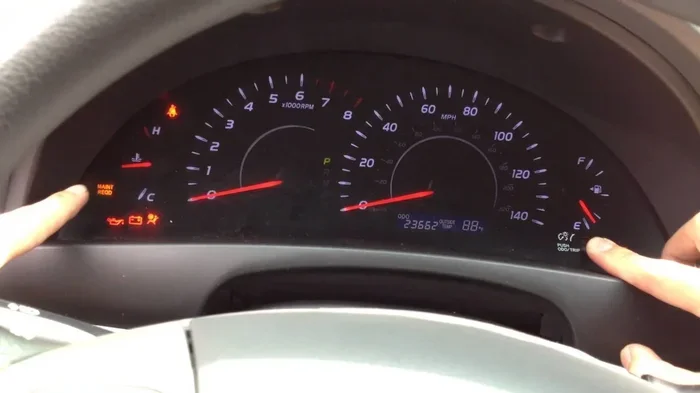
There is nothing quite like that sinking feeling when the check engine light pops up on your Toyota dashboard. You are driving along, minding your own business, and suddenly a yellow or orange warning light glows on the dash. Your first thought might be panic. Your second thought is probably, “How do I clear my Toyota code?”
The good news is that clearing a Toyota error code is something you can do at home with the right tools and a little patience. Whether the light is steady or check engine light flashing, there are several methods you can try. In this guide, we walk you through every option, explain what the codes mean, and help you decide the best approach for your situation.
Before you grab any tools, it helps to understand what you are dealing with. Toyota uses a system called OBD-II, which stands for On-Board Diagnostics. This system monitors your engine, transmission, emissions, and other critical systems. When something goes wrong, the computer stores a diagnostic trouble code, or DTC, and lights up the check engine warning. The code tells you what category of problem triggered the alert.
Now, let us get into the details. Below, we cover everything you need to know about clearing Toyota codes and getting your Toyota dashboard warning lights back to normal.
Key Takeaways
- An OBD-II scanner is the fastest and most reliable way to clear Toyota codes.
- Disconnecting the battery can reset the check engine light but may erase other settings.
- You should always fix the root cause before clearing any Toyota diagnostic code.
- Most Toyota error codes are universal and work across multiple model years.
- Waiting 10-20 drive cycles after clearing helps confirm the fix worked.
- A dealer or mechanic can clear codes using professional-grade diagnostic tools.
- You can check Toyota check engine light codes for free at most auto parts stores.
📑 Table of Contents
- What Does The Check Engine Light Mean On Your Toyota
- Common Toyota Error Codes And What They Mean
- How To Clear Toyota Codes With An OBD-II Scanner
- When To Clear Toyota Codes And When Not To
- Can You Clear Toyota Codes Without A Scanner
- How Long After Clearing Codes To Pass Emissions
- Should You Visit A Dealer Or Mechanic To Clear Toyota Codes
- Key Takeaways
- Conclusion
What Does The Check Engine Light Mean On Your Toyota
The check engine light is part of your Toyota’s emissions and diagnostic system. It is not just one signal — it can mean many different things. Sometimes it is a minor issue. Other times, it points to something more serious that needs immediate attention.
Steady Light vs. Flashing Light
A steady check engine light usually means the problem is not an emergency. You can drive a short distance to a safe location or a mechanic. However, a check engine light flashing is a different story entirely. A flashing light often signals a severe engine misfire that can damage your catalytic converter. If you see a flashing light, pull over safely and avoid driving the vehicle if possible.
Common Reasons The Light Comes On
Toyota check engine lights can turn on for dozens of reasons. Here are some of the most common causes:
- Loose or damaged gas cap — This is the number one reason people see the light come on. A loose cap lets fuel vapors escape and triggers an emissions code.
- Faulty oxygen sensor — This sensor measures unburned oxygen in the exhaust. When it fails, fuel economy drops and emissions rise.
- Catalytic converter issues — A failing converter is expensive to replace and often causes multiple error codes.
- Mass airflow sensor problems — A dirty or broken MAF sensor leads to poor engine performance.
- Spark plug or ignition coil failure — Worn spark plugs cause misfires that show up as specific Toyota diagnostic codes.
- EVAP system leak — The evaporative emission control system can develop small leaks that trigger a code.
Knowing the root cause makes it much easier to decide how to proceed. Once you understand why the light came on, you can choose the right method to reset check engine light on your Toyota.
Common Toyota Error Codes And What They Mean
Every Toyota error code starts with a letter followed by four numbers. The letter tells you which system the code relates to. Here is a quick breakdown of the most common Toyota error codes you might encounter.
P-Codes (Powertrain Codes)
P-codes relate to the engine and transmission. These are the most frequent codes you will see.
- P0300 — Random or multiple cylinder misfire detected
- P0420 — Catalyst system efficiency below threshold (bank 1)
- P0440 — Evaporative emission control system malfunction
- P0171 — System too lean (Bank 1)
- P0301 — Cylinder 1 misfire detected
B-Codes (Body Codes)
B-codes relate to the interior and body of the vehicle. These include things like airbag sensors, climate control, and lighting systems.
C-Codes (Chassis Codes)
C-codes cover the chassis, suspension, and steering systems. You might see these if there is a problem with your ABS or stability control.
U-Codes (Network Codes)
U-codes relate to communication between different control modules. A U-code might appear if there is a wiring or connection issue between the engine computer and other systems.
Understanding these Toyota diagnostic codes helps you decide whether the problem is something you can fix yourself or whether you need professional help. If you are unsure, many auto parts stores will read your codes for free.
How To Clear Toyota Codes With An OBD-II Scanner
Using an OBD-II scanner is the most reliable way to clear Toyota codes. This method works on nearly every Toyota model from the last three decades. Here is exactly how to do it step by step.
Step 1: Locate Your Toyota OBD Port
Every Toyota has an OBD-II port somewhere under the dashboard. On most models, you will find it on the driver’s side, below the steering column. It is a trapezoidal-shaped plug with 16 pins. If you have trouble finding it, check your Toyota service manual or look up the location for your specific model year.
Step 2: Plug In The Scanner
Connect the OBD-II scanner to the port. The port is always powered, so the scanner should turn on automatically. If you are using a Bluetooth or Wi-Fi scanner, pair it with your phone or tablet using the companion app.
Step 3: Read The Stored Codes
Before you clear anything, read the codes first. Write them down or take a photo of the screen. This gives you a record of what was wrong and helps you verify the fix later.
Step 4: Clear The Codes
On the scanner menu, look for an option that says “Clear Codes” or “Erase DTCs.” Select it and confirm. The scanner will communicate with your Toyota’s computer and wipe the stored error codes. The check engine light should turn off immediately.
Step 5: Drive And Verify
After clearing, drive the vehicle for at least 10 to 20 drive cycles. A drive cycle means starting the car, warming it up, and driving under various conditions. If the light does not come back on, the fix worked. If it returns, the underlying problem is still present and needs further attention.
Quick Tip: Invest in a quality OBD-II scanner. Cheap scanners sometimes cannot read manufacturer-specific Toyota codes. A mid-range scanner from a reputable brand will give you much better results.
When To Clear Toyota Codes And When Not To
Clearing codes is not always the right move. Sometimes it makes things worse. Here is a simple guide on when to clear and when to wait.
When You Should Clear Codes
- You have fixed the problem and want to verify the repair worked
- The light came on due to a temporary issue like a loose gas cap
- You need to pass an emissions test and the light is currently on
- You are selling the vehicle and want a clean diagnostic report
When You Should NOT Clear Codes
- The light is flashing — this indicates a serious problem that needs immediate diagnosis
- You have not identified the root cause yet
- The vehicle is running rough or showing other symptoms
- You are planning to visit a mechanic soon and want them to see the original codes
One important thing to keep in mind: if you clear codes before fixing the actual problem, the light will almost always come back. This is because the Toyota computer monitors systems continuously and will re-trigger the code if the issue persists.
Also, if you are wondering whether you can handle this yourself or need professional help, it depends on the code. Simple codes like a loose gas cap or a faulty sensor are usually straightforward. Complex codes involving the transmission or catalytic converter are better left to a trained mechanic. You can also check if you can take your Toyota to any dealer for service if you prefer dealer-level expertise.
Can You Clear Toyota Codes Without A Scanner
Yes, you can clear Toyota codes without an OBD-II scanner, but the method is less precise. Here are the two main alternatives.
Method 1: Disconnect The Battery
Disconnecting the negative battery terminal resets the Toyota computer and clears most stored codes. Here is how to do it:
- Turn off the engine and all electrical systems
- Locate the negative battery terminal (marked with a minus sign)
- Use a wrench to loosen the cable clamp
- Remove the cable and let it sit disconnected for 15 to 30 minutes
- Reconnect the cable and tighten it securely
- Start the engine and check if the light is off
Warning: Disconnecting the battery will also reset your radio presets, clock, and possibly other settings. Some Toyota models may require a relearn procedure for certain systems after a battery disconnect.
Method 2: Wait It Out
Some Toyota models will clear minor codes on their own after enough drive cycles. If the issue was temporary — like a momentary sensor glitch — the computer may turn the light off automatically after a few days of normal driving. However, this only works for minor codes and not for serious problems.
Why A Scanner Is Still Better
While the battery disconnect method works, it is a blunt instrument. An OBD-II scanner gives you control. You can read the codes first, fix the problem, and then clear only the codes you need to erase. This approach is much more precise and helps you avoid clearing codes that still need attention.
If you are interested in using technology to monitor your Toyota in real time, you might also want to explore whether you can use Toyota Connect without a subscription to stay on top of your vehicle’s health between trips.
How Long After Clearing Codes To Pass Emissions
This is one of the most common questions people ask after resetting their check engine light. The answer depends on your vehicle, your driving habits, and the nature of the repair.
In most cases, you need to complete several drive cycles before the Toyota computer monitors all systems again. A drive cycle typically involves:
- Cold start the engine
- Let it idle for a few minutes
- Drive at moderate speeds for 10 to 15 minutes
- Include some highway driving if possible
- Allow the engine to cool down completely
After completing 2 to 3 drive cycles, the onboard diagnostics system will have rechecked all monitored systems. At that point, if the repair was successful, the check engine light should stay off and you should pass an emissions test.
However, if you recently cleared codes and need to pass an emissions test quickly, keep in mind that the readiness monitors need time to run. Some states and testing centers check the readiness status of each monitor. If monitors show as “not ready,” you may fail the test even if no codes are present.
For a more detailed timeline on emissions readiness after clearing codes, check out our guide on how long after you clear codes to pass emissions.
Should You Visit A Dealer Or Mechanic To Clear Toyota Codes
While DIY methods work well for many situations, there are times when professional help is the better choice. A dealer or certified mechanic has access to manufacturer-specific diagnostic tools that can read deeper codes and perform advanced resets.
If you are dealing with persistent Toyota error codes that keep coming back, a professional diagnostic session is worth the investment. Mechanics can use tools that go beyond basic code clearing — they can view live data streams, perform bi-directional tests, and pinpoint exactly which component needs replacement.
Many people also wonder about cost. How much do most mechanics charge for this kind of service? The answer varies, but basic diagnostics typically cost between $100 and $200. If the issue is simple and the fix is quick, the labor charge may be minimal. You can learn more about how much most mechanics make an hour to understand what you are paying for.
Additionally, if you own a Toyota and a Lexus, you might be able to save money on services like oil changes. Many owners ask, “Can I get my Lexus oil change at Toyota?” and the answer is often yes, depending on your warranty and service plan.
Key Takeaways
- An OBD-II scanner is the fastest and most reliable way to clear Toyota codes.
- Disconnecting the battery can reset the check engine light but may erase other settings.
- You should always fix the root cause before clearing any Toyota diagnostic code.
- Most Toyota error codes are universal and work across multiple model years.
- Waiting 10-20 drive cycles after clearing helps confirm the fix worked.
- A dealer or mechanic can clear codes using professional-grade diagnostic tools.
- You can check Toyota check engine light codes for free at most auto parts stores.
Conclusion
Clearing a Toyota code does not have to be stressful or expensive. With the right approach, you can handle most check engine light issues yourself. Start by reading the code with an OBD-II scanner so you know exactly what you are dealing with. Fix the underlying problem, then clear the codes using either a scanner or the battery disconnect method.
Remember that the check engine light exists to protect your vehicle and keep it running cleanly. Clearing the code is only the first step — making sure the problem is actually fixed is what really matters. Drive through a few complete cycles, monitor the light, and if everything stays off, you are good to go.
Whether you are a DIY enthusiast or prefer leaving things to the professionals, understanding your Toyota’s diagnostic system gives you more control and confidence. The next time that yellow light comes on, you will know exactly what to do.
Frequently Asked Questions
Can I clear Toyota codes with a generic OBD-II scanner?
Yes, most generic OBD-II scanners can clear Toyota codes without any problem. However, a generic scanner may not read manufacturer-specific codes that are unique to certain Toyota models. If you want full coverage, consider a scanner that supports enhanced Toyota diagnostics.
Will clearing codes damage my Toyota?
No, clearing codes does not damage your vehicle in any way. It simply removes the stored error data from the computer. The real issue that triggered the light still needs to be addressed, but the clearing process itself is completely safe.
How long does it take to clear a Toyota code?
Using an OBD-II scanner, clearing a code takes less than one minute. The battery disconnect method takes about 15 to 30 minutes of waiting time. After clearing, you will need several drive cycles for the computer to fully recheck all systems.
What is the difference between a Toyota code and a generic OBD-II code?
Generic OBD-II codes (the P0xxx format) are standardized across all vehicle manufacturers. Toyota-specific codes may use a different format or include manufacturer-specific definitions. A quality scanner will show both generic and Toyota-specific codes so you get the full picture.
Can I drive my Toyota with the check engine light on?
In most cases, you can drive a short distance with the light on if it is steady. However, if the light is flashing, you should stop driving and seek help immediately. A flashing light usually indicates a serious problem that could cause further damage to your engine or emissions system.
Do I need to clear codes after fixing the problem?
Yes, once you have fixed the problem, you should clear the codes to reset the check engine light. After clearing, drive through several cycles to confirm the issue is resolved. If the light stays off, the repair was successful. If it returns, the problem may not be fully fixed yet.