Common Car Air Conditioning Problems And How To Fix Them
Car air conditioning problems can turn a comfortable drive into a sweaty nightmare. This guide covers the top causes of AC failure, from refrigerant leaks to compressor issues, and gives you clear, step-by-step fixes you can do at home or with a mechanic. Learn how to diagnose, repair, and prevent the most common car air conditioning problems so your system stays cool all year long.
This is a comprehensive guide about car air conditioning problems.
Key Takeaways
- Low refrigerant is the #1 cause: Most car air conditioning problems start with a leak or low charge that makes the system blow warm air.
- Compressor failure stops everything: If the AC compressor clutch isn’t engaging, your entire cooling system shuts down.
- Cabin filters matter: A clogged cabin filter restricts airflow and causes weak cooling, strange odors, and reduced efficiency.
- DIY fixes save money: Recharging refrigerant, replacing cabin filters, and cleaning condenser fins are jobs most car owners can do themselves.
- Preventive maintenance works: Regular AC inspections and seasonal use prevent most car air conditioning problems from developing.
- Know when to call a pro: Complex issues like compressor replacement, evaporator leaks, or electrical faults need a certified technician.
[FEATURED_IMAGE_PLACEHOLDER]
There is nothing worse than climbing into your car on a hot summer day and hitting the AC button only to get a blast of warm air. Car air conditioning problems are incredibly common, and they can happen to any vehicle no matter how new or old it is. The good news is that most of these issues have simple, affordable fixes.
Whether your AC is making strange noises, blowing weak air, or just not cooling at all, this guide will walk you through exactly what is going wrong and how to fix it. We will cover every major car air conditioning problem you are likely to face, explain why it happens, and give you practical solutions you can try right away.
Think of this as your go-to reference for keeping your car cool and comfortable. You do not need to be a mechanic to understand these problems. We will keep things simple, practical, and straight to the point.
Why Your Car Air Conditioning System Breaks Down
Your car air conditioning system is a sealed loop that moves refrigerant through several components. When one part fails or wears out, the whole system suffers. Understanding how the system works helps you figure out why things go wrong.
The main parts of your car AC include the compressor, condenser, evaporator, expansion valve, and cabin filter. Each one plays a specific role in cooling the air that comes into your car. When any of these parts develop a problem, you notice it right away through weak airflow, warm air, or unusual sounds.
Most car air conditioning problems fall into three broad categories. There are airflow issues, cooling issues, and noise or odor issues. Airflow problems usually come from clogged filters or failing blower motors. Cooling problems often trace back to refrigerant levels or compressor health. And strange smells or noises can signal mold growth, worn belts, or damaged components.
The Role Of Refrigerant In Your AC System
Refrigerant is the lifeblood of your car air conditioning system. It absorbs heat from inside your car and releases it outside through the condenser. Without enough refrigerant, the system simply cannot cool the air properly.
Refrigerant does not get used up over time in a healthy system. If your levels are low, you have a leak somewhere. Even a tiny leak can cause your AC to lose its cooling power gradually over weeks or months. This is one of the most frequent car air conditioning problems that owners report.
How Seasonal Use Affects Your AC
Many people only use their car AC during summer. This might seem smart, but it actually causes problems. When you do not use the air conditioning system regularly, seals can dry out and refrigerant can slowly leak. The compressor seals especially need regular use to stay lubricated and flexible.
Running your AC for at least ten minutes every few weeks, even in winter, keeps the system in good shape. This simple habit prevents many common car air conditioning problems before they start.
Common Car Air Conditioning Problems And Symptoms
Let us get into the specific problems you are most likely to encounter. Each one has clear symptoms that help you identify it quickly.
AC Blowing Warm Air
This is the most obvious and frustrating of all car air conditioning problems. You set the temperature to cold, but the air coming out feels warm or barely cool. The most common reasons for this are low refrigerant, a failing compressor, or a blocked condenser.
Low refrigerant causes the AC to lose its cooling ability gradually. You might notice the air starts out cool and then gets warm after a few minutes. A failing compressor means the system cannot pressurize the refrigerant properly. A blocked condenser, often caused by dirt or debris, prevents heat from escaping the system.
Weak Airflow From The Vents
Even if your AC is blowing cold, weak airflow makes it feel like the system is not working. This problem usually comes from a clogged cabin filter, a failing blower motor, or blocked vents. A dirty cabin filter restricts the amount of air that can pass through the system.
In some cases, the blower motor resistor goes bad and the fan can only run on certain speeds. This is a simple and inexpensive fix, but it leaves you with limited airflow control.
Strange Noises When The AC Is On
Unusual sounds are never a good sign. Grinding, squealing, or clicking noises when you turn on the AC can point to several issues. A worn serpentine belt often causes squealing. A failing AC compressor might produce grinding or clunking sounds.
Clicking noises can come from the AC clutch, which engages and disengages the compressor. If the clutch is worn or the pressure switch is faulty, you will hear repeated clicking as the system tries and fails to activate.
Bad Smells Coming From The Vents
A musty or moldy smell when you turn on the AC is more than just unpleasant. It is a health concern too. Moisture naturally collects in the evaporator core, and when it sits without airflow, mold and bacteria grow.
This is one of the car air conditioning problems that affects air quality inside your car. It is especially common in vehicles that sit unused for long periods or in humid climates. The good news is that cleaning or replacing the cabin filter and using an AC evaporator cleaner usually solves this problem.
AC Compressor Not Engaging
If you turn on the AC and the compressor does not kick in at all, the problem could be electrical or mechanical. The AC compressor clutch needs a signal from the pressure switch and the relay to engage. If any of these components fail, the compressor stays off and no cooling happens.
Low refrigerant can also prevent the compressor from engaging. Most modern cars have a low-pressure safety switch that shuts the compressor off when refrigerant levels drop too low. This protects the system from further damage.
AC Works Then Stops Intermittently
Sometimes your AC works fine for a while and then just stops. It might restart on its own after a few minutes or not come back until you turn the car off and on again. This pattern usually points to an electrical issue, a failing pressure switch, or a compressor that is overheating.
Intermittent problems are tricky to diagnose because they do not happen all the time. They often get worse in hot weather or when you are stuck in traffic with the AC working hard.
How To Diagnose Your Car AC Problems
Before you start fixing anything, you need to figure out what is actually wrong. Diagnosing car air conditioning problems is easier than most people think. You do not need expensive tools for every check.
Start With The Basics
Always start with the simple checks first. Make sure the AC is turned on and set to the coldest temperature. Check that the fan is on and set to a high speed. Look at the condenser fins in front of the radiator and make sure they are not clogged with leaves, dirt, or bugs.
These basic steps take just a few minutes and solve the problem more often than you would think. Many people skip straight to expensive repairs when a simple cleaning was all that was needed.
Check The Refrigerant Level
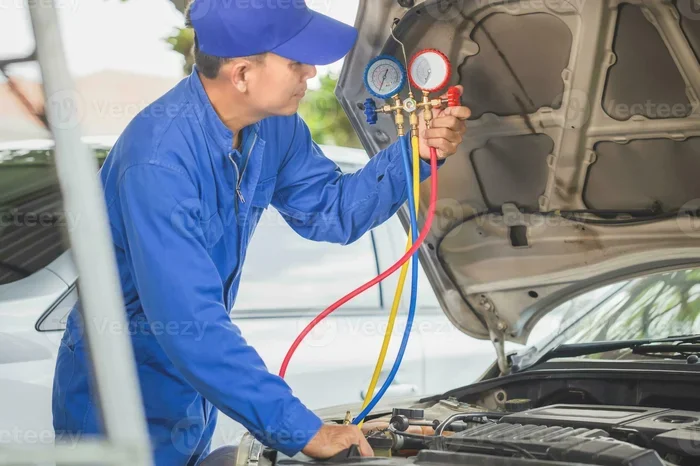
An AC pressure gauge set lets you check the refrigerant level yourself. You can buy a basic kit at any auto parts store for under thirty dollars. Connect the gauges to the service ports on your AC system and read the pressure.
Low pressure on both the high and low side readings almost always means you have a refrigerant leak. High pressure on the low side and low pressure on the high side can indicate a blockage or compressor issue. These readings give you a strong starting point for figuring out your car air conditioning problems.
Inspect The Belts And Hoses
Walk around the engine bay and look at the serpentine belt that drives the AC compressor. Check for cracks, glazing, or fraying. A damaged belt will not spin the compressor properly and can cause squealing or complete AC failure.
Also look at the rubber hoses that connect the AC components. Any visible grease or oily residue on a hose indicates a refrigerant leak. Even a small leak will eventually cause the system to lose all its cooling power.
Use Your Senses
Your eyes, ears, nose, and hands are powerful diagnostic tools. Feel the two AC hoses going into the firewall. One should be hot and one should be cold when the system is running. If both feel the same temperature, the refrigerant is likely low or the compressor is not working.
Listen for clicking, grinding, or squealing sounds. Smell for musty or chemical odors. Watch for steam or liquid leaking under the car. All of these sensory clues help you narrow down the specific car air conditioning problem you are dealing with.
Step-By-Step Fixes For Each Problem
Now that you know what is wrong, here is how to fix each problem. Some repairs you can do yourself, and others need a professional.
Fixing Low Refrigerant
Recharging your AC refrigerant is the most common DIY repair for car air conditioning problems. You will need a refrigerant recharge kit that matches your vehicle type. Most cars use R-134a refrigerant, but newer vehicles may use R-1234yf.
First, locate the low-pressure service port on the AC system. Connect the recharge hose and add refrigerant slowly while monitoring the pressure gauge. Do not overfill the system. Once the pressure reaches the recommended level, disconnect the hose and test the AC.
Keep in mind that recharging only works if you do not have a major leak. If the refrigerant keeps dropping, you need to find and repair the leak before recharging again.
Replacing A Cabin Filter
A clogged cabin filter causes weak airflow and musty smells. Replacing it is one of the easiest car air conditioning maintenance tasks you can do. The cabin filter is usually located behind the glove box or under the dashboard on the passenger side.
Open the glove box, remove the old filter, and slide in the new one. Make sure you install it in the correct direction. Most filters have an airflow arrow printed on the frame. A new cabin filter costs between fifteen and thirty dollars and makes a noticeable difference in airflow and air quality.
Cleaning The Condenser And Evaporator
Dirt and debris buildup on the condenser reduces cooling efficiency. Use a soft brush or compressed air to gently clean the condenser fins. Be careful not to bend the fins, as this blocks airflow even more.
For evaporator mold and bacteria, use an AC evaporator cleaner spray. You spray it into the vents while the AC is running, and it kills mold and eliminates odors. This is a great preventive step that addresses one of the most common car air conditioning problems related to smell.
Fixing A Failing Blower Motor
If the fan is not working or only works on certain speeds, the blower motor or its resistor may need replacement. The blower motor is usually located under the dashboard on the passenger side behind the glove box.
Disconnect the battery, remove the motor mounting bolts, and unplug the electrical connector. Install the new motor in reverse order. A blower motor replacement typically costs between one hundred and three hundred dollars at a shop, but the part itself is usually under fifty dollars.
AC Compressor Replacement
A failed AC compressor is one of the more expensive car air conditioning problems to fix. The compressor compresses the refrigerant and circulates it through the system. Without it, the AC simply cannot function.
Replacement involves evacuating the old refrigerant, removing the old compressor, installing the new one, and recharging the system with fresh refrigerant and oil. This is a job best left to a qualified mechanic. Expect to pay between five hundred and one thousand dollars for a compressor replacement, depending on your vehicle.
Preventive Maintenance To Avoid Future AC Problems
The best way to deal with car air conditioning problems is to prevent them from happening in the first place. A little regular maintenance goes a long way toward keeping your AC running strong for years.
Run Your AC Year-Round
As mentioned earlier, running the AC for at least ten minutes every few weeks keeps the compressor seals lubricated and the system pressurized. This simple habit prevents many problems before they develop. Even in winter, running the AC on defrost mode for a few minutes helps maintain the system.
Replace The Cabin Filter Regularly
Change your cabin filter every twelve months or every twelve thousand miles, whichever comes first. A clean filter ensures proper airflow and keeps dust, pollen, and debris from entering the AC system. This is one of the cheapest and most effective car air conditioning maintenance steps you can take.
Get Annual AC Inspections
Have a professional inspect your AC system at least once a year, ideally before summer. They can check refrigerant levels, inspect for leaks, test the compressor, and clean components you cannot easily reach. Catching small problems early saves you from expensive repairs later.
Keep The Condenser Clean
The condenser sits at the front of your car and takes a beating from road debris, bugs, and dirt. Rinse it gently with a garden hose every few months to keep the fins clear. Clear fins mean better airflow and better cooling performance.
When To Call A Professional Mechanic
While many car air conditioning problems can be fixed at home, some issues absolutely require professional help. Trying to fix complex problems yourself can make things worse and cost you more money in the long run.
Call a mechanic if you suspect a major refrigerant leak, if the compressor needs replacement, or if you have electrical issues that you cannot trace. AC systems use pressurized refrigerant that requires special recovery equipment to handle safely. Licensed technicians have the tools and training to work on these systems properly.
Also seek professional help if your AC works intermittently and you cannot find the cause. Intermittent electrical faults can be extremely difficult to diagnose without proper diagnostic equipment. A professional mechanic can read AC system error codes and test components with specialized tools that are not available to most car owners.
Common Mistakes People Make With Their Car AC
Avoid these common mistakes that make car air conditioning problems worse or cause new ones to develop.
- Ignoring weak airflow: Many people tolerate weak AC airflow for months without addressing it. This usually means the problem is getting worse and will eventually leave you with no cooling at all.
- Adding refrigerant without fixing a leak: Topping off refrigerant without finding the leak is a waste of money. The refrigerant will leak out again, and you will be back where you started.
- Using the wrong refrigerant: Different vehicles use different refrigerant types. Putting the wrong one in can damage the system and void your warranty. Always check your owner manual first.
- Running the AC on maximum from the start: On a hot day, open the windows and use fresh air mode for the first minute before switching to recirculation. This lets the hot air escape faster and reduces strain on the AC compressor.
- Neglecting the cabin filter: A dirty cabin filter is the most overlooked cause of weak AC performance. Replacing it costs almost nothing but makes a huge difference.
Expert Insights On Long-Term AC Health
Automotive technicians who specialize in car air conditioning repair agree on a few key principles for long-term system health. First, never let your refrigerant get completely empty. Running the compressor with no refrigerant causes internal damage that can be very expensive to repair.
Second, address small problems immediately. A minor refrigerant leak that drips just a little each month might seem harmless, but it will eventually leave you with a completely non-functioning AC. Catching and fixing small issues early is always cheaper than dealing with major failures later.
Third, invest in quality parts when replacing AC components. Cheap aftermarket compressors or condenser units may save money upfront but often fail much sooner than OEM-quality parts. Your car air conditioning system works hard, especially in hot weather. Give it components that are built to last.
Final Thoughts On Car Air Conditioning Problems
Car air conditioning problems are frustrating, but they are almost always fixable. Whether it is a simple refrigerant recharge, a new cabin filter, or a more involved compressor replacement, there is a solution for every problem on this list. The key is to act quickly when you notice symptoms. The longer you ignore a problem, the worse it gets and the more expensive the repair becomes.
Use the diagnostic tips in this guide to figure out what is wrong with your AC. Try the DIY fixes where you feel comfortable. And do not hesitate to call a professional for complex issues. Your comfort and safety on the road matter, and a working air conditioning system is a big part of that.
Take care of your car air conditioning system, and it will take care of you. Regular maintenance, prompt repairs, and a little attention go a long way toward keeping your car cool and comfortable no matter how hot it gets outside.
How Do I Know If My Car AC Refrigerant Is Low?
The most obvious sign is warm air blowing from the vents even after the AC has been running for several minutes. You may also notice that the AC works okay at first but loses cooling power after a few minutes of driving. Using an AC pressure gauge is the most accurate way to check refrigerant levels at home.
Can I Drive My Car With A Broken AC Compressor?
Yes, you can still drive your car safely with a broken AC compressor. The compressor only affects the air conditioning system and does not impact engine operation or braking. However, if the compressor clutch is seized, it may cause the serpentine belt to slip or break, which could affect other engine accessories.
How Much Does It Cost To Fix Car Air Conditioning Problems?
The cost varies widely depending on the issue. Simple fixes like recharging refrigerant or replacing a cabin filter cost under fifty dollars. Replacing a blower motor or AC pressure switch typically runs one hundred to three hundred dollars. Major repairs like compressor or evaporator replacement can cost five hundred to one thousand dollars or more.
Why Does My Car AC Smell Bad When I First Turn It On?
A musty or moldy smell usually comes from bacteria and moisture buildup on the evaporator core. This is very common, especially in humid climates or vehicles that sit unused for long periods. Replacing the cabin filter and using an AC evaporator cleaner spray usually eliminates the odor quickly.
How Often Should I Recharge My Car AC?
A healthy car air conditioning system should not need recharging at all. Refrigerant does not get used up in a sealed system. If you find yourself needing to recharge frequently, you have a leak that needs to be found and repaired first. Otherwise, the new refrigerant will just escape again.
Is It Normal For The AC To Take A Few Minutes To Get Cold?
It is normal for the AC to take three to five minutes to reach full cooling power, especially on very hot days. If the AC takes longer than that or never gets cold, there is likely an underlying problem such as low refrigerant, a failing compressor, or a clogged condenser.
Frequently Asked Questions
What is car air conditioning problems?
car air conditioning problems is an important topic with many practical applications.