How Do I Interpret My VIN Number And What Each Section Means
Your VIN number is like a fingerprint for your car. It holds details about the manufacturer, model year, assembly plant, and more. This guide breaks down each section so you can decode your VIN number with confidence.
Key Takeaways
- The first 3 digits identify the world manufacturer and country of origin.
- Digits 4 through 8 describe the vehicle descriptor, including model, body type, and engine code.
- The 9th digit is a check digit that validates the entire VIN number.
- The 10th character tells you the model year of the vehicle.
- Digits 11 through 17 reveal the assembly plant and production sequence number.
- A free VIN lookup can pull a full car history report in minutes.
- Understanding your VIN number helps with recalls, insurance, and buying a used car.
📑 Table of Contents
- What Is a VIN Number and Why Does It Matter?
- Breaking Down the World Manufacturer Identifier
- Understanding the Vehicle Descriptor Section
- The Check Digit: Your VIN Number’s Security Feature
- The Vehicle Identifier Section Explained
- How to Decode Your VIN Number Step by Step
- Why Understanding Your VIN Number Is Essential
- Quick Tips for Using Your VIN Number Effectively
- Frequently Asked Questions
- Conclusion
What Is a VIN Number and Why Does It Matter?
A VIN number stands for Vehicle Identification Number. It is a unique 17-character code assigned to every vehicle made since 1981. No two cars on the road share the same VIN number. Think of it as your car’s DNA.
Whether you are buying a used car, filing an insurance claim, or checking for safety recalls, your VIN number is the key. It tells dealers, mechanics, and law enforcement exactly what your vehicle is and where it came from. Once you learn how to read it, you unlock a wealth of information.
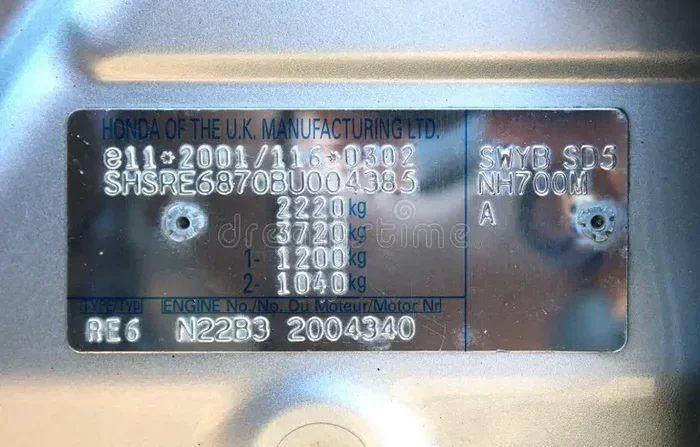
The VIN number is stamped on your dashboard, driver-side door jamb, and vehicle title. You will also find it on registration documents and insurance cards. Keeping this number handy saves time and prevents headaches down the road.
Quick Tip: Always double-check the VIN number on a used car against the title and registration. Mismatched numbers are a red flag for potential fraud or title washing.
Where to Find Your VIN Number
You can locate your VIN number in several places. The most common spot is on the dashboard, visible through the windshield on the driver’s side. You will also find it on a metal plate on the driver-side door frame. Other locations include the engine block, the frame beneath the vehicle, and your insurance documents.
Breaking Down the World Manufacturer Identifier
The first three characters of your VIN number form the World Manufacturer Identifier, or WMI. This section tells you who built the vehicle and where it was made. Let us walk through each character.
The first character identifies the country of origin. For example, 1, 4, and 5 represent the United States. J means Japan. W stands for Germany. K indicates South Korea. Each country has a specific code assigned by the International Organization for Standardization.
The second character identifies the manufacturer. Ford uses F. Toyota uses T. Honda uses H. Chevrolet uses 1. This single letter or number narrows down the brand quickly.
The third character combined with the first two specifies the vehicle type or division. It could indicate a specific brand within a larger manufacturer, such as whether a vehicle is a passenger car, truck, or SUV. Together, these three digits form the foundation of your VIN number.
WMI Quick Reference Table
- 1, 4, 5 — United States
- 2 — Canada
- 3 — Mexico
- J — Japan
- W — Germany
- K — South Korea
- S — England
- Z — Italy
- L — China
- 9 — Brazil
Expert Insight: Some manufacturers use all three WMI positions for their brand. Others reserve the third position for specific vehicle categories like buses or trailers. A VIN decoder tool can help clarify these combinations instantly.
Understanding the Vehicle Descriptor Section
Digits 4 through 8 make up the Vehicle Descriptor Section, or VDS. This part of your VIN number describes the vehicle’s features. It covers the model, body style, engine type, transmission, and trim level. Each manufacturer assigns these characters differently, which makes this section both powerful and complex.
For instance, the fourth and fifth digits often represent the vehicle line and body style. A sedan might have different codes than a pickup truck from the same manufacturer. The sixth digit typically indicates the restraint system type, such as airbag configuration.
The seventh digit usually identifies the body type or model designation. The eighth character often specifies the engine code. Together, these five digits paint a detailed picture of your vehicle’s specifications.
What the VDS Reveals About Your Car
- Model and trim level — Helps identify whether your car is a base model or a higher trim.
- Body style — Distinguishes between sedan, coupe, SUV, hatchback, or truck.
- Engine type — Specifies engine size, configuration, and fuel type.
- Transmission — Indicates whether the vehicle has automatic or manual transmission.
- Safety features — Can reveal airbag locations and restraint systems.
Common Mistake: Many people assume the VDS means the same thing across all brands. It does not. Two different manufacturers might use the eighth position for entirely different purposes. Always refer to the specific manufacturer’s VIN guide for accuracy.
The Check Digit: Your VIN Number’s Security Feature
The ninth character in your VIN number is the check digit. This is a mathematical validation code. It uses a complex formula to verify that the VIN number is legitimate. Not every character in the VIN carries a numeric value — letters are assigned specific numbers based on a weighted chart.
The check digit prevents fraudulent or duplicated VIN numbers. When a manufacturer creates a VIN, the algorithm generates this single character to match the rest of the code. If even one digit is wrong, the check digit will not match.
This is why a VIN decoder always validates the check digit first. If it fails, the entire VIN number may be invalid or altered. This security feature has been required on all vehicles sold in the United States since 1981.
Quick Tip: If you are buying a used car and the check digit does not validate, walk away. An invalid VIN number is a serious red flag that could mean the vehicle was stolen or rebuilt illegally.
The Vehicle Identifier Section Explained
The last section of your VIN number spans digits 10 through 17. This is called the Vehicle Identifier Section, or VIS. It provides the most specific details about your individual car. No two vehicles coming off the same assembly line share these final digits.
The tenth character is the model year code. It uses a rolling pattern of letters and numbers. For vehicles made from 2010 onward, the letters A through Y are used (skipping I, O, Q, and U to avoid confusion with numbers). The year 2010 was A, 2011 was B, and so on. The year 2030 will roll back to A again.
The eleventh character identifies the assembly plant. Each manufacturer assigns plant codes to their factories worldwide. A Toyota built in Kentucky will have a different plant code than one built in Japan.
Digits 12 through 17 form the sequential production number. This is the unique serial number assigned to your specific vehicle on the assembly line. It tells you the exact order in which the car rolled off the production floor.
Model Year Code Chart
- A — 2010 | B — 2011 | C — 2012
- D — 2013 | E — 2014 | F — 2015
- G — 2016 | H — 2017 | J — 2018
- K — 2019 | L — 2020 | M — 2021
- N — 2022 | P — 2023 | R — 2024
- S — 2025 | T — 2026 | V — 2027
Note: The letters I, O, Q, and U are never used in the model year position. This prevents confusion with the numbers 1 and 0.
How to Decode Your VIN Number Step by Step
Decoding your VIN number does not require a mechanic degree. You can do it yourself with a few simple steps. Follow this process to extract every detail from your 17-character code.
Step 1: Write down your full VIN number. Make sure all 17 characters are correct. Even one wrong letter or number will throw off your results.
Step 2: Look up the first three digits. These tell you the country of origin and manufacturer. Use a WMI lookup table or an online VIN decoder to identify this quickly.
Step 3: Examine digits 4 through 8. These describe your vehicle’s features, including body style, engine, and trim level. Keep in mind that each manufacturer interprets these positions differently.
Step 4: Verify the check digit in position 9. Use a VIN validator tool to confirm the number is authentic. This step protects you from fraudulent listings or incorrect records.
Step 5: Check the model year in position 10. Match it against the model year code chart. This tells you the exact year of production.
Step 6: Identify the assembly plant in position 11. This reveals where your specific vehicle was built.
Step 7: Note the sequential production number from positions 12 through 17. This is your vehicle’s unique serial identifier.
Once you complete these steps, you will have a full picture of your vehicle’s background. For a more detailed breakdown, run the VIN number through a free online VIN decoder or request a car history report.
Expert Insight: Professional VIN decoders use manufacturer-specific databases to interpret the VDS section accurately. Free online tools often provide a general overview, but paid services like Carfax or AutoCheck offer deeper vehicle history details including accident records and ownership history.
Why Understanding Your VIN Number Is Essential
Knowing how to interpret your VIN number goes beyond curiosity. It has real practical value in everyday car ownership. Here is why every driver should understand their VIN.
First, it helps you verify a vehicle’s identity before purchase. A VIN lookup can reveal whether a car has a clean title or a salvage history. It can show previous accidents, service records, and odometer readings. This information protects you from buying a problematic vehicle.
Second, understanding your VIN number makes it easier to track safety recalls. Manufacturers issue recalls by VIN range, so entering your VIN number on the NHTSA website instantly shows if your vehicle is affected. This simple step keeps you and your family safe on the road.
Third, insurance companies use your VIN number to determine premiums. The vehicle specs encoded in your VIN — including engine size, safety features, and model year — directly impact your rates. A correct VIN ensures you are not overpaying or underinsured.
Fourth, during maintenance and repairs, mechanics rely on your VIN number to order the correct parts. Using the wrong part can cause serious issues. Having your VIN number ready speeds up service visits and reduces errors at the shop.
Finally, if your vehicle is ever stolen, the VIN number is the primary tool for recovery. Law enforcement uses it to trace and identify recovered vehicles. A visible VIN on your dashboard and title makes it much harder for thieves to sell a stolen car.
Common Mistake: Many people ignore their VIN number until they need it. Do not wait for an emergency. Take a few minutes now to decode your VIN number and save a VIN copy in your phone. It could save you thousands of dollars and countless hours of hassle.
Quick Tips for Using Your VIN Number Effectively
- Save your VIN number in your phone’s notes app and in your glove box.
- Run a free VIN check before purchasing any used vehicle.
- Verify the VIN matches across the dashboard, door jamb, title, and registration.
- Use multiple VIN decoder tools to cross-check results for accuracy.
- Check for recalls using your VIN number at least twice a year.
- Keep your VIN private online to prevent identity theft or vehicle cloning.
- Request a full car history report from a reputable service before buying a used car.
Frequently Asked Questions
Can two cars have the same VIN number?
No. Every VIN number is unique. Since 1981, the ISO standard requires that no two vehicles share the same 17-character code. If you find two identical VIN numbers, one of them is likely counterfeit or altered.
What does the VIN number tell you about a used car?
A VIN number reveals the manufacturer, model year, assembly plant, engine type, and body style. When paired with a car history report, it can also show accident history, title status, service records, and ownership changes.
Is it safe to share my VIN number?
Yes, sharing your VIN number is generally safe. It is printed on your dashboard and visible to anyone. However, be cautious about posting it publicly online. A VIN alone cannot steal your identity, but it can be used to clone a vehicle or create fraudulent paperwork.
What should I do if my VIN number does not validate?
If a VIN check fails the check digit validation, do not proceed with the transaction. An invalid VIN number could indicate tampering, fraud, or a rebuilt title. Contact the seller for clarification and consider running a full vehicle history investigation.
How often do VIN number formats change?
The 17-character VIN format has remained standard since 1981. However, individual manufacturers may update their internal coding systems over time. The WMI and VIS sections tend to stay consistent, while the VDS may evolve as new vehicle features are introduced.
Can I decode my VIN number for free?
Absolutely. Many websites offer free VIN lookup tools. Services like the NHTSA recall database, the manufacturer’s own website, and third-party VIN decoders provide basic vehicle information at no cost. For a detailed history report, paid services like Carfax or AutoCheck offer more comprehensive data.
Conclusion
Learning how to interpret your VIN number is one of the most valuable skills you can develop as a car owner. The 17 characters in your VIN number tell a complete story — from where and when the vehicle was built to its specific features and production details. Each section of the VIN number serves a purpose, and understanding them puts you in control of your vehicle’s history and identity.
Whether you are buying a used car, scheduling a repair, or checking for recalls, your VIN number is the tool that unlocks reliable answers. Keep it saved in your phone, verify it before major transactions, and use free VIN decoder tools whenever you need clarity.
The next time you see your VIN number on the dashboard or paperwork, you will know exactly what it means. Take a few minutes today to decode your VIN number. It is a small effort that pays big dividends in safety, savings, and peace of mind.