Is 80 a Lot for an Oil Change or Is It Really Worth It
Is 80 a lot for an oil change? The answer depends on your vehicle, oil type, and where you go. A $80 oil change falls within the normal range for most cars, especially if you use synthetic oil or visit a dealership. This guide breaks down what you actually pay for, when the price is fair, and how to avoid overpaying.
Key Takeaways
- Average oil change cost: $65 to $125 depending on oil type and location
- Synthetic oil changes typically cost more but offer better engine protection
- Dealerships charge more but may include multi-point inspections and warranty coverage
- You can negotiate oil change prices at many independent shops and some dealerships
- Skipping oil changes leads to costly engine damage over time
- Coupons and loyalty programs can significantly reduce the cost of routine maintenance
- Know your vehicle’s needs so you don’t pay for services you don’t need
📑 Table of Contents
What Does an Oil Change Actually Cost?
Let’s cut straight to the chase. When you walk into a shop and see a bill for $80, your first thought is probably, “Is 80 a lot for an oil change?” The honest answer is: it depends. But mostly, it’s not a crazy price. Oil change cost varies a lot based on a few key factors.
Most drivers pay between $65 and $125 for a standard oil change. The lower end usually covers conventional oil at a quick-lube shop. The higher end often means synthetic oil or a visit to a dealership. So where does $80 fit in? Right in the middle. It’s a perfectly normal price for many vehicles.
Here is a simple breakdown of what drives the price:
- Oil type: Conventional, synthetic blend, or full synthetic
- Oil volume: Most cars need 4 to 6 quarts
- Labor rates: Vary by location and shop type
- Oil filter: Some shops include it, others charge extra
- Shop type: Dealership, chain, or independent mechanic
Understanding these pieces helps you figure out if you are paying a fair price. It also helps you make smarter choices about where and how often you get your car serviced.
Conventional vs Synthetic Oil: What’s the Real Difference?
This is the biggest factor in oil change pricing. Conventional oil is the cheapest option. It works fine for older cars with simpler engines. Synthetic oil costs more but lasts longer and protects better. Many modern Toyotas and other newer vehicles require or recommend synthetic.
Here is a quick comparison:
- Conventional oil: $35 to $55 per change. Needs changing every 3,000 to 5,000 miles.
- Synthetic blend: $45 to $70 per change. Lasts about 5,000 to 7,500 miles.
- Full synthetic: $65 to $125 per change. Can go 7,500 to 10,000 miles.
If your car needs full synthetic and you are paying $80, that is a great deal. You are getting premium engine oil protection at a reasonable oil change price.
Why Some Oil Changes Cost More Than Others
Not all oil changes are created equal. The price tag tells only part of the story. Several hidden factors can push a simple oil change from $40 to $100 or more.
Dealership vs. Independent Shop
One of the biggest questions drivers ask is whether they should go to a dealership or an independent shop. Dealerships usually charge more. But they also use factory-approved parts and follow your maintenance schedule to the letter. This matters if your car is still under warranty.
Independent shops and chains like Jiffy Lube often charge less. But quality can vary. Some independent shops are excellent. Others may cut corners. The key is finding a trusted mechanic you can rely on.
Wondering if you can save money by going somewhere else? Check out Can You Negotiate The Price Of An Oil Change for tips on getting a better deal.
What’s Included in the Service
A basic oil change should include:
- Draining the old oil
- Replacing the oil filter
- Adding new oil to the correct level
- A quick visual inspection of undercarriage components
Some shops go further. They check tire pressure, fluid levels, belts, and hoses. This is called a multi-point inspection. It adds value but also adds to the cost. At $80, you might get a more thorough service than a $40 quick-lube stop.
The Role of Oil Filters and Other Parts
Not all oil filters are the same. OEM filters from the manufacturer cost more than aftermarket options. But they often fit better and filter more effectively. If your shop uses a premium filter, that adds $5 to $15 to the bill.
Also, some vehicles have additional engine oil requirements. Turbo engines, for example, may need more oil or a specific type. Performance vehicles and luxury cars also tend to cost more to service. So if you drive a BMW or a Mercedes, $80 might actually be on the low side.
Is $80 Too Much for an Oil Change?
Here is the direct answer: for most standard vehicles, $80 is not too much. It is a fair and common price. But context matters a lot.
Let us look at when $80 makes sense and when it might be too high.
When $80 Is a Fair Price
- You are getting full synthetic oil changed
- The shop includes a multi-point inspection
- You visit a dealership or reputable shop
- Your vehicle requires premium engine oil (like many modern Toyotas)
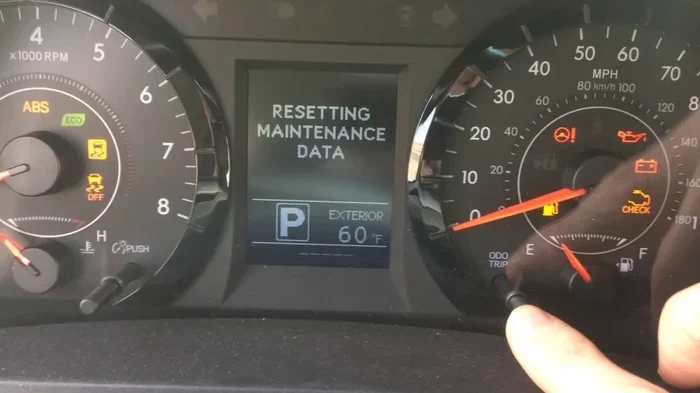
- The service includes resetting your maintenance reminder
In these cases, $80 is reasonable. You are paying for quality oil, a clean filter, and professional service. Think of it as an investment in your engine’s health.
When $80 Might Be Too High
- You are getting conventional oil at a dealership
- The shop did not replace your oil filter
- You were not given a clear breakdown of charges
- You could have gotten the same service for $50 nearby
- You were upsold services you did not need
If any of these apply, you may have overpaid. Always ask for an itemized bill before you approve the work. A good shop will happily explain every charge.
How Oil Change Frequency Affects Long-Term Cost
How often you need an oil change also changes the math. If you change oil every 3,000 miles with conventional oil, you will pay more over time than someone who changes it every 7,500 miles with synthetic. Let us do the numbers.
Say you drive 15,000 miles per year. With conventional oil at $45 per change every 3,000 miles, you pay $225 per year. With full synthetic at $80 per change every 7,500 miles, you pay $160 per year. So the synthetic oil change actually saves you money in the long run, even though each visit costs more.
For more on how often you really need an oil change, read Can You Go Two Years Without An Oil Change.
How to Save Money on Your Next Oil Change
Nobody wants to overpay for routine maintenance. The good news is there are several easy ways to keep your oil change cost down without sacrificing quality.
Look for Coupons and Promotions
Most chain shops and dealerships run monthly coupons. You can find them in mailers, on their websites, or through apps. A $10 to $20 discount on a $80 oil change adds up fast, especially if you get oil changes regularly.
Ask About Loyalty Programs
Many shops offer loyalty programs that reward repeat customers. You might earn points toward free services or get a discount on your fifth oil change. These small savings compound over time.
Consider Independent Shops
Independent mechanics often charge 20 to 30 percent less than dealerships. If your car is out of warranty, this can be a smart way to save. Just make sure the shop uses quality oil and filters and has good reviews.
Do Not Skip the Oil Filter
It might be tempting to skip the filter to save $10. Do not do it. A clogged oil filter lets dirty oil circulate through your engine. Over time, this causes wear and can lead to expensive repairs. Always get a new filter with every oil change.
Use the Right Oil for Your Vehicle
Using the wrong oil viscosity can hurt your engine and waste money. Check your owner’s manual. If it says 0W-20, do not use 5W-30 just because it is cheaper. Can I Use 5W20 Instead Of 5W30 In A Toyota? The answer depends on your specific model and engine, so always check first.
What Happens If You Skip or Delay an Oil Change?
This is the part nobody wants to think about, but it matters. Skipping oil changes is one of the cheapest ways to destroy your engine.
Old oil breaks down over time. It loses its ability to lubricate moving parts. Metal-on-metal contact increases. Heat builds up. Sludge forms inside the engine. All of this leads to increased wear, reduced fuel efficiency, and eventually, catastrophic engine failure.
Here is what can go wrong if you put off your oil change too long:
- Engine overheating: Old oil cannot dissipate heat effectively
- Increased wear on bearings and cylinder walls: Expensive to repair
- Sludge buildup: Can clog oil passages and starve the engine
- Reduced fuel economy: Dirty oil increases friction and drag
- Voided warranty: If you skip services, your warranty may not cover engine damage
Think of an oil change as cheap insurance for your engine. At $80, you are spending a small amount to potentially avoid thousands in repair bills. And while you are there, you can ask the tech to check transmission fluid and other important fluids. Find out more about what mechanics do during an oil change at Do Mechanics Check Transmission Fluid During An Oil Change.
How to Know When Your Oil Change Is Due
Modern vehicles have oil life monitoring systems. These track driving conditions and tell you when it is time for a change. Do not ignore the warning light. Even if you have only driven 1,000 miles since the last change, the system knows your driving habits better than you do.
As a general rule of thumb:
- Conventional oil: every 3,000 to 5,000 miles
- Synthetic blend: every 5,000 to 7,500 miles
- Full synthetic: every 7,500 to 10,000 miles
These are general guidelines. Always follow your vehicle manufacturer’s specific recommendations. Check your owner’s manual or ask your dealer. If you are unsure whether your Toyota needs service, you might want to read Can I Take My Toyota To Any Dealer For Service for guidance.
The Bottom Line on $80 Oil Changes
So, is $80 a lot for an oil change? The short answer is no. For most drivers, $80 is a perfectly normal and fair price for a quality oil change. It covers good oil, a new filter, and professional service. The real question is not whether $80 is a lot. The real question is whether you are getting your money’s worth.
Pay attention to what is included in the service. Ask questions. Know what type of oil your car needs. And do not let the lowest price be your only deciding factor. A cheap oil change today can lead to expensive engine problems tomorrow.
Regular oil changes are one of the simplest and most effective ways to keep your car running strong for years. Whether you pay $50 or $100, the most important thing is that you do it on time, every time.
Your engine is the heart of your vehicle. Treat it well, and it will reward you with reliability and longevity. A routine oil change at $80 is a small price for that peace of mind.
Frequently Asked Questions
Is $80 too expensive for an oil change?
No, $80 is not too expensive for most vehicles. It falls right in the middle of the average oil change cost range of $65 to $125. The price depends on your oil type, vehicle model, and where you go. For a synthetic oil change at a reputable shop, $80 is a very reasonable price.
How often should I get an oil change?
It depends on your oil type and vehicle. Conventional oil needs changing every 3,000 to 5,000 miles. Synthetic oil can last 7,500 to 10,000 miles. Check your owner’s manual for your specific vehicle’s maintenance schedule. Many newer cars also have oil life monitoring systems that tell you exactly when it is time.
Can I use any oil type for my car?
No, you should always use the oil type recommended by your vehicle manufacturer. Using the wrong oil viscosity can reduce engine performance and void your warranty. Check your owner’s manual or ask your mechanic. For example, if you are wondering about Toyota oil options, Can I Use 5W20 Instead Of 5W30 In A Toyota depends on your specific model.
Does a more expensive oil change mean better service?
Not always. A higher price does not automatically mean better quality. What matters is what is included in the service. A good oil change should use the right oil for your vehicle, include a new filter, and feature a basic inspection. Ask for an itemized breakdown so you know exactly what you are paying for.
Are oil changes free at Toyota dealerships?
Some Toyota dealerships offer free oil changes as part of a maintenance plan or new vehicle promotion. However, this is not standard across all dealerships or all models. To learn more about what is included, check out Are Oil Changes Free At Toyota for the latest details on Toyota service offers.
What will happen if I wait too long between oil changes?
Waiting too long between oil changes can cause sludge buildup, increased engine wear, overheating, and reduced fuel efficiency. In worst-case scenarios, it can lead to complete engine failure. Stick to your recommended oil change interval to protect your engine and avoid costly repairs down the road.