
Can Old Coolant Cause Engine Overheating in Your Car
Yes, old coolant can absolutely cause engine overheating. Degraded coolant loses its ability to regulate engine temperature, leading to serious mechanical problems. When coolant breaks down over time, it becomes acidic, corrosive, and less effective at transferring heat away from the engine block. This article explains the science behind coolant degradation, the warning signs to watch for, and simple steps you can take to prevent overheating. Understanding the connection between old coolant and engine overheating can save you hundreds in repairs and keep your car running safely.
Have you ever popped your hood and seen steam billowing out? Or maybe your temperature gauge spiked on a hot day, and you wondered what went wrong. The culprit might be sitting quietly in your radiator right now — old, degraded coolant that has lost its ability to do its job.
Your car’s cooling system works hard every single time you turn the key. It pulls heat away from the engine and keeps everything running at a safe temperature. But when the coolant inside that system gets old, it stops working properly. The result can be engine overheating, which is one of the most expensive problems a driver can face.
In this article, we will walk you through exactly how old coolant causes overheating, what warning signs to look for, and how to prevent it from happening. Whether you are a seasoned car owner or a complete beginner, this guide will give you the knowledge you need to protect your engine and your wallet.
Key Takeaways
- Old coolant loses its heat-transfer ability: Over time, coolant breaks down and can no longer cool your engine effectively.
- Corrosion and buildup are major problems: Degraded coolant causes rust and debris that clog the cooling system.
- Overheating leads to expensive repairs: Ignoring old coolant can result in a blown head gasket, cracked engine block, or water pump failure.
- Replacement intervals matter: Most vehicles need a coolant flush every 30,000 to 50,000 miles or every 2 to 5 years.
- Warning signs are easy to spot: Rising temperature gauge, steam from the hood, and sweet-smelling leaks all point to coolant issues.
- Prevention is simple and affordable: Regular coolant flushes and checks cost far less than engine repairs.
- Mixing coolant types can cause problems: Always use the manufacturer-recommended coolant for your vehicle.
📑 Table of Contents
- What Happens When Coolant Gets Old?
- How Old Coolant Leads to Engine Overheating
- Warning Signs That Old Coolant Is Causing Overheating
- How Often Should You Replace Your Coolant?
- Preventing Overheating Caused by Old Coolant
- What to Do If Your Engine Is Already Overheating
- Key Takeaways
- Conclusion
- FAQs
What Happens When Coolant Gets Old?
Coolant is not just water. It is a carefully balanced mixture of antifreeze and distilled water, along with special additives that protect your cooling system. Over time, those additives break down. The chemical composition changes. And the fluid that once kept your engine cool becomes something that can actually harm it.
Here is what happens inside your cooling system when coolant ages:
- Additives wear out: The anti-corrosion compounds that protect metal surfaces inside the radiator and engine block gradually lose their effectiveness.
- pH levels shift: Fresh coolant is slightly alkaline, which helps prevent corrosion. Old coolant becomes acidic, which eats away at metal and rubber seals.
- Debris builds up: As coolant degrades, it forms sludge and sediment that clog narrow passages in the radiator and engine block.
- Heat transfer drops: Old coolant simply cannot absorb and transfer heat as efficiently as fresh coolant. This means your engine runs hotter than it should.
- Water pump strain increases: Thick, dirty coolant forces the water pump to work harder, which can lead to premature pump failure.
Think of it like changing the oil in your car. Oil gets dirty and loses its lubricating properties over time. Coolant works the same way. It needs to be replaced on a regular schedule to keep your engine healthy.
The Chemistry Behind Coolant Breakdown
Most modern coolants use ethylene glycol or propylene glycol as the base. These chemicals are excellent at transferring heat and preventing freezing. However, they are not permanent. Over months and years of heating and cooling cycles, the glycol molecules break down. The pH of the fluid drops. The protective silicates and phosphates that coat metal surfaces dissolve away.
Once the protective coating inside your radiator and engine block wears off, bare metal is exposed. This leads to micro-corrosion, which produces tiny metal particles. Those particles circulate through the cooling system, clogging the radiator fins, the thermostat housing, and even the small passages inside the engine block itself.
The table below shows a quick comparison between fresh and old coolant:
- Fresh Coolant: pH around 8.5 to 10.5, clear or bright green/orange/blue, excellent heat transfer, protects rubber seals and metal surfaces, flows freely through all passages.
- Old Coolant: pH drops below 7.0, becomes dark brown or muddy, poor heat transfer, corrodes metal and degrades rubber, thick and sluggish flow.
As you can see, the difference is dramatic. Even a slight drop in pH can start the corrosion process. And once corrosion takes hold, it is very difficult to reverse without a full cooling system flush and possibly expensive component replacements.
How Old Coolant Leads to Engine Overheating
Now that we understand what happens to old coolant, let us look at the specific ways it causes engine overheating. The connection is not always obvious, which is why many drivers ignore the problem until serious damage has already occurred.
Reduced Heat Absorption Capacity
The primary job of coolant is to absorb heat from the engine and carry it to the radiator, where it gets released into the air. When coolant degrades, its heat absorption capacity drops significantly. Think of it like a sponge that has been squeezed dry — it simply cannot hold any more liquid.
When the coolant cannot absorb enough heat, the engine temperature starts to climb. The thermostat opens, the cooling fan kicks in, but none of it is enough because the fluid circulating through the system is no longer doing its job properly. The temperature gauge creeps upward, and before you know it, you are staring at a overheating warning light on your dashboard.
Clogged Radiator and Passages
Old coolant forms sediment and sludge that can physically block the tiny passages inside your radiator and engine. When these passages are clogged, coolant cannot flow freely. Hot spots develop inside the engine because certain areas are not getting any coolant flow at all.
A clogged radiator also cannot release heat efficiently. The radiator relies on airflow through its fins to cool the fluid inside. If those fins are coated in sludge, the heat transfer process slows down dramatically. Your engine runs hotter, even on a mild day.
Failed Thermostat Operation
The thermostat is a small valve that opens and closes based on engine temperature. It lets coolant flow to the radiator when the engine is hot and blocks flow when the engine is warming up. Old coolant can cause the thermostat to stick in either position.
If the thermostat sticks closed, coolant cannot reach the radiator at all. The engine overheats within minutes. If it sticks open, the engine takes too long to reach operating temperature, which causes other efficiency problems. Either way, degraded coolant is often the root cause of thermostat failure.
Water Pump Damage
The water pump is responsible for circulating coolant through the engine and radiator. It has a small seal and bearings that can be damaged by acidic, contaminated coolant. When the water pump starts to fail, coolant circulation slows or stops entirely.
Without proper circulation, heat builds up quickly in the engine block. A failing water pump often makes a whining or grinding noise, but by the time you hear it, the damage may already be done. Replacing a water pump is expensive, and it is completely preventable with regular coolant maintenance.
Head Gasket Failure
This is the worst-case scenario. When an engine overheats repeatedly due to old coolant, the cylinder head can warp. The head gasket, which sits between the engine block and the cylinder head, can fail. A blown head gasket allows combustion gases to leak into the cooling system, which creates even more overheating problems.
Signs of a head gasket failure include white smoke from the exhaust, a milky residue under the oil cap, bubbles in the coolant reservoir, and persistent overheating. Repairing a head gasket is one of the most costly engine repairs, often costing over a thousand dollars. All of this can be traced back to simple neglect of coolant replacement.
Warning Signs That Old Coolant Is Causing Overheating
Catching the problem early can save you from a catastrophic engine failure. Here are the most common warning signs that your old coolant is causing overheating issues:
- Temperature gauge reading higher than normal: If your temperature gauge consistently sits in the upper range or climbs into the red zone, your coolant may be degraded.
- Steam or smoke coming from under the hood: This is a clear sign that coolant has reached boiling point because it is no longer regulating temperature properly.
- Sweet smell coming from the engine area: Coolant has a sweet, syrupy smell. If you notice this odor, you may have a leak caused by degraded seals and hoses.
- Coolant color has changed: Fresh coolant is bright green, orange, or pink. If your coolant looks brown, muddy, or rusty, it is way past its prime.
- Coolant reservoir shows low levels frequently: Old coolant can cause internal leaks as seals and gaskets deteriorate from corrosion.
- Heater stops working: If your car heater blows cold air, it could mean coolant is not flowing properly due to blockages or a failing water pump.
- Rattling or knocking sounds from the engine: Overheating can cause metal parts to expand and rub against each other, creating unusual noises.
If you notice any of these signs, do not ignore them. Pull over safely, turn off the engine, and let it cool down before checking the coolant level. Driving with an overheating engine for even a few minutes can cause permanent damage.
Quick Tip: The Coolant Color Test
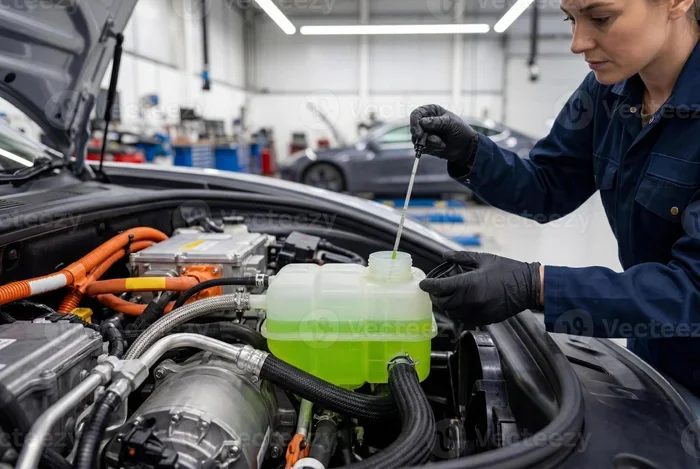
Open your coolant reservoir when the engine is cool. Fresh coolant should be bright and translucent. If it looks dark, murky, or has visible particles, it is time for a coolant flush. You can also use a coolant test strip from any auto parts store. These strips measure pH levels and show you exactly how degraded your coolant has become. It is a quick and inexpensive way to know if your coolant needs replacing.
How Often Should You Replace Your Coolant?
One of the most common questions drivers ask is how often they really need to change their coolant. The answer depends on the type of coolant your vehicle uses, your driving conditions, and your vehicle’s age.
Coolant Replacement Intervals by Type
Not all coolants are created equal. Manufacturers have developed different formulations to last longer and provide better protection. Here is a breakdown of common coolant types and their recommended replacement intervals:
- IAT (Inorganic Additive Technology): This is the traditional green coolant. It typically needs to be replaced every 24,000 to 36,000 miles or every 2 years. Older vehicles often use IAT coolant.
- OAT (Organic Acid Technology): This is a longer-life coolant, often orange or red. It can last up to 150,000 miles or 5 years before needing replacement. Many modern vehicles use OAT coolant.
- HOAT (Hybrid Organic Acid Technology): A blend of IAT and OAT, usually yellow or turquoise. Recommended replacement is around 60,000 to 100,000 miles or 4 to 5 years.
- Si-OAT (Silicated Organic Acid Technology): A premium long-life coolant, often purple or pink. It can last up to 150,000 miles or 5 years.
Always check your owner’s manual for the exact recommendation for your vehicle. Using the wrong type of coolant can cause compatibility issues and actually accelerate the degradation process.
Factors That Shorten Coolant Life
Even if you follow the recommended replacement schedule, certain driving conditions can cause coolant to degrade faster. Be aware of these factors:
- Stop-and-go traffic: Frequent idling and low speeds generate more heat and put extra stress on the cooling system.
- Hot climates: Driving in very hot weather accelerates coolant breakdown.
- Towing or hauling heavy loads: Extra weight means more engine work and more heat generation.
- Short trips: The engine may not reach full operating temperature, which allows moisture to build up in the coolant and accelerate corrosion.
- Coolant leaks: Even small leaks that cause you to top off the coolant can introduce tap water, which contains minerals that cause buildup.
If you regularly deal with any of these conditions, consider replacing your coolant more frequently than the standard recommendation. It is a small investment that pays off in engine longevity.
Common Mistakes Drivers Make With Coolant
Many drivers make avoidable mistakes when it comes to coolant maintenance. Here are the most common ones:
- Never checking coolant level: Many people only think about coolant when something goes wrong. A quick monthly check can catch problems early.
- Topping off with water: Using plain water instead of proper coolant mixture reduces the boiling point and introduces minerals that cause corrosion.
- Mixing different coolant types: Combining different coolant formulations can cause chemical reactions that create sludge and reduce effectiveness.
- Ignoring the coolant warning light: When that light comes on, pull over immediately. Continuing to drive can cause irreversible engine damage.
- Skipping coolant flushes: Draining and refilling coolant without flushing the entire system leaves old, contaminated fluid behind.
Preventing Overheating Caused by Old Coolant
The good news is that preventing overheating caused by old coolant is straightforward. It does not require expensive tools or mechanical expertise. A little regular maintenance goes a long way toward keeping your engine cool and running smoothly.
Follow a Regular Maintenance Schedule
The single most effective thing you can do is follow your vehicle’s recommended coolant replacement schedule. Mark it on your calendar, set a reminder on your phone, or keep track in your maintenance log. Most manufacturers recommend a coolant flush every 30,000 to 100,000 miles depending on the type of coolant used.
During a coolant flush, a mechanic will drain the old fluid, flush the entire cooling system with a cleaning solution, and refill it with fresh coolant. This removes all the sediment, sludge, and contaminated fluid that has built up over time.
Check Your Coolant Level Monthly
Get into the habit of checking your coolant level once a month. Make sure the engine is cool before you open the reservoir cap. The coolant should be between the minimum and maximum marks on the side of the reservoir. If it is low, top it off with the correct coolant type or a 50/50 mix of coolant and distilled water.
A consistently low coolant level is a red flag. It usually means you have a leak somewhere in the system. Have a mechanic inspect the radiator hoses, water pump, thermostat housing, and heater core for leaks as soon as possible.
Use Quality Coolant and Distilled Water
Not all coolants are created equal. Use the type recommended by your vehicle manufacturer. Cheap, off-brand coolants may not contain the right balance of additives and can cause more harm than good.
When mixing coolant, always use distilled water. Tap water contains minerals and chlorine that can cause scale buildup inside the cooling system. Over time, this buildup restricts flow and reduces the system’s ability to cool the engine effectively.
Inspect Hoses and Connections Regularly
The rubber hoses that connect your radiator, water pump, and engine can crack and deteriorate over time. Inspect them visually every few months. Look for swelling, cracks, soft spots, or coolant residue around the clamps. Replacing a hose costs very little compared to the damage a coolant leak can cause.
Keep Your Radiator Clean
Your radiator relies on airflow through its fins to cool the coolant inside. Bugs, dirt, and debris can clog the fins and reduce airflow. Periodically hose down the front of your radiator to keep it clean. Be gentle — the fins are delicate and can bend easily, which would further restrict airflow.
Monitor Your Temperature Gauge
Your temperature gauge is your best early warning system. Get to know what normal looks like for your vehicle. If you notice the needle creeping higher than usual, pull over and investigate. Catching a temperature problem early can prevent a minor repair from turning into a major engine replacement.
What to Do If Your Engine Is Already Overheating
If you are reading this article because your engine is currently overheating, here is what you need to do right now. Stay calm and follow these steps carefully.
- Turn on the heater: This sounds counterintuitive, but turning the heater to full blast pulls heat away from the engine. It can buy you a few extra minutes to get to safety.
- Pull over safely: Find a safe place to stop. Turn off the engine and let it cool down. Do not open the radiator cap while the engine is hot — pressurized coolant can cause severe burns.
- Check the coolant level: Once the engine has cooled, check the coolant reservoir. If it is low, you can carefully add coolant or a 50/50 mix of coolant and distilled water.
- Look for visible leaks: Check under your car for puddles of coolant. Look for hoses that have come loose or cracked.
- Call for help if needed: If the coolant level is fine but the engine is still overheating, you may have a more serious problem like a failed water pump or a stuck thermostat. Call a tow truck and have the vehicle taken to a mechanic.
Do not keep driving an overheating engine. Even a few more minutes of driving with an overheating engine can cause the head gasket to blow, the engine block to crack, or the pistons to seize. These are catastrophic failures that can cost thousands of dollars to repair.
Key Takeaways
- Old coolant loses its heat-transfer ability: Over time, coolant breaks down and can no longer cool your engine effectively.
- Corrosion and buildup are major problems: Degraded coolant causes rust and debris that clog the cooling system.
- Overheating leads to expensive repairs: Ignoring old coolant can result in a blown head gasket, cracked engine block, or water pump failure.
- Replacement intervals matter: Most vehicles need a coolant flush every 30,000 to 50,000 miles or every 2 to 5 years.
- Warning signs are easy to spot: Rising temperature gauge, steam from the hood, and sweet-smelling leaks all point to coolant issues.
- Prevention is simple and affordable: Regular coolant flushes and checks cost far less than engine repairs.
- Mixing coolant types can cause problems: Always use the manufacturer-recommended coolant for your vehicle.
Conclusion
The answer to the question “Can old coolant cause engine overheating?” is a definitive yes. Old coolant loses its ability to absorb and transfer heat, becomes acidic and corrosive, and can clog the entire cooling system. All of these problems lead to engine overheating, which can cause devastating and expensive damage if left unchecked.
The good news is that this is one of the most preventable problems in car maintenance. A regular coolant flush, monthly level checks, and using the right type of coolant for your vehicle can keep your cooling system working perfectly for years. You do not need to be a mechanic to take care of your coolant — a little awareness and a little effort go a long way.
Your engine is the heart of your vehicle. Treat it well by keeping the coolant fresh and the cooling system clean. The next time you are due for a coolant replacement, do not put it off. Your wallet — and your engine — will thank you for it. Take action today, and enjoy the peace of mind that comes from knowing your car is protected from the costly consequences of old coolant and engine overheating.
FAQs
Can I just add new coolant on top of old coolant?
It is not recommended. Simply topping off old coolant with new coolant dilutes the additives and does not remove the contaminants already in the system. A full coolant flush is the best way to ensure all old, degraded fluid is removed and replaced with fresh, effective coolant. Mixing old and new coolant can reduce the overall effectiveness and accelerate the degradation process.
How much does a coolant flush cost?
A coolant flush typically costs between $100 and $200 at a mechanic shop, depending on your vehicle and your location. This is a small price to pay compared to the cost of repairing an overheating engine, which can range from $500 for a thermostat replacement to several thousand dollars for a head gasket or engine rebuild. Many dealerships and quick-lube shops offer coolant flush services as part of routine maintenance packages.
What happens if I never change my coolant?
If you never change your coolant, it will eventually become so degraded that it can no longer cool the engine effectively. This leads to overheating, corrosion, and eventual engine failure. Internal components like the water pump, thermostat, and radiator can all be damaged. In the worst case, the engine block can crack, requiring a full engine replacement. Regular coolant replacement is one of the cheapest and most important maintenance tasks you can do for your vehicle.
Can old coolant cause overheating even if the level is full?
Yes, absolutely. Even if the coolant reservoir is full, old and degraded coolant cannot properly absorb or transfer heat. The chemical breakdown of the fluid means it has lost its ability to regulate temperature, regardless of how much is in the system. This is why a coolant flush is more important than simply topping off the reservoir. Fresh coolant contains the right balance of additives to protect your engine.
Is it safe to drive with old coolant?
It is not safe in the long term. Old coolant increases the risk of engine overheating, which can cause sudden breakdowns and expensive repairs. In the short term, your vehicle may run fine, but the internal corrosion and buildup are silently causing damage. If you know your coolant has not been changed in a long time, schedule a coolant flush as soon as possible to protect your engine.
Does coolant expire or go bad over time?
Yes, coolant does go bad over time. The additives that protect your cooling system have a limited lifespan. Even if your car sits parked for months without being driven, the coolant can still degrade. The protective compounds break down, the pH shifts, and the fluid becomes less effective. Always check the condition and age of your coolant, even if your vehicle has low mileage.




One Comment