Can Coolant Last 10 Years Heres What You Need To Know
Can coolant last 10 years? The short answer is it depends on the type and your vehicle. Many modern coolants claim long life, but factors like contamination, pH changes, and driving conditions can shorten their lifespan significantly. Understanding your coolant type and following manufacturer guidelines helps prevent overheating, corrosion, and costly engine repairs. This guide breaks down everything you need to know about coolant longevity and maintenance.
This is a comprehensive guide about Can Coolant Last 10 Years?.
Key Takeaways
- Not all coolants are equal: Traditional coolant typically lasts 2-3 years, while long-life formulations can extend to 5 years or more.
- Ten years is generally too long: Most manufacturers recommend replacing coolant well before the 10-year mark to maintain engine protection.
- Coolant degrades over time: Additives break down, pH levels shift, and contamination reduces the fluid’s ability to prevent corrosion and overheating.
- Driving conditions matter: Extreme temperatures, stop-and-go traffic, and heavy loads accelerate coolant breakdown.
- Regular testing is key: Using a coolant tester or requesting a coolant analysis during service helps you track fluid condition.
- Color changes signal trouble: Dark, rusty, or milky coolant often indicates contamination or degradation that demands immediate attention.
- Flushing matters more than topping off: A full coolant flush removes old fluid and deposits, ensuring fresh protection for your cooling system.
[FEATURED_IMAGE_PLACEHOLDER]
Let’s talk about something every car owner should understand but often overlooks. Your engine generates an enormous amount of heat while running. Without proper cooling, metal parts expand, seize, and crack. Coolant, also called antifreeze, is the fluid that keeps your engine at a safe operating temperature. It flows through channels in the engine block and cylinder head, absorbing heat and carrying it away to the radiator. From there, the heat dissipates into the air.
But here is the question that confuses a lot of people. Can coolant last 10 years? You might have heard conflicting advice. Some say change it every two years. Others insist modern coolant lasts a decade. The truth lies somewhere in between, and it depends on several important factors. In this article, we will explore everything about coolant lifespan, why it matters, and how to keep your engine running smoothly for years to come.
What Exactly Is Coolant and Why Does It Matter?
Before we dive into longevity, let us understand what coolant actually does. Coolant is a mixture of ethylene glycol or propylene glycol and distilled water. This combination raises the boiling point and lowers the freezing point of the liquid in your cooling system. That means your engine stays protected whether you are driving in freezing winter weather or scorching summer heat.
But temperature regulation is only part of the job. Coolant also contains additives that prevent corrosion inside the cooling system. These additives protect metal components like the water pump, radiator, heater core, and hoses. Over time, these additives get used up. That is why coolant does not last forever, even if it still looks fine in the reservoir.
The Different Types of Coolant
Not all coolant is the same. Automakers use different formulations, and knowing which one your vehicle needs matters a lot. Here are the main types you will encounter:
- IAT (Inorganic Additive Technology): This is the traditional green coolant found in older vehicles. It typically needs replacement every 2 years or 24,000 miles. The inorganic additives provide excellent corrosion protection but deplete faster than modern formulations.
- OAT (Organic Acid Technology): Often orange, red, or purple, OAT coolant uses organic acids that deplete much more slowly. Many GM, Ford, and Chrysler vehicles use this type. It can last up to 5 years or 150,000 miles under ideal conditions.
- HOAT (Hybrid Organic Acid Technology): This is a blend of IAT and OAT technologies. It combines the fast-acting protection of inorganic additives with the longer life of organic acids. Many European brands like BMW, Mercedes, and Audi use HOAT formulations. Expect a lifespan of about 5 years.
- Si-OAT (Silicate Organic Acid Technology): Common in Asian vehicles from Honda, Toyota, and Nissan. This formulation includes silicates for added protection of aluminum components. It typically lasts 5 years or longer.
Each type has a different chemical makeup, and mixing them can cause harmful chemical reactions. Always check your owner manual before adding or replacing coolant. Using the wrong type can lead to premature cooling system failure and expensive repairs.
Can Coolant Last 10 Years? The Honest Answer
Now let us address the big question directly. Can coolant last 10 years? In most cases, the answer is no. Even the longest-lasting coolants are not designed to perform effectively for a full decade. Here is why.
Coolant additives degrade over time. The organic acids in OAT coolant slowly get consumed as they neutralize acids and prevent corrosion. The silicates in Si-OAT formulations can drop out of solution and form scale deposits. Traditional IAT coolant loses its protective additives even faster. After 3 to 5 years, most coolant formulations are significantly depleted, regardless of how they look.
Some people assume that if the coolant level stays full and the color looks okay, everything is fine. That is a dangerous assumption. Coolant can lose its protective properties without any visible change. The pH level drops, the corrosion inhibitors are gone, and the boiling point decreases. You might not notice any problems until something goes wrong, like an overheating engine or a blown head gasket.
Factors That Shorten Coolant Lifespan
Several real-world factors can cause coolant to break down much faster than the manufacturer’s recommended interval. Here is what you should know:
- Driving in extreme heat: Hot climates put extra stress on the cooling system. The coolant works harder to maintain safe temperatures, and the additives break down faster.
- Stop-and-go traffic: Frequent idling and low speeds reduce airflow through the radiator, causing the coolant to run hotter than it would on the highway.
- Towing or hauling heavy loads: Extra weight means more engine strain and more heat. The cooling system works overtime, accelerating coolant degradation.
- Coolant contamination: Rust, scale, or oil entering the cooling system can neutralize protective additives and create sludge that clogs passages.
- Cooling system leaks: Small leaks allow air into the system, causing cavitation in the water pump and accelerating corrosion from the inside out.
- Using tap water for mixing: Tap water contains minerals that form deposits and reduce the effectiveness of coolant additives. Always use distilled water when mixing coolant.
If any of these conditions apply to your driving habits, your coolant will likely last even less than the standard interval. Regular testing becomes even more important in these situations.
How to Test Your Coolant Condition
You do not have to guess whether your coolant is still good. Several simple methods can tell you the condition of your engine coolant right now. These tests take minutes and can save you from major engine repairs down the road.
Using a Coolant Refractometer
A refractometer measures the specific gravity of your coolant, which tells you the concentration of antifreeze in the mixture. A properly mixed coolant should have a specific gravity between 1.08 and 1.12. If the reading is too low, the mixture has too much water and may freeze in cold weather. If it is too high, the concentration is excessive and can reduce heat transfer efficiency. A refractometer costs under fifteen dollars and is one of the best tools any car owner can own.
Testing Coolant pH Level
This test is just as important as checking the concentration. Fresh coolant typically has a pH between 7.5 and 11. As additives break down, the pH drops and the fluid becomes acidic. Once the pH falls below 7.0, the coolant starts corroding metal components from the inside. You can test pH with simple test strips available at any auto parts store. If your pH is low, a coolant flush and refill is the smart move, even if the mileage or time interval has not been reached.
Visual Inspection
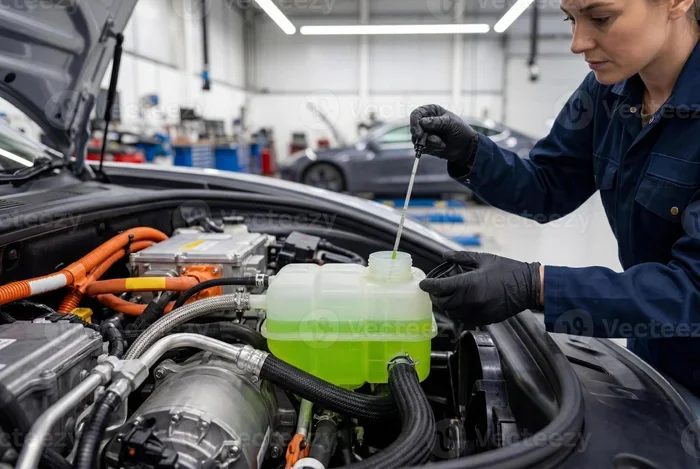
Sometimes your eyes can tell you a lot. Open the coolant reservoir and look at the fluid. Fresh coolant is usually bright green, orange, red, or purple depending on the type. If the fluid looks dark brown, rusty, or milky, something is wrong. Milky coolant can indicate oil contamination, which is a serious problem requiring immediate attention. Rusty fluid suggests internal corrosion that is already damaging your cooling system components.
Quick Tip: Always check coolant when the engine is cold. Opening the radiator cap on a hot system can cause serious burns from pressurized hot fluid spraying out.
What Happens When Old Coolant Fails?
Understanding the consequences of neglected coolant helps put maintenance into perspective. When coolant loses its protective properties, the effects are not immediate, but they are inevitable without intervention.
Corrosion and Scale Buildup
Without sufficient corrosion inhibitors, the metal surfaces inside your cooling system start to corrode. The radiator, water pump, heater core, and engine passages all become vulnerable. Corrosion produces particles that circulate through the system and accumulate as scale. This scale restricts coolant flow, reduces heat transfer, and can eventually block critical passages in the engine block. A blocked cooling system leads directly to overheating.
Overheating and Engine Damage
Degraded coolant has a lower boiling point and reduced heat capacity. This means it cannot absorb and transfer heat as effectively. The engine runs hotter than designed, which can cause warped cylinder heads, blown head gaskets, cracked engine blocks, and piston damage. Overheating repairs are among the most expensive in automotive maintenance. A simple coolant flush costs a fraction of what an engine rebuild costs.
Water Pump Failure
The water pump relies on coolant to lubricate its internal bearings and seals. Old, acidic coolant eats away at these components. A failing water pump leaks coolant, loses pumping efficiency, or seizes entirely. When the water pump stops working, the engine has no circulation, and temperatures spike rapidly. This is one of the most common cooling system failures caused by neglected coolant.
How Often Should You Really Change Your Coolant?
The manufacturer’s recommendation in your owner manual is the best starting point. However, the actual interval depends on your coolant type, driving conditions, and vehicle age. Here is a general guideline to help you plan your maintenance schedule.
| Coolant Type | Typical Lifespan | Common Vehicles |
|---|---|---|
| IAT (Traditional Green) | 2 years / 24,000 miles | Older vehicles, pre-2000 models |
| OAT (Orange/Red/Purple) | 5 years / 150,000 miles | GM, Ford, Chrysler (many models) |
| HOAT (Yellow, Pink, Blue) | 5 years / 100,000 miles | BMW, Mercedes, Audi, VW |
| Si-OAT (Pink, Blue, Red) | 5 years / 150,000 miles | Honda, Toyota, Nissan, Hyundai |
These numbers represent ideal conditions. Real-world driving often shortens the effective lifespan. If you drive in hot climates, tow frequently, or deal with heavy traffic, consider shortening your interval by 20 to 30 percent. It is always better to be proactive than to discover a problem after damage has already occurred.
Expert Insight: Many experienced mechanics recommend a coolant flush every 3 to 5 years regardless of the type, simply as a preventive measure. The cost of a coolant flush is minimal compared to the cost of cooling system repairs caused by degraded fluid. It is one of the most cost-effective maintenance services you can perform on your vehicle.
Signs Your Coolant Needs Immediate Attention
Sometimes your vehicle gives you warning signs before a cooling system problem becomes serious. Learning to recognize these signals can help you catch issues early and avoid expensive repairs.
- Temperature gauge reading higher than normal: If your temperature gauge climbs into the red zone, pull over safely and turn off the engine. Continuing to drive an overheating engine can cause catastrophic damage.
- Coolant leaks under the vehicle: Puddles of green, orange, or pink fluid under your car indicate a leak in the cooling system. Check hoses, the radiator, water pump, and heater core for visible signs of dripping.
- Sweet smell from the engine bay: Coolant has a distinct sweet smell. If you notice this odor near the engine, there may be a leak or internal coolant loss into the combustion chamber.
- Steam or vapor from under the hood: Visible steam means the engine is overheating and coolant may be boiling off. Stop immediately and let the engine cool before investigating.
- Heater not working properly: The heater core is part of the cooling system. If your cabin heater blows cold air when the engine is warm, there may be low coolant or a blockage in the heater core.
- Rusty or discolored coolant: As mentioned earlier, dark or murky coolant signals contamination and depleted additives. A coolant flush should follow promptly.
If you notice any of these signs, do not ignore them. Addressing a cooling system issue early can prevent a minor repair from turning into a major engine replacement.
DIY Coolant Maintenance Tips for Car Owners
You do not need to be a professional mechanic to maintain your coolant properly. A few simple habits can extend the life of your cooling system and keep your engine protected.
Check Coolant Level Regularly
Make it a habit to check your coolant level once a month. Locate the coolant reservoir and verify the fluid is between the minimum and maximum marks. If the level drops frequently, you have a leak that needs attention. Never open the radiator cap when the engine is hot, and always use the proper coolant type when topping off.
Use Distilled Water for Mixture
If you need to top off or mix coolant yourself, always use distilled water. Tap water contains minerals like calcium and magnesium that form scale deposits inside the cooling system. Over time, these deposits restrict flow and reduce cooling efficiency. Distilled water is cheap and available at any grocery store. It is a small step that makes a big difference in coolant longevity and system health.
Flush the System on Schedule
Topping off coolant is not the same as replacing it. Old coolant loses additives and accumulates contaminants even if the level stays full. A complete coolant flush removes the old fluid, cleans the system, and replaces it with fresh coolant at the correct mixture ratio. Most vehicles benefit from a full flush every 3 to 5 years, or as specified in your owner manual.
Keep the Radiator Clean
Your radiator dissipates heat by transferring it to the airflow passing through the fins. Debris, bugs, dirt, and leaves can block this airflow and reduce cooling efficiency. Periodically hose down the front of the radiator to keep it clean. This simple maintenance step helps your coolant do its job more effectively.
Common Coolant Mistakes That Shorten Engine Life
Even well-meaning car owners make mistakes with coolant that can cause serious long-term damage. Here are the most common errors to avoid.
- Mixing different coolant types: Combining incompatible formulations can cause chemical reactions that form gel-like substances. These blockages restrict coolant flow and lead to overheating. Always flush the system thoroughly before switching coolant types.
- Topping off with the wrong fluid: Some people add water or generic coolant when they are low. This dilutes the concentration and reduces the boiling point and freeze protection. Use the exact coolant type specified for your vehicle.
- Ignoring small leaks: A slow leak might not seem urgent, but it allows air into the system and reduces the coolant volume. Low coolant means inadequate cooling, which leads to overheating and potential engine damage.
- Skipping coolant flushes: Many owners only think about coolant when the level gets low. Neglecting scheduled flushes means old, depleted fluid stays in the system, offering little protection against corrosion and overheating.
- Overfilling the coolant reservoir: Coolant expands when hot. An overfilled reservoir can push fluid out through the overflow hose, creating a mess and potentially causing a low-coolant condition when the system cools down.
Avoiding these mistakes keeps your cooling system healthy and your engine running at the right temperature. Prevention is always cheaper and easier than repair.
The Cost of Coolant Maintenance vs. Engine Repair
Let us put the numbers in perspective. A coolant flush and refill typically costs between 100 and 200 dollars, depending on your vehicle and location. A cooling system repair caused by neglected coolant can cost anywhere from 500 dollars for a water pump replacement to several thousand dollars for a head gasket repair or engine rebuild. The math is clear. Regular coolant maintenance is one of the cheapest and most effective ways to protect your engine.
Think of it this way. You pay for oil changes, tire rotations, and brake inspections because they prevent expensive breakdowns. Coolant maintenance deserves the same priority. It is a small investment that pays for itself many times over by preventing overheating, corrosion, and cooling system failures.
Conclusion
So, can coolant last 10 years? The honest answer is that it should not. Most coolant formulations are designed to last between 2 and 5 years, depending on the type and your driving conditions. After that, the protective additives break down, the pH shifts, and the fluid loses its ability to prevent corrosion and regulate engine temperature effectively.
Ignoring coolant maintenance can lead to overheating, corrosion, water pump failure, and catastrophic engine damage. The cost of regular coolant flushes is minimal compared to the cost of repairing a damaged engine. By understanding your coolant type, following the manufacturer’s recommended intervals, and watching for warning signs, you can keep your cooling system working reliably for the life of your vehicle.
Take a few minutes today to check your coolant level and condition. It is one of the simplest things you can do to protect your engine and avoid expensive repairs down the road. Your vehicle will thank you with years of dependable, cool-running performance.
Frequently Asked Questions
What is the average coolant lifespan for most vehicles?
The average coolant lifespan ranges from 2 to 5 years depending on the type. Traditional green IAT coolant lasts about 2 years, while modern OAT and HOAT formulations can last up to 5 years or more under normal driving conditions. Always check your owner manual for the specific recommendation for your vehicle.
Can I drive with old coolant if it still looks fine?
Even if old coolant appears clean in color, the protective additives have likely degraded. The pH level drops over time, making the fluid acidic enough to cause internal corrosion. Visual inspection alone is not enough to determine coolant condition. Use a refractometer or pH test strips for an accurate assessment.
What happens if I mix different coolant types?
Mixing incompatible coolant types can cause chemical reactions that form gel-like deposits. These blockages restrict coolant flow through the engine and radiator, leading to overheating and potential engine damage. If you need to switch coolant types, always perform a full system flush first.
How much does a coolant flush cost?
A coolant flush typically costs between 100 and 200 dollars at most auto repair shops. The price varies based on vehicle type, coolant type, and regional labor rates. Some dealerships charge more, but independent mechanics often provide the same quality service at a lower cost.
Can I use tap water to mix coolant?
No, you should always use distilled water when mixing coolant. Tap water contains minerals like calcium and magnesium that form scale deposits inside the cooling system. These deposits restrict coolant flow and reduce heat transfer efficiency, which can lead to overheating over time.
How do I know if my coolant is contaminated?
Signs of coolant contamination include dark or rusty color, a milky appearance, a sweet smell coming from the engine bay, or frequent low coolant levels. If you notice any of these symptoms, have a mechanic inspect your cooling system and perform a coolant test to determine if a flush is needed.