How Much Should A Cabin Air Filter Cost For Your Car
The average cabin air filter cost ranges from $15 to $50 for the part alone, with professional installation adding $20 to $75. Your total expense depends on filter type, vehicle make and model, and whether you DIY or visit a shop. This guide covers everything you need to know about cabin air filter pricing so you can make a smart choice for your car.
Your car’s cabin air filter works quietly behind the scenes. It traps dust, pollen, and pollutants before they reach your breathing space. But how much should a cabin air filter cost? The answer is not as straightforward as you might think. Several factors influence the final price, from the type of filter you choose to where you have it replaced.
Whether you are a DIY enthusiast or prefer visiting a service center, understanding cabin air filter pricing helps you make informed decisions. In this guide, we break down every cost component. We compare OEM and aftermarket options. We also share practical tips to keep your cabin air filter cost low without sacrificing quality.
A clean cabin air filter means cleaner air inside your car. It also keeps your HVAC system running efficiently. Neglecting this small part can lead to bigger problems over time. Let us walk through everything you need to know about what you should pay for a new cabin filter.
Key Takeaways
- Part costs vary widely: A basic cabin air filter costs $15 to $30, while premium options run $30 to $50 or more.
- Installation adds to the total: Dealerships charge $50 to $75 for labor, while independent shops typically cost $20 to $40.
- DIY saves money: Replacing your cabin air filter yourself can cut costs by $30 to $50 in labor fees.
- OEM vs aftermarket matters: Original equipment manufacturer filters cost more but offer guaranteed fit and quality.
- Replacement frequency impacts long-term cost: Most cabin filters need changing every 15,000 to 30,000 miles.
- Dirty filters affect your health: A clogged cabin air filter reduces air quality and can impact AC performance.
📑 Table of Contents
What Does A Cabin Air Filter Do?
Before we dive into pricing, it helps to understand the role of your cabin air filter. This small but important component sits behind your glove box or under your dashboard. It filters the air that enters your car’s interior through the ventilation system.
The cabin air filter captures dust, pollen, mold spores, and even exhaust fumes. Without it, you and your passengers would breathe in unfiltered air every time you drive. This is especially important for people with allergies or respiratory sensitivities.
Most modern vehicles come equipped with a cabin air filter from the factory. However, many drivers do not realize it exists until problems arise. That is why understanding cabin air filter maintenance is so important. A well-maintained filter keeps your car’s interior air fresh and your air filtration system working properly.
How Much Should A Cabin Air Filter Cost?
Now let us get to the big question. The cabin air filter cost for the part itself typically ranges from $15 to $50. But your total expense depends on several variables. Let us look at the different price tiers.
Budget-friendly filters from brands like Fram or Bosch can cost as little as $10 to $15. Mid-range options from brands like Mann-Filter or Wix run $15 to $30. Premium filters with activated carbon or HEPA technology can cost $30 to $50 or more.
If you visit a dealership for replacement, expect to pay $50 to $75 for the part and labor combined. Independent auto shops usually charge $25 to $50 total. And if you do it yourself, you only pay for the part.
Here is a quick comparison of common pricing scenarios:
- DIY with a budget filter: $10 to $15 total
- DIY with a premium filter: $30 to $50 total
- Independent shop with mid-range filter: $30 to $50 total
- Dealership with OEM filter: $60 to $100 total
As you can see, the difference between the cheapest and most expensive options is significant. But price does not always mean better quality. We will explore this more in the next section.
OEM vs Aftermarket Cabin Filters
One of the biggest decisions you face is choosing between an OEM and aftermarket cabin filter. OEM filters come from your vehicle’s manufacturer. They carry the brand logo and are designed to meet exact specifications. Aftermarket filters are made by third-party companies and come in a wide range of brands and quality levels.
OEM filters typically cost more. You might pay $25 to $40 for an OEM part compared to $10 to $20 for a comparable aftermarket filter. But OEM filters offer peace of mind. They are guaranteed to fit your vehicle perfectly and meet the manufacturer’s standards.
Aftermarket filters can be just as good. Many reputable brands use similar materials and manufacturing processes. The key is to choose a trusted brand with good reviews. Brands like Mann-Filter, Wix, and Bosch are well-regarded in the auto parts industry.
If you are unsure which option is right for you, consider your budget and how long you plan to keep the vehicle. For a short-term car, an aftermarket filter makes sense. For a long-term vehicle or leased car, an OEM filter might be worth the extra cabin air filter replacement cost.
Factors That Affect Cabin Air Filter Price
Not all cabin air filters are priced the same. Several factors influence how much you will pay. Understanding these factors helps you budget and avoid overpaying.
Vehicle make and model: Luxury vehicles and rare models often have more expensive filters. A cabin filter for a Toyota Camry might cost $15 to $25, while a filter for a BMW or Mercedes could cost $30 to $60.
Filter type and technology: Standard particulate filters are the cheapest. Carbon-activated filters that reduce odors cost more. HEPA filters, which trap the smallest particles, are the most expensive. Some filters also include antimicrobial treatments that add to the price.
Where you buy: Buying online from retailers like Amazon or RockAuto often saves money. Dealerships charge a premium for convenience and warranty assurance. Local auto parts stores offer a middle ground with competitive prices.
Labor costs: If someone else replaces the filter for you, labor adds to the total. Some vehicles have easy-to-access cabin filters that take five minutes to swap. Others require removing dashboard components, which increases labor time and cost.
When Should You Replace Your Cabin Air Filter?
Knowing how much a cabin air filter costs is only half the battle. You also need to know when to replace it. Most manufacturers recommend changing the cabin air filter every 15,000 to 30,000 miles. However, your driving conditions can change this timeline.
If you drive in heavy traffic or dusty areas, you may need to replace the filter more often. City drivers who encounter lots of exhaust and pollution should consider replacing the filter every 12,000 miles. Rural drivers with cleaner air might stretch it to 30,000 miles.
Here are some general guidelines to follow:
- Every 15,000 miles: Good baseline for most drivers in moderate conditions.
- Every 12,000 miles: Recommended for city drivers or those in polluted areas.
- Every 20,000 to 30,000 miles: Fine for rural drivers with clean air.
- Before allergy season: A fresh filter helps reduce pollen exposure in spring.
Regular replacement keeps your cabin air filter cost manageable over time. Waiting too long between replacements can strain your HVAC system and reduce air quality inside the car.
Signs Your Cabin Air Filter Needs Replacing
How do you know it is time for a new cabin air filter? Your car gives you several warning signs. Paying attention to these signals can prevent bigger issues down the road.
Reduced airflow from vents: This is the most common sign. If your vents push out weak air even on high settings, a clogged filter might be the culprit. A dirty filter restricts airflow and makes your AC system work harder.
Unpleasant odors: A musty or stale smell coming from your vents often means the filter is dirty. Mold and bacteria can build up in a saturated filter, creating foul odors that no air freshener can mask.
Increased allergy symptoms: If you or your passengers experience more sneezing, itching, or congestion inside the car, the cabin filter may be failing. A worn-out filter cannot trap pollen and dust effectively.
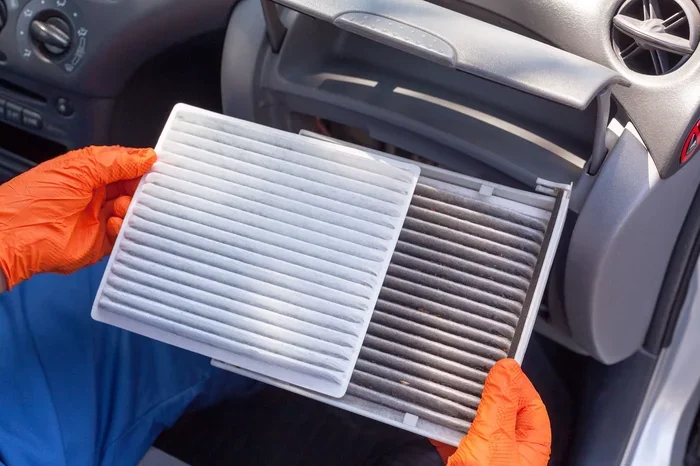
Visible debris on inspection: When you look at the old filter, it should be white or light gray. If it looks dark gray, black, or clogged with debris, it is definitely time for a replacement.
If you notice any of these signs, address them promptly. Ignoring a dirty filter can lead to cabin filter problems that affect your entire ventilation system. In some cases, a severely clogged filter can even impact your AC performance.
Can You Replace A Cabin Air Filter Yourself?
One of the best ways to save on cabin air filter cost is to replace the filter yourself. For most vehicles, this is a straightforward job that takes about 10 to 15 minutes. You do not need any special tools or mechanical skills.
The filter is usually located behind the glove box. You simply open the glove box, remove the stops or clips, and the filter compartment drops down. Pull out the old filter, slide in the new one, and you are done.
Here is a quick step-by-step overview:
- Open your glove box and remove any items inside.
- Push the glove box sides inward to release the stops.
- Locate the cabin air filter compartment underneath.
- Open the compartment cover and note the airflow direction arrow.
- Remove the old filter and dispose of it properly.
- Insert the new filter, matching the airflow direction arrow.
- Close the compartment and reinstall the glove box.
Always check your owner’s manual for specific instructions. Some vehicles have the cabin filter located under the dashboard or behind the engine compartment. If you are not comfortable doing it yourself, any local auto repair shop can handle the replacement quickly and affordably.
Replacing the filter yourself saves you the labor charge, which is often the biggest part of the cabin air filter replacement cost. You also learn more about your vehicle, which builds confidence for future maintenance tasks.
How To Choose The Right Cabin Air Filter
With so many options on the market, choosing the right cabin air filter can feel overwhelming. But a few simple guidelines make the decision much easier.
First, check your owner’s manual for the recommended filter size and type. Using the wrong size can let unfiltered air bypass the filter entirely. This defeats the purpose and can let dirt into your car’s air system.
Second, consider your driving environment. If you drive in a city with heavy pollution, a carbon-activated filter is a great choice. It helps remove exhaust fumes and odors. If you deal with seasonal allergies, a filter with a high particle capture rating works best.
Third, read reviews before you buy. Online retailers make it easy to see what other drivers think about specific brands. Look for filters with consistently high ratings and positive feedback about build quality.
Finally, do not let price be your only factor. The cheapest filter might not trap particles as effectively as a slightly more expensive option. Think of it as an investment in your health and comfort every time you drive.
Final Thoughts
So how much should a cabin air filter cost? The answer really depends on your vehicle, your filter choice, and whether you DIY or go to a shop. For most drivers, a total cost of $25 to $50 hits the sweet spot between quality and affordability.
Replacing your cabin air filter is one of the simplest and most affordable maintenance tasks you can do. It takes just a few minutes and makes a noticeable difference in air quality inside your car. A clean filter protects your health, keeps your AC system running efficiently, and can even improve fuel economy slightly by reducing strain on the HVAC blower motor.
If you are unsure about the cost or process, talk to a trusted mechanic. They can recommend the right filter for your vehicle and budget. Staying on top of this simple maintenance item saves you money and keeps your car running at its best. A small investment in a cabin air filter pays big dividends in comfort and air quality for every drive you take.
And remember, if you ever wonder whether you can drive without a cabin air filter, the short answer is yes, but you should not. The health risks and reduced air quality are not worth skipping this small but important part. Similarly, if you notice your AC acting up, it might be worth checking if a dirty cabin filter is stopping your AC before you assume something more serious is wrong.
Keeping your cabin air filter fresh is one of the easiest ways to take care of your car and yourself. Next time you are due for a replacement, use what you learned here to make a smart, cost-effective choice.
Frequently Asked Questions
How much does it cost to replace a cabin air filter at a dealership?
Replacing a cabin air filter at a dealership typically costs $60 to $100, which includes the part and labor. OEM filters from the dealership tend to be more expensive than aftermarket options, but they come with a warranty and guaranteed fit for your specific vehicle model.
Can I use any cabin air filter for my car?
No, you should always use the filter size and type recommended for your specific vehicle. Check your owner’s manual or look up your vehicle’s year, make, and model to find the correct cabin air filter. Using the wrong filter can reduce air quality and filtration effectiveness.
How often should I change my cabin air filter?
Most manufacturers recommend replacing the cabin air filter every 15,000 to 30,000 miles. However, if you drive in dusty areas, heavy traffic, or polluted environments, you may need to replace it more frequently, around every 12,000 miles or once a year.
Is it worth paying more for a premium cabin air filter?
Premium cabin air filters with activated carbon or HEPA technology can be worth the extra cost if you have allergies or drive in heavily polluted areas. These filters trap smaller particles and reduce odors better than basic filters, which can improve the air quality inside your car significantly.
What happens if I never replace my cabin air filter?
Over time, a cabin air filter becomes clogged with dust, pollen, and debris. This reduces airflow from your vents, makes your AC system work harder, and can cause musty odors. In severe cases, a neglected filter can even impact your overall air quality and contribute to respiratory issues for passengers.
Can a dirty cabin air filter affect my AC performance?
Yes, a dirty cabin air filter can significantly reduce airflow and make your AC less effective. When the filter is clogged, your system has to work harder to push air through, which can reduce cooling power and increase strain on the blower motor. This is a common cause of weak airflow from car vents.
=== CONCLUSION ===
The cabin air filter cost for your car is a small price to pay for cleaner, healthier air every time you drive. Whether you choose a budget filter for $15 or a premium option for $50, the investment pays for itself in comfort and protection. Understanding what affects the price helps you make the best choice for your vehicle and your wallet.
Remember to replace your filter on schedule, watch for warning signs of a dirty filter, and consider doing the job yourself to save on labor costs. Your car’s air filtration system works hard for you every day. Give it the care it deserves with a fresh cabin air filter at the right cabin air filter replacement cost. Happy driving!