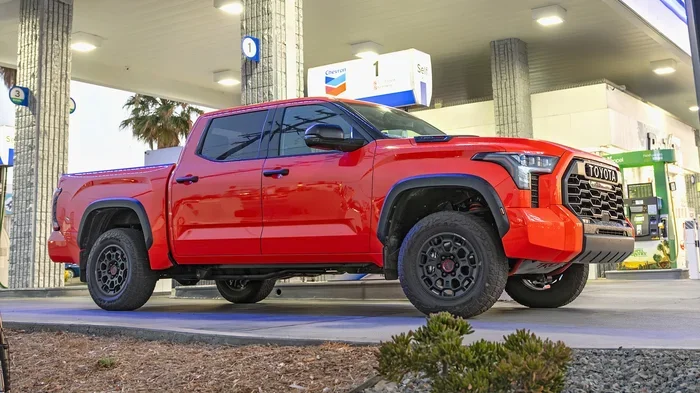
How Many MPG Does the 2025 Toyota Tundra Actually Get
The 2025 Toyota Tundra delivers an estimated 20 MPG combined with its standard i-FORCE MAX twin-turbo V6 engine. City MPG sits around 18, while highway driving pushes close to 24 MPG. This full-size pickup offers competitive fuel economy for its class, especially when compared to similar V8-powered trucks.
The 2025 Toyota Tundra has been turning heads since it hit the market. Truck enthusiasts love its rugged design, powerful engine, and impressive towing capacity. But one question keeps coming up in forums and dealership parking lots: how many MPG does this truck actually deliver?
Fuel economy matters. Whether you are commuting to work or hauling gear to a campsite, you want to know what your wallet is facing at the pump. The good news is that the 2025 Tundra brings some meaningful improvements to the table. Toyota has tuned the powertrain and added hybrid assistance to help squeeze every mile out of each gallon.
In this guide, we will walk through everything you need to know about the 2025 Toyota Tundra MPG. We will cover official EPA ratings, real-world performance, factors that affect fuel economy, and practical tips to get the most out of your truck. Let us dive in.
Key Takeaways
- 2025 Toyota Tundra MPG: The standard i-FORCE MAX engine delivers around 20 MPG combined, with 18 MPG city and 24 MPG highway.
- Hybrid Boost: The i-FORCE MAX hybrid system helps improve fuel economy compared to the previous generation Tundra.
- Fuel Tank Range: With a full tank of gas, the Tundra can cover roughly 400 to 500 miles depending on driving conditions.
- Real-World MPG: Actual fuel economy varies based on towing, driving habits, terrain, and payload weight.
- Competitive Standing: The Tundra holds its own among full-size trucks like the Ford F-150 and Ram 1500 in terms of fuel efficiency.
- Tips to Improve MPG: Smooth driving, proper tire pressure, and avoiding excessive idling can boost your Tundra’s fuel economy.
📑 Table of Contents
- 2025 Toyota Tundra Fuel Economy Overview
- City MPG: What to Expect in Stop-and-Go Driving
- Highway MPG: Cruising Efficiency
- Combined MPG: The Big Picture
- What Affects the 2025 Tundra MPG?
- Real-World MPG Reports from Tundra Owners
- How Does the 2025 Tundra MPG Compare to Competitors?
- How to Maximize Your 2025 Tundra’s MPG
- Is the 2025 Toyota Tundra MPG Good Enough for You?
- Final Thoughts on 2025 Toyota Tundra MPG
2025 Toyota Tundra Fuel Economy Overview
Toyota has always aimed to balance power and efficiency in its trucks. The 2025 Tundra continues that tradition with its updated powertrain lineup. Here is a quick look at what the numbers say.
EPA Ratings for the 2025 Tundra
The base engine on the 2025 Toyota Tundra is the i-FORCE MAX 3.4-liter twin-turbo V6. This hybrid-assisted powertrain produces around 389 horsepower and 479 pound-feet of torque. Toyota paired it with a 10-speed automatic transmission.
Here are the official EPA estimates:
- City MPG: 18
- Highway MPG: 24
- Combined MPG: 20
These numbers are for the rear-wheel-drive configuration. Four-wheel-drive models see a slight dip, typically landing around 17 MPG combined. The difference comes from the added weight and drag of the 4WD drivetrain.
Compared to the previous generation Tundra, these figures represent a solid step forward. The older model with its 5.7-liter V8 struggled to break 20 MPG combined. The new twin-turbo hybrid setup changes the game entirely. If you want to compare raw engine output, the old 5.7-liter V8 made significantly more horsepower but drank fuel at a much higher rate.
City MPG: What to Expect in Stop-and-Go Driving
City driving is tough on fuel economy. Stop-and-go traffic, idling at intersections, and lower speeds all work against your MPG. For the 2025 Toyota Tundra, the city rating sits at 18 MPG.
But here is the thing: actual city MPG can vary quite a bit. A driver who accelerates gently and plans stops ahead will see better numbers than someone who rides the brake pedal. Traffic density also plays a huge role. Driving in a small town with light traffic will always yield better fuel economy than crawling through a downtown gridlock.
Many Tundra owners report getting between 15 and 19 MPG in city conditions. The lower end usually comes from heavy urban driving or short trips where the engine does not fully warm up. The higher end comes from experienced drivers who have mastered the art of smooth acceleration.
Tips for Better City MPG
- Avoid hard acceleration from stoplights.
- Maintain a steady speed when traffic allows.
- Keep your tires properly inflated.
- Remove unnecessary weight from the truck bed.
- Use cruise control on flat roads when possible.
Highway MPG: Cruising Efficiency
Highway driving is where the 2025 Tundra shines. The EPA rates it at 24 MPG on the highway. This is where the twin-turbo V6 really benefits from steady-state cruising. Once the truck reaches cruising speed, the engine can settle into an efficient operating range.
Real-world highway MPG for the Tundra typically falls between 22 and 26 MPG. Drivers who maintain speeds around 60 to 65 mph tend to see the best results. Pushing the speedometer above 75 mph starts to eat into fuel economy noticeably. Aerodynamic drag increases exponentially at higher speeds, and no truck escapes this physics rule.
Another factor that affects highway MPG is wind conditions. Driving into a strong headwind can drop your fuel economy by 2 to 3 MPG. Tailwinds, on the other hand, can give you a small boost. It is not much, but over long road trips, those small gains add up.
Combined MPG: The Big Picture
The combined MPG of 20 for the 2025 Toyota Tundra puts it in a respectable position among full-size trucks. Let us put this into perspective.
When you compare the Tundra to competitors like the Ford F-150, Ram 1500, and Chevrolet Silverado, the fuel economy numbers are competitive. Many of these trucks offer similar or slightly better MPG, but they also come with smaller standard engines or more advanced aerodynamic designs. The Tundra holds its own, especially considering its V6 power output and towing capability.
For a truck that can tow over 12,000 pounds and carry a payload of around 1,700 pounds, 20 MPG combined is impressive. It shows that Toyota has found a sweet spot between performance and efficiency. The hybrid system plays a big role here, providing electric assist during acceleration and allowing the engine to shut off at idle.
If you are curious about how far your Tundra can go on a single tank, knowing your MPG helps. You can estimate your range by multiplying your MPG by the fuel tank capacity. For reference, how far a car can go on empty depends heavily on the tank size and your driving style.
What Affects the 2025 Tundra MPG?
No two drivers will see the exact same fuel economy numbers. Several factors influence how many miles per gallon your Tundra delivers. Understanding these factors helps you set realistic expectations and find ways to improve your MPG.
Towing and Payload
Towing is the biggest MPG killer for any truck. When you hook up a trailer, the engine works harder. The Tundra’s 20 MPG combined rating assumes no towing or payload. If you are pulling a boat, a camper, or a trailer full of equipment, expect your MPG to drop by 3 to 5 points. Some drivers report getting as low as 12 to 14 MPG when towing heavy loads.
The same applies to payload. A fully loaded truck bed with heavy gear adds weight. More weight means more fuel consumption. If you regularly haul heavy loads, plan for lower fuel economy and budget accordingly.
Driving Style
How you drive matters more than you might think. Aggressive driving — rapid acceleration, hard braking, and speeding — can reduce your MPG by 15 to 30 percent. Smooth, predictable driving is the key to maximizing fuel economy.
Here is a simple rule of thumb: imagine you have a cup of coffee on your dashboard. Drive in a way that keeps it from spilling. That gentle, smooth approach will save fuel and keep you safer on the road.
Terrain and Geography
Flat highways reward you with better MPG. Mountainous terrain with steep grades will drain your fuel tank faster. If you live in a hilly area or frequently drive through mountain passes, your fuel economy will naturally be lower.
Weather also plays a role. Cold temperatures reduce engine efficiency and increase warm-up time. Winter fuel blends contain less energy than summer blends. All of these factors contribute to seasonal variations in your Tundra’s MPG.
Vehicle Maintenance
A well-maintained truck runs more efficiently. Dirty air filters, old spark plugs, and low tire pressure all hurt fuel economy. Regular maintenance keeps your Tundra running at its best.
Some maintenance tasks that directly impact MPG include:
- Keeping tires properly inflated to the recommended PSI.
- Replacing air filters on schedule.
- Using the recommended grade of motor oil.
- Keeping the fuel system clean with quality fuel.
- Addressing check-engine lights promptly.
Toyota trucks are known for their durability. If you take care of your Tundra, it can last well over 200,000 miles with proper maintenance. A well-maintained truck also delivers better fuel economy throughout its life.
Real-World MPG Reports from Tundra Owners
EPA ratings give you a baseline, but real-world MPG tells the full story. Thousands of Tundra owners have shared their fuel economy data on forums and apps like Fuelly and Garmin Connect.
Here is what real-world data typically shows for the 2025 Toyota Tundra:
- Daily commuting (mixed driving): 17 to 21 MPG
- Long highway trips: 21 to 25 MPG
- City-only driving: 14 to 18 MPG
- Towing trips: 10 to 15 MPG
- Light-duty pickup use: 18 to 22 MPG
These numbers vary widely based on individual driving conditions and habits. The key takeaway is that most owners find the Tundra’s fuel economy reasonable for a full-size truck. It is not a compact car, so do not expect 35 MPG. But for a truck with this much capability, 20 MPG combined is a solid result.
How Does the 2025 Tundra MPG Compare to Competitors?
To truly understand where the Tundra stands, it helps to compare it directly with other full-size trucks. Here is a quick comparison of 2025 models and their combined MPG ratings.
| Truck | Engine | Combined MPG |
|---|---|---|
| 2025 Toyota Tundra | 3.4L Twin-Turbo V6 Hybrid | 20 |
| 2025 Ford F-150 | 3.3L V6 (Base) | 20 |
| 2025 Ram 1500 | 3.6L V6 | 21 |
| 2025 Chevrolet Silverado | 2.7L Turbo V4 | 20 |
| 2025 GMC Sierra | 2.7L Turbo V4 | 20 |
As you can see, the 2025 Toyota Tundra holds its own. It matches or comes very close to the competition in combined MPG. What sets the Tundra apart is its standard hybrid powertrain. Many competitors offer hybrid options, but Toyota makes it standard on the Tundra.
The Tundra also benefits from Toyota’s reputation for reliability. A truck that lasts longer means fewer replacements and less waste over time. If you are interested in how long a Toyota can go, many Toyota models regularly exceed 300,000 miles with proper care.
How to Maximize Your 2025 Tundra’s MPG
Want to get the best possible fuel economy from your 2025 Toyota Tundra? Here are some proven strategies that real owners swear by.
1. Drive Smoothly and Predictably
Gradual acceleration and smooth braking are the foundation of good fuel economy. Aggressive driving wastes fuel and wears out your brakes faster. Give yourself extra following distance so you can coast to stops instead of braking hard.
2. Keep Your Speed Steady
Use cruise control on highways whenever conditions allow. Maintaining a constant speed is more fuel-efficient than constantly adjusting your speed. Aim for 60 to 65 mph on highways for the best balance of speed and efficiency.
3. Reduce Excess Weight
Every extra pound costs fuel. Remove items from your truck bed and cabin that you do not need. Roof racks and cargo carriers create aerodynamic drag that hurts MPG at highway speeds. Take them off when you are not using them.
4. Keep Up with Maintenance
Regular oil changes, tire rotations, and air filter replacements all contribute to better fuel economy. A well-maintained engine runs cleaner and more efficiently. Do not ignore warning lights or unusual sounds.
5. Plan Your Trips
Combine errands into single trips to reduce cold starts. A warmed-up engine runs more efficiently than a cold one. Also, try to avoid peak traffic hours when possible to reduce stop-and-go driving.
6. Use the Right Fuel
The 2025 Tundra recommends premium unleaded fuel for optimal performance. Using the recommended fuel grade ensures the engine runs at its best. While you might save a few cents per gallon with lower-grade fuel, the potential loss in efficiency can cost you more in the long run.
Is the 2025 Toyota Tundra MPG Good Enough for You?
Ultimately, the answer depends on your needs and driving habits. If you use your truck primarily for commuting and light-duty tasks, the 20 MPG combined is quite reasonable for a full-size pickup. You will spend less at the pump than owners of older V8 trucks.
If you tow frequently or haul heavy loads, the MPG will dip. But that is true for every truck on the market. The Tundra’s hybrid system helps soften the blow, delivering better fuel economy under load than many competitors.
For buyers who prioritize fuel efficiency above all else, a smaller truck or a hybrid SUV might be a better fit. But if you need the capability and utility of a full-size truck, the 2025 Tundra offers an excellent balance of power, capability, and efficiency.
Toyota has made significant strides with this generation of the Tundra. The 2025 Toyota Tundra MPG numbers reflect a truck that is ready for the modern era — efficient enough for daily driving, powerful enough for tough jobs.
Final Thoughts on 2025 Toyota Tundra MPG
The 2025 Toyota Tundra delivers 20 MPG combined with its standard i-FORCE MAX hybrid V6 engine. City MPG comes in at 18, highway MPG at 24, and the numbers hold up well in real-world testing. For a full-size truck with over 380 horsepower and 12,000 pounds of towing capacity, this fuel economy is genuinely competitive.
Your actual MPG will depend on how you drive, what you haul, and where you drive. But with the tips and insights in this guide, you are well equipped to get the most out of every gallon. The 2025 Tundra proves that you do not have to sacrifice efficiency for capability. Toyota has delivered a truck that works hard and sips fuel smart.
Whether you are buying your first Tundra or upgrading from an older model, the fuel economy numbers should give you confidence. This is a truck built for the long haul — and it will not cost you a fortune at the fuel pump along the way.
Frequently Asked Questions
What is the official EPA MPG rating for the 2025 Toyota Tundra?
The 2025 Toyota Tundra gets an EPA-rated 20 MPG combined, with 18 MPG in the city and 24 MPG on the highway. These numbers are for the rear-wheel-drive model with the standard i-FORCE MAX twin-turbo V6 engine.
Does the 2025 Toyota Tundra have a hybrid engine?
Yes, the standard engine on the 2025 Tundra is the i-FORCE MAX, which is a 3.4-liter twin-turbo V6 with hybrid assist. The hybrid system provides electric torque assist and allows the engine to shut off at idle, improving overall fuel economy.
How far can a 2025 Toyota Tundra go on a full tank?
With a fuel tank capacity of around 22 gallons and a combined MPG of 20, the Tundra can travel approximately 440 miles on a full tank. Actual range varies based on driving conditions, towing, and payload.
Why is my 2025 Tundra getting lower MPG than the EPA rating?
Several factors can reduce your MPG below the EPA estimate. Towing, carrying heavy payloads, aggressive driving, cold weather, and stop-and-go traffic all contribute. Most owners find their real-world MPG falls within a reasonable range of the official ratings.
Does 4WD affect the 2025 Tundra’s fuel economy?
Yes, four-wheel-drive models typically get 1 to 2 MPG less than their rear-wheel-drive counterparts. The added weight and mechanical drag of the 4WD system reduce overall fuel efficiency. If maximum MPG is your priority, the rear-wheel-drive configuration is the better choice.
What is the best way to improve my 2025 Tundra’s MPG?
The most effective ways to boost your Tundra’s fuel economy include driving smoothly, maintaining steady highway speeds, keeping tires properly inflated, reducing excess weight, and staying on top of regular maintenance. Small changes in driving habits can make a noticeable difference over time.