How Many Liters Is a Toyota Matrix Fuel Tank Capacity
The Toyota Matrix fuel tank capacity holds approximately 60 liters (15.9 gallons) across most model years. This compact hatchback offers solid range and efficiency for daily driving. Knowing your tank size helps plan fuel stops and estimate miles per tank accurately.
The Toyota Matrix has been a favorite among compact car buyers since it first hit the market. One question owners and shoppers often ask is about the Toyota Matrix fuel tank capacity. Whether you are buying a used Matrix or just want to understand your current ride better, knowing the fuel tank size matters. It affects everything from how far you can drive between fill-ups to how much fuel you carry on road trips.
In this guide, we will walk through everything you need to know about the Toyota Matrix gas tank. We will cover the exact capacity in liters, how it compares across model years, real-world range estimates, and practical tips to get the most out of every drop of fuel. If you have ever wondered how many liters fit in that tank or how far a full tank can take you, you are in the right place.
The Toyota Matrix is a sporty compact hatchback that Toyota built from 2003 to 2013. It combined the practicality of a Corolla with a more youthful, elevated design. Under the hood, you found efficient four-cylinder engines paired with either a manual or automatic transmission. But one detail that often gets overlooked is the fuel tank itself.
The fuel tank capacity of the Toyota Matrix is a key spec that influences your daily driving and long-distance planning. Most people assume all years are the same, and they are mostly right. But there are small nuances worth exploring. Let us dive into the numbers and what they mean for you as a driver.
Key Takeaways
- Standard Capacity: The Toyota Matrix fuel tank holds about 60 liters or 15.9 gallons in most years.
- Year Variations: Early models (2003–2008) and later models (2009–2013) share a similar tank size with minor differences.
- Range Estimates: A full tank can take you roughly 350 to 450 miles depending on driving habits and fuel economy.
- Fuel Economy: The Matrix delivers an average of 25–32 MPG combined, making it a practical daily driver.
- Maintenance Matters: Keeping your fuel system clean helps maintain consistent tank performance and engine health.
- Comparison Value: The Matrix fuel capacity competes well with other compact hatchbacks in its class.
📑 Table of Contents
- Toyota Matrix Fuel Tank Capacity in Liters
- How Far Can a Toyota Matrix Go on a Full Tank?
- Toyota Matrix Fuel Tank Specifications and Design
- Tips to Maximize Your Toyota Matrix Fuel Tank
- Common Toyota Matrix Fuel Tank Issues
- How the Toyota Matrix Compares to Similar Vehicles
- Why Knowing Your Fuel Tank Size Matters
- Final Thoughts on the Toyota Matrix Fuel Tank
Toyota Matrix Fuel Tank Capacity in Liters
The standard Toyota Matrix fuel tank capacity is approximately 60 liters (15.9 gallons). This figure applies to the vast majority of model years, from the 2003 debut through the 2013 final production year. Toyota kept the tank size consistent across generations, which made it easy for owners to plan fuel stops and estimate costs.
To put this in perspective, 60 liters is a typical size for a compact hatchback. It is not the largest tank on the road, but it strikes a good balance between weight, space, and range. A smaller tank would mean more frequent stops. A larger tank would add weight and reduce fuel efficiency. Toyota found a sweet spot with this capacity.
Liters vs. Gallons: What You Need to Know
If you are more familiar with gallons than liters, here is a quick conversion. The Toyota Matrix tank holds about 15.9 gallons of gasoline. This is the US gallon measurement. In imperial gallons used in the UK, the number would be slightly different, but most Matrix owners in North America use US gallons.
Knowing both measurements is helpful. Some fuel price comparisons use liters, especially when looking at international specs or when filling up in Canada where prices are often listed per liter. Having both numbers in your head makes life simpler at the pump.
Does the Tank Size Change by Model Year?
Across the Matrix production run from 2003 to 2013, Toyota did not make significant changes to the fuel tank size. Both the first generation (2003–2008) and the second generation (2009–2013) share the same 60-liter tank. This consistency is great news for owners who switch between model years or buy used vehicles.
You might notice slight differences in fuel economy between years, but those come from engine updates and aerodynamic tweaks, not from a larger or smaller tank. The Toyota Matrix fuel tank remained a reliable constant throughout the vehicle’s lifespan.
How Far Can a Toyota Matrix Go on a Full Tank?
Now that you know the tank holds about 60 liters, the next logical question is how far you can drive. The answer depends on your driving style, road conditions, and the specific engine in your Matrix. But we can give you a solid estimate.
Estimated Range Based on Fuel Economy
The Toyota Matrix delivers an average combined fuel economy of about 25 to 32 MPG depending on the year and engine option. Let us do the math for a 60-liter tank.
- At 25 MPG, a full tank gives you roughly 375 miles of range.
- At 30 MPG, that number rises to about 450 miles.
- At 32 MPG, you could push past 470 miles on a single fill-up.
These numbers are estimates based on combined driving conditions. Your actual miles per tank will vary. City driving with lots of stops will reduce your range. Highway cruising at steady speeds will increase it.
For comparison, if you are curious about how other vehicles handle running on empty, check out how far a car can go on empty for general guidelines across different models.
Real-World Driving Scenarios
Let us look at a few real-world situations to make this more practical. If you commute 30 miles each way to work, five days a week, you use about 150 miles weekly. With a 60-liter tank and 28 MPG average, you would need to fill up roughly every two weeks.
If you take a weekend road trip covering 400 miles, a full tank should get you there with a little margin to spare. This makes the Matrix a dependable companion for both short errands and longer journeys. The fuel tank size gives you flexibility without unnecessary weight.
Toyota Matrix Fuel Tank Specifications and Design
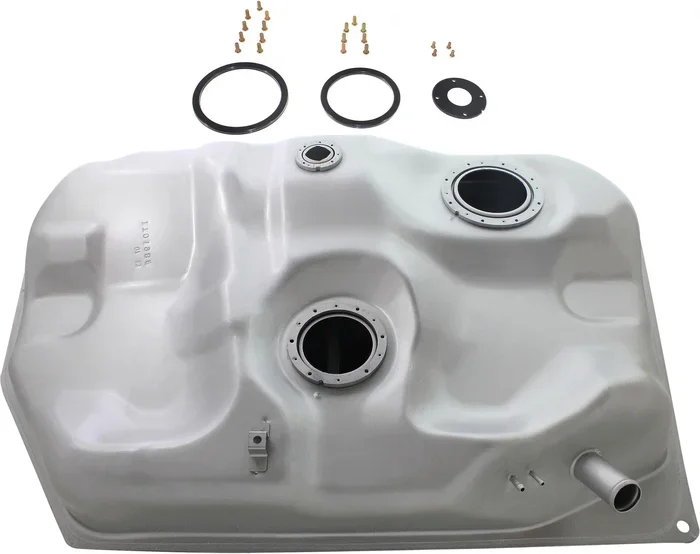
The Toyota Matrix fuel tank is designed with both efficiency and safety in mind. It is made from durable materials that resist corrosion and impact. The tank is positioned under the rear passenger area, which helps distribute weight evenly and protects the fuel system in minor collisions.
Tank Construction and Materials
Toyota uses high-grade polyethylene plastic for the fuel tank in the Matrix. This material is lightweight yet strong. It resists cracks and leaks better than older metal tank designs. The 60-liter capacity is achieved through a compact, well-shaped tank that fits snugly in the rear section of the car.
The tank also features an internal baffle system. This reduces fuel sloshing during sharp turns and sudden stops. It keeps the fuel supply steady to the engine, which contributes to smoother performance and better fuel economy.
Fuel Filler and Cap Design
The Matrix uses a standard screw-on fuel cap with a quick-release mechanism. This makes refueling fast and easy. The fuel filler door is located on the rear passenger side of the vehicle. The cap seals tightly to prevent fuel vapor leaks, which is important for both safety and emissions control.
The cap also plays a role in your fuel economy. A loose or damaged cap can cause fuel evaporation, wasting gasoline and money. Always make sure your cap clicks tightly after every fill-up. This small habit can save you significant fuel over time.
Tips to Maximize Your Toyota Matrix Fuel Tank
Getting the most out of your Toyota Matrix fuel tank capacity is about more than just the numbers. Your driving habits and maintenance routine play a big role. Here are practical tips to help you squeeze every kilometer out of each liter.
Drive Smoothly and Consistently
Aggressive acceleration and hard braking burn fuel faster. Smooth, steady driving is the single best way to improve your MPG. Try to maintain a consistent speed on highways and avoid rapid bursts of speed from stoplights. Your fuel tank will last longer, and your engine will thank you.
Keep Tires Properly Inflated
Underinflated tires create more rolling resistance, which means your engine works harder. Check your tire pressure at least once a month. The recommended pressure for the Matrix is usually listed on the driver’s side door jamb. Properly inflated tires can improve fuel economy by up to 3%.
Reduce Excess Weight
Every extra pound in your car requires more fuel to move. Remove unnecessary items from your trunk and back seat. While the Toyota Matrix is not a heavy vehicle, carrying around heavy gear adds up over time. Travel light whenever possible.
Use the Right Fuel Grade
The Matrix runs well on regular unleaded gasoline. You do not need premium fuel unless your specific model recommends it. Using a higher octane than required will not improve performance or fuel economy. Save your money by sticking with the recommended grade.
Keep Up with Maintenance
Regular oil changes, air filter replacements, and spark plug maintenance all contribute to better fuel efficiency. A well-maintained engine burns fuel more cleanly and efficiently. This means your fuel tank goes further between fill-ups. Check your owner’s manual for the recommended maintenance schedule.
Common Toyota Matrix Fuel Tank Issues
While the Toyota Matrix is a reliable car, fuel tank issues can occasionally arise. Being aware of potential problems helps you catch them early and avoid costly repairs.
Fuel Pump Wear Over Time
The fuel pump sits inside the tank and pushes gasoline to the engine. Over time, especially in higher-mileage vehicles, the pump can weaken. Signs of a failing fuel pump include difficulty starting, stalling under load, or a drop in power when accelerating. If you notice these symptoms, get the pump checked promptly.
Fuel Level Sensor Accuracy
Some Matrix owners report that the fuel gauge becomes less accurate as the vehicle ages. The sensor inside the tank can wear out, causing the gauge to read incorrectly. This can leave you guessing about how much fuel remains. If your gauge seems off, have the sensor inspected. Running out of fuel unexpectedly is never a good experience.
Rust and Corrosion
Older Toyota Matrix models from the early 2000s can develop rust around the fuel tank area, especially in regions that use road salt during winter. Inspecting the tank and surrounding underbody components regularly can help you spot corrosion early. Applying protective coatings or addressing rust spots quickly prevents more serious damage.
When dealing with fuel system concerns, understanding general vehicle maintenance is valuable. For instance, knowing how many gallons are left when the low fuel light comes on can help you plan your next stop safely.
How the Toyota Matrix Compares to Similar Vehicles
The Toyota Matrix competes in the compact hatchback segment. Let us see how its fuel tank capacity stacks up against similar vehicles.
| Vehicle | Fuel Tank Capacity (Liters) | Fuel Tank Capacity (Gallons) | Est. Range (Miles) |
|---|---|---|---|
| Toyota Matrix | 60 | 15.9 | 375–470 |
| Honda Civic Hatchback | 50 | 13.2 | 310–400 |
| Mazda 3 Hatchback | 55 | 14.5 | 340–430 |
| Hyundai Elantra GT | 56 | 14.8 | 350–440 |
As you can see, the Toyota Matrix holds a competitive amount of fuel compared to its rivals. The 60-liter tank gives it a slight edge in range over several similarly sized hatchbacks. This is one reason the Matrix remains a popular choice among buyers who value practicality and efficiency.
Understanding fuel tank sizes across different vehicles also helps when comparing overall costs. For more general information about fuel tanks, you might find how many gallons is a full tank of gas helpful for broader context.
Why Knowing Your Fuel Tank Size Matters
It is easy to overlook fuel tank specifications when shopping for a car. But this number has real-world implications for your daily life and budget.
First, it helps you budget for fuel costs. If you know your tank holds 60 liters and your car gets 28 MPG, you can estimate how much you will spend on gas each month. This makes financial planning easier and helps you avoid surprises at the pump.
Second, it helps you plan road trips. Nobody wants to run out of fuel on a highway in an unfamiliar area. Knowing your range gives you confidence to choose rest stops and fueling points strategically. It also helps you decide whether to carry a spare fuel container for very long drives through remote areas.
Third, it affects resale value. Buyers often look at practical details like fuel capacity when comparing used vehicles. A car with a clearly documented and reliable fuel system is more attractive to potential buyers.
Final Thoughts on the Toyota Matrix Fuel Tank
The Toyota Matrix fuel tank capacity of approximately 60 liters is a well-designed feature that balances range, efficiency, and practicality. Whether you are a daily commuter or an occasional road tripper, this tank size serves you well. It is consistent across all model years, which makes ownership simpler and planning easier.
By following the maintenance tips and driving habits outlined in this guide, you can get the most from every liter of fuel. The Toyota Matrix may no longer be in production, but for the millions of owners still driving these vehicles, understanding your fuel tank is key to getting the best experience from your car.
Take a moment to check your own fuel gauge, verify your tank condition, and make sure you are getting the range you should be. A little attention to your fuel system goes a long way toward keeping your Matrix running strong for years to come.
For those interested in overall vehicle longevity, you might also enjoy learning about how many miles a car can last to get a broader picture of your Matrix potential lifespan.
Frequently Asked Questions
What is the Toyota Matrix fuel tank capacity in liters?
The Toyota Matrix fuel tank holds approximately 60 liters, which is equivalent to about 15.9 US gallons. This capacity remained consistent across all model years from 2003 to 2013.
How far can a Toyota Matrix go on a full tank?
With a 60-liter tank and an average fuel economy of 25 to 32 MPG, the Toyota Matrix can travel between 375 and 470 miles on a full tank. Your actual range depends on driving habits, road conditions, and vehicle maintenance.
Does the Toyota Matrix fuel tank size vary by model year?
No, the fuel tank capacity stays the same at 60 liters across all Toyota Matrix model years, from the first generation in 2003 to the last model in 2013. Any differences in range come from engine efficiency, not tank size.
Can I upgrade my Toyota Matrix fuel tank to a larger size?
While it is technically possible to install a larger aftermarket tank, it is not common or recommended. The stock 60-liter tank is well-designed for the vehicle’s weight and engine. Modifications can affect safety, emissions, and warranty.
Why does my Toyota Matrix fuel gauge read inaccurately?
An inaccurate fuel gauge is often caused by a worn fuel level sensor inside the tank. Over time, the sensor can lose its calibration. Have a qualified mechanic inspect and replace the sensor if needed to restore accurate readings.
What type of fuel does the Toyota Matrix require?
The Toyota Matrix runs on regular unleaded gasoline with an octane rating of 87 or higher. Using premium fuel is unnecessary and will not improve performance or fuel economy for this vehicle.