How Long Can I Drive with Low Tire Pressure Before Damage
Driving with low tire pressure might seem like a minor issue, but it can lead to serious tire damage and safety risks. You should not drive more than a few miles on underinflated tires, and even then, only at low speeds. This guide covers exactly how long you can safely drive, what happens to your tires, and the steps you should take right away.
Have you ever been driving and noticed your tire pressure warning light flicker on? It is one of those moments that makes you pause. You wonder, “Can I just keep going? How far is too far?” The truth is, driving with low tire pressure is something many drivers face, but not many understand the real risks involved.
Your tires are the only part of your car that touches the road. When they are not properly inflated, everything changes. The way your car handles, the way it burns fuel, and even the way your tires wear down is affected. Low tire pressure is not just a minor annoyance. It is a maintenance issue that can snowball into something much bigger if you ignore it.
In this guide, we will walk through exactly how long you can drive on low tire pressure, what damage it can cause, and what you should do the moment your tire pressure drops. Whether you noticed the TPMS sensor light on your dashboard or you just feel something is off, this article has you covered. Let us get into it.
Key Takeaways
- Short Distances Only: You can drive a short distance on low tire pressure, but anything beyond a few miles at high speeds greatly increases the risk of permanent tire damage.
- TPMS Alerts Matter: Your tire pressure monitoring system is designed to warn you early. Ignoring the tire pressure warning light can lead to costly repairs.
- Fuel Economy Drops: Underinflated tires create more rolling resistance, which means your engine works harder and you burn more fuel at the pump.
- Check Pressure Regularly: Using a tire pressure gauge at least once a month helps you catch low tire pressure before it causes serious problems.
- Know Your Numbers: Every vehicle has a recommended tire pressure listed on the driver’s side door jamb. Staying within that range keeps your tires healthy.
- Safety Comes First: Driving on severely underinflated tires raises the chance of a blowout. If you notice a tire pressure warning, pull over and address it promptly.
📑 Table of Contents
- What Happens When You Drive on Low Tire Pressure
- How Low Is Too Low? Understanding Tire Pressure Numbers
- The Real Risks of Driving with Underinflated Tires
- How to Check Your Tire Pressure Correctly
- What to Do If You Have Low Tire Pressure
- How to Prevent Low Tire Pressure in the Future
- How Long Can You Actually Drive on Low Tire Pressure?
- Conclusion
What Happens When You Drive on Low Tire Pressure
The Hidden Danger Under Your Car
When your tires are underinflated, they lose their proper shape. The sidewall flexes more than it should. The contact patch, which is the part of the tire that touches the road, becomes larger and uneven. This might not sound like a big deal at first, but over time, the effects add up fast.
Here is what happens inside your tire when the air is low:
- The sidewall flexes excessively, which generates heat.
- The rubber compounds break down faster than normal.
- The tire tread wears down on the outer edges of the tread.
- The tire loses its ability to grip the road properly, especially in wet conditions.
- The internal layers of the tire can separate, leading to tire sidewall damage.
All of these things happen gradually. That is what makes low tire pressure so sneaky. You might drive for a few days without noticing anything wrong. But underneath, your tires are taking a beating. The longer you drive on underinflated tires, the more damage accumulates.
How Low Tire Pressure Affects Your Vehicle
It is not just your tires that suffer when the air pressure is low. Your entire vehicle feels the impact. The steering might feel sluggish or vague. The car might pull to one side. Braking distances can increase because the tires cannot grip the road as well.
Your engine also works harder. Underinflated tires create more rolling resistance. That means your engine has to burn more fuel to keep you moving. Over time, this adds up at the gas pump. If you have been wondering why your fuel efficiency has dropped, low tire pressure could be the culprit.
Some drivers also notice a rough or vibrating ride. This happens because the tire is not holding its shape, so it bounces and flexes unevenly on the road surface. If you experience this, it is a clear sign that your tire inflation needs attention.
How Low Is Too Low? Understanding Tire Pressure Numbers
Finding Your Recommended Tire Pressure
Every vehicle comes with a recommended tire pressure. This number is not a suggestion. It is the pressure level that the manufacturer designed your tires to operate at for the best performance, safety, and longevity.
You can find this number in a few places:
- On the driver’s side door jamb sticker.
- Inside the glove box door.
- In your vehicle owner’s manual.
- Some vehicles also display the recommended tire pressure on the fuel door.
The number is usually listed in PSI, which stands for pounds per square inch. Most passenger cars recommend tire pressure somewhere between 30 and 35 PSI. However, every vehicle is different, so always check your specific number.
When your tire pressure drops below 25 percent of the recommended level, your TPMS sensor will typically trigger a warning light. This is your car telling you something is wrong. Do not ignore it.
Reading the Tire Pressure Gauge
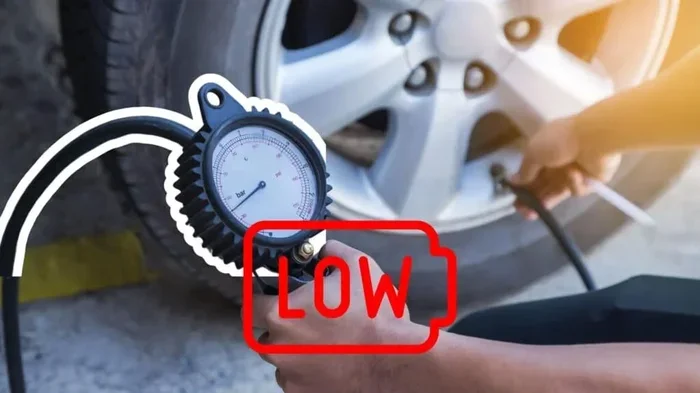
If you want to check your tire pressure yourself, you will need a tire pressure gauge. These are inexpensive tools that you can buy at any auto parts store or gas station. They give you an accurate reading of the air pressure inside each tire.
Here is how to use one:
- Remove the valve cap from the tire.
- Press the gauge firmly onto the valve stem.
- Read the number that appears on the gauge.
- Compare it to the recommended PSI for your vehicle.
- Replace the valve cap when you are done.
Check your tire pressure when the tires are cold, meaning the car has been sitting for at least three hours or has not been driven more than a mile. Hot tires can give falsely high readings, which can lead you to let air out when you do not need to.
The Real Risks of Driving with Underinflated Tires
Tire Blowout and Sudden Failure
This is the biggest danger. When a tire is significantly underinflated, the sidewall flexes so much that it can overheat. The heat weakens the rubber and the internal structure of the tire. In extreme cases, this can lead to a tire blowout.
A blowout at highway speeds is extremely dangerous. You can lose control of the vehicle very quickly. Even at lower speeds, a blowout can damage your wheel rim, your suspension, and other expensive parts of your car.
The risk increases the longer you drive on low tire pressure. A short trip to the grocery store is one thing. But if you are on a long road trip and your tire pressure has been low for hours, the heat buildup becomes much more serious.
Uneven Tire Wear and Reduced Lifespan
One of the most common effects of driving on low tire pressure is uneven tire wear. The outer edges of the tread wear down much faster than the center. This means your tires wear out prematurely, and you end up needing a tire replacement sooner than you should.
The cost of replacing a set of tires can be significant. A single tire might cost anywhere from $100 to $300 or more, depending on your vehicle. Multiply that by four, and you are looking at a serious expense. Regular tire pressure checks are one of the easiest and cheapest ways to extend the life of your tires and avoid this cost.
Impact on Fuel Economy and Safety
Studies have shown that underinflated tires can reduce fuel efficiency by up to three percent. That might not sound like a lot, but over the course of a year, it adds up. You end up spending more money on gas for no good reason.
Beyond fuel, there is the safety factor. Tires with proper air pressure give you better traction, shorter braking distances, and more predictable handling. When your tire pressure is low, all of these safety benefits decrease. Wet roads, sharp turns, and emergency stops all become more dangerous.
For overall tire safety, keeping your air pressure at the recommended level is one of the simplest things you can do. It costs nothing but a few minutes of your time.
How to Check Your Tire Pressure Correctly
When and Where to Check
The best time to check your tire pressure is in the morning before you drive. The tires are cold, which gives you the most accurate reading. If you have already been driving, wait at least three hours before checking.
You should check your tire pressure at least once a month. Seasonal changes also affect tire pressure. Cold weather can cause the air inside your tires to contract, lowering the pressure. Hot weather can cause it to expand. This is why some drivers notice their tire pressure warning light comes on more in winter.
If you have a newer Toyota, you might be able to check your tire pressure right from the dashboard. Some Toyota models let you see tire pressure on the Toyota app through Toyota Connect. This is a convenient way to keep an eye on your tires without even stepping outside.
Using the TPMS System
Most vehicles built after 2007 come equipped with a tire pressure monitoring system, commonly known as TPMS. This system uses sensors inside each tire to monitor the air pressure and alert you when it drops below a safe level.
When the TPMS light comes on, it usually looks like a horseshoe shape with an exclamation point in the center. If you see this light, do not panic. Pull over safely and check your tire pressure with a gauge. If you are low, add air to the recommended PSI.
If the light stays on after you have added air, you may need to reset your TPMS sensor. Sometimes the system needs a manual reset after you have corrected the pressure. Your owner’s manual will have instructions on how to do this for your specific vehicle.
What to Do If You Have Low Tire Pressure
Immediate Steps to Take
If you discover that your tire pressure is low, here is what you should do right away:
- Do not drive fast or long distances. Keep your speed low and limit your driving to the nearest gas station or service center.
- Check all four tires. Low pressure in one tire might indicate a leak, but low pressure in all four could be a temperature-related issue.
- Add air to the recommended PSI. You can use an air pump at most gas stations. Many are free or cost just a dollar or two.
- Look for visible damage. Check the tire for nails, screws, cuts, or bulges. If you see any of these, you may need a professional repair.
- Monitor the pressure over the next few days. If the pressure drops again quickly, you likely have a slow leak that needs professional attention.
Remember, if you have a tire pressure warning light on and you are not sure how low your pressure is, it is better to be safe than sorry. Driving more than a few miles on a severely underinflated tire can cause irreversible damage.
When to See a Professional
There are times when checking and adding air is not enough. If you notice any of the following signs, it is time to visit a tire professional:
- The tire pressure light keeps coming back on even after you add air.
- You can see a puncture, bulge, or crack in the tire sidewall.
- The tire feels soft or spongy even after being inflated.
- You hear a hissing sound coming from the tire.
- The tire has been low for an extended period, and you are unsure of the damage.
A professional can inspect the tire from the inside and outside, patch any leaks, and tell you whether the tire is still safe to use. In some cases, the tire may need to be replaced entirely. The tire replacement cost is much lower than the cost of an accident caused by a blowout.
How to Prevent Low Tire Pressure in the Future
Regular Maintenance Habits
The best way to deal with low tire pressure is to prevent it from happening in the first place. Here are some simple habits that can help:
- Check your tire pressure at least once a month.
- Check the pressure before long road trips.
- Keep a portable tire pressure gauge in your trunk.
- Know the recommended PSI for every tire on your vehicle.
- Replace your valve stems every few years, as they can dry out and leak.
- Get your tires rotated regularly to promote even wear.
These habits take very little time but can save you from unexpected tire problems. They also help you stay safe on the road and avoid unnecessary expenses.
Seasonal Tire Pressure Changes
Temperature changes have a direct effect on your tire pressure. For every 10-degree drop in temperature, your tire pressure can decrease by about one PSI. This means that in the fall and winter, your tires may naturally lose pressure even if there is no leak.
During the summer, the opposite can happen. Hot pavement and hot air can increase the pressure slightly. This is why it is important to check your tire pressure PSI regularly and adjust as needed throughout the year.
If you ever notice that your low tire pressure light comes on during a cold snap, check the pressure before you assume something is wrong. A simple top-off of air may be all you need.
Other Car Maintenance Issues That Can Mimic Tire Problems
Sometimes, what feels like a tire issue might actually be related to something else. For example, if your car is showing a maintenance warning, you might wonder if it is safe to keep driving. In many cases, you can still drive your car for a short distance, but you should address the warning soon. You can read more about this in our article on Can I Still Drive My Car If It Says Maintenance Required Soon.
Similarly, low oil levels can cause engine overheating, which might be confused with tire-related issues if you are experiencing a rough ride or reduced performance. You can learn more about this in our guide on Can Low Oil Cause Overheating. Staying on top of all your vehicle’s maintenance needs helps you avoid compounding problems.
How Long Can You Actually Drive on Low Tire Pressure?
The honest answer depends on how low the pressure is and how fast you are driving. If your tire pressure is only slightly below the recommended level, you can likely drive a few miles without any immediate damage. This might be enough to get you to the nearest gas station or service center.
However, if your tire pressure is more than 25 percent below the recommended level, you should limit your driving as much as possible. Even a short drive at highway speeds can cause significant heat buildup and permanent tire damage. In this case, call for roadside assistance or drive very slowly to the nearest service center.
The general rule of thumb is this: the lower the pressure, the shorter the distance you should drive. Never push your luck with low tire pressure. The risks are simply not worth it.
Some drivers also ask whether they can drive with a completely flat tire. The answer is no. A completely flat tire should not be driven on at all. It will destroy the tire and potentially damage the wheel rim. Call for a tow or a tire change instead.
Conclusion
Low tire pressure is a car maintenance issue that should never be ignored. Whether your tire pressure warning light just came on or you have been driving on slightly low tires for a while, the time to act is now. The risks of continued driving include uneven tire wear, reduced fuel economy, tire sidewall damage, and even a dangerous blowout.
The good news is that checking and maintaining your tire pressure is simple. It takes just a few minutes and a basic tire pressure gauge. Make it a monthly habit, and your tires will last longer, your car will drive better, and you will stay safer on the road.
Remember, your tires are your connection to the road. Take care of them, and they will take care of you. Do not let low tire pressure turn into an expensive repair or a dangerous situation. Check your pressure today, and drive with confidence tomorrow.
Frequently Asked Questions
Can I drive long distances with low tire pressure?
No, you should avoid driving long distances on low tire pressure. Extended driving on underinflated tires causes excessive heat buildup, which can lead to tire blowouts and permanent tire damage. If you need to travel a long distance, get your tires inflated to the recommended PSI first.
How far can I drive if my TPMS light comes on?
You should limit your driving to a short distance, ideally just enough to reach the nearest gas station or service center. Driving more than a few miles with the TPMS light on can cause serious tire wear and potentially dangerous situations, especially at higher speeds.
What PSI is considered low tire pressure?
Any pressure more than 25 percent below the recommended PSI is considered low. For most passenger cars with a recommended pressure of 32 PSI, anything below 24 PSI would trigger a warning and should be addressed immediately. Check your vehicle’s door jamb sticker for the exact number.
Can low tire pressure cause a check engine light?
In most vehicles, low tire pressure triggers the TPMS light, not the check engine light. However, severe tire issues that affect vehicle performance could potentially trigger other warning lights. If you are unsure, it is best to check both your tire pressure and your engine diagnostics.
How often should I check my tire pressure?
You should check your tire pressure at least once a month and before any long road trips. Temperature changes can affect air pressure inside your tires, so more frequent checks during seasonal transitions are a good idea. A simple tire pressure gauge makes this quick and easy.
Will adding air to my tires fix a slow leak?
Adding air will temporarily restore the pressure, but it will not fix the underlying cause of a slow leak. You should have a professional inspect the tire for punctures, damaged valve stems, or other issues. Continuing to add air without addressing the leak will only lead to repeated problems and potential tire damage.