How Do You Start a Dead Forklift And Get It Running
Knowing how to start a dead forklift can save you time and money on the job site. Whether your forklift is electric or diesel, a dead machine can halt your entire operation. This guide walks you through safe, proven methods to get your forklift running again with clear, simple steps. You will learn the common causes, safety checks, and expert tips that keep your forklift in top shape.
There is nothing worse than walking up to your forklift on a busy morning and finding it completely dead. You turn the key, and nothing happens. No hum. No click. Just silence. If you have ever faced this frustrating situation, you are not alone. How do you start a dead forklift and get it back to work? This guide will show you exactly how. We will cover every scenario, from electric forklifts to diesel models. You will learn simple steps, safety rules, and pro tips that get results fast. Let us get your forklift running again.
A dead forklift can stop your whole warehouse or job site in its tracks. Productivity drops. Deadlines slip. And stress levels go through the roof. But here is the good news. Most forklift starting problems have simple solutions. You do not need to be a mechanic to fix them. With the right knowledge and a little patience, you can bring your machine back to life. This article gives you everything you need. We will break down each method in plain language. No jargon. No confusion. Just clear steps that work.
Key Takeaways
- Safety always comes first: Never skip protective gear or pre-start checks before attempting to start a dead forklift.
- Battery issues are the #1 culprit: Most dead forklifts fail to start because of a weak or dead battery.
- Electric and diesel forklifts need different approaches: Each type has unique starting procedures and common failure points.
- Jump-starting works for many situations: You can use another forklift or a portable jump pack to revive a dead battery.
- Regular maintenance prevents dead forklifts: Simple daily checks can save you from unexpected breakdowns.
- Know when to call a pro: Some problems need a trained forklift technician, not a DIY fix.
📑 Table of Contents
Understanding Why a Forklift Won’t Start
Before you try anything, it helps to understand why a forklift goes dead in the first place. Forklift troubleshooting starts with knowing the common causes. Different types of forklifts have different power sources, and each has its own weak points. Let us look at the main reasons a forklift battery dies or an engine fails to turn over.
Dead or Weak Battery
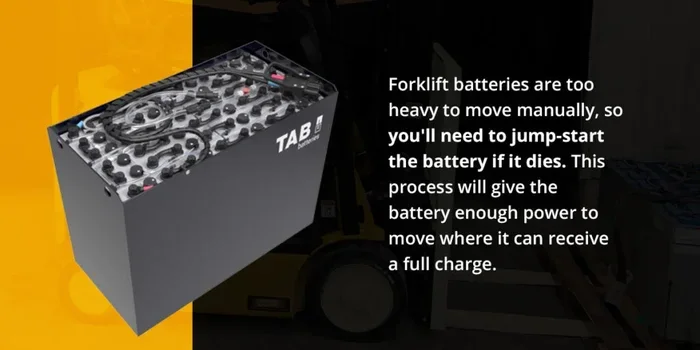
The most common reason for a dead forklift is a dead battery. Forklift batteries are heavy-duty, but they still lose charge over time. If a forklift sits unused for days or weeks, the battery slowly drains. Extreme temperatures also hurt battery life. Cold weather makes it harder for a battery to hold a charge. Hot weather can cause fluid to evaporate. Either way, a weak battery means no start.
Another cause is old age. Forklift batteries typically last five to seven years with proper care. After that, they lose their ability to hold a full charge. If your forklift battery is older than that, it might be time for a replacement. You can test the battery with a multimeter. A fully charged forklift battery should read around 80 volts or higher. Anything below that means trouble.
Faulty Starter Motor
The starter motor is what turns the engine over when you turn the key. If the starter motor goes bad, you will hear nothing when you try to start the forklift. Sometimes you might hear a single click, but the engine does not turn. Starter motors wear out over time, especially if the forklift is used heavily. Corrosion on the connections can also stop the starter from working properly.
Bad Solenoid
The solenoid is a small switch that sends power from the battery to the starter motor. When it fails, the starter motor never gets the signal to engage. A bad solenoid often causes a single click sound when you turn the key. Solenoid problems are common in older forklifts. They are also easy and inexpensive to replace.
Fuel System Issues (Diesel Forklifts)
Diesel forklifts have their own set of starting problems. A clogged fuel filter can stop diesel from reaching the engine. Air in the fuel lines is another common issue. If the forklift has been sitting for a long time, the fuel may have gone bad. Diesel fuel can degrade over several months, especially in warm weather. A glow plug failure can also prevent a diesel engine from starting in cold conditions.
Electrical Connection Problems
Loose or corroded cables can prevent power from reaching the starter motor or ignition system. Forklifts work in tough environments. Vibrations, moisture, and dirt can all loosen electrical connections over time. A simple visual inspection of the battery terminals and cables can reveal a lot. If you see white or greenish buildup on the terminals, that is corrosion. It blocks the flow of electricity and can keep your forklift from starting.
Safety First: Preparing to Start a Dead Forklift
Before you do anything else, safety comes first. A dead forklift is not a toy. It is a powerful machine that can cause serious injury if handled incorrectly. Always follow your workplace safety rules. Here are the steps you should take before attempting any starting procedure.
Wear the Right Protective Gear
Always wear a hard hat, safety glasses, and steel-toed boots. Do not wear loose clothing or jewelry that could get caught in moving parts. If you are working near other forklifts or pedestrians, stay alert at all times. Forklift safety inspection should be a habit, not an afterthought.
Check the Area Around the Forklift
Make sure the area is clear of people and obstacles. Set the parking brake before you do anything. Lower the forks all the way to the ground. Put the gear shift in neutral. These simple steps prevent the forklift from moving unexpectedly while you are working on it.
Read the Operator Manual
Every forklift model is different. Your operator manual has specific instructions for starting and troubleshooting. It also lists warning labels and safety precautions unique to your machine. If you do not have the manual, check with your supervisor or look for a digital copy from the manufacturer.
Ventilation Matters
If you are working with a diesel forklift indoors, make sure the area is well-ventilated. Diesel exhaust contains carbon monoxide, which is dangerous in enclosed spaces. Never run a diesel forklift in a closed warehouse without proper ventilation. For electric forklifts, this is not a concern, which is one reason they are popular for indoor use.
How to Start a Dead Electric Forklift
Electric forklifts are the most common type used in warehouses and indoor facilities. They run on large rechargeable batteries, and they are generally easier to troubleshoot than diesel models. Here is how you start a dead electric forklift step by step.
Step 1: Check the Battery Charge Level
Look at the battery indicator on the dashboard or display panel. If the charge is very low or shows zero, the battery needs power. You can also check the battery water level if your model has removable cell caps. Low water levels can cause poor battery performance. Never open the cells if you are not trained to do so.
Step 2: Inspect the Battery Terminals
Look at the battery terminals closely. Clean any corrosion with a wire brush or a baking soda solution. Make sure the cables are tight and secure. A loose terminal will not deliver power, even if the battery is fully charged. This is one of the most overlooked causes of a dead forklift.
Step 3: Try a Jump Start
If the battery is weak but not completely dead, a jump start can bring it back. You will need either a second forklift with a good battery or a portable jump pack. Connect the positive cable to the dead battery first, then to the good battery. Connect the negative cable to the good battery, then to a metal ground on the dead forklift. Start the working forklift first, then try the dead one.
Quick Tip: Always follow the correct jump-start order. Connecting cables in the wrong order can damage the electrical system or cause a spark. If you are unsure, ask a trained coworker for help.
Step 4: Press the Emergency Stop Button
Before turning the key, make sure the emergency stop button is pressed in and released. This sounds obvious, but it is a common mistake. A pressed-in emergency stop button will prevent the forklift from starting, no matter how much charge the battery has.
Step 5: Turn the Key or Press the Start Button
Once all checks are done, turn the ignition key or press the start button. The forklift should hum to life within a few seconds. If you hear a rapid clicking sound, the battery still does not have enough charge. You may need to charge it for several hours before trying again.
Step 6: Let the Forklift Warm Up
Give the forklift a minute or two to warm up before putting it in gear. Check the dashboard lights and warning indicators. Make sure there are no error codes displayed. Test the horn, lights, and brakes before moving the forklift.
How to Start a Dead Diesel Forklift
Diesel forklifts are commonly used outdoors and in heavy-duty applications. They have more complex systems than electric models, which means a few more things can go wrong. Here is how to start a dead diesel forklift.
Step 1: Check the Fuel Level
Sounds simple, but it happens all the time. Someone forgot to refill the tank. Check the fuel gauge first. If the tank is empty, fill it with the correct diesel fuel. Use only the fuel type recommended by the manufacturer. Using the wrong fuel can damage the engine and void your warranty.
Step 2: Bleed the Fuel System
Air can get trapped in the fuel lines, especially after the forklift has been sitting for a long time. Bleeding the system removes that air. Look for the bleed screw on the fuel filter or injection pump. Open it slowly and pump the fuel primer until you see a steady flow of fuel with no bubbles. Then tighten the screw and try starting again.
Step 3: Check the Glow Plugs
Glow plugs help diesel engines start in cold weather. If the glow plugs are faulty, the engine may not turn over when it is cold. Turn the ignition to the “on” position before cranking. You should see the glow plug indicator light on the dashboard. If it does not light up, the glow plugs may need to be replaced.
Step 4: Inspect the Battery and Starter
Diesel forklifts also use batteries, and they need a strong electrical connection to crank the engine. Check the battery charge and terminals the same way you would for an electric forklift. A weak battery will struggle to turn over a diesel engine because diesel compression is higher than gasoline.
Step 5: Turn the Key and Listen
Turn the ignition key and listen carefully. A healthy diesel engine will start with a steady rumble. If you hear grinding, clicking, or nothing at all, stop and investigate further. Repeated attempts without success can drain the battery even more or damage the starter motor.
Step 6: Let It Warm Up
Let the diesel engine idle for a few minutes before putting it in gear. This allows the oil to circulate and the engine to reach operating temperature. Watch the temperature gauge and make sure it stays within the normal range.
Common Reasons a Forklift Won’t Turn Over
Even after you try the steps above, your forklift might still refuse to start. Here are the most common reasons a forklift won’t turn over and what you can do about each one.
1. The Battery Is Completely Dead
A completely dead battery will not hold any charge at all. This usually happens when a forklift sits unused for too long or the battery is past its lifespan. The fix is to charge the battery or replace it entirely. A forklift battery charger can bring a weak battery back to life, but it cannot fix a dead cell.
2. The Key Switch Is Faulty
The key switch sends the electrical signal to start the forklift. If it is worn out or damaged, it will not send that signal. You might notice the dashboard lights flicker or not come on at all when you turn the key. Replacing a key switch is a relatively simple and affordable repair.
3. The Cable Connections Are Corroded
Corrosion on battery terminals or cable connections blocks the flow of electricity. This is one of the easiest problems to fix. Clean the terminals with a wire brush and apply a thin layer of petroleum jelly to prevent future corrosion. Make sure all cable connections are tight and secure.
4. The Engine Oil Is Too Thick or Low
In cold weather, thick oil makes it harder for the engine to turn over. Low oil levels can also cause starting problems and damage the engine over time. Check the oil level and use the recommended weight for your climate. Switching to a winter-grade oil can help in cold conditions.
5. The Parking Brake or Gear Shift Is Not in the Right Position
Many forklifts have a safety interlock that prevents starting unless the parking brake is engaged and the gear shift is in neutral. Double-check both of these before trying again. This sounds silly, but it is a surprisingly common reason a forklift will not start.
When to Call a Professional Forklift Technician
Not every problem is a DIY fix. Some issues require the skills of a trained forklift technician. Here are signs that you should call a professional.
If you have tried all the steps above and the forklift still will not start, it is time to call in the experts. Strange smells like burning plastic or oil can indicate serious internal problems. If you see smoke or fluid leaking from the engine compartment, stop immediately and call for help. A forklift repair professional has the tools and training to diagnose complex electrical and mechanical issues safely.
Also, if your forklift is under warranty, attempting DIY repairs might void that warranty. Always check with your dealer or service provider before opening up any panels or making repairs. It is better to pay for a service call than to risk making a costly mistake.
Regular forklift maintenance is the best way to avoid dead forklifts altogether. Schedule routine inspections, replace worn parts on time, and keep the battery charged and clean. A well-maintained forklift starts reliably every time and lasts much longer than a neglected one.
Key Takeaways
- Safety always comes first: Never skip protective gear or pre-start checks before attempting to start a dead forklift.
- Battery issues are the #1 culprit: Most dead forklifts fail to start because of a weak or dead battery.
- Electric and diesel forklifts need different approaches: Each type has unique starting procedures and common failure points.
- Jump-starting works for many situations: You can use another forklift or a portable jump pack to revive a dead battery.
- Regular maintenance prevents dead forklifts: Simple daily checks can save you from unexpected breakdowns.
- Know when to call a pro: Some problems need a trained forklift technician, not a DIY fix.
Conclusion
Dealing with a dead forklift is frustrating, but it does not have to be a disaster. Now you know how to start a dead forklift and get it running again. You have the steps for both electric and diesel models. You understand the common causes and the safety rules you must follow. The most important thing to remember is to stay calm and work through the problem methodically. Check the battery first, inspect the connections, and try a jump start if needed. For diesel models, do not forget to check the fuel level and bleed the system if air is in the lines.
Regular forklift maintenance will save you from most of these headaches. A little daily care goes a long way. Keep your battery clean, your fuel fresh, and your connections tight. When you do run into a problem you cannot fix, do not hesitate to call a professional. There is no shame in getting expert help, and it is always safer than forcing a repair you are not sure about.
The next time your forklift goes dead, you will be ready. You will know exactly what to do. You will stay safe while you do it. And you will have your machine back up and running in no time. Keep this guide handy. Share it with your coworkers. And remember, a little preparation and knowledge can keep your forklift fleet running smoothly all year long.
Frequently Asked Questions
What should I do first when my forklift will not start?
Start with the basics. Check that the parking brake is engaged and the gear shift is in neutral. Then look at the battery indicator on the dashboard. A dead or weak battery is the most common reason a forklift will not start. Always make sure your emergency stop button is released before turning the key.
Can I jump-start a dead forklift battery?
Yes, you can jump-start a dead forklift battery using another forklift or a portable jump pack. Make sure you follow the correct cable connection order to avoid damaging the electrical system. Connect the positive cables first, then the negative cables, and always ground the last negative cable to a metal part of the dead forklift frame.
How long does a forklift battery last?
A forklift battery typically lasts five to seven years with proper care. Factors like charging habits, temperature, and usage intensity affect battery life. Avoid letting the battery run completely empty before recharging. Regularly check the water levels if your battery has removable cell caps, and keep the terminals clean and free of corrosion.
Why does my diesel forklift not start in cold weather?
Cold weather can cause diesel fuel to thicken and glow plugs to fail. This makes it hard for the engine to turn over. Make sure your diesel forklift has winter-grade oil and that the glow plugs are working properly. Bleeding the fuel system to remove air bubbles can also help in cold conditions.
Is it safe to start a dead forklift indoors?
It is safe to start an electric forklift indoors because it produces no exhaust. However, never start or run a diesel forklift indoors without proper ventilation. Diesel exhaust contains carbon monoxide, which is dangerous in enclosed spaces. Always make sure your indoor area has good airflow before starting any diesel engine.
When should I stop trying to start a dead forklift and call a technician?
Stop trying if you hear grinding, see smoke, or smell burning. These are signs of serious mechanical or electrical problems. If you have tried all the basic steps and the forklift still will not start after several attempts, it is time to call a professional. Repeated failed starting attempts can drain the battery further or damage the starter motor.