Can Low Antifreeze Cause Overheating in Your Vehicle
Yes, low antifreeze can absolutely cause your engine to overheat. Antifreeze, also known as coolant, plays a critical role in regulating your engine’s temperature. When the fluid level drops too low, your cooling system can’t transfer heat away from the engine effectively, leading to dangerous overheating and potentially costly damage. In this guide, we’ll walk you through the warning signs, common causes of low antifreeze, how to fix the problem, and simple steps to prevent it from happening again.
Your car’s engine generates an incredible amount of heat. We’re talking thousands of degrees Fahrenheit during normal operation. Without a proper cooling system, your engine would seize up in minutes. That’s where antifreeze comes in. It circulates through your engine block, absorbs heat, and carries it to the radiator where it cools down. But what happens when the level drops too low? Can low antifreeze cause overheating? The short answer is a definite yes. And understanding why can save you from a roadside breakdown or a very expensive repair bill.
Many drivers overlook their coolant levels until something goes wrong. They assume it will just “top itself off” or that a little low fluid isn’t a big deal. That’s a dangerous misconception. Even a small drop in antifreeze can start a chain reaction of problems. Your engine runs hotter, components wear out faster, and in worst-case scenarios, you’re looking at a complete engine failure. Let’s dive deep into how this happens and what you can do about it.
Whether you’re a seasoned car owner or someone who just wants to understand what’s under the hood, this guide covers everything you need to know. We’ll explore the signs of low antifreeze, the most common reasons your coolant level drops, and the best ways to fix and prevent the problem. No fluff, no filler — just practical, actionable advice you can use right away.
Key Takeaways
- Low antifreeze directly causes overheating: Without enough coolant, your engine can’t maintain a safe operating temperature.
- Watch for warning signs: A rising temperature gauge, steam from the hood, and a sweet smell are clear red flags.
- Common causes include leaks: Worn hoses, a faulty radiator cap, or a cracked radiator are the usual culprits.
- Act fast when overheating starts: Ignoring early signs can lead to severe engine damage, including a blown head gasket.
- Prevention is simple: Regular coolant checks and flushes keep your cooling system working properly.
- Mix matters: Using the right antifreeze-to-water ratio ensures optimal heat transfer and freeze protection.
📑 Table of Contents
- How Your Cooling System Works
- Can Low Antifreeze Cause Overheating? Here’s How It Happens
- Why Does Antifreeze Level Drop?
- What Happens When an Engine Overheats from Low Antifreeze?
- How to Check and Top Off Your Antifreeze
- Common Mistakes That Lead to Low Antifreeze
- When to See a Mechanic
- Preventing Antifreeze Problems Before They Start
- Expert Insights on Antifreeze and Engine Cooling
- Key Takeaways
- Conclusion
How Your Cooling System Works
To understand why low antifreeze causes overheating, it helps to know how your cooling system works. Think of it as a loop that moves heat away from your engine. The process starts in the engine block. Hot coolant flows through channels inside the block, picking up heat along the way. Then it travels through a rubber hose up to the radiator. The radiator uses airflow to cool the fluid down. The cooled antifreeze then cycles back into the engine, and the process repeats.
Several key parts make this loop work. The water pump pushes coolant through the system. The thermostat opens and closes to regulate flow based on engine temperature. The radiator cap maintains proper pressure so the coolant can absorb more heat without boiling. And the overflow reservoir catches extra fluid when the system heats up.
The Role of Antifreeze in Heat Transfer
Antifreeze does more than just prevent freezing in winter. Its primary job is heat transfer. Pure water actually absorbs heat better than antifreeze alone. But water boils at a lower temperature and freezes in cold weather. That’s why manufacturers mix antifreeze with water to create a balanced coolant solution. The right mixture raises the boiling point and lowers the freezing point. This gives your engine the best protection year-round.
When you run low on this mixture, the system loses its ability to pull heat from the engine efficiently. Hot spots develop. Metal parts expand. Gaskets start to fail. The whole cooling process breaks down, and your engine temperature climbs rapidly.
Can Low Antifreeze Cause Overheating? Here’s How It Happens
Let’s get straight to the point. Yes, low antifreeze absolutely causes overheating. Here’s the step-by-step breakdown of what goes wrong inside your engine when coolant levels drop too low.
First, there’s less fluid circulating through the engine block. That means fewer pathways to absorb and carry away heat. The engine starts running hotter than it should. The thermostat may stay closed because it detects high temperatures, but without enough coolant, it can’t cool things down. The water pump starts pulling air instead of liquid, which creates air pockets. These air pockets block the flow even further.
As the temperature climbs, the radiator can’t do its job because there’s not enough hot fluid arriving. The cooling fans kick on, but they can only do so much without adequate coolant flow. Eventually, the engine reaches temperatures that cause serious damage. Head gaskets blow. Cylinder heads warp. In extreme cases, the engine block itself can crack.
Common Overheating Symptoms to Watch For
Your car gives you plenty of warning before a full-blown overheating event. The key is knowing what to look for. Here are the most common symptoms of low antifreeze and overheating:
- Temperature gauge climbing toward the red zone: This is the most obvious sign. If your temperature needle starts climbing, pull over safely and check your coolant level.
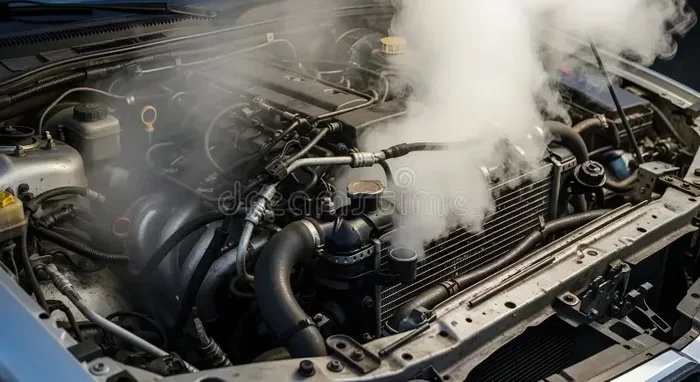
- Steam or smoke coming from under the hood: This usually means coolant has hit a hot engine part and is boiling off. It’s a clear emergency signal.
- A sweet, syrupy smell: Antifreeze has a distinct sweet odor. If you smell it inside or outside your car, you likely have a leak.
- Coolant puddles under your car: Look for green, orange, or pink fluid on your driveway or garage floor.
- Heater blowing cold air: If your cabin heater suddenly goes cold, your coolant level may be too low to feed the heater core.
- Thumping or knocking sounds from the engine: This can indicate that parts are expanding from excessive heat due to low coolant.
Why Does Antifreeze Level Drop?
Antifreeze doesn’t just disappear on its own. Something is causing it to leave the system. Understanding the root cause is essential to fixing the problem and preventing it from happening again.
Coolant Leaks
Leaks are the number one reason antifreeze levels drop. Your cooling system has many rubber hoses, connections, and seals that can wear out over time. The radiator itself can develop cracks or pinhole leaks. The water pump has a seal that can degrade. Even the heater core inside your dashboard can leak, which often shows up as a wet floor on the passenger side.
External leaks are usually easy to spot. You’ll see fluid on the ground under your car or on engine components. Internal leaks are trickier. A leaking head gasket, for example, can push coolant into the combustion chamber. You might notice white smoke coming from your exhaust or find a milky residue on your oil cap. These are serious issues that need immediate attention.
Normal Evaporation
Over time, a small amount of coolant can evaporate through the overflow reservoir or tiny gaps in connections. This is normal and expected. However, if you’re constantly topping off your antifreeze every few weeks, something more serious is going on. Don’t ignore it. Even a slow leak can eventually cause major overheating problems.
Improper Coolant Mixture
Using the wrong ratio of antifreeze to water can also cause problems. Too much water and your mixture may freeze in cold weather or boil too quickly in hot weather. Too much antifreeze and the cooling efficiency drops significantly because pure antifreeze doesn’t transfer heat as well as a proper mixture. Most manufacturers recommend a 50/50 mix, but always check your owner’s manual for the exact specification.
What Happens When an Engine Overheats from Low Antifreeze?
Let’s talk about the damage. What actually happens to your engine when it overheats because of low antifreeze? The answer is not pretty, and it’s exactly why you should never ignore a low coolant warning.
When the engine temperature rises above normal operating levels, several things happen in rapid succession. First, the metal components expand. Pistons swell in their cylinders. Bearings lose their proper clearance. The cylinder head can warp, which means it no longer sits flush against the engine block. This creates a path for combustion gases to escape into the cooling system.
The head gasket is one of the most vulnerable parts. It seals the combustion chamber and keeps coolant and oil in their proper channels. When it fails from overheating, coolant can leak into the oil, oil can leak into the coolant, and combustion gases can enter the cooling system. A blown head gasket repair is one of the most expensive jobs in automotive maintenance.
In the worst cases, extreme heat can cause the engine block to crack. A cracked engine block means the engine needs to be replaced or rebuilt. We’re talking thousands of dollars in repair costs. All of this started with something as simple as low antifreeze.
How Long Can You Drive an Overheating Engine?
Here’s the honest truth. You should not drive an overheating engine. Even a few minutes of high temperatures can cause irreversible damage. If your temperature gauge starts climbing, pull over as soon as it’s safe to do so. Turn off the engine and let it cool down. Do not open the radiator cap while the engine is hot — pressurized coolant can cause severe burns. Wait at least 15 to 20 minutes before checking anything.
| Temperature Range | What’s Happening | Action Needed |
|---|---|---|
| 220°F – 230°F | Normal operating range | No action needed |
| 230°F – 240°F | Slightly elevated | Monitor closely, check coolant level |
| 240°F – 250°F | Warning zone | Find a safe place to pull over |
| 250°F+ | Danger zone | Turn off engine immediately |
How to Check and Top Off Your Antifreeze
Checking your antifreeze level is one of the easiest maintenance tasks you can do at home. It takes just a few minutes and can save you from a major headache. Here’s how to do it safely and correctly.
Step-by-Step Guide
- Make sure the engine is cool: Never check coolant on a hot engine. Wait at least 30 minutes after driving, or check it first thing in the morning before you start the car.
- Locate the coolant reservoir: This is a translucent plastic tank near the radiator. It usually has minimum and maximum markers on the side.
- Check the level: Look at the fluid level against the markings. If it’s below the minimum line, you need to add more coolant.
- Open the radiator cap carefully: If you need to add fluid directly to the radiator, place a cloth over the cap and turn it slowly. Release any pressure before removing it fully.
- Add the correct coolant: Use the type recommended in your owner’s manual. You can use pre-mixed coolant or mix concentrated antifreeze with distilled water at a 50/50 ratio.
- Check for leaks: After topping off, keep an eye on the level over the next few days. If it drops again, you likely have a leak that needs professional attention.
Quick Tips
- Never use plain water as a permanent replacement for antifreeze. It lacks corrosion inhibitors and boil-over protection.
- Keep a gallon of pre-mixed coolant in your trunk during summer months. It could save you from a roadside emergency.
- Check your coolant level once a month as part of your regular car maintenance routine.
Common Mistakes That Lead to Low Antifreeze
Some mistakes are easy to avoid once you know about them. Here are the most common errors drivers make when it comes to antifreeze and cooling system maintenance.
Ignoring Small Leaks
A small drip today can become a big problem tomorrow. Many people notice a puddle of coolant under their car and think it’s not worth worrying about. But even a slow leak can drain your system over time. Get any leak checked out as soon as you notice it.
Using the Wrong Coolant Type
Not all antifreeze products are the same. There are different chemical formulations, and mixing incompatible types can create a gel-like substance that clogs your cooling system. This leads to poor circulation and overheating. Always check what type your vehicle requires and stick with it.
Skipping Coolant Flushes
Over time, antifreeze breaks down and loses its effectiveness. Old coolant becomes acidic and can corrode internal components. Most manufacturers recommend flushing and replacing coolant every 30,000 to 60,000 miles. Check your owner’s manual for the specific interval for your vehicle.
Forgetting to Check the Radiator Cap
The radiator cap plays a crucial role in maintaining system pressure. A weak or faulty cap can cause coolant to boil at a lower temperature and escape through the overflow hose. A new radiator cap is inexpensive and easy to replace. It’s one of those small parts that can prevent big problems.
Neglecting the Overflow Reservoir
The overflow reservoir catches excess coolant when the system heats up. If the reservoir is cracked or the cap is faulty, coolant escapes and the level drops. Check the reservoir for cracks and make sure the cap seals properly.
When to See a Mechanic
Some antifreeze problems you can handle yourself. Others require professional help. Here’s how to know when it’s time to see a mechanic.
If you’ve topped off your coolant and the level keeps dropping, there’s an underlying leak that needs to be found and repaired. A mechanic can perform a pressure test on your cooling system to pinpoint the exact location of the leak. They can also inspect the water pump, thermostat, and head gasket for signs of failure.
Also seek professional help if you notice any of these signs: white smoke from the exhaust, coolant mixing with your engine oil, frequent overheating even after refilling the coolant, or a sweet smell inside the cabin that doesn’t go away. These symptoms suggest internal damage that won’t fix itself.
Regular cooling system inspections are worth the cost. A mechanic can check the condition of your hoses, belts, radiator, and water pump before they fail. Preventive maintenance is always cheaper than emergency repairs.
Preventing Antifreeze Problems Before They Start
The best way to deal with low antifreeze is to prevent it from happening in the first place. A little proactive maintenance goes a long way toward keeping your engine cool and your wallet intact.
- Check your coolant level monthly: Make it a habit. It only takes a minute and can catch problems early.
- Watch for warning signs: A slight rise in your temperature gauge or a faint sweet smell is worth investigating.
- Flush and replace coolant on schedule: Don’t wait until something goes wrong. Follow the manufacturer’s recommended maintenance intervals.
- Use quality coolant: Cheap coolant products may not provide the same level of protection. Stick with reputable brands or use the OEM-recommended product.
- Keep your radiator clean: Dirt and debris can block airflow through the radiator, reducing its cooling efficiency. Hose it down gently during regular car washes.
- Monitor your temperature gauge while driving: A quick glance at your dashboard every few minutes can alert you to problems before they escalate.
- Replace worn hoses and belts: Rubber components degrade over time. Inspect them regularly and replace anything that looks cracked or brittle.
Expert Insights on Antifreeze and Engine Cooling
We asked a certified automotive technician about the most common cooling system mistakes he sees. Here’s what he had to say:
“I see drivers every week who’ve been driving on low coolant for weeks without realizing it. By the time they bring the car in, the engine has already suffered heat damage. The number one piece of advice I can give is to check your coolant level regularly and never ignore a rising temperature gauge. A few minutes of attention can save you thousands of dollars in repairs.”
He also emphasized the importance of using the right coolant type. “Many people buy whatever antifreeze is on sale at the auto parts store. That’s a mistake. Different engines need different formulations. Using the wrong one can cause chemical reactions that damage seals and gaskets over time.”
Another expert tip he shared was about the importance of the 50/50 ratio. “In extremely cold climates, some people go up to a 70/30 antifreeze-to-water ratio for extra freeze protection. But too much antifreeze actually reduces cooling efficiency. Stick with 50/50 unless you’re dealing with temperatures below negative 30 degrees Fahrenheit.”
Key Takeaways
- Low antifreeze directly causes overheating: Without enough coolant, your engine can’t maintain a safe operating temperature.
- Watch for warning signs: A rising temperature gauge, steam from the hood, and a sweet smell are clear red flags.
- Common causes include leaks: Worn hoses, a faulty radiator cap, or a cracked radiator are the usual culprits.
- Act fast when overheating starts: Ignoring early signs can lead to severe engine damage, including a blown head gasket.
- Prevention is simple: Regular coolant checks and flushes keep your cooling system working properly.
- Mix matters: Using the right antifreeze-to-water ratio ensures optimal heat transfer and freeze protection.
Conclusion
The answer to the question “can low antifreeze cause overheating” is a clear and definitive yes. Your engine depends on the right amount of coolant to stay at a safe operating temperature. When antifreeze levels drop, the cooling system can’t do its job, and heat builds up fast. The damage that follows can be severe and expensive.
The good news is that preventing this problem is straightforward. Check your coolant level regularly. Watch for the warning signs of low antifreeze. Fix leaks promptly. Use the right type of coolant at the proper ratio. And don’t skip your scheduled coolant flushes. These simple habits will keep your cooling system working the way it should and your engine running cool for years to come.
Don’t wait until you see steam coming from under your hood. Take a few minutes today to check your antifreeze level. It’s one of the easiest and most impactful things you can do for your vehicle’s long-term health. Your engine will thank you for it.
Frequently Asked Questions
How quickly can low antifreeze damage an engine?
Damage can begin within minutes of running an engine with critically low coolant. However, the severity depends on how high the temperature climbs and how long it stays elevated. Even five to ten minutes of driving with no coolant can cause significant overheating damage to the head gasket, cylinder head, and engine block.
Can I just add water instead of antifreeze in an emergency?
Yes, adding water in an emergency is better than driving with no fluid at all. But water should only be a temporary fix. It lacks the corrosion inhibitors and heat protection properties of proper coolant. Replace it with the correct antifreeze mixture as soon as possible.
What color is antifreeze, and does the color matter?
Antifreeze comes in green, orange, pink, and red colors, depending on the chemical formulation. The color itself doesn’t determine performance. What matters is using the type recommended by your vehicle manufacturer. Mixing incompatible coolant types can cause problems in your cooling system.
How do I know if my head gasket is blown from overheating?
Common signs of a blown head gasket include white smoke from the exhaust, coolant mixing with oil (which creates a milky appearance), bubbles in the radiator or overflow reservoir, and a persistent loss of coolant with no visible external leak. If you notice any of these symptoms, have a mechanic inspect your vehicle right away.
How often should I flush my cooling system?
Most manufacturers recommend flushing and replacing coolant every 30,000 to 60,000 miles, or every two to five years. Check your owner’s manual for the specific recommendation for your vehicle. Vehicles that drive in hot climates or tow heavy loads may need more frequent flushes.
Can a low coolant warning light come on even if the antifreeze level is fine?
Yes. Sometimes a faulty coolant temperature sensor, a loose wire, or a problem with the radiator fan can trigger the warning light even when the fluid level is normal. If you see the light but your coolant level looks good, have a diagnostic scan done to identify the real cause.