Can a Wrapped Car Go Through a Car Wash Without Damage
Yes, a wrapped car can go through a car wash, but you need to know the right type and method. Vinyl wraps are durable, yet they require careful handling to avoid peeling, lifting, or adhesive failure. This guide covers everything you need to know about washing a wrapped vehicle safely.
You just spent money on a vinyl wrap for your car. Maybe it was a bold color change, a sleek matte finish, or a full vehicle wrap with your business logo. Either way, you want it to last. And one question keeps popping up in your head: can a wrapped car go through a car wash?
The short answer is yes. But the full answer is a little more complicated. Not all car washes are safe for wrapped vehicles. Some can cause serious damage that costs you time and money to fix. In this article, we will walk you through everything you need to know about washing a wrapped car. You will learn which types of washes are safe, which ones to avoid, and how to keep your vinyl film looking brand new for years.
Whether you have a partial wrap or a full vehicle wrap, this guide will help you make smart decisions. We will cover touchless washes, hand washing, pressure washing, and much more. By the end, you will feel confident about keeping your wrapped vehicle clean without any worries.
Key Takeaways
- Touchless washes are the safest option for vehicles with vinyl wraps.
- Avoid brush-based automatic washes that can scratch or peel the wrap material.
- Hand washing is the gold standard for maintaining wrap integrity and appearance.
- Check your wrap edges regularly for signs of lifting or adhesive breakdown.
- Use pH-neutral soaps and soft microfiber cloths to clean wrapped surfaces safely.
- Pressure washing is okay on low settings but keep distance from edges and seams.
- Regular maintenance extends wrap lifespan from 3-5 years to potentially 7+ years.
📑 Table of Contents
- Can a Wrapped Car Go Through a Car Wash?
- Types of Car Washes and How They Affect Wraps
- What Happens When Water Hits a Vinyl Wrap
- Tips for Washing a Wrapped Car Safely
- Common Mistakes People Make With Wrapped Cars
- How to Maintain Your Car Wrap for Longevity
- Expert Insights on Wrap Care and Car Wash Safety
- Key Takeaways
- Conclusion
Can a Wrapped Car Go Through a Car Wash?
The quick answer is yes, but with important caveats. A wrapped car can go through certain types of car washes safely. However, the wrong wash method can ruin your vinyl wrap in minutes. Understanding the difference is critical if you want to protect your investment.
When you get a car wrap, the vinyl material bonds directly to your vehicle’s surface. Unlike traditional paint, this protective layer is not as hard or rigid. It is flexible, but it has limits. Harsh chemicals, high pressure, and aggressive brushes can all compromise the adhesive and the film itself.
The good news is that modern vinyl wraps are built to last. Most quality wraps come with a clear coat that adds an extra shield against environmental damage. This means your wrap can handle normal cleaning just fine. The key is knowing which cleaning methods are safe and which ones are risky.
Paint protection is another reason people choose wraps over regular paint. A properly installed wrap can actually shield your original paint from scratches, UV rays, and minor chips. But this protection only works if you take care of the wrap itself. And that starts with knowing how to wash it correctly.
Why This Question Matters So Much
Many car owners assume all washes are created equal. They pull up to the nearest automatic tunnel wash without thinking twice. But for wrapped vehicles, this habit can be costly. A single bad wash can cause edge lifting, adhesive failure, or even complete wrap delamination.
Think about it this way. You would not drag a sander across a fresh paint job. The same logic applies to your wrapped vehicle. The cleaning method you choose directly impacts the wrap durability and overall lifespan. Taking a few extra minutes to choose the right wash can save you hundreds of dollars in repair costs.
Types of Car Washes and How They Affect Wraps
Not all car washes are the same. Some are gentle and safe for wraps. Others are anything but. Let us break down the most common types and see how each one affects your vinyl wrap.
Touchless Car Washes
Touchless car washes use high-pressure water jets and chemical detergents instead of physical brushes. These are generally the safest option for wrapped vehicles. Since there is no abrasive contact, the risk of scratching or peeling is very low.
However, there is a catch. The chemicals used in some touchless washes can be harsh. Strong solvents or highly acidic formulas may degrade the vinyl film over time. If you use a touchless wash frequently, try to find one that uses gentle, pH-neutral cleaning solutions.
Brush-Based Automatic Washes
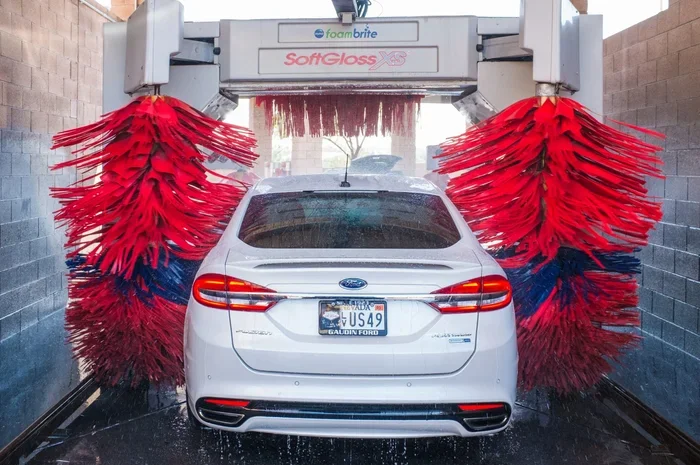
This is where things get risky. Brush-based automatic washes use spinning cloth or foam rollers to scrub your car clean. While they work fine for standard paint jobs, they can be terrible for vinyl wraps.
The brushes can catch on edges, seams, and corners of the wrap. This can cause edge lifting or even tear the vinyl material. The friction from repeated brushing also wears down the clear coat protection. Over time, this can make your wrap look dull and faded.
If you absolutely must use a brush-based wash, make sure the brushes are soft and well-maintained. Even then, it is not the ideal choice for a wrapped car.
Hand Washing
Hand washing is the gold standard for wrapped vehicles. It gives you complete control over the cleaning process. You decide what products to use, how much pressure to apply, and which areas need extra attention.
Use a soft microfiber wash mitt and a pH-neutral car soap. Avoid anything with harsh detergents or abrasive compounds. Wash in gentle, circular motions and never scrub aggressively at seams or edges. Rinse thoroughly and dry with a clean, soft towel to prevent water spots.
Pressure Washing
Pressure washing can be safe for wrapped cars if done correctly. The key is keeping the pressure low and maintaining a safe distance from the surface. A pressure washer set below 1,500 PSI is generally fine for a wrapped vehicle.
Always hold the nozzle at least 12 inches away from the wrap. Never aim directly at edges, seams, or wrap corners. High-pressure water forced into these areas can push under the vinyl and cause bubbling or adhesive failure. Use a wide fan tip rather than a narrow stream for the safest results.
Self-Service Bays
Self-service car wash bays give you control over the water pressure and soap selection. These can work well for wrapped cars if you are careful. Stick to low pressure, use gentle soap, and avoid lingering too long in one spot.
The main advantage of self-service bays is that you can avoid the harsh chemicals that automatic washes sometimes use. You also eliminate the risk of brush contact entirely. Just be mindful of the water pressure and always rinse thoroughly.
What Happens When Water Hits a Vinyl Wrap
Water itself is not the enemy of your vinyl wrap. In fact, rinsing your wrapped car with plain water is perfectly safe and often recommended. The real concern comes from what is in the water and how it interacts with the wrap surface.
Hard water contains minerals like calcium and magnesium. Over time, these minerals can leave spots on your wrap film. They can also build up around edges and seams, potentially weakening the adhesive bond. Using a water softener or filtered water for your final rinse can help prevent this buildup.
Soap residue is another issue to watch for. If you do not rinse your car thoroughly, soap can dry on the wrap surface and leave a filmy residue. This not only looks bad but can also attract dirt and grime faster. Always rinse every last bit of soap off your wrapped vehicle.
The good news is that quality vinyl film is designed to be water-resistant. The clear coat layer repels water effectively, which is one reason wraps are so popular for vehicle branding and aesthetic upgrades. As long as you dry your car after washing, water damage is rarely a concern.
Understanding Wrap Adhesive and Water Exposure
The adhesive used in car wrapping is specially formulated to bond with vehicle surfaces. It is designed to withstand normal exposure to water, rain, and moisture. However, prolonged exposure to standing water or forced water intrusion can weaken this bond over time.
This is why edge care is so important. The edges of a wrap are the most vulnerable points. If water gets under the edge, it can slowly dissolve the adhesive and cause the wrap to lift. Regular inspections of your wrap edges can catch this problem early before it becomes a major issue.
Tips for Washing a Wrapped Car Safely
Now that you know which washes are safe and which are not, let us talk about best practices. These tips will help you keep your wrapped car looking incredible while maximizing the wrap lifespan.
Use the Right Products
Not all car cleaning products are safe for vinyl wraps. Avoid anything that contains wax, polish, or abrasive compounds. These can leave a hazy residue on the wrap surface and dull the finish over time.
Instead, look for pH-neutral car wash soaps specifically formulated for vinyl and wrap materials. These products clean effectively without stripping the protective clear coat. A quick spray of wrap-specific cleaner after a wash can also help maintain the glossy or matte finish.
Wash in the Shade
This might sound like a small detail, but it matters more than you think. Washing your car in direct sunlight causes the soap and water to dry too quickly. This leads to water spots and soap residue that can be difficult to remove from a vinyl surface.
Find a shaded area or wash your car during cooler parts of the day. This gives you time to rinse and dry properly, which protects both the wrap and the adhesive underneath.
Dry Thoroughly After Every Wash
Never let your wrapped car air dry. Use a clean, soft microfiber towel to dry the surface gently. Pay extra attention to edges, seams, and any areas where water tends to pool.
Thorough drying prevents water spots and mineral buildup. It also reduces the chance of moisture seeping under the wrap edges. A quick dry after every wash is one of the simplest things you can do to extend your wrap life.
Avoid High-Pressure Nozzles Near Edges
Even when using a pressure washer, keep the nozzle away from wrap edges and seams. These areas are the weakest points of any vinyl wrap. High-pressure water directed at these spots can lift the edges and allow moisture underneath.
A gentle, wide spray pattern is your best friend here. If you are unsure about the pressure, stick to a regular garden hose for the areas near the edges. It is better to be safe than to deal with a peeling wrap later.
Clean Your Wheels Separately
Wheel cleaners and brake dust removers are often highly acidic. These chemicals can damage your wrap if they splash onto the vinyl surface. Always clean your wheels first and rinse them thoroughly before washing the rest of the car.
If any wheel cleaner does get on your wrap, rinse it off immediately. The longer it sits, the more damage it can do to the protective layer of your vinyl film.
Common Mistakes People Make With Wrapped Cars
Even the best wraps can fall victim to poor washing habits. Here are the most common mistakes wrapped car owners make and how to avoid them.
Using Automatic Brush Washes Regularly
This is the number one mistake. Many owners think if a car wash is labeled “safe for all vehicles,” it must be safe for wraps. That is not always true. Brush-based washes can cause micro-scratches, edge lifting, and adhesive wear over time. Avoid them whenever possible.
Skipping Regular Washes
Some owners think that less washing equals more wrap protection. The opposite is actually true. Dirt, bird droppings, tree sap, and other contaminants can eat into the vinyl film if left too long. Regular gentle washing protects the wrap and keeps it looking fresh.
Using Household Cleaners
Do not use household cleaning products on your wrap. Things like dish soap, all-purpose cleaners, and glass cleaners are often too harsh for vinyl. They can strip the protective clear coat and cause the wrap to fade or become brittle.
Ignoring Small Damage
A tiny bubble or a small edge lift might seem harmless at first. But if left untreated, it can grow into a much bigger problem. Moisture gets in, the adhesive weakens, and the wrap can start to peel. Fix small issues quickly before they become expensive repairs.
How to Maintain Your Car Wrap for Longevity
Proper maintenance goes beyond just washing. There are several habits you can adopt to keep your car wrap in top condition for years to come.
Apply a Wrap-Specific Sealant
Some manufacturers offer wrap sealants designed specifically for vinyl films. These sealants add an extra layer of protection against UV rays, road grime, and environmental contaminants. They also make the wrap easier to clean by creating a slick, hydrophobic surface.
Apply the sealant every few months following the manufacturer’s instructions. This simple step can significantly extend the wrap lifespan and keep your car looking vibrant.
Keep Your Car Garaged When Possible
UV exposure is one of the biggest enemies of vinyl wraps. Over time, prolonged sun exposure can cause fading and discoloration. Parking your car in a garage or under a cover whenever possible helps protect the wrap from sun damage.
If you do not have access to a garage, consider using a car cover. This is especially important if you park outside for extended periods. A good cover blocks UV rays and keeps your wrap looking its best.
Inspect Your Wrap Monthly
Get into the habit of inspecting your wrap once a month. Look for any signs of edge lifting, bubbling, or discoloration. Catching these issues early makes repairs much easier and less expensive.
Pay special attention to areas around doors, hood edges, and trunk seams. These are high-movement areas where the wrap is more likely to experience wear and stress.
Avoid Automated Fuel Nozzle Contact
When refueling, be careful not to drag the fuel nozzle across your wrap. The rubber tip can scratch or snag the vinyl surface. Lift the nozzle gently and place it into the fuel tank opening without dragging it along the wrap.
Expert Insights on Wrap Care and Car Wash Safety
We spoke with several professional wrap installers about their top tips for maintaining wrapped vehicles. Here is what they had to say.
“The first 72 hours after a wrap installation are critical,” says Jake Morrison, a certified wrap installer with over 10 years of experience. “The adhesive needs time to fully cure. During this period, avoid any car wash entirely. Even a gentle hand wash can compromise the bond before it has fully set.”
“After the curing period, hand washing is always my number one recommendation,” adds Morrison. “But I understand that not everyone has the time for that. A touchless automatic wash is a solid second choice. Just stay away from brush washes, and your wrap will hold up beautifully.”
Another professional, Maria Chen, who specializes in commercial vehicle wraps, emphasizes the importance of regular maintenance. “I tell all my clients that a wrapped vehicle is like a high-performance sports car. It needs regular care to perform at its best. A simple hand wash every one to two weeks keeps the wrap looking sharp and extends its life significantly.”
These expert insights reinforce what we have covered throughout this guide. The right washing approach makes all the difference. Whether you have a personal wrap or a commercial vehicle wrap, treating it with care during the cleaning process pays off in the long run.
Key Takeaways
- Touchless washes are the safest option for vehicles with vinyl wraps.
- Avoid brush-based automatic washes that can scratch or peel the wrap material.
- Hand washing is the gold standard for maintaining wrap integrity and appearance.
- Check your wrap edges regularly for signs of lifting or adhesive breakdown.
- Use pH-neutral soaps and soft microfiber cloths to clean wrapped surfaces safely.
- Pressure washing is okay on low settings but keep distance from edges and seams.
- Regular maintenance extends wrap lifespan from 3-5 years to potentially 7+ years.
Conclusion
So, can a wrapped car go through a car wash? Absolutely. The key is choosing the right method and being mindful of your wrap’s needs. Touchless washes, hand washing, and gentle pressure washing are all safe options that will keep your vehicle looking great. Brush-based automatic washes, on the other hand, should be avoided to protect your investment.
Your vinyl wrap is a significant investment in your vehicle’s appearance and paint protection. Taking a few extra minutes to wash it correctly can add years to its lifespan. Follow the tips in this guide, stay consistent with your maintenance routine, and your wrapped car will turn heads for miles.
Remember, the effort you put into caring for your wrap pays off every time you see that flawless finish on your vehicle. Treat it right, and it will keep looking incredible for years to come.
FAQs
How long does a vinyl car wrap typically last?
A well-maintained vinyl wrap typically lasts between 5 and 7 years, though some can last up to 10 years with excellent care. The wrap lifespan depends on factors like the quality of the vinyl, the installation technique, how often you wash the car, and how much sun exposure the vehicle gets. Regular maintenance and proper washing techniques play a huge role in maximizing durability.
Can I wax a wrapped car?
No, you should not wax a wrapped car. Traditional car waxes contain abrasive compounds and oils that can dull the wrap finish and compromise the adhesive. Instead, use a wrap-specific sealant or cleaner designed for vinyl surfaces. These products are formulated to be safe and effective on wrapped vehicles without causing damage.
Is it safe to take a wrapped car through an automatic car wash?
It depends on the type of automatic wash. Touchless automatic washes are generally safe for wrapped cars because they use only water jets and gentle chemicals. However, brush-based automatic washes should be avoided because the rotating brushes can scratch, peel, or lift the vinyl material. Always check with your wrap installer if you are unsure about a specific wash type.
How soon after getting a wrap can I wash my car?
You should wait at least 72 hours after a wrap installation before washing your car. The adhesive needs time to fully cure and bond with the vehicle surface. Washing too early can weaken the bond and cause the wrap to shift or peel. Ask your installer for their specific recommendation based on the type of wrap and adhesive used.
What should I do if my wrap starts to peel at the edges?
If you notice edge lifting, address it immediately to prevent further damage. Clean the lifted area gently and apply a small amount of wrap-safe adhesive. If the peeling is significant, contact your wrap installer for professional repair. Ignoring edge lifting can allow moisture to get under the wrap, which can cause bubbling, adhesive failure, and eventually require a full wrap replacement.
Can I pressure wash my wrapped car at home?
Yes, you can pressure wash a wrapped car at home as long as you keep the pressure below 1,500 PSI and maintain a distance of at least 12 inches from the surface. Never aim the nozzle directly at wrap edges, seams, or corners. Use a wide fan tip and avoid lingering in one spot for too long. When in doubt, a regular garden hose is always a safe alternative.