What Is MPG and How Is It Calculated Simply Explained
MPG stands for miles per gallon, the standard measurement of how far your vehicle travels on one gallon of fuel. This guide explains exactly what MPG means, how to calculate it yourself, and practical ways to improve your fuel economy every time you drive.
Every time you pull up to the gas pump, you probably notice the numbers on the fuel gauge and the price per gallon. But have you ever stopped to think about how far that gallon can actually take you? That is where MPG comes in. MPG stands for miles per gallon, and it is the most common way to measure how fuel-efficient your vehicle really is.
Whether you are buying a new car, trying to save money on gas, or just curious about how your daily commute affects your fuel bill, understanding MPG is essential. In this guide, we will break down everything you need to know about what MPG is and how MPG is calculated. We will keep it simple, practical, and easy to follow.
You do not need to be a mechanic or a math expert to understand fuel economy. By the end of this article, you will know exactly how to calculate your own MPG, what the numbers mean, and how to improve them. Let us get started.
Key Takeaways
- MPG measures fuel efficiency: It tells you how many miles your car can travel on a single gallon of gasoline.
- Calculating MPG is simple: You just divide the miles driven by the gallons of fuel used during a fill-up cycle.
- City and highway MPG differ: Stop-and-go traffic lowers your MPG, while steady highway driving typically improves it.
- EPA ratings are estimates: Your real-world MPG will vary based on driving habits, vehicle condition, and road conditions.
- Small changes boost MPG: Smooth acceleration, proper tire pressure, and regular maintenance all help you get better gas mileage.
- MPG saves you money: Understanding your fuel economy helps you budget for gas and choose a more efficient vehicle.
📑 Table of Contents
What Does MPG Mean?
MPG stands for miles per gallon. It is a simple measurement that tells you how many miles your vehicle can travel using one gallon of fuel. Think of it as a scorecard for your car’s fuel efficiency. The higher the MPG number, the farther you can go on less gas.
Here is a quick way to think about it. If your car gets 30 MPG, that means you can drive 30 miles on a single gallon of gasoline. If your friend’s car gets 20 MPG, they can only drive 20 miles on that same gallon. Over time, the difference adds up fast at the gas station.
Why MPG Matters to Every Driver
MPG affects your wallet more than you might think. Fuel is one of the biggest ongoing costs of owning a car. When you understand your vehicle’s fuel economy, you can predict your monthly gas expenses more accurately. This helps you budget and avoid surprises at the pump.
Beyond money, MPG also matters for the environment. Cars that burn less fuel produce fewer emissions. So improving your gas mileage is a win-win. You save money and you help reduce your carbon footprint. That is a pretty good deal for something as simple as understanding a number on your dashboard.
Different types of vehicles have very different MPG ratings. A compact sedan might get 35 to 40 MPG on the highway. A full-size SUV might only get 18 to 22 MPG. Even among similar vehicles, the MPG can vary based on engine size, weight, and aerodynamics. This is why checking the MPG rating before buying a car is so important.
How Is MPG Calculated?
The formula for calculating MPG is straightforward. You simply divide the total miles you drove by the number of gallons of fuel you used. Here is the basic MPG formula:
MPG = Miles Driven ÷ Gallons of Fuel Used
That is it. No complicated math. No special tools required. Just two numbers you can easily track yourself.
Step-by-Step: Calculate Your Own MPG
Want to find out your real-world MPG? Follow these simple steps the next time you fill up:
- Fill your tank completely. Drive until the fuel gauge is near empty, then fill it all the way up at the pump.
- Reset your trip meter. Most cars have a trip odometer that you can reset to zero. Hit that button right after you finish filling up.
- Drive normally. Go about your daily routine. Commute to work, run errands, do whatever you normally do.
- Fill up again. When you need gas again, fill the tank completely once more.
- Record the miles driven. Check your trip meter to see how many miles you covered since the last fill-up.
- Record the gallons used. Check your receipt or the pump display to see how many gallons you put in.
- Divide miles by gallons. That gives you your MPG for that driving period.
For example, let us say your trip meter shows 350 miles and you added 11.5 gallons at the pump. You would divide 350 by 11.5. That gives you approximately 30.4 MPG. Simple as that.
The Fill-Up Method Explained
The method described above is often called the fill-up method. It is the most accurate way to track your personal fuel economy because it measures your actual driving conditions. The numbers on your car’s information screen are estimates. The fill-up method gives you real data based on your real habits.
Some drivers like to repeat this process over several tanks to get an average MPG. This smooths out any anomalies caused by short trips or unusual driving conditions. Over three to five fill-ups, you will get a very reliable picture of your vehicle’s true fuel efficiency.
You can track this in a notebook, a spreadsheet, or even a free app on your phone. The key is consistency. Record your numbers every time you fill up, and you will build a valuable record of your gas mileage over time.
City MPG vs Highway MPG
You have probably noticed that your car’s MPG number changes depending on where you drive. There are two main categories: city MPG and highway MPG. Understanding the difference helps you set realistic expectations for your fuel economy.
What Is City MPG?
City MPG measures fuel efficiency in urban driving conditions. This means stop-and-go traffic, traffic lights, low speeds, and frequent braking. In city driving, your engine works harder because it constantly accelerates from a stop. All that idling and low-speed driving uses more fuel.
As a result, city MPG is almost always lower than highway MPG. If your car gets 25 MPG in the city, that is perfectly normal. City driving is simply less fuel-efficient due to the nature of stop-and-go traffic patterns.
What Is Highway MPG?
Highway MPG measures fuel efficiency at steady, higher speeds on open roads. When you are cruising on the highway, your engine does not need to work as hard. There are fewer stops, less idling, and more consistent speeds. This is why highway mileage is typically higher than city mileage.
Using the same car as our example, it might get 35 MPG on the highway. That is a big difference from the 25 MPG in the city. The steady flow of highway driving allows your engine to operate at its most efficient range.
What Affects Your MPG Between City and Highway?
Several factors influence how your MPG changes between city and highway driving:
- Driving speed: Higher speeds increase wind resistance, which can lower your MPG at very high velocities.
- Acceleration patterns: Hard acceleration burns more fuel, whether in the city or on the highway.
- Traffic density: Heavy traffic means more stops and starts, which reduces fuel economy.
- Road conditions: Hilly terrain, rough roads, and construction zones all impact your gas mileage.
- Weather: Cold weather, wind, and rain can all lower your MPG compared to ideal conditions.
EPA MPG Ratings and What They Mean
When you shop for a new car, you will see MPG ratings listed on the window sticker or in the vehicle specifications. These numbers come from the Environmental Protection Agency, commonly known as the EPA. The EPA MPG rating is a standardized estimate of how fuel-efficient a vehicle should be.
How the EPA Tests Vehicles
The EPA tests vehicles in controlled laboratory conditions. They put cars on a special dynamometer, which is essentially a rolling road, and simulate different driving cycles. These cycles include a city driving pattern and a highway driving pattern. The results are combined to create the combined MPG rating you see on the sticker.
The testing is rigorous and consistent across all vehicles. This allows buyers to compare the fuel economy of different cars side by side. However, it is important to remember that these are estimates, not guarantees.
Why Real-World MPG Differs from EPA Ratings
Your actual MPG will almost certainly differ from the EPA rating. Most drivers find their real-world numbers are slightly lower than the official estimate. Here is why:
- Personal driving habits: Aggressive driving, speeding, and rapid acceleration all lower your MPG.
- Vehicle load: Carrying heavy cargo or towing a trailer reduces fuel efficiency.
- Tire condition: Underinflated tires create more rolling resistance, which hurts your gas mileage.
- Climate control: Using air conditioning in summer and heat in winter consumes extra fuel.
- Vehicle age: Older vehicles with worn parts tend to have lower MPG than when they were new.
The EPA rating is still a useful benchmark. It gives you a baseline to compare vehicles. But do not be surprised if your personal MPG is a few miles per gallon different. That is completely normal and expected.
Tips to Improve Your MPG
Want to get more miles out of every gallon? Improving your MPG is easier than most people think. Small changes in how you drive and how you maintain your vehicle can make a big difference in your fuel economy.
Driving Habits That Boost MPG
Your driving style has a huge impact on your MPG. Here are some habits that help you save fuel:
- Accelerate smoothly: Avoid slamming the gas pedal. Gentle acceleration uses less fuel.
- Maintain a steady speed: Use cruise control on the highway to keep your speed consistent.
- Avoid excessive idling: If you are parked for more than a minute, turn off the engine.
- Observe speed limits: Fuel efficiency drops significantly above 60 miles per hour.
- Use cruise control wisely: On hilly terrain, manual throttle control can sometimes be more efficient.
These changes do not require any extra cost. They simply require a shift in how you approach driving. Over time, these habits can improve your MPG by 10 to 20 percent. That is a significant savings over months and years of driving.
Vehicle Maintenance for Better MPG
Keeping your vehicle in good shape directly improves your fuel economy. Regular maintenance is one of the easiest ways to protect your MPG. Here are the key maintenance areas to focus on:
- Tire pressure: Check your tire pressure at least once a month. Underinflated tires can lower your MPG by up to 3 percent.
- Air filters: A dirty engine air filter restricts airflow and reduces efficiency. Replace it according to your owner’s manual.
- Spark plugs: Worn spark plugs cause incomplete combustion, which wastes fuel. Check your spark plug condition regularly.
- Oil changes: Fresh engine oil reduces friction and helps your engine run more efficiently.
- Fuel system cleaning: Deposits in your fuel injectors can reduce fuel atomization and lower your MPG.
If your dashboard shows a maintenance light, you might wonder whether you can still drive when your car says maintenance required soon. The answer is usually yes for short distances, but addressing the underlying issue promptly will help protect your fuel economy and prevent more costly repairs down the road.
Quick Tips for Better Fuel Economy
Here are a few extra tips that are easy to implement today:
- Remove unnecessary items from your trunk. Extra weight reduces MPG.
- Keep your windows up at highway speeds to reduce drag.
- Use the recommended grade of motor oil for your engine.
- Plan your trips to combine errands and reduce total miles driven.
- Consider carpooling or public transit when possible to cut your fuel costs in half.
Some drivers also ask whether they can leave their Subaru Outback running and lock it while running quick errands. While this does not directly affect your MPG, minimizing idling time is one of the simplest ways to improve your overall fuel economy.
Common MPG Myths Debunked
There are many myths floating around about MPG and fuel economy. Let us clear up a few of the most common ones so you can focus on what actually works.
Myth: Premium Fuel Always Improves MPG
Unless your owner’s manual specifically requires premium fuel, using it will not improve your MPG. Most modern cars run perfectly well on regular gasoline. Premium fuel costs more per gallon but does not give you more miles per gallon in standard engines. Save your money and stick with the recommended fuel grade.
Myth: Warming Up Your Car for 10 Minutes Improves MPG
This was true for older cars with carburetors, but modern fuel-injected engines do not need extended warm-up time. Driving gently after starting the engine is the fastest way to reach optimal operating temperature. Idling for long periods actually wastes fuel and lowers your MPG from the start.
Myth: Manual Transmissions Always Get Better MPG
Modern automatic transmissions are incredibly efficient. Many automatic vehicles now match or exceed the MPG of their manual counterparts. The technology in modern automatics, including more gear ratios and lock-up torque converters, has closed the gap significantly.
Myth: You Should Always Fill Up in the Morning When It Is Cool
The idea is that cool gasoline is denser, so you get more fuel for your money. In reality, gasoline is stored in underground tanks where the temperature remains fairly constant all day. The difference in MPG from filling up at different times of day is negligible.
Understanding Fuel Cost Per Mile
Once you know your MPG, you can calculate your cost per mile. This is a powerful number that helps you understand the true cost of driving. Here is the simple formula:
Cost Per Mile = Price Per Gallon ÷ MPG
For example, if gas costs $3.50 per gallon and your car gets 30 MPG, your cost per mile is about $0.117. Over a 1,000-mile month, that adds up to roughly $117 in fuel costs. If you improve your MPG from 25 to 30, you save about $23 per month, or $276 per year.
Tracking your cost per mile gives you a clear picture of how much driving really costs. It also motivates you to find ways to improve your fuel economy. Small improvements in MPG compound into significant savings over the life of your vehicle.
MPG and Different Vehicle Types
Not all vehicles are created equal when it comes to fuel economy. The type of vehicle you drive plays a major role in your MPG numbers.
Sedans and compact cars typically offer the best MPG because they are lighter and more aerodynamic. Many sedans deliver 30 to 40 MPG on the highway, making them excellent choices for fuel-conscious drivers.
SUVs and trucks generally have lower MPG due to their heavier weight and larger engines. A typical mid-size SUV might get 20 to 25 MPG combined. However, newer SUV models are becoming much more efficient thanks to advanced engine technology and lighter materials.
Hybrid vehicles combine a gasoline engine with an electric motor to maximize MPG. Many hybrids deliver 45 to 55 MPG in combined driving. Plug-in hybrids can go even further on electric power alone, though their MPG rating works differently since they can also be charged from an outlet.
Electric vehicles do not use gasoline at all, so they do not have an MPG rating. Instead, they are measured in MPGe, or miles per gallon equivalent. This allows consumers to compare the energy efficiency of electric cars with traditional gasoline vehicles.
When you are shopping for a vehicle, always compare the MPG ratings of models you are considering. The difference in annual fuel costs between a 22 MPG vehicle and a 35 MPG vehicle can be hundreds of dollars per year. Over five years of ownership, that is real money in your pocket.
Frequently Asked Questions
What is a good MPG number for a car?
A good MPG depends on the type of vehicle. For a compact sedan, 35 or more MPG on the highway is excellent. For an SUV, 25 or more is considered very good. The average new car in the United States gets around 25 to 30 MPG combined. But the best MPG for you is one that fits your driving needs and budget.
How often should I calculate my MPG?
Calculating your MPG every few fill-ups is a great habit. Tracking it regularly helps you spot trends and catch potential problems early. If your MPG drops suddenly, it could signal an issue like a clogged air filter, bad spark plugs, or a fuel system problem that needs attention.
Does AC use affect MPG significantly?
Yes, using air conditioning does reduce your MPG, especially in city driving. The compressor puts extra load on the engine, which burns more fuel. At highway speeds, however, using the AC is actually more fuel-efficient than driving with the windows down because open windows increase aerodynamic drag.
Can aggressive driving lower my MPG?
Absolutely. Aggressive driving, including rapid acceleration, hard braking, and speeding, can lower your MPG by 15 to 30 percent at highway speeds and 10 to 40 percent in stop-and-go traffic. Smooth, anticipatory driving is the single best way to improve your fuel economy.
Does tire pressure really affect MPG?
Yes, it does. Underinflated tires create more rolling resistance, which forces your engine to work harder. According to the Department of Energy, properly inflated tires can improve your MPG by up to 3 percent. That may not sound like much, but it adds up over thousands of miles of driving.
How can I check my MPG without doing the math?
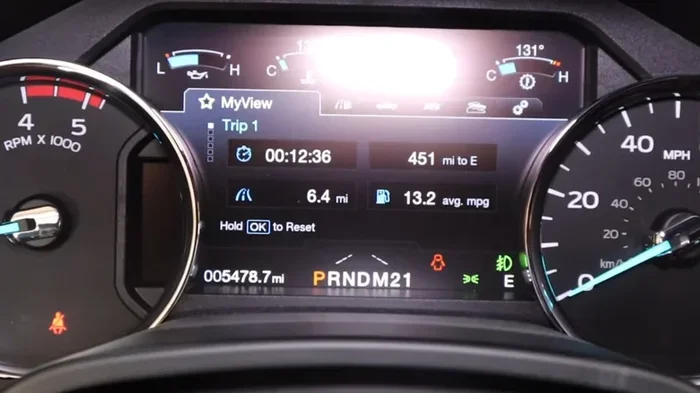
Most modern vehicles have a built-in trip computer that displays your real-time and average MPG. You can usually find this on your dashboard display or infotainment screen. While these readings are estimates, they give you a good general idea of your fuel economy between fill-ups.
Conclusion
MPG is one of the most important numbers to understand as a car owner. It affects your budget, your driving habits, and even your environmental impact. Now that you know exactly what MPG is and how MPG is calculated, you have the tools to take control of your fuel economy.
Remember, calculating your own MPG using the fill-up method gives you the most accurate picture of your real-world fuel efficiency. Comparing that number to the EPA rating helps you understand how your driving habits stack up. And making small improvements, like smoothing your acceleration and keeping your tires properly inflated, can boost your MPG noticeably over time.
The beauty of understanding MPG is that it empowers you. You can make smarter decisions at the dealership, budget more accurately for gas, and feel good about reducing your fuel consumption. Start tracking your MPG today, and you will never look at the gas pump the same way again.