How Do I Find the Exact Paint Code for My Car Today
Finding the exact paint code for your car is easier than you think. Whether you need touch-up paint, a full respray, or just want to match a small dent repair, knowing your car paint color code saves time and money. This guide walks you through every method to locate your factory paint code fast and accurately.
Have you ever tried to touch up a scratch on your car and ended up with a color that looks completely off? It is frustrating. The problem is almost always the same. You do not have the right paint code for car. Without the exact code, even the best paint shop cannot get a perfect match. Finding your exact paint code is the first step to getting your car looking brand new again.
Maybe you just bought a used car and the previous owner touched up a door ding with the wrong color. Maybe you want to order touch up paint for a small chip before rust sets in. Or perhaps you are planning a full respray and need the OEM paint code for your automotive paint supplier. Whatever your reason, this guide will show you exactly how to find it.
We will cover every method you can use. From checking common locations on your vehicle to using online paint code lookup tools. We will also share tips on avoiding mistakes that waste your time and money. By the end, you will know exactly how to find your car paint color code in minutes.
Key Takeaways
- Check the door jamb sticker: Most cars list the paint code on a label inside the driver’s door frame.
- Use your VIN: A VIN decoder can reveal your vehicle’s factory color code in seconds.
- Look under the hood: Many manufacturers place paint code stickers near the radiator support or inner fender.
- Online tools help: Free lookup tools from paint suppliers and manufacturer sites make finding codes simple.
- Contact your dealer: Dealerships can pull your exact OEM paint code using the VIN or registration details.
- Avoid common mistakes: Never rely on the paint name alone. Always use the alphanumeric code for accuracy.
- Act fast after finding it: Order touch-up paint or save the code for future reference right away.
📑 Table of Contents
- Why Finding the Exact Paint Code Matters
- Where to Look for Your Car Paint Code
- Using the VIN to Decode Your Paint Code
- Online Paint Code Lookup Tools and Resources
- Getting Help from Dealerships and Body Shops
- Common Mistakes When Looking Up Paint Codes
- What to Do Once You Have Your Paint Code
- Quick Tips for Paint Code Success
- Final Thoughts
Why Finding the Exact Paint Code Matters
You might wonder why you cannot just tell a paint shop the name of your car color. Say your car is “Midnight Black” or “Ocean Blue Metallic.” That sounds specific enough, right? Wrong. Car manufacturers use the same color names across many different models and years. The formula for “Midnight Black” on a 2015 Honda Civic is completely different from the one on a 2020 Toyota Camry.
Every vehicle has a unique color formula assigned by the factory. This formula includes the exact mix of pigments, clear coat, and base layers. The factory paint code is a short alphanumeric string that identifies this specific formula. Think of it like a recipe number. Without the right number, you get the wrong recipe.
Here is why this matters so much:
- Color accuracy: Even a slight formula difference creates a visible mismatch. Your touch-up patch might stand out more than the original scratch.
- Metallic and pearl finishes: These special paint types use different flake sizes and orientations. Only the exact code captures the right sparkle effect.
- Resale value: A poorly matched paint job can lower your car’s resale value. Buyers notice uneven panels immediately.
- Time and money: Getting a color match wrong means another trip to the shop. You pay twice and wait longer.
The bottom line is simple. Your car paint color code is the single most important piece of information for any paint job. Take five minutes to find it now. It will save you hours of hassle later.
Where to Look for Your Car Paint Code
The paint code location varies by car brand and model. But there are a few spots where manufacturers almost always place the sticker or plate. Let us walk through each one so you know exactly where to check first.
Check the Driver’s Door Jamb
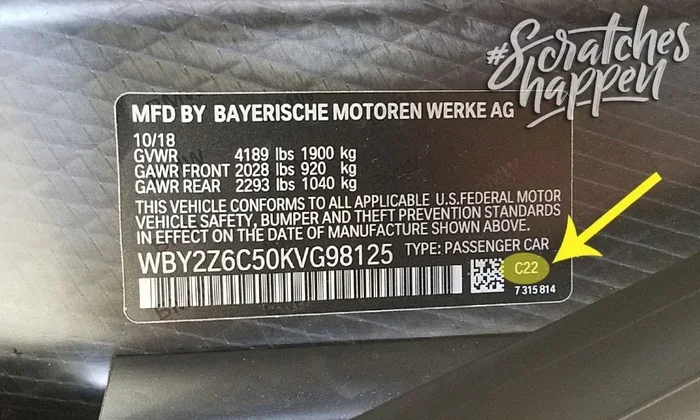
This is the most common paint code location. Open your driver’s door and look at the door frame or the B-pillar. You are looking for a sticker or metal plate. It usually contains a lot of information. Tire pressure, vehicle weight, model details, and yes, the paint code sticker.
On many Ford, Chevrolet, and Toyota models, the code is clearly labeled “Paint Code” or “Color Code.” It is usually a short combination of letters and numbers like “WA” or “2T0” or “9C11.” Write this down or take a clear photo with your phone.
If you do not see it on the door jamb, do not worry. Not every car puts it there. Move on to the next location.
Look Under the Hood
Many car makers place a label on the inner fender or near the radiator support. Open your hood and look around the edges. On Honda and Acura vehicles, you will often find it on the driver’s side inner fender. On Volkswagen and Audi cars, check the radiator support cross member.
This spot is great because it is protected from weather. The sticker stays clean and legible for years. Just make sure your car is cool before reaching inside. You do not want to burn yourself on a hot engine.
Check the Trunk or Glove Box
Some manufacturers place the color code sticker in less obvious spots. On certain BMW models, you can find it inside the trunk lid. On older Mercedes-Benz cars, check the glove box area. On some Nissan and Infiniti models, look inside the rear seat area or under the trunk mat.
If you have trouble finding it, flip through your owner’s manual. Many manuals include a diagram showing the paint code location for your specific model.
Check the VIN Plate or Firewall
The vehicle identification number plate is another common spot. Look on the dashboard near the windshield or on the firewall inside the engine bay. Some brands like Hyundai and Kia place a data plate on the driver’s side door that includes the paint code alongside the VIN.
If you see a plate with a long list of numbers and codes, look for any label that says “Color,” “Paint,” or “Exterior Color.” The OEM paint code is usually right there.
Using the VIN to Decode Your Paint Code
What if you cannot find the physical sticker? Maybe it faded, or someone removed it, or your car simply does not have one in an obvious spot. In that case, your vehicle identification number is your best friend. Every car built since 1981 has a unique VIN. And that VIN contains a wealth of information about your vehicle, including the factory color.
What Is a VIN Decoder?
A VIN decoder is an online tool that breaks down your VIN into individual data points. Each section of the VIN represents something specific. The first three digits identify the manufacturer. The fourth through eighth digits describe the vehicle features, including the body type, engine, and often the paint color. The tenth digit tells you the model year.
You can use a VIN decoder to find your car paint color code without ever opening the hood. Here is how it works:
- Find your VIN. It is on the dashboard near the windshield on the driver’s side. You can also check your registration card or insurance documents.
- Go to a reliable VIN decoder website. Many are free.
- Enter your 17-character VIN.
- Look for the “Paint Code” or “Exterior Color” section in the results.
Limitations of VIN Decoders
VIN decoders are helpful, but they are not perfect. Some decoders only provide the general color name, not the specific paint code. Others may not have data for older vehicles or rare models. If the decoder does not give you the code, do not give up. Try the physical sticker methods described above. You can also contact the manufacturer directly.
Contacting the Manufacturer
Most major car manufacturers have customer service lines that can look up your factory paint code using your VIN or registration number. Call the brand’s customer support, provide your VIN, and ask for the exterior paint code. They can usually pull it up within minutes. This method works especially well for newer vehicles where the manufacturer keeps detailed records in their system.
Online Paint Code Lookup Tools and Resources
The internet has made finding paint codes much easier. Several websites and tools can help you get your car paint color code quickly. Let us look at the best options available.
Paint Supplier Websites
Major automotive paint suppliers like Axalta, PPG, and Sherwin-Williams offer free online paint code lookup tools. You enter your car’s make, model, year, and sometimes the VIN. The tool returns the correct OEM paint code and often links directly to the touch-up paint product you need.
These tools are especially useful because they also show you the color match formula for your specific year and trim level. Remember, the same model can have different paint codes depending on the production year and package level.
Manufacturer Websites and Owner Portals
Many car brands now offer owner portals on their websites. If you register your vehicle online, you can often access a digital owner’s manual and vehicle details. Some portals include your paint code alongside other vehicle specifications. Check your brand’s website and look for a “Vehicle Info” or “My Car” section after logging in.
Third-Party Paint Code Databases
Several independent websites maintain extensive databases of car manufacturer paint codes. These sites compile information from thousands of models across decades. You can search by brand, model, and year to find the code. Some popular options include PaintScratch, AutomotiveTouchup, and Codefinder sites dedicated to specific brands like Ford or GM.
Always double-check any code you find against a second source. Enter the code into another lookup tool or compare it with your physical sticker if you have one. This simple step prevents ordering the wrong paint.
Mobile Apps for Paint Code Lookup
If you prefer using your phone, several mobile apps can help. Apps like “Paint Code Finder” and “Car ID” let you scan your VIN or search by vehicle details. Some apps even use your phone camera to show you the original color on screen. This is a great visual confirmation that you have the right code.
Getting Help from Dealerships and Body Shops
If all else fails, you can always get professional help. Car dealerships and body shops deal with paint code lookup every day. They have access to manufacturer databases and specialized tools.
Visiting Your Car Dealership
Walk into your local dealership with your VIN or registration. The parts department can look up your exact paint code in seconds. Many dealerships will even sell you the touch up paint directly. This is often the fastest and most reliable method, especially for newer vehicles.
Bring your VIN with you. The parts team will enter it into their system and pull up your vehicle’s full specifications, including the factory paint code. Some dealerships charge a small fee for this service, but many provide it for free.
Asking a Body Shop for Help
Local body shops are another great resource. A qualified body shop paint matching specialist can look up your code and also verify it using their color matching equipment. They often have access to professional automotive paint matching systems that cross-reference your VIN with the correct formula.
Some body shops will do this lookup for free if you are already a customer. Even if you are not, most shops are happy to help because they want your business for the actual repair work.
Using Your Vehicle Registration
If you do not have your VIN handy, your vehicle registration can work as an alternative. The registration lists your make, model, year, and trim level. A dealership or paint supplier can use this information to narrow down the correct color code. However, the VIN is always the most precise method because it accounts for production changes and special editions.
Common Mistakes When Looking Up Paint Codes
Even with so many resources available, people still make mistakes when trying to find their paint code for car. Here are the most common errors and how to avoid them.
Confusing the Paint Name with the Paint Code
This is the number one mistake. Your car might be called “Ruby Red Metallic” in the brochure, but the actual paint code is “R97” or “4U.” Never use the color name alone when ordering paint. Always use the alphanumeric code. The name is just a marketing label and it can be reused across different formulas.
Ignoring the Year and Trim Level
Paint formulas change between model years. A 2018 Honda Civic and a 2020 Honda Civic might share the same color name but have different codes. Always include the exact year and trim level when searching. A color match formula that works for one year might not work for the next.
Relying on a Faded or Damaged Sticker
If the physical sticker on your car is faded or damaged, do not guess the code. A smudged “7” could look like a “1.” Take the time to verify the code through a second method. Use a VIN decoder, contact the dealer, or check an online database to confirm what the sticker says.
Ordering Touch-Up Paint Without Verifying the Code
It is tempting to order touch up paint as soon as you find a code that seems right. But always verify first. Check the code against at least two sources. If the first source gives you “3B4” and the second gives you “3B5,” do not guess. Contact the manufacturer or dealer to resolve the discrepancy.
What to Do Once You Have Your Paint Code
Congratulations. You found your exact paint code. Now what? Here is how to make the most of it.
Order Touch-Up Paint Immediately
Use your code to order touch up paint from a reputable supplier. Most touch-up paint kits include the base color and a clear coat. Apply the paint carefully to the damaged area using the included brush or pen applicator. Let it dry completely before applying the clear coat.
Store your paint code in a safe place. You never know when you might need it again. A small chip from a grocery cart can happen at any time, and having the code ready means you can fix it before rust develops.
Save the Code for Future Reference
Take a photo of your paint code sticker and save it in your phone. You can also write it down and keep it in your glove box. If you ever sell the car, having the code handy adds value because the new owner will appreciate the touch-up paint and any future repair work.
Share the Code with Your Insurance or Body Shop
If you file an insurance claim for paint damage, provide the OEM paint code to the adjuster. This ensures the body shop uses the correct formula. Do not let an insurance company guess the color. Give them the exact code and avoid a poor match.
Quick Tips for Paint Code Success
- Always use the alphanumeric code, not the color name.
- Check multiple locations on your car before giving up.
- Verify the code through at least two different sources.
- Include the model year and trim level in every search.
- Save the code digitally so you never lose it.
- Order paint from a trusted supplier that guarantees color match.
- Act quickly on chips and scratches to prevent rust damage.
Final Thoughts
Finding your exact paint code for my car does not have to be a mystery. With the right approach, you can locate it in just a few minutes. Start by checking the driver’s door jamb, the area under the hood, and the trunk. If the sticker is missing or faded, use your VIN with a decoder tool or contact your dealership directly.
Remember that the car paint color code is the key to a perfect repair. Whether you are ordering touch up paint for a small chip or planning a full respray, the code ensures you get the right color match formula every time. Avoid the common mistake of relying on color names alone. Always use the alphanumeric code.
Once you have your code, save it somewhere safe. Take a photo, write it down, and share it with your body shop or insurance adjuster when needed. This small piece of information saves you time, money, and the frustration of a mismatched paint job.
Now that you know how to find your paint code for car quickly and accurately, you are ready to tackle any touch-up or repair job with confidence. Grab your VIN, check those common locations, and get the exact code your vehicle needs. Your car deserves the right color, and now you know exactly how to get it.
Frequently Asked Questions
Can I find my car paint code using just the make and model?
Sometimes, but it is not recommended. The same make and model can have multiple paint codes depending on the year, trim level, and production run. Always use your VIN or the physical paint code sticker for the most accurate result.
What if the paint code sticker on my car is completely gone?
Do not worry. You can still find your factory paint code using a VIN decoder online or by contacting your dealership with your VIN. The vehicle identification number links directly to your car’s original specifications.
Is the paint code the same on all four doors?
Yes, on most vehicles the paint code sticker is only on the driver’s side. However, some manufacturers place matching codes on multiple doors or on the passenger side as well. Check both if you do not find it on the driver’s door jamb.
Can I use a paint code from a different country for my car?
No. Paint formulas can vary by region due to different environmental regulations and material availability. Always use the code specific to your vehicle’s market and production location.
How long does a touch-up paint job last if I use the correct paint code?
With the right OEM paint code and proper application, a touch-up repair can last for years. Use the matching clear coat, apply in thin layers, and avoid washing the area for at least 30 days to ensure durability.
Are aftermarket paint codes the same as factory codes?
Not always. Aftermarket suppliers sometimes reformulate their paints. However, reputable suppliers use the same OEM paint code to match the factory formula. Always confirm with the supplier that their product matches your specific factory code exactly.