1 Litre Petrol How Many Km in Car and Boost Mileage
Many drivers wonder how far 1 litre petrol can go in a car. The answer depends on your vehicle type, engine size, and driving habits. On average, most cars deliver between 10 and 15 km per litre of petrol. With the right mileage booster tips, you can push that number higher and save significantly on fuel costs. This guide covers everything from basic fuel economy facts to actionable ways to boost your car’s mileage starting today.
Key Takeaways
- Average Range: Most petrol cars deliver 10 to 15 km per litre under normal conditions.
- Fuel Efficiency Matters: Small hatchbacks and hybrids often achieve the best kmpl ratings.
- Driving Habits Count: Smooth acceleration and steady speeds dramatically improve mileage.
- Simple Maintenance: Proper tire pressure and clean air filters boost petrol mileage tips naturally.
- Avoid Common Mistakes: Idling, overloading, and aggressive driving waste fuel fast.
- Calculate Your Km/L: Tracking your own fuel economy helps you spot problems early.
- Boost Mileage Now: Small changes in routine can lead to big savings over time.
📑 Table of Contents
- How Far Can 1 Litre Petrol Go in Your Car?
- What Affects How Far 1 Litre Petrol Can Take You?
- Average Km Per Litre for Different Car Types
- Practical Tips to Boost Your Mileage
- Common Mistakes That Waste Petrol
- The Science Behind Fuel Efficiency
- How to Calculate Your Car’s Km Per Litre
- How to Save Money on Petrol Over the Long Run
- Conclusion
How Far Can 1 Litre Petrol Go in Your Car?
You fill up your tank, drive a few kilometres, and wonder: 1 litre petrol how many km in car? It is a simple question, but the answer is not always straightforward. Many factors decide how far your fuel takes you. Understanding these factors helps you get more kilometres from every drop.
On average, a standard petrol car gives you around 10 to 15 kilometres per litre. But this number changes a lot depending on your vehicle, how you drive, and even the road conditions. A small hatchback might give you 18 km per litre, while a large SUV could manage only 7 or 8. Knowing your car’s fuel efficiency helps you plan trips and budget for fuel costs.
Fuel economy is not just a number on a sticker. It reflects real-world driving. Your daily commute, weekend road trips, and even short errands all affect how much petrol you use. The good news is that you have more control over this than you might think. A few smart changes can seriously improve your car’s mileage.
In this article, we break down everything you need to know. We look at what affects km per litre, share practical mileage booster tips, and help you avoid common mistakes. By the end, you will know exactly how to get the most out of every litre of petrol in your tank.
What Affects How Far 1 Litre Petrol Can Take You?
Not all cars are the same. Not all driving is the same. Many variables come into play when figuring out your petrol mileage. Let us look at the biggest ones.
Engine Size and Type
Your engine is the heart of your car. A smaller engine, like a 1.0-litre or 1.2-litre unit, usually sips petrol. It needs less fuel to move the car. A bigger engine, like a 2.0-litre or 3.0-litre, uses more fuel because it produces more power. This directly impacts your kmpl (kilometres per litre) rating.
Hybrid and turbocharged engines add another layer. Hybrids use both a petrol engine and an electric motor. This combo can push your fuel economy rating well above average. Turbocharged engines pack more power into a smaller unit, which can also help with fuel efficiency.
Driving Conditions
Where you drive matters a lot. Highway mileage is usually better than city mileage. On the highway, you drive at a steady speed. Your engine works at a consistent level. In the city, you stop and go constantly. Each time you brake and accelerate, you use extra fuel.
Traffic jams are a mileage killer. Sitting in traffic with your engine idling burns petrol without moving you forward. If your daily commute involves heavy city traffic, expect your km per litre to drop below the average range.
Vehicle Weight and Aerodynamics
Heavier cars need more energy to move. If you carry heavy loads or roof boxes, your car uses more fuel. Vehicle weight is one of the simplest factors to control. Clean out your boot. Remove unnecessary items. Every extra kilogram costs you a little fuel over time.
Aerodynamics also play a role. Roof racks and spoilers change how air flows over your car. Poor aerodynamics create drag. More drag means your engine works harder. That means more petrol burned and fewer kilometres covered.
Average Km Per Litre for Different Car Types
Curious about where your car stands? Here is a general look at fuel economy across popular car types. These numbers give you a rough idea of what to expect.
Small Hatchbacks
Small hatchbacks are champions of fuel efficiency. Cars like the Maruti Suzuki Alto, Hyundai Grand i10, and Volkswagen Polo often deliver 15 to 20 km per litre. Their light weight and small engines make them perfect for city driving. If you want the best petrol mileage tips in a budget car, a hatchback is a great starting point.
Sedans
Mid-size sedans typically give you 12 to 16 km per litre. Models like the Honda City and Hyundai Verna balance comfort with decent mileage. They are heavier than hatchbacks, but their engine tuning helps keep fuel use reasonable. Sedans are a solid choice if you need more space without sacrificing too much economy.
SUVs and Crossovers
SUVs are the thirstiest of the bunch. A typical petrol SUV delivers only 8 to 12 km per litre. Their large bodies, heavy weight, and powerful engines burn through fuel fast. If you drive an SUV, boosting your mileage becomes even more important. The tips in this article will help you squeeze out every possible kilometre.
Hybrid and Electric-Assist Cars
Hybrid cars are changing the game. Models like the Toyota Prius and Honda City e:HEV combine a small petrol engine with an electric motor. They can deliver 20 km per litre or more in some cases. Fuel economy in these cars is outstanding because the electric motor handles low-speed driving, saving petrol for highway stretches.
| Car Type | Average Km per Litre | Best For |
|---|---|---|
| Small Hatchback | 15 – 20 km/L | City commuting, budget driving |
| Sedan | 12 – 16 km/L | Family trips, highway driving |
| SUV | 8 – 12 km/L | Off-road, large families |
| Hybrid | 18 – 25 km/L | Maximum fuel economy |
These numbers are averages. Your real-world results will vary based on how and where you drive. Use them as a guide, not a guarantee.
Practical Tips to Boost Your Mileage
Want to know how to get more kilometres from every litre? Here are proven mileage booster strategies that really work. You do not need expensive modifications. Most of these tips are free and easy to follow.
Drive Smoothly and Steadily
Your driving habits are the single biggest factor in fuel economy. Aggressive acceleration wastes petrol. Slamming the brakes wastes the energy you just burned. Instead, accelerate gently and maintain a steady speed. Think of your right foot as a gentle tool, not a weapon.
On the highway, use cruise control if your car has it. It keeps your speed constant and helps your engine work efficiently. This simple habit can improve your highway mileage by 10 to 15 percent.
Keep Your Tires Properly Inflated
Under-inflated tires create rolling resistance. Your engine has to work harder to overcome this resistance. That means more petrol burned. Check your tire pressure at least once a month. Follow the recommended PSI listed on your driver’s door sticker. This one car maintenance task pays for itself many times over.
Remove Unnecessary Weight
Your car does not need extra weight. Clean out your boot regularly. Remove roof boxes when you are not using them. Every kilogram you carry costs fuel. Think of it this way: would you rather carry a heavy backpack while walking or walk light? Your car feels the same way.
Use Air Conditioning Wisely
AC fuel consumption is real. Your air conditioning system puts extra load on your engine. At low speeds, opening the windows is more efficient. At high speeds, closed windows with AC are better because open windows create drag. Find the balance that works for your driving situation.
Plan Your Trips Smartly
Combine errands into one trip. Cold starts use more fuel because your engine needs time to warm up. Several short trips from a cold start burn much more petrol than one longer trip. Plan your route to avoid heavy traffic and construction zones whenever possible.
Stick to Your Service Schedule
Regular car maintenance keeps your engine running smoothly. Change your oil on time. Replace dirty air filters. Clean or replace spark plugs when needed. A well-maintained engine burns fuel more efficiently. Skipping services might save you a small bill now, but it costs you more in fuel later.
Quick Tips for Better Mileage
- Turn off your engine at long red lights or railway crossings.
- Use the recommended grade of engine oil for your car.
- Keep your windows closed at speeds above 60 km/h.
- Avoid revving your engine unnecessarily in neutral.
- Use navigation apps to find the shortest, least congested routes.
Common Mistakes That Waste Petrol
Some habits quietly drain your fuel tank. You might not even notice them. Here are the most common mistakes that hurt your fuel efficiency.
Idling for Too Long
Leaving your engine running while parked burns fuel for zero kilometres. If you expect to wait for more than a minute, turn off the engine. Modern cars use very little fuel to restart. Idling for long periods is one of the easiest ways to waste petrol.
Overloading Your Car
Carrying heavy items everywhere you go adds weight. Extra weight means more fuel burned. Only carry what you need. If you have a roof rack that is not in use, take it off. It creates drag even when empty.
Ignoring Dashboard Warnings
Your car tells you when something is wrong. Check engine lights, low oil warnings, and tire pressure alerts all matter. Ignoring them can lead to reduced engine efficiency and higher fuel use. Pay attention to what your car is trying to tell you.
Using the Wrong Fuel
Always use the fuel grade recommended by your car manufacturer. Using a lower grade might seem cheaper, but it can hurt your engine efficiency over time. Using a higher grade than needed does not improve mileage. Stick to what your owner’s manual says.
Racing the Engine
Redlining your engine before shifting gears (in manual cars) wastes fuel. Shifting at the right RPM keeps your engine in its efficient range. For most petrol cars, shifting between 2,000 and 3,000 RPM is ideal. Let your car do the work at the right time.
The Science Behind Fuel Efficiency
You do not need to be a mechanic to understand why some cars go further on a litre of petrol. The basic idea is simple: energy in versus energy out. Petrol contains chemical energy. Your engine converts that energy into motion. But not all of it becomes forward movement. Some is lost as heat, some as friction, and some as noise.
A fuel efficient car wastes less energy. It uses more of the petrol’s energy to actually move the car forward. Engineers work hard to improve engine efficiency through better combustion, lighter materials, and smarter computer controls. But you also play a big role. How you drive and how well you maintain your car directly affects your km per litre numbers.
Understanding this basic science helps you make better choices. When you know that idling wastes fuel and smooth driving saves it, you naturally adjust your habits. Fuel efficiency is not magic. It is physics, maintenance, and smart decisions working together.
How to Calculate Your Car’s Km Per Litre
Do not rely only on what the manufacturer claims. Your real-world fuel economy might be different. Here is how to calculate it yourself at home.
- Fill your tank completely and reset your trip meter.
- Drive normally until you need to refuel.
- Fill up again and note how many litres it takes to fill the tank.
- Check your trip meter for the total kilometres driven.
- Divide the kilometres by the litres used.
The result is your personal kmpl figure. Track this over several tanks to get an average. If your number drops significantly, it might be time for a service or to check for issues like low tire pressure or a dirty air filter.
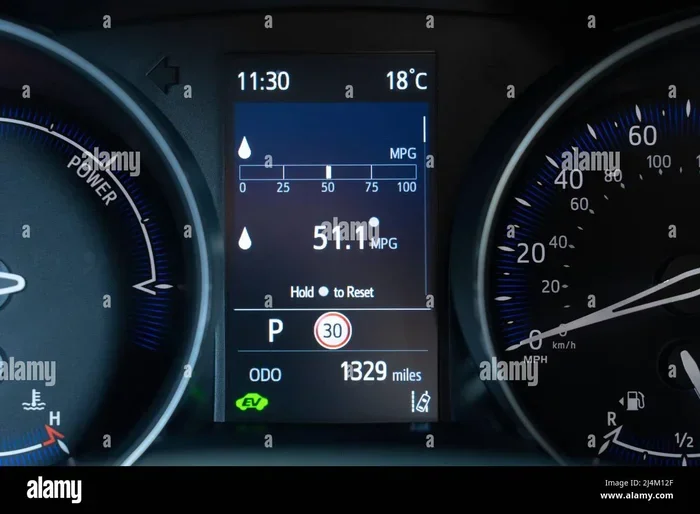
Many modern cars also have a onboard mileage calculator in the trip computer. Check your dashboard display for instant and average fuel economy readings. These can be handy, but calculating it manually from time to time keeps you honest and aware.
How to Save Money on Petrol Over the Long Run
Improving your km per litre is great, but saving money is the real goal for most drivers. Here are a few extra strategies beyond driving habits.
Compare fuel prices in your area. Apps and websites make it easy to find the cheapest petrol near you. Even saving a few paise per litre adds up over hundreds of fill-ups. Consider joining a fuel rewards program if your local station offers one.
Think about your fuel budget at the start of each month. Estimate how many kilometres you drive and divide by your car’s average fuel efficiency. This gives you a realistic idea of how much petrol you need. When you track your spending, you naturally become more mindful of waste.
If you are shopping for a new car, compare fuel economy ratings carefully. A car that gives 18 km per litre instead of 12 km per litre can save you thousands of rupees over its lifetime. The upfront cost might be slightly higher, but the savings at the pump more than make up for it.
Conclusion
1 litre petrol how many km in car is a question every driver should understand. The answer is not a single number. It depends on your vehicle type, driving habits, road conditions, and how well you maintain your car. On average, expect 10 to 15 km per litre, but with the right approach, you can push that higher.
Boosting your mileage is not about expensive upgrades. It is about smart habits, regular maintenance, and paying attention to the little things. Check your tire pressure, drive smoothly, remove extra weight, and plan your trips wisely. These simple steps add up to real savings over weeks and months.
Your fuel efficiency is in your hands more than you might think. Every smooth acceleration, every properly inflated tire, and every well-planned trip contributes to better kmpl numbers. Start applying these tips today and watch your fuel costs drop. The road ahead becomes cheaper and more enjoyable when you make the most of every litre of petrol in your tank.
Frequently Asked Questions
How many km can 1 litre petrol run in a car?
On average, most petrol cars run between 10 and 15 km per litre. Small hatchbacks can reach 15 to 20 km per litre, while larger SUVs might manage only 8 to 12 km per litre. Your actual results depend on driving conditions, vehicle type, and maintenance.
What is the best way to improve km per litre?
The best ways include driving smoothly, maintaining steady speeds, keeping tires properly inflated, and removing unnecessary weight from your car. Regular servicing and using the right fuel grade also help. These simple steps can boost your fuel efficiency by 10 to 20 percent.
Does AC really affect fuel economy?
Yes, AC fuel consumption does affect your mileage. The air conditioning system puts extra load on your engine. At low city speeds, using AC can reduce your kmpl by 10 to 15 percent. At highway speeds, using AC with closed windows is more efficient than having windows down due to reduced drag.
Is it better to drive in the city or on the highway for fuel economy?
Generally, highway driving gives better fuel economy than city driving. City driving involves frequent stops and starts, which waste fuel. Highway driving allows steady speeds and efficient engine operation. However, very high speeds above 100 km/h can also reduce mileage due to increased aerodynamic drag.
How often should I check my tire pressure for better mileage?
Check your tire pressure at least once a month and before long trips. Under-inflated tires create rolling resistance that forces your engine to work harder. This directly reduces your petrol mileage. Keeping tires at the recommended PSI is one of the easiest ways to boost mileage.
Does car age affect fuel efficiency?
Yes, older cars tend to have slightly lower fuel efficiency due to worn engine parts, carbon buildup, and older technology. Regular maintenance can help keep an older car’s km per litre numbers reasonable. However, if your older car’s mileage drops suddenly, it may need a service or repairs.
=== META TITLE ===
1 Litre Petrol Km in Car | Boost Mileage Tips
=== URL SLUG ===
1-litre-petrol-how-many-km-in-car-and-boost-mileage