What Vehicles Come with HomeLink Garage Door Opener
Many popular car brands offer HomeLink garage door opener as a standard or optional feature in their vehicles. You will find HomeLink compatible cars from manufacturers like Toyota, Ford, BMW, Chevrolet, and Mercedes-Benz across SUVs, sedans, and trucks. This guide covers which vehicles come with HomeLink, how the system works, and tips for getting the most out of your built-in garage door integration.
Imagine pulling into your driveway on a rainy evening. You grab your groceries, walk to your car, and press a button mounted on the sun visor. Your garage door swings open without you ever fumbling for a remote. That is the magic of HomeLink. It is one of those small car features that completely changes your daily routine once you experience it.
If you are shopping for a new vehicle or just curious about what HomeLink offers, you have come to the right place. This article answers the big question: what vehicles come with HomeLink garage door opener built right into the car? We will walk through compatible car brands, how the system works, and everything else you need to know about this handy convenience feature.
The HomeLink system has been around for decades, and it keeps getting better. Modern versions support rolling code technology, which makes your garage more secure. Some even connect to smart home platforms like MyQ. Whether you drive a compact sedan or a full-size truck, there is a good chance your next car might already include this feature.
Key Takeaways
- Wide Vehicle Coverage: Major brands like Toyota, Ford, BMW, and Chevrolet offer HomeLink compatible cars across multiple trim levels.
- Standard or Optional: Some models include HomeLink as standard equipment, while others offer it as part of a convenience package.
- Universal Compatibility: HomeLink garage door openers work with most garage door brands, including Chamberlain, LiftMaster, and Genie.
- Easy Programming: Setting up HomeLink in your car is a simple process that takes just a few minutes.
- Modern Upgrades: Newer HomeLink systems support rolling code technology and smart home integration through MyQ.
- Replacement Options: If your car lacks HomeLink, universal transceiver kits can add the feature easily.
📑 Table of Contents
- What Is HomeLink and Why Does It Matter?
- Vehicles That Come with HomeLink
- How HomeLink Works in Your Car
- Programming Your HomeLink System
- HomeLink vs. Universal Garage Door Remotes
- Troubleshooting Common HomeLink Issues
- Tips for Getting the Most Out of HomeLink
- Should You Choose a Vehicle with HomeLink?
What Is HomeLink and Why Does It Matter?
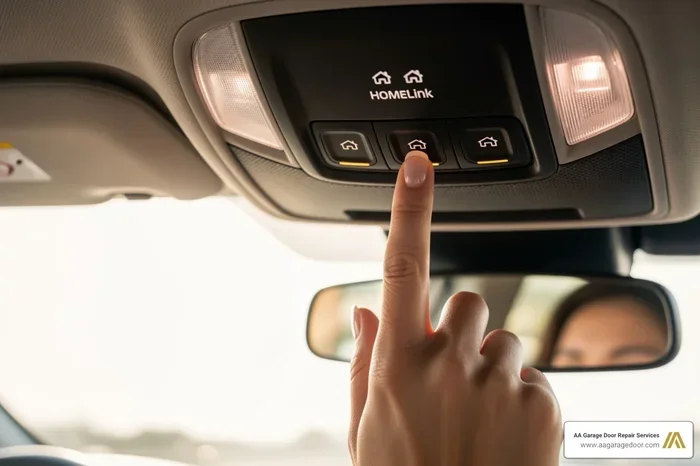
HomeLink is a built-in wireless control system found in many vehicles. It replaces the need for a separate handheld garage door remote. Instead, a small transmitter is embedded in your car, usually near the rearview mirror or on the overhead console. You program it once, and then you can open and close your garage door with the touch of a button.
So why does this matter? Convenience is the biggest reason. Think about how many times a day you interact with your garage door. If you carry groceries, walk the dog, or simply want a seamless arrival experience, HomeLink garage door opener integration saves you time and hassle. You do not need to dig through your pockets or worry about dropping a remote.
Security is another advantage. HomeLink systems use encrypted signals, especially with rolling code technology. This means the code changes every time you use it, making it much harder for someone to copy your signal. Compared to older universal remotes, HomeLink offers a more reliable and secure connection between your car and garage door.
Let us also talk about resale value. Cars with HomeLink often appeal to more buyers. It is one of those features that people notice and appreciate. When you decide to sell or trade in your vehicle, having a built-in garage door integration system can set your car apart from similar models without it.
How HomeLink Differs from Universal Remotes
A universal remote plugs into your car’s cigarette lighter or attaches to the windshield. It works, but it adds clutter and can fall off. HomeLink, on the other hand, is permanently installed in your vehicle. It is integrated into the car’s electrical system from the factory, which means a cleaner look and a more reliable connection.
Another key difference is compatibility. Most universal remotes work with basic garage door openers, but they may struggle with newer models that use rolling codes. HomeLink handles both fixed-code and rolling-code openers with ease. This makes it a far superior choice for integrated garage door opener functionality.
Vehicles That Come with HomeLink
Now let us get to the heart of the matter. What vehicles come with HomeLink garage door opener? The answer is broader than you might think. Many car manufacturers offer HomeLink compatible cars across their lineup. Some include it as standard equipment, while others list it as part of a convenience or technology package.
Below is a breakdown of popular brands and their approach to HomeLink integration. Keep in mind that availability can vary by model year and trim level, so always double-check with the manufacturer or dealer.
Toyota and Lexus
Toyota has been a leader in offering HomeLink across its vehicle lineup. Most Toyota SUVs and trucks, including the RAV4, Highlander, 4Runner, and Tacoma, come with HomeLink as either standard or optional equipment. Lexus models, being Toyota’s luxury division, also feature HomeLink in many of their vehicles.
For example, the Toyota RAV4 often includes HomeLink in its convenience package. The Toyota Camry may offer it on higher trims. If you are a Toyota shopper, there is a strong chance you can find HomeLink in the model you want.
Ford
Ford offers HomeLink on many of its vehicles, especially in the SUV and truck segments. The Ford Explorer, Ford Escape, Ford Expedition, and Ford F-150 frequently include HomeLink as part of their technology or convenience packages. Ford also offers MyQ compatibility in some newer models, which lets you control your garage door from your phone.
If you are looking at a Ford Bronco or Ford Mustang Mach-E, check the trim details carefully. HomeLink may be standard on higher trims or available as an add-on package.
Chevrolet and GMC
General Motors brands like Chevrolet and GMC also embrace HomeLink technology. The Chevrolet Silverado, Chevrolet Tahoe, and Chevrolet Equinox are popular choices that offer HomeLink in various configurations. GMC models like the GMC Sierra and GMC Acadia follow a similar pattern.
Chevrolet has made HomeLink more accessible by including it in many of its mid-range trims. This makes the garage door integration feature available to a wider range of buyers, not just those purchasing top-trim models.
BMW and Mercedes-Benz
Luxury car buyers are not left out. BMW offers HomeLink in many of its SUVs and sedans, including the BMW X5, BMW X3, and BMW 5 Series. Mercedes-Benz integrates HomeLink into vehicles like the Mercedes-Benz GLE, Mercedes-Benz GLA, and Mercedes-Benz E-Class.
In the luxury segment, HomeLink often comes bundled with other premium convenience features. It is part of what makes the in-car experience feel polished and complete. If you are shopping for a luxury vehicle, HomeLink is almost always available as an option or standard feature.
Other Brands with HomeLink Support
Beyond the big names, several other manufacturers offer HomeLink in their vehicles. Here are a few worth mentioning:
- Honda: Many Honda CR-V, Honda Pilot, and Honda Accord models include HomeLink in higher trims.
- Nissan: The Nissan Rogue, Nissan Pathfinder, and Nissan Armada often feature HomeLink integration.
- Jeep: Jeep Grand Cherokee and Jeep Wrangler models frequently offer HomeLink as part of convenience packages.
- Volkswagen: The Volkswagen Tiguan and Volkswagen Atlas include HomeLink in select trims.
- Ram: Ram trucks, including the Ram 1500, often come with HomeLink built in.
As you can see, the answer to what vehicles come with HomeLink is quite extensive. Most major brands recognize the value of built-in garage door control and include it in their offerings.
How HomeLink Works in Your Car
Understanding how HomeLink works helps you appreciate the technology. The system uses a small radio transmitter inside your car. When you press the HomeLink button, it sends a signal to your garage door opener receiver. The receiver then activates the door, either opening or closing it.
The process is simple and wireless. There are no wires to run and no apps to install. Once HomeLink is programmed, it works every time you press the button. The signal range is typically strong enough to reach your garage from quite a distance, even when you are still in your driveway.
The HomeLink Button Location
Most vehicles place the HomeLink buttons in one of three locations:
- Overhead console: Above the front seats, near the sunroof controls. This is the most common placement.
- Sun visor: Mounted on the visor itself, making it easy to reach while seated.
- Dashboard or center console: Some newer models integrate the buttons into the infotainment area or steering column.
Wherever the buttons are located, they are designed to be easy to find and use. The HomeLink system typically includes three buttons, which allows you to program up to three different garage doors or gates.
Rolling Code Technology
One of the most important features of modern HomeLink systems is rolling code technology. Older garage door openers used fixed codes, which meant the same signal was sent every time. This created a security risk because someone could potentially copy the signal.
With rolling code technology, the HomeLink transmitter and your garage door opener exchange a new code every time you use the system. This makes it virtually impossible for someone to intercept and replicate your signal. Most garage door openers made after 1996 support rolling codes, so HomeLink works seamlessly with modern equipment.
Programming Your HomeLink System
Programming HomeLink in your car is straightforward and usually takes less than five minutes. While the exact steps can vary slightly by vehicle, the general process is similar across most HomeLink compatible cars.
Step-by-Step Programming Guide
- Locate the HomeLink buttons in your vehicle. They are usually on the overhead console or sun visor.
- Press and hold two buttons simultaneously until the indicator light starts flashing. This clears any previous programming.
- Position your garage door remote near the HomeLink buttons. You want the remote close to the car’s transmitter.
- Press and hold both buttons at the same time, one from the garage door remote and one from the HomeLink system.
- Wait for the indicator light to change from flashing to solid. This confirms the signal has been learned.
- Test the system by pressing your newly programmed HomeLink button. Your garage door should respond.
If your garage door opener uses rolling code technology, you may need to follow an additional step. Check your garage door opener’s manual for instructions on putting it into “learn” or “smart” mode before programming the HomeLink button.
Tips for Smooth Programming
- Make sure your car is parked outside the garage during programming.
- Keep the garage door remote batteries fresh for a strong signal.
- If the first attempt fails, repeat the process. Sometimes it takes a second try.
- For older garage door openers that use dip switches, you may need to match the switch settings manually on the HomeLink receiver.
HomeLink vs. Universal Garage Door Remotes
When people learn about HomeLink, they often wonder how it compares to a universal garage door remote. Both serve the same basic purpose, but they differ in several important ways.
| Feature | HomeLink | Universal Remote |
|---|---|---|
| Installation | Built into the vehicle | Aftermarket add-on |
| Aesthetics | Clean, integrated look | Visible device on dash or visor |
| Signal Reliability | Strong, factory-quality signal | Varies by brand and model |
| Security | Rolling code support | Depends on the model |
| Number of Devices | Up to 3 garage doors | Usually 1 to 2 |
| Smart Home Integration | MyQ compatible in newer models | Rarely supported |
The comparison makes it clear why HomeLink is the preferred choice for most car owners. It is more convenient, more secure, and more integrated into your vehicle’s design. Universal remotes still have their place, especially for older cars that lack HomeLink, but a built-in system is simply better.
Troubleshooting Common HomeLink Issues
HomeLink is generally very reliable, but like any electronic system, it can occasionally have issues. Here are some common problems and quick fixes.
HomeLink Button Does Not Respond
If pressing the HomeLink button does nothing, start by checking the battery in your garage door remote. A weak remote battery can sometimes interfere with the programming process. Also, make sure your car’s battery is fully charged, as low voltage can affect the HomeLink transmitter power.
Garage Door Opens but Does Not Close
This issue often relates to the garage door opener’s safety sensors. Clean the sensors and make sure nothing is blocking the beam. If the problem persists, try reprogramming the HomeLink button from scratch using the steps outlined above.
Interference from Other Devices
In rare cases, other radio-frequency devices in your car can interfere with HomeLink signals. This is uncommon but can happen with aftermarket electronics or phone chargers. If you experience interference, try moving your phone and other devices away from the HomeLink buttons area.
Tips for Getting the Most Out of HomeLink
Once you have HomeLink set up in your vehicle, a few simple tips can help you get even more out of the system.
Program All Three Buttons
Most HomeLink systems come with three buttons. Use them! You can program one button for your home garage, another for a second garage or gate, and a third for a storage shed or boat lift. This gives you garage door integration for all your access points from one convenient location.
Keep Your HomeLink System Updated
While HomeLink does not require software updates like a smartphone, keeping your garage door opener’s firmware current can improve compatibility. Check your opener manufacturer’s website periodically for updates and new features.
Consider MyQ Integration
If your vehicle supports MyQ HomeLink, take advantage of it. MyQ lets you monitor and control your garage door from your smartphone, even when you are not in the car. You can check if the door is closed, open it remotely, and receive alerts. It adds a whole new layer of convenience to the HomeLink experience.
Replace Your HomeLink System When Needed
If your car is older and the HomeLink system starts malfunctioning, you do not need to replace the entire vehicle. Aftermarket HomeLink replacement units are available and can be installed by a professional or a handy DIYer. These replacement HomeLink universal transceivers plug into your car’s existing wiring and restore full functionality.
Should You Choose a Vehicle with HomeLink?
The short answer is yes. HomeLink is one of those features that you use every single day without even thinking about it. It is one of those car conveniences that makes life noticeably easier once you are used to it. When you are comparing vehicles and one option includes HomeLink while another does not, the choice is pretty clear.
The HomeLink garage door opener is not just a luxury. It is a practical tool that saves time, reduces clutter, and adds a layer of security to your home. Whether you are buying a new Toyota, Ford, Chevrolet, BMW, or any other brand, look for HomeLink in the feature list. It is a small detail that makes a big difference in your daily life.
If your current car does not have HomeLink, do not worry. Aftermarket HomeLink universal transceiver kits are widely available and affordable. They can add this convenient feature to almost any vehicle, giving you the same seamless garage door control that factory-installed HomeLink provides.
In summary, what vehicles come with HomeLink covers a wide range of brands and models. From Toyota and Ford to BMW and Honda, most major manufacturers recognize the value of built-in garage door control. The HomeLink system is reliable, secure, and incredibly convenient. If you have not yet experienced the ease of HomeLink, your next car purchase is a great opportunity to add it to your daily driving experience.
Frequently Asked Questions
What is HomeLink and how does it work?
HomeLink is a built-in wireless control system in vehicles that allows you to open and close your garage door directly from your car. It uses a small radio transmitter mounted in the vehicle to communicate with your garage door opener receiver. You program it once, and then you simply press a button on your sun visor or overhead console to control your garage door.
Which vehicles come with HomeLink as standard equipment?
Many Toyota, Ford, Chevrolet, and Honda models include HomeLink as standard on higher trims or in specific packages. For example, the Toyota RAV4, Ford Explorer, Chevrolet Silverado, and Honda CR-V often feature HomeLink standard in their mid-to-upper trim levels. Always check the specific model and year for exact availability.
Can I add HomeLink to a car that does not have it?
Yes, you can. Aftermarket HomeLink universal transceiver kits are available at most auto parts stores and online retailers. These kits plug into your car’s existing wiring and add HomeLink functionality to vehicles that did not come with it from the factory. Installation is straightforward for most DIYers, or a professional can handle it for you.
Is HomeLink compatible with all garage door openers?
HomeLink is compatible with most garage door openers, including those from Chamberlain, LiftMaster, Genie, and Craftsman. It supports both fixed-code and rolling-code openers. If you have an older opener, you may need a HomeLink security+2 compatible receiver or an adapter to ensure proper function.
Does HomeLink work with smart home systems?
Many newer HomeLink systems support MyQ integration, which connects your garage door to your smartphone. Through the MyQ app, you can monitor your garage door status, open or close it remotely, and receive alerts. Check your vehicle’s features list to see if MyQ HomeLink compatibility is included.
How do I reprogram my HomeLink system?
To reprogram HomeLink, press and hold two HomeLink buttons simultaneously until the indicator light flashes. Then follow the programming steps with your garage door remote. The process typically takes about five minutes. If you are having trouble, consult your vehicle’s owner manual for model-specific instructions.
=== CONCLUSION ===
What vehicles come with HomeLink garage door opener? The answer spans a wide range of brands, models, and trim levels. From Toyota and Ford to BMW and Honda, most major car manufacturers offer HomeLink as either a standard feature or a convenient option. It is one of those small but impactful features that transforms your daily driving experience.
Whether you are programming a new car’s HomeLink system for the first time or retrofitting an older vehicle with an aftermarket HomeLink universal transceiver, the process is simple and the payoff is immediate. You gain convenience, security, and a cleaner, clutter-free driving experience.
Take a moment to check if your current or next vehicle includes HomeLink. If it does, make sure it is programmed and ready to go. If it does not, consider adding the feature with an aftermarket kit. Once you experience the ease of controlling your garage door from behind the wheel, you will wonder how you ever lived without it.