What Are the Three Pedals on a Forklift For Beginners
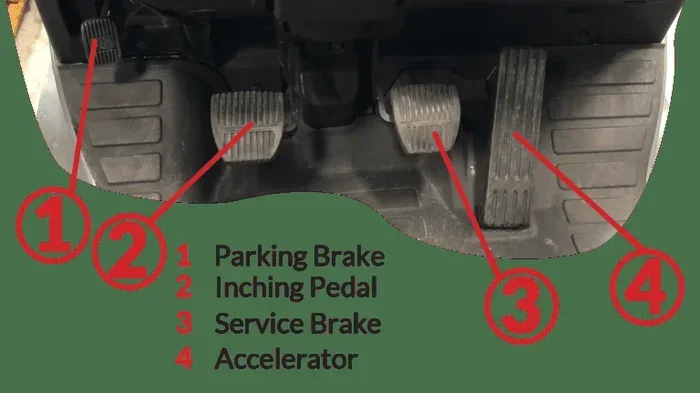
The three pedals on a forklift serve distinct purposes: the brake pedal stops the machine, the inch pedal (or clutch) disengages the transmission for precision control, and the accelerator pedal controls speed. Understanding these forklift pedals is essential for safe and efficient operation. This guide breaks down each pedal’s function so beginners can feel confident behind the wheel.
Key Takeaways
- The brake pedal slows or stops the forklift and is the most frequently used pedal.
- The inch pedal (also called the clutch) allows you to move the forklift at a very slow, controlled speed without pressing the brake.
- The accelerator pedal controls the forklift’s forward speed and should be used gently.
- Pedal coordination is the skill that separates a safe forklift operator from a risky one.
- Forklift pedal layout differs slightly from a car, and beginners often confuse the pedals at first.
- Regular training and practice help build muscle memory for smooth pedal transitions.
- Safety should always come first when operating any industrial equipment with foot pedals.
📑 Table of Contents
- What Are the Three Pedals on a Forklift and Why Do They Matter
- Understanding the Brake Pedal
- The Inch Pedal: Precision Control for Tight Spaces
- The Accelerator Pedal: Controlling Your Speed
- How the Three Pedals Work Together
- Pedal Layouts Across Different Forklift Types
- Training and Practice Tips for Mastering Forklift Pedals
- Common Mistakes Beginners Make with Forklift Pedals
- Expert Insights on Forklift Pedal Control
- Key Takeaways
- Conclusion
What Are the Three Pedals on a Forklift and Why Do They Matter
If you have ever sat in a forklift operator’s seat and stared down at the floor, you might have wondered about the three pedals. They look similar to a car’s pedals, but they work differently. For beginners, understanding forklift pedals is one of the most important steps toward becoming a safe and skilled operator.
The three pedals on a forklift each serve a unique purpose. One stops the machine. One gives you fine control for tight spaces. And the third controls your speed. Together, these pedals let you move heavy loads with precision. Without knowing how they work, even simple tasks can become dangerous.
This guide is designed for anyone who is new to forklift operation. We will walk through each pedal in detail, explain how they work together, and share practical tips that will help you avoid common mistakes. Whether you are preparing for forklift certification or just starting on the job, this article will give you the knowledge you need to feel confident.
Forklift pedals might seem simple at first glance. But mastering them takes practice, patience, and a solid understanding of how each one affects the machine. Let us dive in and break down everything you need to know about the three pedals on a forklift.
Understanding the Brake Pedal
The brake pedal is usually on the right side of the floorboard. In most forklift models, it is the pedal you will use the most during a shift. Its job is straightforward: it slows the forklift down or brings it to a complete stop.
How the Brake Pedal Works
When you press the brake pedal, it activates the forklift’s braking system. This engages the rear wheels’ brakes, which gradually reduces your speed. Unlike in a car, most forklifts use a mechanical or hydraulic braking system that relies on friction to stop the wheels.
Here are some key things to know about the brake pedal:
- It works on the rear wheels, which means the front wheels stay free to steer.
- You should press it gradually to avoid jerky stops that could shift a load.
- On wet or oily floors, the brake may take longer to slow the forklift down.
- The parking brake is a separate mechanism and should always be engaged when you leave the seat.
When to Use the Brake Pedal
You will use the brake pedal in many situations. When approaching a intersection in a warehouse, you need to slow down. When you are about to pick up or set down a load, you need to stop completely. And when you see someone walking ahead, you need to brake immediately.
A good rule of thumb is to anticipate your stops. Do not wait until the last second to press the brake. Instead, ease off the accelerator early and let the forklift slow down gradually. This protects your load, your machine, and the people around you.
The Inch Pedal: Precision Control for Tight Spaces
The second pedal from the left is often called the inch pedal. Some operators also refer to it as the clutch pedal. This pedal is what gives you fine-tuned control when you need to move the forklift very slowly.
What Does the Inch Pedal Do
When you press the inch pedal, it disengages the transmission from the engine. This means the forklift can roll forward or backward at a crawl without the engine revving up. You get smooth, controlled movement without using the brake pedal.
The inch pedal is essential for tasks like:
- Loading and unloading pallets where you need millimeter-level precision.
- Navigating narrow aisles in a warehouse where space is tight.
- Positioning the forks under a load without bumping into anything.
- Moving through pedestrian areas where you need to be extra cautious.
Why Beginners Struggle with the Inch Pedal
Many new operators find the inch pedal confusing at first. They accidentally press it when they mean to use the brake, or they forget to release it when they want to speed up. This is completely normal. It takes time to build the muscle memory needed to switch between pedals smoothly.
One common mistake is pressing the inch pedal and the accelerator at the same time. This can cause the forklift to lurch forward unexpectedly. Always make sure the inch pedal is fully released before you press the accelerator.
The Accelerator Pedal: Controlling Your Speed
The accelerator pedal is on the far left in most forklift designs. Wait, that might sound backwards if you are used to driving a car. In a forklift, the layout is intentionally different for safety reasons. The accelerator is on the left, the brake is on the right, and the inch pedal sits in the middle.
How the Accelerator Pedal Functions
The accelerator controls how fast the forklift moves. When you press it gently, the forklift speeds up slowly. When you lift your foot, it slows down. The response is usually more sensitive in a forklift than in a regular vehicle, which is why beginners should start by pressing very lightly.
Here are some tips for using the accelerator pedal safely:
- Start with very light pressure and increase gradually.
- Never slam the accelerator when starting from a stop, especially with a raised load.
- Lift your foot completely when you want to coast or slow down.
- Be aware of the forklift’s tilt — sudden acceleration with a high load can cause tipping.
The Difference Between Forklift and Car Accelerators
In a car, the accelerator is on the right. In a forklift, it is on the left. This is a deliberate design choice. Placing the brake on the right ensures that if a beginner panics, their foot naturally goes to the brake instead of the accelerator. This small detail can prevent serious accidents.
Always remember this layout when you first get behind the wheel. It might feel strange at first, but with practice, it will become second nature. The pedal arrangement on a forklift is designed to keep you and those around you safe.
How the Three Pedals Work Together
Now that you know what each pedal does individually, let us talk about how they work together. Forklift pedal coordination is a skill that takes time to develop. But once you get the hang of it, operating the machine becomes much smoother and safer.
Think of the three pedals as a team. The brake stops you. The inch pedal gives you control at low speeds. And the accelerator moves you forward or backward. Knowing when to use each one — and in what order — is the key to confident forklift driving.
The Basic Pedal Sequence for Beginners
Here is a simple sequence to follow when starting and moving a forklift:
- Press the brake pedal and start the engine.
- Release the parking brake.
- Press the inch pedal to disengage the transmission.
- Shift into forward or reverse using the gear lever.
- Slowly release the inch pedal while gently pressing the accelerator.
- Use the brake pedal whenever you need to slow down or stop.
This sequence might feel like a lot at first. But after a few practice sessions, it will become automatic. The goal is to make your movements smooth and predictable so that your load stays stable and people around you stay safe.
Common Pedal Mistakes and How to Avoid Them
Even experienced operators sometimes make pedal errors. Here are a few common mistakes to watch out for:
- Confusing the inch pedal with the brake. If you press the inch when you mean to brake, the forklift will not slow down as expected.
- Riding the accelerator. Keeping your foot on the accelerator while driving can cause you to speed up without realizing it.
- Using only the brake in tight spaces. This can cause the forklift to jerk. Use the inch pedal for smoother stops at low speeds.
- Forgetting to release the inch pedal before accelerating. This can cause the forklift to lurch or stall.
Being aware of these mistakes is the first step toward avoiding them. Take your time, stay focused, and always think about what each pedal is doing at any given moment.
Pedal Layouts Across Different Forklift Types
Not all forklifts have the exact same pedal layout. While the basic three-pedal arrangement is standard, there can be slight differences depending on the type of forklift and the manufacturer. Let us look at a few common variations.
Counterbalance Forklifts
The counterbalance forklift is the most common type you will see in warehouses and distribution centers. It typically has the standard three-pedal layout: brake on the right, inch in the middle, and accelerator on the left. The counterbalance design uses the weight of the forklift itself to balance the load, which affects how the pedals feel during operation.
Reach Trucks
Reach trucks are designed for narrow aisle operations. They often have a similar three-pedal setup, but the accelerator may feel more sensitive because these machines are lighter and faster than counterbalance forklifts. Pedal sensitivity can vary, so always test the pedals before you start a shift.
Pallet Jacks and Walkie Stackers
Some smaller industrial equipment, like walkie pallet jacks, may not have all three pedals. They often have a simple accelerator and a brake. Understanding the differences between material handling equipment will help you adapt quickly when you switch between machines.
Training and Practice Tips for Mastering Forklift Pedals
The best way to master the three pedals on a forklift is through hands-on practice and proper forklift training. No amount of reading can replace the feeling of actually operating the machine under supervision.
Start in a Safe, Open Area
Before you try navigating tight aisles or moving heavy loads, practice in an open area with no obstacles. Focus on getting a feel for how each pedal responds. Press the brake gently and notice how the forklift slows down. Try the inch pedal and feel how it allows smooth, creeping movement. Then experiment with the accelerator, starting with very light pressure.
Build Muscle Memory Through Repetition
Muscle memory is your best friend when operating industrial equipment. The more you practice the pedal sequence, the more natural it will feel. Try the full start-up sequence ten times in a row until it becomes second nature. Over time, you will not have to think about which pedal is which — your feet will just know.
Get Feedback from Experienced Operators
If you have access to a mentor or experienced operator, take advantage of it. They can watch your pedal technique and give you real-time feedback. They might notice habits you are not even aware of, like resting your foot on the accelerator or braking too aggressively.
Never Skip Safety Checks
Before every shift, do a quick check of the pedals. Make sure they respond properly and that there is no sticking or unusual resistance. If something feels off, report it immediately. Forklift safety depends on well-maintained equipment, and the pedals are no exception.
Common Mistakes Beginners Make with Forklift Pedals
Learning to operate a forklift is a journey, and mistakes are a natural part of that process. But some mistakes can be dangerous. Here are the most common pedal-related errors that beginners make and how to avoid them.
- Using the wrong pedal in an emergency. When startled, many beginners instinctively press the accelerator instead of the brake. Always position your feet so you can reach the brake quickly.
- Pressing both the inch and accelerator simultaneously. This creates unpredictable movement and can cause the forklift to surge forward.
- Ignoring the inch pedal entirely. Some beginners try to use only the brake and accelerator, which leads to jerky, unsafe movement in tight spaces.
- Not adjusting seat position. If your seat is too far from the pedals, you will lose precise control. Always adjust your seat so you can press each pedal fully and comfortably.
- Wearing loose footwear. Shoes with thick soles or loose laces can get caught under the pedals. Wear snug, flat-soled shoes when operating a forklift.
Being aware of these mistakes puts you ahead of most beginners. The next step is to practice deliberately, focusing on smooth and deliberate pedal movements every single time you operate the machine.
Expert Insights on Forklift Pedal Control
We spoke with experienced forklift trainers to get their top advice for beginners learning to master the pedals. Here is what they had to say.
“The inch pedal is your best friend,” says Mike Torres, a certified forklift instructor with over 15 years of experience. “Many beginners try to skip it and just use the brake and accelerator. But the inch pedal gives you the control you need to move precisely without jerking the machine. Spend time practicing with it, and you will see a huge improvement in your operation.”
“Pedal feel is different for every forklift,” adds Sarah Lin, a warehouse operations manager. “No two machines feel exactly the same. When you switch to a different forklift, take a minute to test the pedals at low speed before you start your real work. This small habit can prevent a lot of problems.”
“The biggest thing I tell beginners is to stay calm,” says James Okafor, a safety officer at a major logistics company. “If you panic, you will press the wrong pedal. Stay focused, think about what you need to do, and let your training guide your feet. The pedals will respond the way you want them to if you stay composed.”
Key Takeaways
- The brake pedal is on the right and is used to slow down or stop the forklift safely.
- The inch pedal sits in the middle and allows for smooth, controlled movement at low speeds without engaging the brake.
- The accelerator pedal is on the left and controls the forklift’s speed — always use it gently.
- The pedal layout on a forklift differs from a car, with the accelerator on the left and the brake on the right for safety.
- Practicing the basic pedal sequence regularly helps build muscle memory and confidence.
- Common mistakes like confusing pedals or pressing multiple pedals at once can be avoided with awareness and practice.
- Forklift pedal mastery comes from hands-on training, patience, and a commitment to safety every single shift.
Conclusion
The three pedals on a forklift are more than just foot controls — they are the primary way you communicate with the machine. Each pedal plays a vital role in safe and efficient forklift operation. The brake keeps you and your load secure. The inch pedal gives you the precision needed for tight spaces and delicate maneuvers. And the accelerator lets you move with controlled speed.
For beginners, the learning curve can feel steep at first. But with consistent practice, proper forklift training, and a focus on safety, mastering the pedals becomes second nature. Remember to always start with the basics, build your confidence gradually, and never skip safety checks before you begin a shift.
Forklift pedals are the foundation of good forklift driving. Take the time to understand each one, practice the coordination between them, and you will be well on your way to becoming a skilled and confident operator. The road to mastery starts right here, right at your feet.
Frequently Asked Questions
What is the order of the three pedals on a forklift from left to right?
From left to right, the pedals are the accelerator, the inch pedal (or clutch), and the brake. This layout is the opposite of a car, which is intentional for safety. The brake being on the right ensures that your foot naturally goes to the stopping pedal in an emergency.
Can I use the brake and inch pedal at the same time?
In most situations, you should not. Using both at the same time can cause the forklift to behave unpredictably. The inch pedal disengages the transmission for smooth, low-speed movement, while the brake stops the wheels. Use them separately for the best control and safety.
Do all forklifts have the same three pedals?
Most standard forklifts, including counterbalance forklifts and reach trucks, use the same three-pedal arrangement. However, smaller equipment like walkie pallet jacks may have fewer pedals. Always check the specific model you are operating and review the operator’s manual before use.
How do I get better at using forklift pedals smoothly?
The best way to improve is through practice in a safe, open area. Focus on smooth, gentle movements with each pedal. Repeat the start-up sequence until it feels natural. Getting feedback from an experienced operator or trainer can also help you identify and fix bad habits early on.
Is forklift pedal operation covered in certification training?
Yes. Forklift certification programs include hands-on training with all the controls, including the three pedals. You will learn the proper pedal sequence, coordination techniques, and safety procedures. Most certification programs require both classroom instruction and practical driving tests.
What should I do if a pedal feels stuck or unresponsive?
If any pedal feels stuck, spongy, or unresponsive, do not operate the forklift. Report the issue to your supervisor or maintenance team immediately. Operating equipment with faulty pedals is a serious safety hazard and can lead to accidents or injuries in the workplace.