Should You Replace All 4 Brake Pads at Once Today
Replacing all 4 brake pads at once is usually the safest choice for balanced stopping power. Many drivers wonder if they can save money by replacing only the worn set. This guide breaks down the real costs, safety risks, and smart strategies so you can make the best decision for your vehicle and your wallet.
This is a comprehensive guide about Should You Replace All 4 Brake Pads at Once?.
Key Takeaways
- Safety first: Replacing all 4 brake pads ensures even braking and prevents pull-left or pull-right dangers.
- Cost matters: A full set replacement costs more upfront but can save money on labor and future repairs.
- Front pads wear faster: Front brake pads typically wear out 2x faster than rear pads due to weight transfer.
- Mismatched pads are risky: Mixing old and new pads can cause uneven braking and damage your rotors.
- Check your manual: Your vehicle owner’s manual often has specific guidance on brake pad replacement intervals.
- Listen to your car: Squealing, grinding, or vibration signals it is time for a brake pad inspection.
[FEATURED_IMAGE_PLACEHOLDER]
Should You Replace All 4 Brake Pads at Once Today?
Your brakes are the most important safety system in your car. When the brake pads wear down, you need to act fast. But here is the big question: do you need to replace all 4 brake pads at once, or can you just swap out the worn ones?
The short answer is that replacing all 4 brake pads at once is almost always the better choice. It keeps your braking balanced, improves safety, and often saves you money in the long run. But there are exceptions. Let us walk through everything you need to know so you can make a smart decision.
Whether you drive a sedan, SUV, or truck, your braking system works hard every time you hit the road. Brake pad wear happens naturally over time. How fast it happens depends on your driving style, road conditions, and the type of brake pad material you use. Understanding this helps you plan your next brake pad replacement the right way.
Many car owners try to save a few dollars by replacing only the front or rear set. This might seem like a smart move at first. But mismatched brake pads can cause uneven wear on your rotors, pulling during braking, and even dangerous situations at high speeds. That is why most mechanics and car experts recommend a full set replacement whenever possible.
Why Brake Pad Replacement Matters for Your Safety
Your braking system relies on all four wheels working together. When one corner has worn pads and another has fresh ones, your car will not stop evenly. This imbalance can cause your vehicle to pull to one side when you hit the brakes. At highway speeds, that kind of unpredictable behavior is a serious safety risk.
Brake pads create friction against the rotors to slow your car down. Over time, this friction wears the pads thinner. When the pads get too thin, they stop gripping the rotor properly. This means longer stopping distances and less control. The braking system depends on all four corners contributing equally to bring your car to a safe stop.
How Brake Pads Wear Down
Brake pad wear is not the same on every wheel. The front brakes do most of the heavy lifting. When you brake, the weight of your car shifts forward. This puts more pressure on the front wheels. As a result, the front brake pads wear out faster than the rear ones.
Here is a simple breakdown of how brake pad wear typically works:
- Front brake pads: Wear out about 2 times faster than rear pads. They handle 60 to 70 percent of your braking force.
- Rear brake pads: Last longer because they handle less braking force. However, they still wear down over time.
- Driving style matters: Hard braking, aggressive driving, and stop-and-go traffic all wear pads faster.
- Terrain matters: Hilly roads and mountainous driving increase brake pad wear significantly.
This uneven wear pattern is exactly why many people wonder if they can replace just two pads. But here is the catch: even if your front pads are worn and your rear pads look fine, replacing only the front set creates a mismatch. The new front pads grab harder than the old rear pads. This causes uneven braking and can damage your braking system over time.
Signs Your Brake Pads Need Attention
Your car gives you warning signs before the brake pads become a serious problem. Paying attention to these signals can save you from costly repairs and dangerous situations. Here are the most common signs that your brake pad thickness is getting low:
- Squealing or squeaking noises: A high-pitched sound when you press the brake pedal is often the first indicator. Many brake pads have built-in wear indicators that make this noise on purpose.
- Grinding sounds: If you hear a grinding or metal-on-metal noise, your pads are completely worn down. This is an emergency. Stop driving and get your car inspected immediately.
- Longer stopping distances: If your car takes longer to stop than usual, the pads may be too thin to create enough friction.
- Vibration or pulsing: A shaking feeling in the brake pedal or steering wheel often means the rotors are damaged from uneven pad wear.
- Brake pad warning light: Some modern vehicles have a dashboard light that activates when pad thickness drops below a safe level.
- Pulling to one side: If your car drifts left or right when you brake, one side may have significantly worn pads.
Do not ignore these warning signs. Ignoring them leads to rotor damage, which is a much more expensive repair. Checking your brake pad thickness regularly can help you catch problems early and avoid bigger headaches down the road.
Can You Replace Just Two Brake Pads?
Yes, you can replace just two brake pads in some situations. But it is not always the best choice. Let us look at when replacing two pads makes sense and when it does not.
When Replacing Two Pads Works
There are a few scenarios where replacing only two brake pads is acceptable:
- Very recent rear pad replacement: If your rear pads were replaced within the last 5,000 to 10,000 miles and the front pads are now worn, replacing just the front set can make sense.
- Different axle wear: Some vehicles have different pad types on the front and rear axles. If only one axle needs new pads, replacing just that set may be the right move.
- Budget constraints: Sometimes you simply cannot afford a full set replacement right now. Replacing the most worn set is better than driving on dangerously thin pads.
However, even in these cases, you should have a mechanic inspect the other set carefully. If the remaining pads are close to the minimum thickness, it is better to replace all 4 at the same time. The brake pad cost difference between replacing two and four pads is often smaller than you think, especially when you factor in labor.
When You Must Replace All Four
There are situations where replacing all 4 brake pads is non-negotiable:
- All pads are worn below 3mm: When every set of pads is thin, replacing all of them ensures balanced braking performance.
- You have ceramic or semi-metallic pads: Mixing different pad materials can cause inconsistent braking and noise.
- You drive a heavy vehicle: Trucks and SUVs put more stress on all four brakes. Balanced pad replacement is especially important for these vehicles.
- You frequently tow or carry heavy loads: Extra weight means all four brakes work harder. Mismatched pads wear even faster under these conditions.
The safest rule of thumb is simple: when in doubt, replace all 4 brake pads at once. The peace of mind and safety benefits far outweigh the extra cost.
The Cost Breakdown: All 4 vs. Two Brake Pads
One of the biggest reasons drivers consider replacing only two pads is cost. Let us break down the real numbers so you can see the full picture.
Average Brake Pad Replacement Costs
Brake pad costs vary widely depending on your vehicle, the pad material, and where you live. Here is a general comparison:
- Two front pads only: Parts and labor typically run between $150 and $350 for most common vehicles.
- Two rear pads only: Similar range, usually $120 to $300 depending on the vehicle and pad type.
- All 4 brake pads: A full set replacement usually costs between $300 and $700 including parts and labor.
- Premium pad materials: Ceramic or high-performance pads can push the total cost higher, sometimes to $800 or more for all four.
At first glance, replacing all 4 pads seems like a big jump in cost compared to replacing just two. But consider this: the labor cost for a brake pad replacement is often the same whether you replace two or four pads. The mechanic still needs to remove the wheels, unbolt the calipers, and compress the pistons. So the added cost for the second set of pads is mostly just the parts price.
Also, think about the long-term savings. When you replace all 4 pads at once, both axles wear evenly. This means your rotors last longer, your braking is more consistent, and you avoid the risk of needing rotor resurfacing or replacement earlier than expected. All of this adds up to real savings over time.
Front vs. Rear Brake Pads: Understanding the Difference
Not all brake pads are the same, even on the same vehicle. The front and rear brakes have different jobs, and they wear at different rates. Understanding this difference helps you make smarter decisions about your brake maintenance.
Why Front Pads Wear Faster
The front brakes handle the majority of your stopping power. When you brake hard, the weight of your car transfers forward. This puts more pressure on the front wheels and makes the front pads work harder. Most vehicles use larger rotors and more aggressive pads up front for this reason.
On a typical car, the front pads might last 30,000 to 50,000 miles while the rear pads last 50,000 to 70,000 miles. But these numbers vary a lot based on driving habits and conditions. City drivers who face lots of stop-and-go traffic will wear through pads faster than highway drivers.
Rear Pad Replacement Considerations
Rear brake pads last longer, but they still need attention. On many modern cars, the rear brakes handle about 30 to 40 percent of the total braking force. Some vehicles also have electronic brake force distribution that adjusts how much force goes to the rear wheels.
Rear pads can sometimes last a very long time on vehicles with regenerative braking systems, like hybrids and electric cars. But even in these vehicles, the rear pads eventually wear down and need replacement. Ignoring rear pad wear can lead to rear brake failure, which is just as dangerous as front brake failure.
If you are replacing only the front pads because the rears still have plenty of life, make sure the remaining rear pads are above 4mm in thickness. Anything below that and you should seriously consider replacing all 4 pads at the same time.
Brake Pad Materials and Their Impact on Replacement Timing
The type of brake pad material you choose affects how long the pads last and how they perform. Different materials have different characteristics that influence your replacement schedule and overall braking experience.
Ceramic Brake Pads
Ceramic pads are the most popular choice for everyday driving. They are made from a dense ceramic compound mixed with copper fibers. These pads offer several advantages:
- Longer lifespan: Ceramic pads typically last longer than organic or semi-metallic options. They handle heat well and resist fading.
- Quiet operation: They produce less noise and squealing than other pad types.
- Less dust: Ceramic pads create less brake dust on your wheels, keeping them cleaner longer.
- Consistent performance: They perform well in both hot and cold conditions.
The downside is that ceramic pads cost more upfront. But because they last longer, they often provide better value over time. When replacing ceramic pads, it is especially important to replace all 4 at once to maintain consistent braking feel across all wheels.
Semi-Metallic Brake Pads
Semi-metallic pads contain a mix of metal fibers, friction modifiers, and binding resins. They are common on many factory-installed brake systems. Here is what you need to know:
- Good stopping power: Semi-metallic pads offer strong braking performance in a wide range of conditions.
- More rotor wear: The metal content can be harder on rotors, causing them to wear faster than with ceramic pads.
- More noise: These pads tend to produce more squealing and grinding sounds.
- Shorter lifespan: They typically wear out faster than ceramic pads, meaning more frequent replacements.
If your vehicle came with semi-metallic pads, replacing all 4 at once ensures the new pads match the wear pattern of your rotors. Mixing old semi-metallic pads with new ones of a different material can create inconsistent braking and noise.
Organic and Low-Metallic Pads
Organic pads use non-metallic materials like rubber, glass, and Kevlar. They are gentler on rotors and quieter than semi-metallic options. However, they wear faster and may not perform as well under heavy braking. Low-metallic pads offer a middle ground with slightly better performance than organic pads but more noise and rotor wear.
Regardless of which pad material you choose, the general rule remains the same: replacing all 4 pads at once delivers the best results for safety and performance.
Common Mistakes to Avoid When Replacing Brake Pads
Even experienced car owners make mistakes when it comes to brake pad replacement. Avoiding these common errors saves you time, money, and potential safety hazards.
Skipping the Rotor Inspection
When you replace brake pads, always have the mechanic inspect the rotors. Worn pads can score or warp the rotors. If the rotors are damaged, new pads will not seat properly and you will still experience vibration or poor braking. In some cases, rotor resurfacing or replacement is necessary alongside the pad swap.
Forgetting to Lubricate Slide Pins
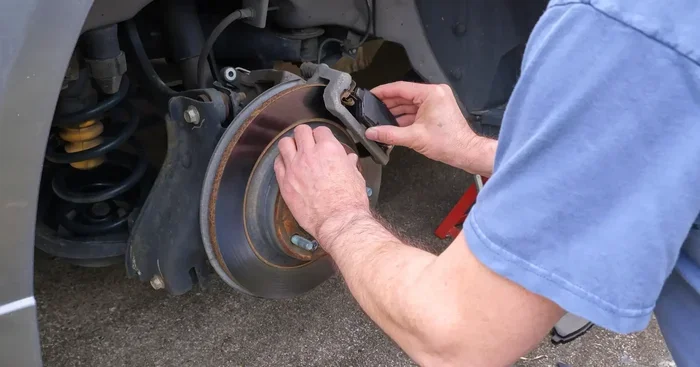
The brake caliper slides on pins that allow the pads to move freely. These pins need proper lubrication with high-temperature brake grease. Skipping this step can cause the caliper to stick, leading to uneven pad wear and overheating. This is one of the most overlooked maintenance steps that causes premature pad failure.
Not Bedding in New Pads
New brake pads need a break-in period to seat properly against the rotors. This process, called bedding in, involves several moderate stops from higher speeds. Skipping this step can result in reduced braking performance, noise, and uneven pad wear. Always follow the pad manufacturer’s bedding-in instructions for best results.
Ignoring Brake Fluid Maintenance
Brake fluid absorbs moisture over time, which reduces its effectiveness. When you are already paying for brake pad replacement, it is a great time to check the brake fluid level and condition. Fresh brake fluid ensures your braking system responds quickly and reliably when you need it most.
How Often Should You Replace Your Brake Pads?
There is no single answer to this question because brake pad lifespan depends on many factors. However, most manufacturers provide a general guideline that can help you plan ahead.
- Average lifespan: Most brake pads last between 25,000 and 65,000 miles depending on the material and driving conditions.
- City driving: Stop-and-go traffic wears pads faster. Expect closer to 25,000 to 35,000 miles in heavy city use.
- Highway driving: Constant-speed driving puts less stress on brakes. Pads can last 50,000 to 70,000 miles or more.
- Check your manual: Your vehicle owner’s manual provides the manufacturer’s recommended brake pad replacement interval for your specific model.
The best habit is to have your brake pads inspected every time you get an oil change. Most quick-lube shops and dealerships will check pad thickness as part of a routine inspection. This proactive approach helps you catch wear early and plan your replacement before the pads become a safety issue.
Remember that your driving habits play a huge role in pad wear. If you are a heavy-footed driver who brakes hard frequently, your pads will wear out much faster than someone who drives smoothly and coasts to stops. Adjusting your driving style can extend pad life and improve fuel economy at the same time.
Final Thoughts on Replacing All 4 Brake Pads
The decision to replace all 4 brake pads at once comes down to safety, cost, and long-term value. While replacing just two pads can save money in the short term, the risks of mismatched braking and uneven rotor wear often outweigh the savings. For most drivers, a full set replacement is the smartest choice.
Your braking system is not something you want to cut corners on. Every time you press the brake pedal, you depend on all four wheels working together to bring your car to a safe stop. Balanced, fresh brake pads give you confidence and control on every drive.
If you are unsure about your current brake pad condition, schedule an inspection with a trusted mechanic. They can measure your pad thickness, check your rotors, and give you a clear recommendation. Staying ahead of brake wear keeps you safe and prevents expensive repairs down the road.
Taking care of your brakes today means fewer surprises tomorrow. Make the smart choice, replace all 4 brake pads when needed, and drive with confidence knowing your vehicle can stop safely every single time.
Final Verdict
Should you replace all 4 brake pads at once? In most cases, yes. The safety benefits, balanced performance, and long-term savings make it the clear winner. Only skip to a partial replacement if your rear pads are genuinely still in great condition and you are on a tight budget. Even then, plan to replace the remaining set as soon as possible.
Keep up with your brake maintenance, listen to your car’s warning signs, and never let your pads wear down to metal. Your brakes protect you and everyone else on the road. Treat them with the care they deserve.
For more information on vehicle maintenance and repair decisions, check out our detailed guide on whether you need to change all 4 brake pads at once. We also cover related maintenance topics like checking transmission fluid while running and testing your car battery with a multimeter to help you stay on top of your vehicle’s health.
Frequently Asked Questions
Can I replace only the front brake pads and leave the rear ones?
Yes, you can replace only the front pads if the rear pads still have plenty of thickness left. However, this creates a mismatch in braking performance. The new front pads will grab harder than the worn rear pads, which can cause uneven stopping and potential rotor damage. It is best to replace all 4 pads whenever possible for balanced braking.
How do I know if my brake pads need replacing?
Watch for warning signs like squealing noises, grinding sounds, longer stopping distances, vibration when braking, or a brake pad warning light on your dashboard. You can also visually inspect the pads through the wheel spokes. If the pad material looks thin, less than 3mm, it is time for a replacement.
Is it safe to drive with worn brake pads?
No, driving with worn brake pads is dangerous. Thin pads reduce your stopping power and increase your braking distance. Once pads wear down to the metal backing, they can damage the rotors permanently. This leads to much more expensive repairs and puts you and others at serious risk on the road.
How much does it cost to replace all 4 brake pads?
The total cost typically ranges from $300 to $700 for all four brake pads, including parts and labor. The exact price depends on your vehicle model, the type of brake pad material you choose, and your local labor rates. Ceramic pads cost more but tend to last longer than semi-metallic options.
Do I need to replace rotors when I replace brake pads?
Not always, but it depends on the rotor condition. If the rotors are warped, scored, or thinner than the minimum safe thickness, they should be resurfaced or replaced. A mechanic can measure rotor thickness and check for warping during the pad replacement service. Fresh pads on damaged rotors will not perform well.
Can I replace brake pads myself at home?
Yes, replacing brake pads is one of the more DIY-friendly car maintenance tasks. You will need basic tools like a jack, lug wrench, socket set, and C-clamp for the caliper. However, if you are not comfortable working on your braking system, it is always safer to have a professional handle the job. Brakes are too important to take chances with.
=== CONCLUSION ===
Replacing all 4 brake pads at once is the safest and most cost-effective choice for most drivers. It ensures balanced braking, protects your rotors, and gives you confidence every time you hit the road. While the upfront cost is higher than replacing just two pads, the long-term benefits far outweigh the extra expense.
Pay attention to the warning signs your car gives you. Do not ignore squealing, grinding, or vibrations. Regular brake inspections and timely replacements keep you safe and your vehicle running its best. When it comes to your brakes, always choose safety over savings.