How to Check Automatic Transmission Fluid Without a Dipstick
Checking your automatic transmission fluid without a dipstick is easier than you think. You can use the fill plug method, an electronic diagnostic tool, or visit a service center. This guide walks you through every method so you can confidently maintain your vehicle and avoid costly transmission repairs.
Your car’s transmission works hard every time you drive. It shifts gears smoothly and keeps your engine running at the right speed. But here is something many car owners overlook. How to check automatic transmission fluid without a dipstick can feel confusing, especially if your vehicle does not have one.
Older cars came with a simple dipstick under the hood. You pulled it out, wiped it, and checked the fluid level. But modern vehicles often use sealed transmission systems. These systems do not have a traditional dipstick. This does not mean you should skip checking your fluid. In fact, skipping this simple maintenance task can lead to big problems.
Checking your transmission fluid regularly is one of the easiest ways to extend the life of your car. Low or dirty fluid causes overheating. It leads to slipping gears. And in worst cases, it results in complete transmission failure. The good news? You have several ways to check the fluid level even without a dipstick. In this guide, we will walk you through each method step by step.
Whether you are a DIY enthusiast or someone who just wants to understand what the mechanic is talking about, this article has you covered. We will cover the tools you need, the methods you can use, and the warning signs that tell you your fluid needs attention. Let us get started.
Key Takeaways
- No dipstick? No problem. Many modern vehicles use sealed transmission systems that require alternative checking methods.
- The fill plug method is the most common DIY approach for checking automatic transmission fluid without a dipstick.
- Electronic diagnostics can give you precise fluid level readings through your vehicle’s onboard computer.
- Regular transmission fluid checks help prevent overheating, slipping, and expensive repairs down the road.
- Knowing the warning signs of low or dirty fluid saves you from major transmission failure.
- Professional service is always an option if you are not comfortable doing it yourself.
📑 Table of Contents
- Why Checking Transmission Fluid Matters
- Signs Your Transmission Fluid Needs Checking
- Tools and Preparation Needed
- How to Check Automatic Transmission Fluid Without a Dipstick
- Common Mistakes to Avoid
- How Often Should You Check Your Transmission Fluid?
- Can You Still Drive Safely With Transmission Fluid Issues?
- Quick Tips for Maintaining Healthy Transmission Fluid
- When to Seek Professional Help
- Final Thoughts
Why Checking Transmission Fluid Matters
The Role of Transmission Fluid
Transmission fluid does several important jobs at once. It lubricates all the moving parts inside your transmission. It keeps the system cool during operation. And it acts as a hydraulic fluid that helps your gears shift smoothly. Without proper fluid levels, your transmission has to work much harder.
Think of it like engine oil for your gears. When the fluid is clean and at the right level, everything runs like butter. But when the fluid gets low or dirty, you start to notice problems. Transmission slipping is one of the first signs. You might feel a delay when shifting from park to drive. Or your engine might rev higher than usual without the car moving faster.
What Happens When You Ignore Transmission Fluid
Ignoring your transmission fluid is one of the most expensive mistakes a car owner can make. Low fluid causes extra friction inside the transmission. This friction creates heat. And heat destroys transmission components over time.
Here is what can go wrong if you skip fluid checks:
- Gear slipping – Your transmission shifts unexpectedly or fails to hold gear.
- Overheating – Excess heat warps internal components and breaks down the fluid faster.
- Complete transmission failure – In severe cases, the entire transmission needs replacement. This repair can cost thousands of dollars.
- Reduced fuel efficiency – A struggling transmission makes your engine work harder, which burns more fuel.
The good news is that regular fluid checks prevent all of these problems. And checking your fluid is free or costs just a few dollars. It is one of the best returns on investment you will ever get as a car owner.
Signs Your Transmission Fluid Needs Checking
You do not always need to open the hood to know something is wrong with your transmission fluid. Your car gives you warning signs. Learning to recognize these signs helps you catch problems early.
Warning Lights and Dashboard Alerts
Modern vehicles have sophisticated warning systems. If your check engine light comes on, do not ignore it. Sometimes a can a check engine light go off by itself after a temporary issue, but it can also signal transmission problems. Some vehicles have a dedicated transmission warning light. If you see it, check your fluid level right away.
Physical Symptoms of Low Transmission Fluid
Your car will tell you through how it drives. Watch for these common signs:
- Delayed engagement – There is a pause before your car moves when you shift from park to drive or reverse.
- Slipping gears – The transmission feels like it is changing gears on its own or slipping out of gear.
- Rough or jerky shifts – Shifts feel harsh or shuddery instead of smooth.
- Unusual noises – Grinding, whining, or clunking sounds when shifting gears.
- Burning smell – A sweet or burnt odor coming from under the hood often means overheated transmission fluid.
- Fluid leaks – Red or brown puddles under your parked car indicate a transmission fluid leak.
If you notice any of these symptoms, check your transmission fluid level immediately. The sooner you catch the problem, the cheaper the fix will be.
Tools and Preparation Needed
Before you start, gather a few basic tools. You do not need anything fancy. Most of these items are things you probably already have in your garage.
What You Will Need
- Socket wrench set – For removing the fill plug on your transmission.
- Transmission fluid – Check your owner’s manual for the exact type and amount your vehicle needs.
- A jack and jack stands or ramps – You will need to lift the front of your vehicle safely.
- Gloves – Transmission fluid can be messy and irritating to your skin.
- A flashlight – Helps you see the fill hole and fluid level more clearly.
- A funnel – Makes adding fluid clean and easy.
- A rag or paper towels – For wiping the fill hole area clean before checking.
Safety First
Always work on a level surface. Make sure your vehicle is parked on flat ground before you lift it. Never get under a car supported only by a jack. Use jack stands or drive onto ramps for safety. Let your engine run for a few minutes before checking the fluid. This warms up the fluid and gives you a more accurate reading. Just be careful around hot engine parts.
How to Check Automatic Transmission Fluid Without a Dipstick
Now for the main event. There are several methods to check your transmission fluid when your vehicle does not have a traditional dipstick. Let us walk through each one in detail.
Method 1: The Fill Plug Method
The fill plug method is the most common way to check automatic transmission fluid without a dipstick. Many rear-wheel-drive vehicles and some front-wheel-drive vehicles use this approach. Here is how it works:
- Warm up your vehicle. Drive your car for about 10 to 15 minutes so the transmission fluid reaches normal operating temperature.
- Lift the front of your vehicle. Use a jack and secure it with jack stands, or drive onto ramps.
- Find the fill plug. The fill plug is usually located on the side of the transmission housing. It looks like a bolt or a round plug. Check your owner’s manual for the exact location.
- Remove the fill plug. Use your socket wrench to carefully remove the plug. Place a drain pan underneath in case some fluid drips out.
- Check the fluid level. With the fill plug removed, look inside the hole. The fluid should be at or just below the bottom edge of the hole. If you do not see fluid, your level is low.
- Add fluid if needed. Use a funnel to pour the correct transmission fluid into the hole. Add small amounts and check frequently.
- Reinstall the fill plug. Once the fluid is at the right level, wipe the area clean and reinstall the plug securely.
This method gives you a direct visual check of your fluid level. It is simple and reliable once you get the hang of it.
Method 2: Electronic Diagnostic Tool
Many newer vehicles use electronic sensors to monitor transmission fluid level. You can access this information using an OBD-II diagnostic scanner. Here is how:
- Locate the OBD-II port. It is usually under the dashboard on the driver’s side.
- Plug in your scanner. Connect the diagnostic tool to the port.
- Turn the ignition to the on position. Do not start the engine yet.
- Navigate to transmission data. Look for a section labeled “Transmission Fluid Level” or similar.
- Follow the on-screen instructions. Some scanners will walk you through the exact procedure to get an accurate reading.
An electronic diagnostic tool is especially helpful if your vehicle uses a sealed transmission system. Many auto parts stores will let you borrow a scanner for free. This is a great option if you do not want to buy one.
Method 3: Visit a Professional Mechanic
If you are not comfortable checking your fluid yourself, that is perfectly fine. A qualified mechanic can check your transmission fluid quickly and accurately. Do mechanics check transmission fluid during an oil change? Many do, but not all. It is always a good idea to ask your mechanic to include a transmission fluid check during your next oil change service.
Professional service has some clear advantages:
- Expert diagnosis. A trained mechanic can spot early signs of transmission wear that you might miss.
- Proper equipment. Some shops have specialized lifts and tools that make the job faster and more accurate.
- Peace of mind. You know the job is done correctly by someone with experience.
Just keep in mind that professional service costs more than a DIY check. But it is worth the money if you are unsure about doing it yourself.
Method 4: The Temperature-Based Check
Some vehicles require you to check the transmission fluid at a specific operating temperature. This method involves using your vehicle’s built-in temperature monitoring system. Here is the general process:
- Start the engine and let it idle. Let the transmission warm up for about 5 to 10 minutes.
- Shift through all gears. Move the gear selector through each position (P, R, N, D) and hold for a few seconds in each.
- Return to park. Let the engine idle for another minute.
- Check the fluid through the fill hole. Follow the same steps as the fill plug method above.
This method ensures the fluid is fully circulated and at the correct temperature for an accurate reading. Always refer to your owner’s manual for the specific procedure recommended by your vehicle manufacturer.
Common Mistakes to Avoid
Even with the best intentions, people make mistakes when checking transmission fluid. Here are the most common ones and how to avoid them.
Checking Fluid with the Engine Off
Transmission fluid needs to be warm and circulating for an accurate reading. Checking it when the engine is cold gives you a false low reading. Always warm up your vehicle first. But do not let it overheat either. A few minutes of driving is all you need.
Using the Wrong Type of Fluid
Not all transmission fluids are the same. Using the wrong fluid can damage your transmission. Always check your owner’s manual for the correct fluid type. If you are unsure, ask your mechanic or check with your dealership.
Overfilling the Transmission
More fluid is not always better. Overfilling can cause foaming, which reduces the fluid’s ability to lubricate properly. It can also lead to pressure buildup and leaks. Add fluid in small amounts and check frequently.
Ignoring the Fluid Condition
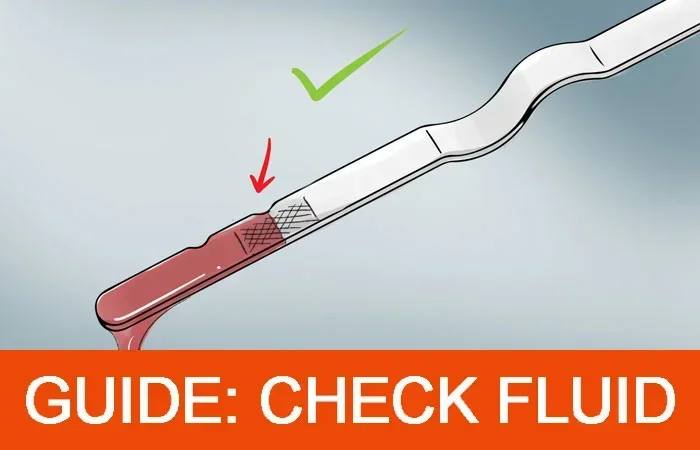
The level matters, but so does the condition. Healthy transmission fluid is reddish-brown and translucent. If your fluid looks dark brown or black, it is time for a change. If it smells burnt, your transmission may be overheating. You can learn more about when to change your fluid and whether you can just add it instead of changing it in our article on can I just add transmission fluid instead of changing it.
How Often Should You Check Your Transmission Fluid?
The general recommendation is to check your transmission fluid every 30,000 to 60,000 miles. However, this varies depending on your vehicle, driving conditions, and the type of fluid you use. Here is a simple guide:
| Driving Conditions | Recommended Check Interval |
|---|---|
| Normal city driving | Every 30,000 to 60,000 miles |
| Heavy towing or hauling | Every 15,000 to 30,000 miles |
| Extreme heat or cold climates | Every 20,000 to 40,000 miles |
| Stop-and-go traffic daily | Every 20,000 to 30,000 miles |
Your owner’s manual is the best source for your specific vehicle’s maintenance schedule. If you are ever unsure about at what mileage does a transmission go bad, regular fluid checks are your best defense. Clean fluid keeps your transmission healthy for longer. And a healthy transmission means fewer trips to the repair shop.
Can You Still Drive Safely With Transmission Fluid Issues?
This is an important question. The short answer is: it depends on the severity of the problem. If your fluid is slightly low, you can usually drive carefully to a nearby service center. But if your transmission is slipping or making unusual noises, stop driving and get your vehicle towed.
Driving with severely low or degraded transmission fluid can cause irreversible damage. The internal components of your transmission rely on proper lubrication. Without it, metal-on-metal contact destroys gears, clutches, and seals. Can you drive a car with transmission problems? Technically yes, but you risk turning a small repair into a very expensive one. If your car shows any serious transmission symptoms, get it checked right away.
Also, keep in mind that some vehicles use continuously variable transmissions (CVTs) that have different maintenance requirements. If you own a Nissan with a CVT, for example, you might want to learn more about can you rebuild a Nissan CVT transmission in case your transmission needs major service down the road.
Quick Tips for Maintaining Healthy Transmission Fluid
Here are some simple habits that keep your transmission fluid in great shape:
- Check your fluid regularly. Make it part of your monthly car care routine.
- Watch for leaks. Look for red or brown spots under your parked car.
- Change your fluid on schedule. Do not wait until the fluid looks bad. Follow your manufacturer’s recommended change interval.
- Avoid aggressive driving. Hard acceleration and sudden stops put extra stress on your transmission.
- Warm up your car in cold weather. Let your vehicle idle for a minute or two before driving in cold conditions.
- Use the correct fluid. Always use the type recommended by your vehicle manufacturer.
- Keep records. Write down when you checked or changed your fluid so you can track your maintenance schedule.
These small habits add up over time. They help your transmission last longer and perform better. And a well-maintained transmission means a more reliable car overall.
When to Seek Professional Help
There is no shame in asking a professional for help. Some transmission tasks are best left to experienced technicians. You should consider seeking professional help if:
- You cannot find the fill plug or check hole on your transmission.
- The fluid level is extremely low and you are unsure why.
- Your transmission shows signs of serious damage, such as grinding or persistent slipping.
- You are uncomfortable working under your vehicle.
- Your owner’s manual recommends a specific procedure you are not confident performing.
A professional mechanic can also perform a full transmission fluid change and flush if needed. This is different from simply checking the level. A complete fluid change replaces all the old fluid and removes contaminants. It is a more thorough service that gives your transmission a fresh start.
Final Thoughts
Knowing how to check automatic transmission fluid without a dipstick is a valuable skill for any car owner. It saves you money. It helps you catch problems early. And it keeps your vehicle running smoothly for years to come. Whether you use the fill plug method, an electronic diagnostic tool, or visit a professional mechanic, the important thing is that you check your fluid regularly.
Your transmission is one of the most expensive components to repair in your vehicle. Taking a few minutes every few months to check the fluid level is a small price to pay for peace of mind. Make it a habit. Your car will thank you for it.
Remember, maintenance is always cheaper than repair. Stay on top of your transmission fluid, and you will avoid the headaches and expenses that come with transmission failure. Drive safe, stay informed, and keep your car in great shape.
Frequently Asked Questions
Can I check my transmission fluid myself without any special tools?
Yes, you can. The fill plug method requires only a socket wrench, a flashlight, and some transmission fluid. If your vehicle has an OBD-II port, you can also borrow a diagnostic scanner from most auto parts stores for free. No special tools are needed for a basic fluid level check.
How do I know if my transmission fluid is low?
Look for warning signs like delayed gear engagement, slipping gears, rough shifts, or a burning smell. You may also notice red or brown fluid leaking under your car. The best way to confirm is to check the fluid level using one of the methods described in this guide.
What color should healthy transmission fluid be?
Healthy transmission fluid is reddish-brown and translucent. If the fluid looks dark brown or black, it has been burned and needs to be changed. If the fluid is pink and frothy, it may be contaminated with water or overfilled.
Is it safe to drive with low transmission fluid?
Driving with low transmission fluid is risky. It can cause overheating, gear slipping, and permanent transmission damage. If you suspect your fluid is low, check it right away and top it off if needed. If you notice serious symptoms like grinding or slipping, have your vehicle towed to a repair shop.
How often should I change my transmission fluid?
Most manufacturers recommend changing transmission fluid every 30,000 to 60,000 miles. However, driving conditions matter. If you tow heavy loads, drive in extreme temperatures, or spend a lot of time in stop-and-go traffic, you should change your fluid more frequently. Always check your owner’s manual for the specific recommendation.
Can low transmission fluid cause the check engine light to come on?
Yes, it can. Low transmission fluid puts extra stress on the transmission components, which can trigger the check engine light. If your check engine light comes on and you notice any transmission symptoms like slipping or rough shifting, check your fluid level first. You can also learn more about check engine lights in our article on can a check engine light go off by itself.
=== CONCLUSION ===
Checking automatic transmission fluid without a dipstick is straightforward once you know the steps. Whether you choose the fill plug method, an electronic diagnostic tool, or professional service, the key is to do it regularly. Low or dirty fluid is the enemy of a healthy transmission. Stay proactive, watch for warning signs, and your transmission will serve you well for many miles to come.