How Much Is a BMW Brake Fluid Service Cost Breakdown
The BMW brake fluid service cost typically ranges from $150 to $400, depending on where you go and your model. A dealer service will cost more than an independent shop, but both include a full fluid flush and system bleed. Regularly changing your brake fluid keeps your BMW’s braking system safe, responsive, and free from dangerous moisture buildup.
You just found out your BMW needs a brake fluid service, and now you’re wondering about the BMW brake fluid service cost. That’s totally normal. Brake fluid is one of those hidden maintenance items that can slip your mind until a warning light pops up or your pedal feels weird. Understanding what goes into this service and why it matters can save you money and keep your BMW stopping safely.
The BMW brake fluid service cost isn’t just a random number. It covers fresh fluid, labor, and the proper bleeding of your entire brake system. BMWs use a specific type of brake fluid called DOT4, which has a high boiling point and absorbs moisture over time. When that moisture builds up, your brake fluid can boil under hard braking, leading to a dangerous loss of braking power. So, this service is not just a routine oil-change-style task—it’s a critical safety item.
In this guide, I’ll break down the BMW brake fluid service cost in detail. You’ll learn what the dealer charges versus independent shops, what’s actually done during the service, and how often you need it. I’ll also share tips on DIY options and common mistakes to avoid. By the end, you’ll know exactly what to expect and how to budget for it.
Key Takeaways
- Dealer cost is higher: Expect to pay $250–$400 at a BMW dealer for a complete brake fluid flush.
- Independent shops save money: You can pay $150–$250 at a trusted independent mechanic for the same service.
- DIY is possible: If you have the right tools, you can do it yourself for just the fluid cost, around $30–$60.
- BMW models vary: Larger SUVs like the X5 may cost more due to higher fluid capacity and complex ABS bleeding.
- What’s included: A proper service drains old fluid, bleeds the entire system, and refills with fresh DOT4 brake fluid.
- Frequency matters: BMW recommends changing brake fluid every 2 years or 30,000 miles, whichever comes first.
- Moisture is the enemy: Brake fluid absorbs water over time, lowering its boiling point and risking brake fade during hard stops.
📑 Table of Contents
What Is a BMW Brake Fluid Service?
A BMW brake fluid service is a full system flush and refill. It’s not just a simple drain and top-off. The goal is to remove all old, contaminated fluid and replace it with fresh, clean fluid that meets BMW specifications. This process ensures your brakes respond instantly and safely every time you press the pedal.
What Happens During a Brake Fluid Flush
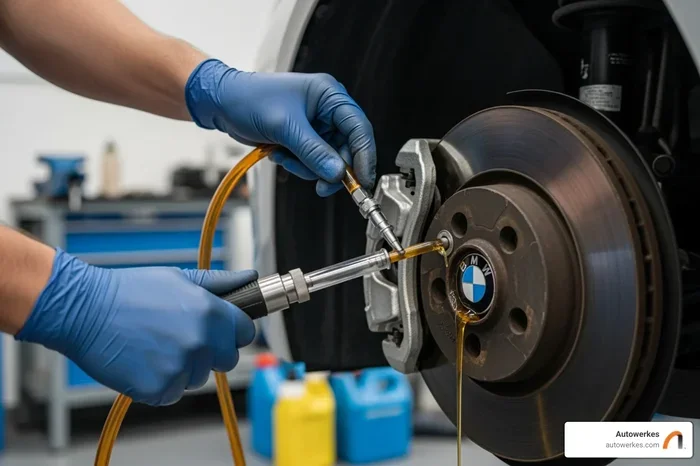
A proper flush involves several steps. First, the technician locates the brake fluid reservoir and removes the old fluid. Next, they attach a bleeding device to each brake caliper or wheel cylinder. They pump fresh fluid through the system, pushing out the old fluid and any trapped air. This is done one wheel at a time, usually starting with the farthest wheel from the master cylinder. Finally, they refill the reservoir, check for leaks, and test the pedal feel.
Many BMWs today have electronic braking systems like ABS and dynamic stability control. These systems require a special bleeding procedure. A dealer or qualified shop will use a diagnostic tool to cycle the ABS pump and ensure all air is purged. Skipping this step can leave a spongy pedal or reduce braking efficiency.
Why BMWs Use DOT4 Brake Fluid
BMW specifies DOT4 brake fluid for most models. DOT4 has a higher boiling point than DOT3, which is important because brake systems generate a lot of heat. When you brake hard, the fluid can get very hot. If the fluid boils, it creates vapor pockets. Vapor is compressible, so your pedal will go to the floor and you’ll lose braking power. DOT4 fluid resists boiling much better, keeping your stops firm and reliable.
The fluid is also hygroscopic, meaning it absorbs moisture from the air over time. Even a sealed system will eventually pick up humidity through microscopic pores in rubber lines and the reservoir cap. That moisture lowers the boiling point and can cause corrosion inside brake components. A brake fluid flush removes this contaminated fluid and restores the system’s integrity.
Why BMW Brake Fluid Service Matters
Some owners forget about brake fluid until something goes wrong. That’s a risky approach. Brake fluid doesn’t just get old—it gets contaminated. Water content increases, and the fluid’s ability to transmit hydraulic pressure decreases. Ignoring this can lead to longer stopping distances, a soft pedal, or even complete brake failure in extreme cases.
The Role of Brake Fluid in Your BMW
Brake fluid is the hydraulic medium that connects your foot to the brakes. When you press the pedal, the fluid transfers force to the calipers, which squeeze the pads against the rotors. Because fluid is incompressible under normal conditions, the pedal feel is firm and direct. But when moisture enters the system, the fluid’s compressibility increases. You might notice a longer pedal travel or a spongy feel. That’s a clear sign the fluid needs changing.
BMW’s brake system is engineered for precision. The ABS module, electronic brake distribution, and automatic emergency braking all rely on clean, properly functioning brake fluid. Contaminated fluid can cause these advanced systems to malfunction, triggering warning lights and potentially unsafe conditions.
How Moisture Gets Into the System
Moisture enters through several paths. The brake fluid reservoir cap is not airtight. Every time you open the hood, humid air can enter. Rubber brake lines and seals are slightly permeable, allowing tiny amounts of water vapor to seep in over time. Even the act of adding fluid during a top-off introduces moisture if the reservoir is left open too long.
Driving in humid or coastal areas accelerates moisture absorption. If you frequently drive through water or wash your car with high-pressure sprays near the wheels, water can work its way past the dust boots and reach the brake components. A brake fluid tester can measure the water content quickly. Many shops offer this test for free when you ask about a brake fluid change.
Signs Your Brake Fluid Needs Changing
- Spongy or soft brake pedal: The pedal feels mushy and goes closer to the floor than usual.
- Longer stopping distances: You notice it takes more effort to stop the car.
- ABS warning light: The ABS light comes on, which can indicate air or contamination in the system.
- Dark or brown fluid: Fresh DOT4 fluid is clear or light amber. Dark fluid indicates contamination and oxidation.
- Unusual brake noises: Grinding or squealing can sometimes be linked to moisture causing corrosion on rotors or calipers.
If you notice any of these signs, don’t delay a BMW brake fluid service. The BMW brake fluid service cost is small compared to the cost of repairing damage caused by contaminated fluid or a brake failure.
BMW Brake Fluid Service Cost Breakdown
The BMW brake fluid service cost varies widely depending on where you go, your BMW model, and what’s included in the price. Understanding the breakdown helps you make an informed decision and avoid surprises on the bill.
Dealer vs Independent Shop Cost
A BMW dealer typically charges the highest price for a brake fluid service. They use genuine BMW parts, factory-trained technicians, and specialized diagnostic equipment. The labor rate at a dealer is usually higher than at an independent shop. You’re also paying for the brand experience and warranty on the work. For most BMW models, the dealer BMW brake fluid service cost falls between $250 and $400.
Independent shops and specialized BMW garages offer a more affordable alternative. They often use high-quality aftermarket fluids and have the same bleeding equipment. The cost of brake fluid change at an independent shop usually ranges from $150 to $250. You can save 30 to 50 percent compared to the dealer, and the quality of work is often excellent if you choose a reputable shop.
DIY is the cheapest option, but it requires the right tools and some mechanical skill. You’ll only pay for the brake fluid itself, which is typically $30 to $60 for a liter of DOT4 fluid. You’ll also need a bleed kit, which you can buy or borrow. The main cost is your time and the risk of making a mistake that introduces air into the system.
| Service Provider | Typical Cost Range | What’s Included |
|---|---|---|
| BMW Dealer | $250 – $400 | Full system flush, genuine BMW DOT4 fluid, electronic ABS bleeding, system inspection, software update if needed |
| Independent Shop | $150 – $250 | Full flush, quality DOT4 fluid, manual or pressure bleeding, basic visual inspection of lines and components |
| DIY | $30 – $60 (fluid only) | Brake fluid, bleed kit or pressure bleeder, your time and tools |
Cost by BMW Model
The BMW brake fluid service cost can differ by model because of fluid capacity and brake system complexity. Smaller sedans like the 3 Series have less fluid volume and simpler ABS systems, so they tend to cost less. Larger vehicles like the X5 or 7 Series hold more fluid and may require additional time for bleeding the rear axle and the ABS module.
- 3 Series (F30/G20): Typically $150–$250 at an independent shop. Fluid capacity is around 1.0–1.5 liters.
- 5 Series (G38): Expect $200–$300. The system is slightly larger, and some models have electronic parking brake integration.
- X5 (G05): The BMW brake fluid service cost here often runs $250–$350 due to higher fluid volume and the need to bleed the rear axle carefully.
- 7 Series (G70): The most expensive, potentially $300–$400, because of the full air suspension and complex brake architecture.
These ranges are for a full flush. If the shop only does a drain and refill without a proper bleed, the cost will be lower, but the service is incomplete. Always ask if the price includes a full system flush and ABS bleeding.
What’s Included in the Service
A proper BMW brake fluid service should include several items. First, the old fluid is completely drained from the reservoir and the system. Then, fresh DOT4 fluid meeting BMW specifications is used to refill the system. The technician will bleed each brake caliper or wheel cylinder to remove air. On models with ABS, the electronic bleeding procedure is performed with a diagnostic scan tool. Finally, the system is tested for leaks and the pedal feel is checked.
Some shops offer additional services as part of the brake fluid service cost. These can include a brake fluid tester reading to show moisture content, a visual inspection of brake lines and hoses, and a check of the master cylinder and ABS pump. These extras add value and help you understand the overall health of your braking system.
Quick Tip: Always ask if the price includes a full system flush, not just a drain and fill. A partial change leaves old fluid in the lines and ABS module, which defeats the purpose of the service.
Common Mistake: Choosing the cheapest shop that uses low-quality fluid or doesn’t bleed the ABS properly. Cheap brake fluid that doesn’t meet DOT4 standards can boil under hard driving and cause a dangerous pedal fade.
How Often Should You Change BMW Brake Fluid?
BMW has a clear maintenance schedule for brake fluid. Understanding the recommended interval helps you plan ahead and avoid the cost of emergency repairs caused by contaminated fluid.
BMW’s Recommended Service Interval
BMW recommends changing brake fluid every 2 years or 30,000 miles, whichever comes first. This interval is based on the hygroscopic nature of the fluid and typical driving conditions. Even if you don’t drive many miles, the fluid still absorbs moisture over time. Two years is the maximum safe lifespan for DOT4 brake fluid in most climates.
If you live in a humid coastal area or frequently drive in heavy rain, you might want to change the fluid every 18 months. Conversely, if you drive in a dry climate and your BMW sits in a garage most of the time, you might stretch to 2.5 years, but I don’t recommend going beyond that. The BMW brake fluid service cost is a small investment compared to the risk of brake failure.
Driving Habits That Require More Frequent Changes
Certain driving habits accelerate brake fluid contamination. If you tow a trailer, the extra weight creates more heat and stress on the brake system. Track days or spirited driving also heat the fluid significantly. In these cases, I’d recommend changing the fluid every 12 months or 15,000 miles.
City driving with lots of stop-and-go traffic also wears the brakes harder, generating more heat and moisture. If your daily commute involves frequent hard braking, don’t skip the fluid change. The BMW brake fluid service cost is a tiny fraction of what you’d pay for a new brake system or, worse, an accident caused by brake fade.
How to Check Your Brake Fluid Condition
You can check your brake fluid at home with a few simple steps. First, locate the brake fluid reservoir in the engine bay. It’s usually on the driver’s side near the firewall. The cap will have a symbol of a brake fluid drop. Open it and look at the fluid color. Fresh fluid is clear or light amber. If it’s dark brown or black, it’s time for a change.
You can also use a brake fluid tester, which measures the water content. A reading below 2% is good. Between 2% and 3% means you should plan for a service soon. Above 3% indicates the fluid is heavily contaminated and needs immediate replacement. You can buy a basic tester for under $20, or many auto parts stores will test it for free.
Expert Insight: A brake fluid tester is one of the most underused tools in DIY maintenance. It takes 30 seconds to get a reading and can prevent expensive brake repairs down the road. If you’re unsure about the BMW brake fluid service cost, just ask the shop to do a moisture test first. Many will do it at no charge.
DIY Brake Fluid Flush: Can You Do It Yourself?
Some BMW owners want to save money by doing the brake fluid flush themselves. It’s definitely possible, but it requires the right tools, a helper, and patience. The biggest advantage is skipping the labor cost, which is often the most expensive part of the BMW brake fluid service cost at a shop.
Tools You’ll Need
- DOT4 brake fluid: Use only BMW-approved or high-quality aftermarket DOT4 fluid that meets the specification. A liter is usually enough for a full flush.
- Brake bleed kit: You can buy a basic one-way valve kit for under $30, or invest in a pressure bleeder for around $100–$150.
- Wrench set: You’ll need the correct size for the bleed screws on your BMW. Most use 8mm or 10mm fittings.
- Catch pan and tubing: To collect the old fluid and prevent spills.
- Turkey baster or syringe: For removing old fluid from the reservoir before refilling.
- Brake fluid tester: Optional, but helpful for confirming the new fluid is dry.
Step-by-Step Brake Fluid Flush
- Lift the car and remove the wheels: Secure the car on jack stands. Remove all four wheels for full access to the bleed screws.
- Clean the reservoir area: Use a cloth to wipe around the master cylinder cap. Remove any dirt to prevent contamination.
- Open the reservoir and extract old fluid: Use a turkey baster to suck out as much old fluid as possible. Dispose of it properly.
- Refill the reservoir with fresh DOT4 fluid: Do not let the reservoir run dry during the process. Keep it topped off to prevent air from being drawn into the system.
- Start with the farthest wheel: On most BMWs, the right rear wheel is farthest from the master cylinder. Attach a tube to the bleed screw and submerge the other end in a jar of fresh fluid.
- Bleed the system: Have your helper press the brake pedal slowly and hold it. Open the bleed screw, fluid and air will flow out. Close the screw before the helper releases the pedal. Repeat until the fluid runs clear and bubble-free.
- Move to the next wheel: Follow the order: right rear, left rear, right front, left front. Each wheel requires several cycles.
- Check the reservoir level frequently: Top it off after each wheel to maintain pressure and prevent air intake.
- Test the pedal feel: After bleeding all four wheels, pump the pedal a few times. It should feel firm and high. If it’s still spongy, there’s still air in the system. Repeat the bleeding process.
- Clean up and check for leaks: Wipe down the bleed screws and check for any drips. Top off the reservoir to the MAX line and close the cap.
A pressure bleeder makes this process much easier. You attach it to the reservoir and pressurize the system with fresh fluid. Then you open each bleed screw and fluid flows out without needing a helper. This method is faster and often produces better results, especially on BMWs with ABS that require a specific bleeding sequence.
Pros and Cons of DIY
- Pros: You save on labor costs, you control the quality of fluid used, and you learn more about your car.
- Cons: It’s time-consuming, requires a helper or special equipment, and mistakes can introduce air into the ABS module, leading to expensive dealer visits to reset the system.
Common Mistake: Not bleeding the brakes in the correct order or letting the reservoir run dry. Both can trap air in the ABS pump, which is very difficult to bleed without a dealer-level scan tool.
Expert Insight: If you’re not confident about the BMW brake fluid service cost savings from DIY, consider a hybrid approach. Buy the fluid and take it to a shop that will do the bleed for a reduced labor rate. This way you save on the fluid markup and still get professional bleeding.
Final Thoughts: Is the BMW Brake Fluid Service Cost Worth It?
The short answer is absolutely yes. The BMW brake fluid service cost is one of the most important maintenance items you can perform. Brake fluid is the lifeblood of your braking system. Without clean, properly functioning fluid, your brakes simply can’t perform at their best. And in an emergency, you need every bit of stopping power your car can provide.
Whether you choose a dealer, an independent shop, or a DIY approach, the key is to not skip this service. The cost is modest compared to the potential cost of a brake system failure, corroded calipers, or a ruined ABS module. A brake fluid flush every two years keeps your BMW’s braking system in top condition and gives you peace of mind every time you step on the pedal.
If you’ve been putting off a brake fluid change, now is the perfect time to schedule one. Ask your shop for a detailed breakdown of the BMW brake fluid service cost and what’s included. A reputable mechanic will be happy to explain the process and show you the old fluid. You’ll walk away knowing your BMW is safe, responsive, and ready for the road.
Remember, brake maintenance isn’t just about pads and rotors. The fluid inside the lines matters just as much. Treat your brake fluid with the same respect you give your engine oil, and your BMW will reward you with years of safe, confident stops.
Frequently Asked Questions
How much does a BMW brake fluid service cost?
The BMW brake fluid service cost typically ranges from $150 to $400. A BMW dealer usually charges $250–$400, while an independent shop will cost $150–$250. DIY is the cheapest option at around $30–$60 for fluid only.
What does a BMW brake fluid service include?
A full service includes draining the old fluid, flushing the entire system with fresh DOT4 fluid, bleeding each brake caliper and the ABS module, and inspecting the lines and reservoir. The goal is to remove all moisture and contaminants and restore proper hydraulic pressure.
Can I change my own BMW brake fluid?
Yes, you can do it yourself if you have the right tools and a helper. You’ll need DOT4 brake fluid, a bleed kit, and about 1–2 hours. The main risk is introducing air into the system, which can cause a spongy pedal. If you’re not experienced, it’s safer to let a professional handle it.
How often should BMW brake fluid be changed?
BMW recommends changing brake fluid every 2 years or 30,000 miles, whichever comes first. If you drive in humid climates, tow often, or enjoy spirited driving, consider changing it every 12–18 months for optimal safety.
What happens if you don’t change BMW brake fluid?
Over time, brake fluid absorbs moisture, which lowers its boiling point. This can cause brake fade during hard stops, a spongy pedal, and corrosion inside brake components. In severe cases, the fluid can boil completely, leading to a total loss of braking power.
Is dealer service worth the extra cost for BMW brake fluid?
Dealer service is worth it if you want factory-trained technicians, genuine BMW fluid, and the use of electronic bleeding tools for ABS-equipped models. However, a reputable independent BMW specialist can often do the same job at a lower cost with equal quality. Always ask about their experience with your specific model.