How Fast Can a Porsche Go And What Makes It So Fast
How fast can a Porsche go? The answer depends on the model, but these legendary sports cars can reach speeds from 150 mph to over 250 mph. What makes them so quick is a blend of powerful engines, advanced aerodynamics, and precision engineering that Porsche has refined over decades.
Key Takeaways
- Porsche top speeds vary widely: from around 150 mph for entry-level models to over 250 mph for the fastest variants.
- Engine power is the heart of speed: horsepower and torque figures directly determine how quickly a Porsche accelerates and reaches its top speed.
- Aerodynamics play a huge role: sleek body designs, rear spoilers, and diffusers help Porsche cars cut through air with minimal drag.
- Transmission technology matters: Porsche’s PDK dual-clutch gearbox shifts gears in milliseconds, keeping power flowing to the wheels.
- Weight reduction helps too: lighter materials like aluminum and carbon fiber keep these sports cars nimble and fast.
- Not all Porsches are built the same: the Cayenne SUV is fast for an SUV, but a 911 GT3 RS is in a completely different speed league.
- Track-ready features add real-world speed: things like rear-wheel steering and adaptive suspension make Porsches faster on both roads and tracks.
📑 Table of Contents
How Fast Can a Porsche Go and What Makes It So Fast
If you have ever stood next to a Porsche and heard that engine roar, you already know something special is happening. These cars look stunning, but they are built for one thing: speed. So how fast can a Porsche go? The short answer is that some models can push past 250 mph, while others cruise comfortably at around 150 mph.
But the real question is what makes a Porsche so fast. Is it the engine? The shape of the car? The tires? The truth is, it is all of those things working together. Porsche engineers spend years perfecting every detail, from the horsepower numbers to the way air flows over the body.
In this article, we will break down the top speeds of different Porsche models. We will also explore the engineering secrets that give these cars their legendary performance. Whether you are a car enthusiast or just curious, this guide covers everything you need to know about Porsche speed.
Porsche performance is not just about straight-line speed. It is also about handling, braking, and the overall driving experience. A fast car means nothing if it cannot turn or stop safely. Porsche nails all of these areas, which is why the brand stands above the rest.
Why Does Porsche Speed Matter?
Speed is more than just a number on a speedometer. It represents years of research, testing, and refinement. When a Porsche hits 60 mph in under three seconds, that is not an accident. It is the result of careful Porsche engineering that balances power, weight, and control.
For many drivers, the thrill of acceleration is what draws them to these cars. The feeling of being pushed back into your seat as the Porsche acceleration kicks in is unlike anything else. That is what makes Porsche one of the most respected names in the automotive world.
Top Speeds Across the Porsche Lineup
Porsche makes several different models, and each one has its own speed capabilities. Let us look at some of the most popular models and how fast they can go.
Porsche 911 Variants and Their Speeds
The 911 is the heart of the Porsche lineup. It has been around since 1963 and keeps getting faster with each generation. Here is a quick look at some popular 911 variants:
- Porsche 911 Carrera: Top speed around 182 mph. A great balance of performance and everyday usability.
- Porsche 911 Turbo: Top speed near 205 mph. The turbocharged engine adds serious power.
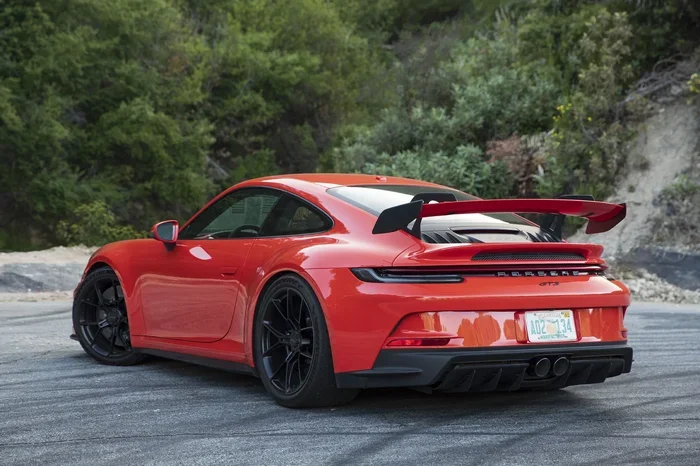
- Porsche 911 GT3: Top speed around 193 mph. Built for track days and spirited road driving.
- Porsche 911 GT3 RS: Top speed exceeding 200 mph. This is a pure track weapon with minimal comfort features.
Porsche Taycan Electric Speed
The Taycan is Porsche’s electric sports car, and it is incredibly fast. The Taycan Turbo S can reach a top speed of 161 mph and sprint from 0 to 60 mph in just 2.6 seconds. Electric Porsche models deliver instant torque, which means there is no waiting for the engine to spool up. The power is there the moment you press the pedal.
The Taycan also shows that electric vehicle speed is not just about being quick off the line. Porsche engineered the Taycan for sustained high-speed performance, which is a challenge for most electric cars. The cooling system and battery management keep everything running even during long pushes on the track.
Porsche Cayenne and Panamera Speeds
Not every Porsche is a two-seat sports car. The Cayenne SUV and Panamera sedan also offer impressive speed for their categories:
- Porsche Cayenne Turbo GT: Top speed of 189 mph. This SUV can keep up with many pure sports cars.
- Porsche Panamera Turbo S: Top speed around 192 mph. A fast luxury sedan that surprises many people.
These models prove that Porsche speed is not limited to the sports car segment. The brand puts its engineering expertise into every vehicle it builds.
What Makes a Porsche So Fast
Now that we have covered the numbers, let us dive into the reasons behind them. What actually makes a Porsche so fast? Several key factors work together to create the incredible Porsche performance the brand is known for.
Engine Power and Horsepower
The engine is the starting point for any fast car. Porsche uses naturally aspirated engines, turbocharged engines, and now electric motors to generate incredible amounts of power. Horsepower is the measure of how much work the engine can do, and torque is the twisting force that pushes the car forward.
Here is a simple breakdown of what powers these cars:
- Flat-six engines: The signature Porsche layout. These engines are low and wide, which keeps the center of gravity down.
- Twin-turbo setups: Found in Turbo and Turbo S models. They force more air into the engine, creating more power.
- Electric motors: Used in the Taycan. They deliver maximum torque instantly, which is why electric Porsches feel so explosive.
A higher horsepower rating generally means a higher top speed. But it is not the only factor. How that power reaches the ground matters just as much.
Aerodynamics and Body Design
Have you ever stuck your hand out of a car window at highway speed? You can feel the air pushing back. That is drag, and it increases the faster you go. Porsche spends a lot of time making sure its cars slice through the air with minimal resistance.
Porsche aerodynamics include features like:
- Active rear spoilers that adjust based on speed
- Underbody panels that smooth airflow
- Front air intakes that feed the brakes and engine
- Rear diffusers that reduce turbulence
These elements work together to keep the car stable at high speeds. Without good aerodynamics, a car would become unstable or use too much power just to push through the air. Porsche understands this, and that is why their cars feel so composed even at extreme speeds.
Transmission and Drivetrain Technology
Having a powerful engine is great, but you need a way to get that power to the wheels. Porsche uses advanced transmission systems that shift gears faster than a human ever could.
The Porsche PDK (Porsche Doppelkupplung) dual-clutch transmission is the gold standard. It uses two clutches to pre-select the next gear, so shifts happen in milliseconds. This means the car never loses power between gears, which keeps acceleration smooth and relentless.
Porsche also offers all-wheel drive on many models. The Porsche all-wheel drive system sends power to all four wheels, which improves traction. This is especially helpful when launching from a stop or driving on wet roads. More traction means faster acceleration and safer cornering.
Weight Reduction and Materials
Physics tells us that lighter objects accelerate faster than heavier ones. Porsche knows this well, which is why they use lightweight materials wherever possible.
Common materials in Porsche construction include:
- Aluminum: Used for the hood, doors, and suspension components. It is strong but much lighter than steel.
- Carbon fiber: Found in high-performance models like the GT3 RS. It is incredibly light and stiff.
- Magnesium: Sometimes used in interior structures to save weight.
Every pound saved helps the car go faster, brake quicker, and handle better. Porsche engineers are constantly looking for ways to reduce weight without sacrificing safety or comfort.
Braking Systems
Speed means nothing if you cannot stop. Porsche equips its cars with high-performance braking systems that can handle extreme heat and repeated use. Porsche braking technology includes large disc brakes, multi-piston calipers, and advanced brake pads.
Many models also feature carbon-ceramic brakes, which are lighter and fade less under extreme heat. This means a driver can push the car hard on a track and still have full braking power lap after lap. Confident braking allows drivers to carry more speed into corners, which ultimately makes the car faster on a complete lap.
How Porsche Speed Compares to Other Brands
It is always interesting to see how Porsche stacks up against the competition. Let us look at a quick comparison of some popular sports cars and their top speeds.
| Car Model | Top Speed | 0-60 mph | Engine Type |
|---|---|---|---|
| Porsche 911 Turbo S | 205 mph | 2.6 sec | Twin-turbo flat-six |
| Porsche 911 GT3 RS | 211 mph | 3.0 sec | Naturally aspirated flat-six |
| Porsche Taycan Turbo S | 161 mph | 2.6 sec | Dual electric motors |
| Chevrolet Corvette Z06 | 200+ mph | 2.6 sec | Turbocharged V8 |
| BMW M4 CSL | 190 mph | 3.7 sec | Twin-turbo inline-six |
| Mercedes-AMG GT Black Series | 202 mph | 3.2 sec | Twin-turbo V8 |
As you can see, Porsche speed holds its own against some of the best sports cars in the world. What sets Porsche apart is not just the top speed number. It is the balance between straight-line speed, handling, and everyday usability. Many of these competing cars are very fast but can be harsh or difficult to live with on a daily basis.
Porsche manages to be both a track-day weapon and a comfortable daily driver. That versatility is a huge part of why the brand has such a loyal following.
Quick Tips for Getting the Most Out of Your Porsche
Owning a Porsche is exciting, but there are things you can do to make sure it performs at its best. Here are some practical tips:
- Keep your tires properly inflated. Tire pressure affects grip, handling, and even fuel economy. Check it before every track day or long drive.
- Use the right driving mode. Porsche offers multiple drive modes like Normal, Sport, and Sport Plus. Each one changes throttle response, suspension stiffness, and steering feel.
- Warm up the engine before pushing hard. This is especially important in cold weather. Let the oil circulate for a minute or two before full-throttle driving.
- Invest in quality fuel. Higher-octane fuel helps turbocharged engines perform at their best and prevents knocking.
- Keep up with maintenance. Regular oil changes, brake inspections, and fluid flushes keep your Porsche running like new for years.
Expert Insight
According to Porsche engineers, the key to unlocking a Porsche’s full speed potential is consistency in maintenance. A well-maintained Porsche will perform close to factory specs for decades. Neglecting basic services like oil changes and brake pad replacements can quietly rob the car of performance over time.
Common Mistakes That Slow Down Your Porsche
Even the fastest cars can lose performance if the owner makes certain mistakes. Here are some common ones to avoid:
- Ignoring tire condition: Worn tires reduce grip and increase stopping distances. This affects both safety and speed.
- Skipping wheel alignments: Misaligned wheels create drag and cause uneven tire wear, which slowly eats into performance.
- Overloading the car: Extra weight in the trunk or cabin reduces acceleration and handling sharpness.
- Using low-quality parts: Aftermarket parts that are not designed for Porsche can hurt performance and reliability.
- Neglecting software updates: Modern Porsches receive performance updates through software. Skipping these means missing out on free speed gains.
Avoiding these mistakes keeps your car running at its full potential. A well-maintained Porsche sports car will stay quick and reliable for many years.
The Future of Porsche Speed
Porsche is investing heavily in electrification and hybrid technology. The Taycan has already proven that electric power and Porsche performance go hand in hand. Looking ahead, we can expect even faster electric Porsches that push the boundaries of what is possible.
Hybrid supercars are also on the horizon. Combining a combustion engine with electric motors could deliver both insane power and instant torque. Porsche has already hinted at hybrid versions of some of its most iconic models, and the speed potential is exciting to think about.
Future Porsche speed will likely focus on two things: even higher top speeds and faster acceleration. But the brand will also need to balance these goals with efficiency, emissions regulations, and everyday usability. It will be interesting to see how Porsche continues to innovate while staying true to its driving DNA.
Conclusion
So, how fast can a Porsche go? The answer is impressive no matter which model you look at. From the 911 Turbo S pushing past 200 mph to the Taycan redefining what electric speed feels like, Porsche continues to set the standard for automotive performance.
What makes these cars so fast is a combination of powerful engines, advanced aerodynamics, lightweight materials, and cutting-edge technology. Every detail is engineered with one goal in mind: to deliver an incredible driving experience. How fast can a Porsche go is a question with many answers, but one thing is certain, these cars are built to thrill.
If you own a Porsche or are thinking about buying one, take care of it. Regular maintenance, quality parts, and proper driving habits will keep your car performing at its best for years to come. Speed is just one part of the Porsche experience. The feeling of being connected to the road is what truly makes these cars special.
Frequently Asked Questions
How fast is the fastest Porsche model?
The fastest Porsche currently is the 911 GT2 RS, which can reach a top speed of around 211 mph. It is a track-focused car with a twin-turbo flat-six engine that produces over 700 horsepower. This makes it one of the quickest production cars in the world.
How fast does a Porsche 911 go from 0 to 60 mph?
A standard Porsche 911 Carrera reaches 60 mph in about 3.5 seconds. The Turbo S variant can do it in around 2.6 seconds. The exact time depends on the model year, engine configuration, and driving conditions.
Is a Porsche faster than a Ferrari?
It depends on the specific models being compared. Some Ferraris are faster in a straight line, while some Porsches handle better on twisty roads. Porsche tends to focus on balance and everyday usability, while Ferrari often prioritizes raw speed and exotic styling.
How does a Porsche Taycan compare in speed to the 911?
The Taycan Turbo S is slightly slower in top speed than a 911 Turbo S, but it matches or beats it in the 0 to 60 mph sprint thanks to instant electric torque. The Taycan also offers incredible performance in stop-and-go driving and on shorter tracks where its quick acceleration shines.
Can a Porsche be used as a daily driver and still be fast?
Absolutely. Many Porsche models, like the Carrera and Panamera, are designed to be comfortable and practical for daily use while still offering thrilling performance. You can drive to work in the morning and take the car to the track on the weekend.
What maintenance does a Porsche need to stay fast?
Regular oil changes, brake inspections, tire rotations, and software updates are essential. Using high-quality fuel and genuine Porsche parts also helps maintain peak performance. Following the manufacturer’s service schedule is the best way to keep your car running its fastest.
=== META TITLE ===
How Fast Can a Porsche Go? Speed & Power Explained
=== URL SLUG ===
how-fast-can-a-porsche-go
=== SEO TITLE ===
How Fast Can a Porsche Go And What Makes It So Fast