How Do I Turn On My Toyota Pre-Collision Safety System
The Toyota Pre-Collision safety system is a powerful driver-assist feature designed to help you avoid or reduce the severity of a crash. In this guide, you will learn exactly how to turn on your Toyota Pre-Collision system, understand how it works, and discover which Toyota models support it. We also share practical tips and common mistakes to help you get the most out of this Toyota safety feature.
Driving a Toyota comes with a long list of advanced safety features built to protect you and your passengers. Among the most important of these is the Toyota Pre-Collision system. If you have recently purchased a Toyota or are simply curious about what this feature does, you are in the right place.
This guide will walk you through everything you need to know about turning on your Toyota Pre-Collision safety system. We will cover the basics, the step-by-step process, model-specific details, and a few tips to keep the system running smoothly. Whether you drive a Camry, RAV4, or Highlander, this article has you covered.
The Toyota Pre-Collision system is part of the broader Toyota Safety Sense suite. It uses a combination of radar sensors and a forward-facing camera to monitor the road ahead. When it detects a potential collision, it can warn you and even apply the brakes automatically to help avoid or reduce the impact of a crash.
Many drivers wonder how to activate this feature or why it seems to turn off unexpectedly. The good news is that the process is straightforward once you know where to look. Let us dive into the details.
Key Takeaways
- Easy Activation: Turning on the Toyota Pre-Collision system is simple and can be done through the steering wheel controls or the touchscreen display.
- Works Across Models: Most newer Toyota models come equipped with Toyota Safety Sense, including the Camry, RAV4, Highlander, and Corolla.
- Smart Sensors: The system uses radar sensors and a camera to detect vehicles, pedestrians, and potential obstacles ahead.
- Customizable Settings: You can adjust sensitivity and turn specific features like pedestrian detection on or off based on your preferences.
- Regular Maintenance Matters: Keeping your sensors and cameras clean ensures the pre-collision system works reliably every time you drive.
- Not a Replacement for Safe Driving: The system assists you but does not replace attentive driving. Always stay focused on the road.
📑 Table of Contents
- What Is the Toyota Pre-Collision Safety System?
- How Do I Turn On My Toyota Pre-Collision System?
- Toyota Models That Support Pre-Collision
- Common Issues and How to Fix Them
- Tips for Getting the Most Out of Your Pre-Collision System
- How Does the Pre-Collision System Compare to Other Safety Features?
- Final Thoughts
What Is the Toyota Pre-Collision Safety System?
The Toyota Pre-Collision system is an advanced driver-assist technology designed to help prevent accidents. It is part of the Toyota Safety Sense package, which comes standard on most newer Toyota models. The system continuously scans the road ahead using a combination of radar sensors and a stereo camera mounted near the rearview mirror.
Here is what the system does:
- Detects vehicles ahead of you in your lane
- Identifies pedestrians crossing your path
- Warns you with visual and audible alerts
- Applies the brakes automatically if a collision is imminent
- Activates brake assist to maximize stopping power
The system works in combination with other Toyota Safety Sense features like dynamic radar cruise control and lane departure alert. Together, these technologies create a comprehensive safety net for your daily commute or long road trips.
How Does Pre-Collision Detection Work?
The pre-collision system relies on two main components. The first is a radar unit located in the front grille that measures the distance and relative speed of vehicles ahead. The second is a camera mounted behind the rearview mirror that reads road signs and detects pedestrians and cyclists.
When both sensors work together, they create a detailed picture of what is happening in front of your vehicle. If the system determines that a collision is likely, it goes through a series of alerts before taking action:
- Stage 1: A visual warning appears on the dashboard display
- Stage 2: An audible alert sounds to grab your attention
- Stage 3: The system applies partial braking to slow the vehicle
- Stage 4: Full automatic emergency braking activates if you do not respond
This layered approach gives you time to react while ensuring the vehicle can protect itself if you do not. It is important to note that the system works best at speeds below 50 mph, though some versions can operate at higher speeds depending on your specific Toyota model.
How Do I Turn On My Toyota Pre-Collision System?
Now that you understand what the system does, let us get into the main question: how do you turn on the Toyota Pre-Collision system? The process varies slightly depending on your model year and trim level, but the general steps are similar across most Toyotas.
Step-by-Step Activation Guide
Follow these steps to activate your Toyota Pre-Collision system:
- Start your vehicle and sit in the driver’s seat with your seatbelt fastened.
- Look at the instrument panel or touchscreen display on the dashboard.
- Locate the Safety Sense menu. On most models, you can access this by pressing the “Setup” or “Menu” button on the steering wheel controls.
- Navigate to the Pre-Collision System settings. This is usually found under the “Vehicle Settings” or “Safety” section.
- Toggle the system to ON using the steering wheel arrow buttons and confirm your selection.
- Verify the indicator light on the dashboard. A green or white icon means the system is active and monitoring the road ahead.
Once you have completed these steps, your Toyota Pre-Collision system is now active and ready to assist you. The system will automatically calibrate itself after a short period of driving, so give it a few minutes before expecting full functionality.
Where Is the Pre-Collision Toggle Located?
The location of the Pre-Collision toggle depends on your Toyota model. In most vehicles from 2018 and newer, you will find the controls on the steering wheel or on the touchscreen infotainment system. Some models also have a dedicated button on the lower left side of the dashboard.
If you are having trouble finding the controls, consult your owner’s manual. The manual will include a diagram showing the exact location for your specific model. You can also search for your vehicle on the Toyota website for model-specific guidance.
Toyota Models That Support Pre-Collision
Not every Toyota comes with the Pre-Collision system as standard. However, most models built after 2017 include Toyota Safety Sense as a base feature. Here is a quick overview of which models support this technology:
Models With Standard Pre-Collision
- Toyota Camry – The Camry includes Toyota Safety Sense on most trims, making it one of the most popular sedans for safety-conscious drivers.
- Toyota RAV4 – The RAV4 comes with the full suite of safety features standard, including pedestrian detection and automatic emergency braking.
- Toyota Highlander – This SUV offers excellent family protection with the Pre-Collision system as a standard feature.
- Toyota Corolla – The Corolla provides strong safety tech even at its entry-level price point.
- Toyota Avalon – Toyota’s flagship sedan includes advanced safety features across all trims.
Models Where Pre-Collision May Be Optional
- Toyota Tacoma – Some trims include Toyota Safety Sense, while others may require a higher trim level.
- Toyota Tundra – Availability depends on the model year and trim package selected.
- Toyota 4Runner – The Pre-Collision system may not be available on all trim levels.
If you are unsure whether your Toyota has the Pre-Collision system, check for the Toyota Safety Sense badge on the vehicle or look for the system icon on your dashboard display. You can also contact your local Toyota dealer for confirmation.
Common Issues and How to Fix Them
While the Toyota Pre-Collision system is highly reliable, there are a few common issues that can prevent it from working properly. Understanding these issues can save you time and frustration.
The System Won’t Turn On
If you cannot activate the pre-collision system, try these troubleshooting steps:
- Check the fuse box under the hood for any blown fuses related to the safety system.
- Restart the vehicle by turning it off and back on. This often resets the system.
- Ensure the camera and radar sensors are clean and free of debris, snow, or dirt.
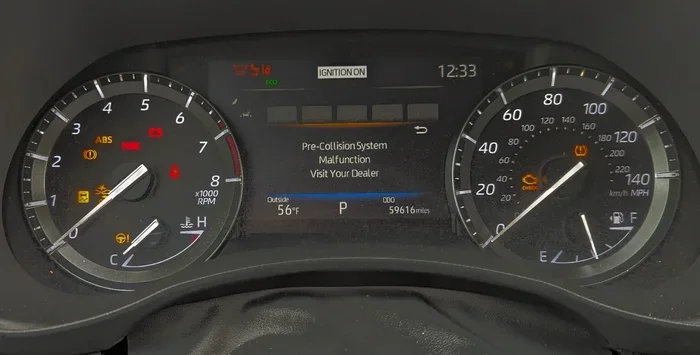
- Check for any warning messages on the dashboard display that may indicate a sensor issue.
Sometimes the system will not activate if the windshield has been recently replaced or if there is a camera calibration issue. In these cases, a visit to a Toyota service center may be necessary to recalibrate the sensors.
The System Turns Off By Itself
There are a few reasons why your Toyota Pre-Collision system might turn off unexpectedly:
- Low battery voltage can cause the system to disable itself to conserve power.
- Dirty sensors may cause the system to shut down until they are cleaned.
- Extreme weather conditions such as heavy rain, fog, or snow can temporarily deactivate the system.
- Aftermarket accessories like roof racks or large cargo carriers can sometimes obstruct the camera view.
If your system keeps turning off, it is worth having a technician inspect the vehicle. You can also check whether your Toyota model supports Toyota Connect without a subscription, as some connected safety features depend on your subscription status.
How to Keep the System in Good Working Order
Regular maintenance goes a long way in keeping your pre-collision system functioning properly. Here are a few tips:
- Keep the front windshield and camera area clean and free of obstructions.
- Have the sensors checked during routine service visits.
- Replace the vehicle battery when it shows signs of weakness.
- Avoid placing items on the dashboard that might block the camera view.
Tips for Getting the Most Out of Your Pre-Collision System
The Toyota Pre-Collision system is designed to assist you, not replace your attention. Here are some tips to help you get the most benefit from this technology.
Keep Your Eyes on the Road
Even with the most advanced driver assistance technology, you must remain alert at all times. The Pre-Collision system is a backup, not a substitute for safe driving habits. Always maintain a safe following distance and stay aware of your surroundings.
Understand the System’s Limitations
The pre-collision system works best under ideal conditions. It may not function as effectively in heavy rain, fog, or direct sunlight. The system also relies on clear visibility of the radar sensors and camera, so keep those areas clean at all times.
Combine It with Other Toyota Safety Features
The Pre-Collision system works best when paired with other Toyota Safety Sense features. For example, dynamic radar cruise control adjusts your speed to maintain a safe distance from the vehicle ahead. The lane departure alert warns you if you drift out of your lane. Together, these features create a comprehensive safety ecosystem.
If you are interested in learning more about other Toyota safety features, check out our guide on how to turn off automatic high beams to better understand your vehicle’s lighting safety systems.
Get Familiar with the Dashboard Indicators
Take a few minutes to study the dashboard icons related to the Toyota Pre-Collision system. Knowing what each indicator means can help you respond quickly if the system activates or if there is a malfunction. Common icons include a vehicle with lines in front of it, a pedestrian symbol, and a warning triangle.
How Does the Pre-Collision System Compare to Other Safety Features?
To understand the value of the Toyota Pre-Collision system, it helps to see how it compares to other safety technologies available in the market. Here is a quick comparison:
Pre-Collision vs. Standard Braking Systems
Standard braking systems require the driver to apply the brakes manually. The Toyota Pre-Collision system adds an extra layer of protection by detecting potential collisions before you even react. This can make a significant difference in preventing accidents, especially at intersections or in heavy traffic.
Pre-Collision vs. Adaptive Cruise Control
While adaptive cruise control maintains a safe following distance, the Pre-Collision system goes further by preparing the vehicle for a potential impact. It can tighten seatbelts, close windows, and apply brakes in milliseconds if needed.
Many drivers also pair the Pre-Collision system with features like auto-text when driving settings on their phones, creating a more holistic approach to safe driving.
Pre-Collision vs. Backup Cameras
Backup cameras help you see behind the vehicle when reversing. The Pre-Collision system focuses on what is ahead of you while driving. Both are important, but they serve different purposes. If you want to learn more about activating your backup camera, check out our guide on how to turn on the backup camera.
Final Thoughts
The Toyota Pre-Collision safety system is one of the most valuable features you can have in your vehicle. It provides an extra layer of protection that can help prevent accidents or reduce their severity. Turning on the system is simple, and once it is active, you can drive with greater confidence knowing that your Toyota is watching the road ahead for you.
Remember to keep your sensors clean, stay familiar with the dashboard indicators, and always practice safe driving habits. The Pre-Collision system is a powerful tool, but it works best when paired with attentive driving.
If you own a Toyota and have not yet explored the Toyota Safety Sense features in your vehicle, now is the perfect time to do so. Take a few minutes to read through your owner’s manual, experiment with the settings, and enjoy the peace of mind that comes with knowing your vehicle is equipped with some of the best safety technology on the road.
For more information on Toyota features and maintenance tips, explore our other articles on Toyota ownership and care. Stay safe, stay informed, and enjoy every mile in your Toyota.
Frequently Asked Questions
Can I Turn Off the Toyota Pre-Collision System?
Yes, you can turn off the Toyota Pre-Collision system through the same menu where you turned it on. However, Toyota recommends keeping it enabled at all times for maximum safety. The system will automatically reactivate when you start the engine the next time you drive.
Does the Pre-Collision System Work at Night?
Yes, the Toyota Pre-Collision system uses radar sensors that work effectively in low-light conditions. However, the camera component may be less effective in complete darkness or heavy rain. Keeping your windshield clean helps ensure optimal performance at all times.
Can the Pre-Collision System Detect Cyclists?
Many newer versions of the Toyota Pre-Collision system can detect cyclists and pedestrians. The system uses its forward-facing camera and radar to identify vulnerable road users and provide warnings or automatic braking if needed.
Will the Pre-Collision System Work After a Windshield Replacement?
After a windshield replacement, the camera may need recalibration. The Toyota Pre-Collision system may not function correctly until the camera is properly calibrated by a certified Toyota technician. Always have this done at an authorized service center.
Is the Pre-Collision System Available on Older Toyota Models?
The Toyota Pre-Collision system was introduced as part of the Toyota Safety Sense package, which became standard on most models starting in 2017. Older models may not have this feature unless it was added as part of a dealer-installed safety package.
What Should I Do If the Pre-Collision Warning Light Stays On?
If the warning light remains illuminated, it usually indicates a sensor malfunction or obstruction. Check that the front sensors and camera are clean. If the light persists, visit a Toyota service center for a diagnostic check to ensure the system is operating correctly.