Car Wont Start After Overheating Here Is What Happened
A car that wont start after overheating is a serious warning sign. Overheating can damage your engine block, head gasket, and cooling system in ways that prevent startup. Understanding what happens inside your engine during an overheat event helps you act fast and avoid costly repairs. This guide covers every cause, symptom, and fix in plain, simple language.
You turn the key, and nothing happens. No cranking. No rumble. Just silence. And then you remember — your car was overheating just a few minutes ago. This is one of the most frustrating moments a driver can face, and it happens more often than you might think.
When an engine overheats, the damage goes far beyond a hot hood and steam rising from the hood. Internal components can warp, crack, or fail in ways that stop your car from starting again. The good news? Understanding what went wrong puts you in a much better position to fix it. This guide walks you through every reason your car wont start after overheating, what to check, and how to get back on the road.
Whether you are dealing with a blown head gasket, a stuck thermostat, or something else entirely, the answers are right here. No jargon. No fluff. Just clear, practical advice that actually helps.
Key Takeaways
- Blown head gasket is the #1 reason a car wont start after overheating, allowing coolant into the cylinders.
- Warped cylinder heads from extreme heat can ruin the engine seal and prevent compression.
- Low coolant levels after an overheat event starve the engine of the lubrication and cooling it needs to turn over.
- Damaged water pumps and thermostats are common overheating causes that also block startup.
- Acting quickly matters — ignoring overheating signs leads to cracked engine blocks and expensive replacements.
- Professional diagnosis is essential when a car overheats and refuses to start again.
- Regular cooling system maintenance prevents most overheating problems before they start.
📑 Table of Contents
- Why Your Car Wont Start After Overheating
- Common Overheating Causes That Lead to No-Start
- Warning Signs Your Engine Is Overheating
- What Happens Inside the Engine During Overheating
- How to Diagnose Why Your Car Wont Start After Overheating
- How to Fix a Car That Wont Start After Overheating
- Preventing Overheating and Starting Problems in the Future
- Expert Insight: When to Tow Instead of Drive
- Key Takeaways
- Conclusion
Why Your Car Wont Start After Overheating
Overheating is not just a temperature problem. It is a chain reaction that attacks multiple engine systems at once. When the cooling system fails, heat builds up fast. And that heat can destroy the very parts your engine needs to start.
Here is the simple truth. Your engine needs three things to start and run. Compression, fuel, and spark. Overheating can damage all three. Let us break down exactly how that happens.
The Engine Block and Cylinder Head Connection
Your engine block and cylinder head sit on top of each other with a gasket in between. That gasket keeps coolant, oil, and combustion gases where they belong. When your engine overheats, the metal expands. A lot. And when it cools back down, it may not return to its original shape.
This warping creates tiny gaps between the block and head. Coolant leaks into places it should not be. Combustion gases escape. And your engine simply cannot build the compression it needs to start. This is why a car wont start after overheating so often points back to the head gasket.
Coolant Mixing with Engine Oil
One of the sneakiest results of overheating is coolant getting into your engine oil. When the head gasket fails from heat damage, coolant can seep past and mix with the oil. You might notice a milky, frothy substance under your oil cap. This is a serious problem because oil lubricates your engine.
Without proper lubrication, internal engine parts grind against each other. The damage gets worse every time you try to start the car. If you see milky oil after an overheating event, do not start the engine. Have it towed to a mechanic instead.
Warped or Cracked Cylinder Heads
Cast iron and aluminum cylinder heads handle heat, but they have limits. Extreme overheating can warp the head surface. In severe cases, the head can actually crack. A cracked or warped cylinder head means the engine cannot seal properly.
This leads to compression loss, coolant loss, and overheating that keeps coming back even after you fix the original cooling problem. A warped cylinder head sometimes can be resurfaced by a machine shop. A cracked head usually needs full replacement.
Common Overheating Causes That Lead to No-Start
Before we talk about fixes, it helps to understand what caused the overheating in the first place. Most overheating problems come from failures in the cooling system. Here are the usual suspects.
Thermostat Stuck Closed
Your thermostat controls the flow of coolant through the engine. When it gets stuck closed, coolant cannot reach the radiator to cool down. The temperature gauge climbs fast. And if you do not notice it quickly, serious engine damage follows.
A stuck thermostat is one of the most common reasons cars overheat. It is also one of the cheapest parts to replace. But if you ignore it long enough, the damage spreads to the head gasket and cylinder head.
Water Pump Failure
The water pump moves coolant through the engine block and radiator. It works constantly while your car runs. Over time, the bearing wears out, or the impeller corrodes. When the water pump fails, coolant stops flowing. Heat builds up fast.
Water pump failure often shows warning signs before it becomes a total breakdown. Listen for grinding noises near the front of the engine. Check for coolant leaks around the pump. These are early signals that can save you from a much bigger problem.
Radiator and Cooling Fan Problems
Your radiator releases heat from the coolant into the air. The cooling fan pulls air through the radiator when the car is slow or idling. If either component fails, the engine cannot cool down properly.
Common radiator problems include clogged fins, internal blockages, and leaks. Cooling fan issues often come from a bad fan motor, faulty relay, or broken temperature sensor. Both radiator and fan problems can cause the engine to overheat, especially in traffic or on hot days.
Coolant Leaks
Low coolant is the most obvious cause of overheating. But finding the leak is not always easy. Coolant can escape from hoses, the radiator cap, the water pump seal, or even the heater core.
Check your coolant reservoir regularly. If the level drops often, you have a leak somewhere. Top up with the right type of coolant and watch for puddles under your car. Green, orange, or pink fluid on the ground is a clear sign of a coolant leak.
Warning Signs Your Engine Is Overheating
Most drivers ignore the early warning signs of overheating. They assume the temperature gauge will come back down on its own. It rarely does. Catching the signs early can save your engine from catastrophic damage.
Temperature Gauge Reading High
Your dashboard temperature gauge is your first line of defense. If it climbs into the red zone, pull over safely and turn off the engine. Continuing to drive with a high temperature reading is the fastest way to destroy your engine.
Do not ignore a gauge that sits higher than normal, even if it is not in the red. A consistently high reading means something in the cooling system is not working right.
Steam or Smoke From the Hood
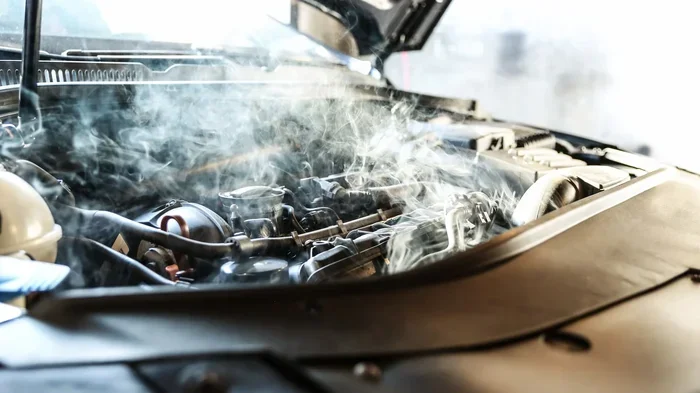
Steam rising from under the hood is one of the most visible signs of overheating. Coolant is hitting hot engine parts and turning to vapor. This often smells sweet, almost like syrup.
If you see steam, pull over immediately. Do not open the hood right away. Hot coolant can spray out and cause burns. Let the engine cool for at least 15 to 20 minutes before you look under the hood.
Unusual Sounds From the Engine Bay
Overheating engines sometimes make strange noises. You might hear knocking, pinging, or a bubbling sound from the radiator. These sounds happen because the coolant is boiling or because metal parts are expanding and rubbing together.
Any unusual engine sound combined with a high temperature reading is a red flag. Stop driving and get the car checked.
Coolant Warning Light on the Dashboard
Modern cars have a dedicated coolant warning light. When it comes on, your coolant level is low or the temperature is too high. This light should never be ignored, even if the car seems to be running fine.
Some cars show a red temperature warning. Others show a blue or green coolant icon. Check your owner manual to know which light means what for your specific vehicle.
What Happens Inside the Engine During Overheating
Understanding the internal damage helps you appreciate why a car wont start after overheating. The engine is a精密 machine with very tight tolerances. Heat changes everything.
Metal Expansion and Loss of Tolerances
Engine components are designed to work within a specific temperature range. When temperatures exceed that range, metal expands beyond its designed limits. Pistons swell. Valve seats loosen. Bearings wear out faster.
Once metal has expanded and warped, it does not always go back to normal. Even after the engine cools down, the damage remains. This is why overheating that seems to go away can still cause long-term problems.
Head Gasket Blowout
The head gasket sits between the engine block and cylinder head. It handles extreme heat and pressure every time you drive. Overheating weakens the gasket material. Eventually, it fails.
A blown head gasket lets combustion gases escape into the cooling system. It lets coolant leak into the cylinders. It lets oil and coolant mix. All of these problems prevent the engine from starting properly.
Cracked Engine Block
In the worst cases, extreme overheating cracks the engine block. This is the most severe outcome of overheating. A cracked block means coolant leaks internally, combustion gases escape, and the engine cannot function.
Engine block cracks are expensive to repair. In many cases, the entire engine needs to be replaced. This is why preventing overheating damage matters so much.
How to Diagnose Why Your Car Wont Start After Overheating
If your car overheated and now it wont start, you need a systematic approach to diagnosis. Here is what to check step by step.
Step 1: Check the Coolant Level
Open the coolant reservoir and look at the level. If it is empty or very low, you have a leak somewhere. Do not open the radiator cap when the engine is hot. Wait for it to cool completely first.
Step 2: Check the Oil Condition
Pull the dipstick and look at the oil. Is it milky or frothy? That means coolant has mixed with the oil. This is a strong sign of head gasket failure from overheating.
Step 3: Try to Crank the Engine
Turn the key and listen carefully. Does the engine crank normally? Does it crank slowly? Does it not crank at all? Each of these points to a different problem.
- Normal crank but no start: Points to fuel delivery, spark, or compression issues from overheating damage.
- Slow crank: May indicate a weak battery that was stressed by the overheating event.
- No crank at all: Could be a starter motor issue or a seized engine from overheating.
Step 4: Check for Compression
A compression test tells you if the cylinders are sealing properly. Low compression in one or more cylinders is a strong indicator of head gasket damage or a warped cylinder head from overheating.
Step 5: Inspect the Radiator and Hoses
Look for visible leaks, cracked hoses, and a radiator that feels damaged or clogged. A radiator pressure test can find hidden leaks that are not visible to the eye.
How to Fix a Car That Wont Start After Overheating
The fix depends entirely on what the overheating damaged. Here are the most common repairs and what they involve.
Head Gasket Replacement
A head gasket replacement is one of the most common repairs after overheating. The mechanic removes the cylinder head, inspects it for warping, and installs a new gasket. This repair can take several hours and costs a few hundred to over a thousand dollars depending on the vehicle.
After a head gasket replacement, the cooling system should be flushed and refilled with fresh coolant. This ensures no contamination remains from the overheating event.
Cylinder Head Resurfacing or Replacement
If the cylinder head is warped but not cracked, a machine shop can resurface it. This restores the flat surface needed for a proper seal with the head gasket.
If the head is cracked, it needs full replacement. Used or remanufactured heads are available for many vehicle models, which can save money compared to a new one.
Water Pump and Thermostat Replacement
If overheating was caused by a failed water pump or stuck thermostat, replacing these parts is the first step. These are relatively affordable repairs and they restore proper coolant flow to the engine.
Always replace the coolant at the same time. Old coolant loses its effectiveness and can contribute to overheating problems returning.
Radiator Repair or Replacement
A leaking radiator can be repaired in some cases. But if the damage is extensive, full replacement is the safer choice. A new radiator ensures proper cooling and prevents future overheating.
Cooling System Flush
After any overheating repair, a full cooling system flush is essential. Old coolant can contain rust, debris, and contaminants that caused the original problem. Fresh coolant keeps the system clean and running at the right temperature.
Preventing Overheating and Starting Problems in the Future
The best way to deal with a car that wont start after overheating is to prevent overheating from happening in the first place. Regular maintenance makes a huge difference.
Follow Your Maintenance Schedule
Your owner manual has a maintenance schedule for a reason. Follow it. Change your coolant at the recommended intervals. Inspect hoses and belts for wear. Check the thermostat and water pump during regular service visits.
Watch Your Temperature Gauge
Get in the habit of glancing at your temperature gauge during every drive. It takes two seconds and can save your engine. If you notice the gauge climbing, take action immediately.
Keep Coolant at the Right Level
Check your coolant reservoir once a month. If the level drops, find the leak and fix it. Running low on coolant is the fastest path to overheating and engine damage.
Address Small Problems Before They Grow
A small coolant leak today becomes a big overheating problem tomorrow. A slightly noisy water pump today becomes a total failure next week. Small issues are easy and cheap to fix. Ignoring them is not.
Expert Insight: When to Tow Instead of Drive
One of the most important decisions you will make during an overheating event is whether to keep driving or call for a tow. The rule is simple. If your temperature gauge is in the red or you see steam, stop driving.
Continuing to drive an overheating engine can turn a $500 repair into a $3,000 engine replacement. A tow truck costs far less than a new engine. When in doubt, call for help.
Also, if your car has already overheated and now wont start, do not keep trying to turn the key over and over. Each attempt can cause more damage. Have the car towed to a trusted mechanic for a full diagnosis.
Key Takeaways
- Blown head gasket is the #1 reason a car wont start after overheating, allowing coolant into the cylinders.
- Warped cylinder heads from extreme heat can ruin the engine seal and prevent compression.
- Low coolant levels after an overheat event starve the engine of the lubrication and cooling it needs to turn over.
- Damaged water pumps and thermostats are common overheating causes that also block startup.
- Acting quickly matters — ignoring overheating signs leads to cracked engine blocks and expensive replacements.
- Professional diagnosis is essential when a car overheats and refuses to start again.
- Regular cooling system maintenance prevents most overheating problems before they start.
Conclusion
A car that wont start after overheating is a clear signal that something inside the engine has been damaged. The most common culprits are a blown head gasket, a warped cylinder head, or a failed water pump. These problems all stem from the same root cause, the cooling system was not able to keep the engine at a safe temperature.
The good news is that understanding what went wrong puts you ahead. You now know the warning signs to watch for, the common causes of overheating, and the steps to take when your car refuses to start. You also know when to stop driving and call for a tow, which can save you thousands of dollars in engine damage.
Prevention is always better than repair. Regular coolant checks, cooling system flushes, and timely attention to small problems keep your engine running at the right temperature. And when overheating does happen, acting quickly and getting professional help gives your engine the best chance of recovery.
Do not ignore the signs. If your car overheated and now it wont start, get it diagnosed today. The longer you wait, the worse the damage becomes. Your engine deserves the care and attention that keeps it running strong for miles to come.
Frequently Asked Questions
Can a car overheat and still start?
Yes, in some mild overheating cases the car may still start. But if the engine has been running hot for a long time, internal damage can prevent startup. Always check the coolant level and oil condition before trying again.
How long can you drive an overheating car before engine damage?
Even a few minutes of driving with an overheating engine can cause serious damage. The head gasket can fail, coolant can boil, and metal parts can warp. Pull over and turn off the engine at the first sign of overheating.
What does a blown head gasket feel like?
A blown head gasket often causes the engine to overheat, leak coolant, and lose power. You might see white smoke from the exhaust or notice a milky substance in the oil. The car may also refuse to start after the overheating event.
Is it safe to add coolant after the engine has cooled down?
Yes, but only after the engine has cooled completely. Adding coolant to a hot engine can cause burns from pressurized steam and hot liquid. Wait at least 15 to 20 minutes before opening the radiator cap or coolant reservoir.
How much does it cost to fix a car that wont start after overheating?
The cost varies widely depending on the damage. A thermostat replacement might cost $150 to $300. A head gasket repair can range from $800 to $2,000. A cracked engine block or seized engine can exceed $3,000 or require a full engine replacement.
Can low coolant cause a car not to start?
Low coolant itself usually does not prevent starting directly. But low coolant leads to overheating, which damages the head gasket, cylinder head, or engine block. Those overheating-related damages are what ultimately prevent the car from starting.