Stunning Car in the Sunset and Golden Hour Photography Tips
Photographing a car in the sunset is one of the most rewarding experiences in automotive photography. The golden hour light adds warmth, depth, and drama that makes any vehicle look incredible. In this guide, you will learn proven techniques for capturing breathtaking car in the sunset shots, from choosing the right location to editing your final images like a pro.
There is something magical about a car in the sunset. The warm orange and pink hues wrapping around a sleek vehicle create images that stop people in their tracks. Whether you are a beginner photographer or someone who has been shooting for years, capturing a car in the sunset offers a unique creative challenge. The light changes fast, the reflections shift constantly, and every single moment feels different.
In this guide, I will walk you through everything you need to know about sunset car photography. You will learn how to find the perfect spot, set up your camera, compose your shot, and edit your images for maximum impact. By the end, you will have the confidence and skills to create jaw-dropping car in the sunset photos of your own.
Let us dive in and explore the world of golden hour car photography together.
Key Takeaways
- Golden hour is the best time: The soft, warm light during sunset creates stunning reflections and highlights on any car.
- Location matters a lot: Open roads, beaches, and desert landscapes make perfect backdrops for a car in the sunset.
- Camera settings are key: Manual mode gives you full control over exposure, white balance, and shutter speed for perfect sunset car shots.
- Composition tips elevate your shots: Use leading lines, reflections, and the rule of thirds to create dynamic car in the sunset photos.
- Editing brings it all together: Simple adjustments in Lightroom or Snapseed can make your sunset car photography pop.
- Avoid common mistakes: Overexposure, wrong white balance, and cluttered backgrounds can ruin an otherwise great shot.
📑 Table of Contents
- Why a Car in the Sunset Looks So Stunning
- Best Locations for Shooting a Car in the Sunset
- Camera Settings for Perfect Sunset Car Photography
- Composition Tips for Jaw-Dropping Sunset Car Shots
- Editing Your Car in the Sunset Photos
- Common Mistakes to Avoid When Photographing a Car in the Sunset
- Final Thoughts on Capturing a Car in the Sunset
Why a Car in the Sunset Looks So Stunning
You might wonder why car in the sunset photos always look so good. The answer lies in the science of light and color. During golden hour, the sun sits low on the horizon. This creates long, warm rays that bathes everything in a soft amber glow. Cars, with their smooth surfaces and reflective paint, catch this light beautifully.
The warm tones of a sunset complement most car colors. A red sports car glows against an orange sky. A black luxury sedan reflects deep golden highlights. Even a simple white sedan looks elegant when framed by sunset colors. This natural pairing is why sunset car photography has become so popular on social media and in automotive magazines.
The Magic of Golden Hour Lighting
Golden hour refers to the period shortly after sunrise or before sunset. During this time, the sun produces a soft, diffused light. Unlike harsh midday sun, golden hour light wraps around objects gently. This means fewer harsh shadows and more even illumination across the car’s surface.
For car photography, this is a dream come true. The soft light reveals details in the bodywork without blowing out highlights. It also creates natural rim lighting along the edges of the vehicle. This rim light separates the car from the background and adds a three-dimensional feel to the image.
Pro tip: Arrive at your location at least 30 minutes before sunset. This gives you time to scout your spot and set up before the best light arrives.
Best Locations for Shooting a Car in the Sunset
Where you shoot matters just as much as how you shoot. The right location can turn a good car in the sunset photo into a masterpiece. Let us look at some of the best spots to consider.
Open Highways and Desert Roads
Long, straight roads leading toward the sunset create powerful leading lines. These lines draw the viewer’s eye directly to the car. Desert roads are especially popular for sunset car photography because they offer wide open spaces and minimal distractions. The flat terrain also allows you to position the car perfectly relative to the sun.
Think about classic routes like Route 66 or desert highways in Arizona and Nevada. The combination of red rock landscapes and golden hour light makes for unforgettable car in the sunset images.
Beaches and Coastal Roads
Water reflections add an extra layer of beauty to sunset car photos. A beach setting gives you sand in the foreground, waves in the background, and the sun setting over the ocean. The car sits right in the middle of this natural frame. Coastal roads with curves also work wonderfully because they add dynamic lines to your composition.
Look for quiet beaches where you can park the car safely. Early evening crowds are usually thin, giving you plenty of space to work.
Urban Skylines and Parking Garages
Not every car in the sunset photo needs a nature setting. City skylines can create a stunning contrast with warm sunset colors. Parking garages with rooftop access offer elevated views of the sunset behind the cityscape. The geometric lines of the garage add structure to the image.
Urban sunset shoots also let you incorporate city lights as the sun goes down. This creates a beautiful transition from golden hour to blue hour in a single session.
Camera Settings for Perfect Sunset Car Photography
Getting the right camera settings is essential for capturing a great car in the sunset. Auto mode can struggle with the bright sky and dark shadows. Switching to manual or semi-manual modes gives you much better control.
Shooting in Manual Mode
Manual mode lets you control every aspect of your exposure. Start with these baseline settings and adjust from there:
- Aperture: Use f/8 to f/11 for sharp focus across the entire car. A wider aperture like f/2.8 can create a beautiful bokeh effect if you want the background soft and dreamy.
- Shutter Speed: Start around 1/125s to 1/250s. This is fast enough to freeze the car and any slight movement. If you want motion blur in the background, slow down to 1/30s or slower.
- ISO: Keep it as low as possible, around ISO 100 or 200. This minimizes noise and keeps your images clean.
- White Balance: Set it to “Shade” or “Cloudy” to enhance the warm tones. Auto white balance sometimes cools down the sunset colors too much.
Using Spot Metering
Sunset scenes can trick your camera’s meter. The bright sky may cause the camera to underexpose the car. Switch to spot metering and meter off the car’s body. This ensures the vehicle is properly exposed even if the sky becomes slightly overexposed.
You can always recover some detail from a bright sky in post-production. But you cannot bring back details lost in a dark, underexposed car.
Shooting in RAW Format
Always shoot in RAW if your camera supports it. RAW files contain far more data than JPEGs. This gives you much more flexibility when editing your car in the sunset photos later. You can recover highlights in the sky and lift shadows on the car without losing quality.
Composition Tips for Jaw-Dropping Sunset Car Shots
Great settings get you 50% of the way there. The other 50% comes down to composition. How you frame the car against the sunset makes all the difference between a snapshot and a stunning photograph.
The Rule of Thirds
Imagine your frame divided into nine equal boxes by two horizontal and two vertical lines. Place the car along one of these lines rather than dead center. Position the horizon on the upper or lower third line depending on whether you want more sky or more foreground.
For a car in the sunset, placing the car on the left or right third and letting the sunset fill the opposite side usually works best. This creates a natural balance in the image.
Leading Lines and Reflections
Use natural lines in the environment to guide the viewer’s eye toward the car. Roads, fences, shorelines, and even tire tracks all work as leading lines. The sunset light casts long shadows that can also serve as powerful compositional elements.
Reflections are another powerful tool. Wet roads after a rainstorm create mirror-like surfaces. You can capture the car’s reflection alongside the sunset for a dramatic double image. Even a puddle in a parking lot can produce a surprising and beautiful reflection.
Silhouette Shots
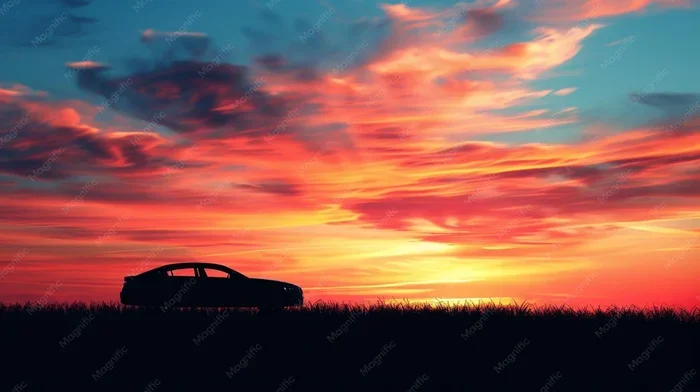
Sometimes the most striking car in the sunset photos are silhouettes. Expose for the sky and let the car turn into a dark shape against the colorful background. This works especially well with cars that have distinctive outlines. Classic muscle cars, convertibles with the top down, and vintage vehicles all make excellent silhouette subjects.
To create a silhouette, point your camera directly at the sun and let the car sit between you and the light source. Reduce exposure by one or two stops to darken the car while keeping the sunset colors vibrant.
Fill Flash for Detail
If the car falls too dark against a bright sunset, try using a fill flash. A speedlight or even a small on-camera flash can add just enough light to reveal details in the car’s body. Keep the flash power low and bounce it off a reflector for a natural look. This technique works wonders for preserving the sunset colors while keeping the car visible and detailed.
Editing Your Car in the Sunset Photos
Editing is where your car in the sunset photos really come to life. A good raw file becomes great with the right adjustments. You do not need expensive software either. Free tools like Snapseed or GIMP can produce professional-quality results.
Basic Adjustments
Start with these foundational edits in any photo editor:
- Exposure: Brighten or darken the overall image to taste. A slightly darker edit often enhances the mood of a sunset photo.
- Contrast: Increase contrast slightly to make the sunset colors pop against the car.
- Highlights and Shadows: Pull down highlights to recover sky detail. Lift shadows to reveal more information on the car’s darker panels.
- White Balance: Shift the temperature warmer to enhance the golden tones. This is especially helpful if your camera captured slightly cooler colors than you saw with your eyes.
Color Grading for Sunset Vibes
Color grading gives your sunset car photos a consistent, cinematic look. In Lightroom, use the HSL panel to boost orange and red tones in the highlights. Add a subtle orange tint to the shadows for a cohesive warm feel. This technique is widely used in automotive photography and social media content.
For a more dramatic look, try split toning. Add warm orange to the highlights and a cool blue to the shadows. This contrast creates depth and visual interest that draws the viewer in.
Sharpening and Noise Reduction
Apply sharpening selectively to the car’s details. Focus on the edges of the body panels, wheels, and any chrome or chrome-like trim. Use noise reduction carefully, especially if you shot at higher ISO. Over-sharpening can create ugly artifacts, so always zoom in and check your work.
Common Mistakes to Avoid When Photographing a Car in the Sunset
Even experienced photographers make mistakes during sunset shoots. Knowing what to avoid saves you time and frustration.
Overexposing the Sky
The biggest mistake in sunset car photography is overexposing the sky. When the sky blows out, you lose all the beautiful color and detail. Use exposure compensation to dial down the brightness by one or two stops. You can always brighten the car in editing, but you cannot recover a completely white sky.
Ignoring the Foreground
Focusing only on the car and the sunset means ignoring the ground beneath your feet. A messy foreground with trash, weeds, or random debris distracts from the main subject. Take a moment to clean up the area or find a spot with a clean foreground. Sand, wet pavement, or a simple stretch of road works perfectly.
Shooting Too Late
The best light for a car in the sunset lasts only about 20 to 30 minutes. If you wait too long, the light fades fast and the colors become dull. Plan your shoot so you are ready to fire your shutter well before the sun dips below the horizon.
Forgetting About the Car’s Cleanliness
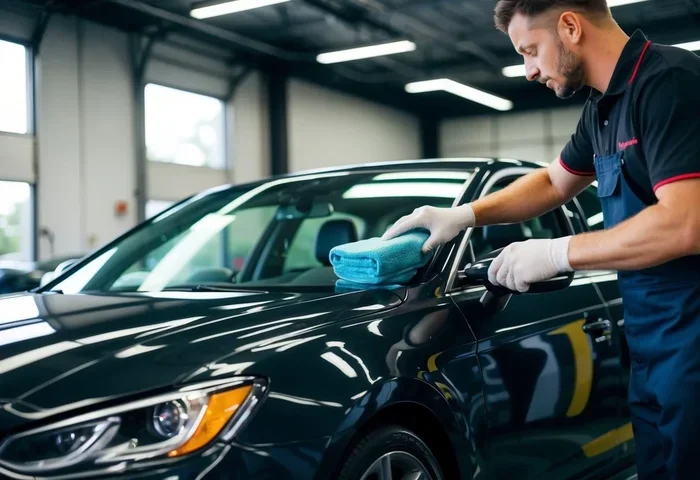
This one is easy to overlook. A dirty car shows every flaw in photos, especially in the warm, directional light of sunset. Give the car a quick wash and wax before your shoot. Clean windows, polished wheels, and a dust-free body make a massive difference in the final image.
Using the Wrong Lens
Wide-angle lenses can distort the car and make it look smaller than it is. Telephoto lenses compress the scene and create a more dramatic, impactful image. A 50mm to 85mm lens is often the sweet spot for car in the sunset photography. It gives you a natural perspective without distortion.
Final Thoughts on Capturing a Car in the Sunset
Photographing a car in the sunset is one of the most fun and creative challenges in automotive photography. The combination of warm light, dramatic skies, and sleek vehicles creates images that people simply love. Whether you are shooting for social media, a portfolio, or just for fun, the tips in this guide will help you take your sunset car photos to the next level.
Remember, practice makes perfect. Every sunset is different, and every car responds to the light in its own unique way. Get out there, experiment with different settings, try new compositions, and most importantly, have fun with it. The best car in the sunset photo is the one that makes you smile when you look at it.
Now grab your camera, find a great spot, and chase that golden light. Your next masterpiece is waiting for you just as the sun dips below the horizon.
Frequently Asked Questions
What time is best for shooting a car in the sunset?
The golden hour, which starts about 30 minutes before sunset, is the absolute best time. The light is soft, warm, and directional during this window. Arriving early gives you time to set up and catch the most dramatic colors.
What camera settings work best for sunset car photography?
Shoot in manual mode with an aperture of f/8 to f/11, shutter speed around 1/125s to 1/250s, and ISO 100 or 200. Use spot metering on the car and shoot in RAW for maximum editing flexibility. These settings give you sharp, well-exposed images with rich sunset colors.
Do I need an expensive camera for car in the sunset photos?
No, you do not. Modern smartphones can capture stunning sunset car photos if you use the right settings. Many phones now have manual or pro modes that let you control exposure and white balance. A dedicated camera gives you more flexibility, but it is not required to get great results.
How can I make my sunset car photos look more professional?
Focus on composition, lighting, and editing. Use the rule of thirds, find leading lines, and shoot during the actual golden hour. In editing, adjust white balance to enhance warmth, boost contrast slightly, and selectively sharpen the car’s details. These small changes make a big difference.
What type of car looks best in a sunset photo?
Almost any car looks great in a sunset photo. Red and black cars tend to pop with warm sunset tones. Classic cars and sports cars with sleek lines create beautiful silhouettes. Even everyday sedans look elegant against a colorful sky. The key is the light, not the car itself.
Can I use a fill flash when shooting a car in the sunset?
Yes, absolutely. A fill flash helps reveal details on the car when the sunset light creates too much contrast. Use a low flash power setting and bounce the light for a natural look. This technique keeps the sunset colors vibrant while making the car visible and detailed.
=== CONCLUSION ===
Capturing a stunning car in the sunset combines technical skill with creative vision. The golden hour light transforms ordinary vehicles into extraordinary subjects. With the right location, camera settings, composition techniques, and editing skills, you can create images that truly stand out. Remember to arrive early, experiment freely, and enjoy the process. Each sunset offers a new opportunity to create something beautiful. Get out there, find your perfect car in the sunset moment, and start shooting. Your next favorite photo is just one golden hour away.