Can a Toyota Key Be Reprogrammed at Home Without a Dealer
Yes, you can reprogram a Toyota key at home without visiting a dealer. This guide shows you how to handle Toyota key fob programming for smart keys, remotes, and traditional models. You’ll discover the tools needed, the exact steps, and when to call a professional. Save money and get back on the road fast.
Can a Toyota Key Be Reprogrammed? The short answer is yes. You do not need to visit a dealership or spend a fortune to get your Toyota key working again. Whether you lost your only key, bought a used car with no spare, or simply want a backup, reprogramming a Toyota key is a skill you can learn. This guide walks you through every step with clear instructions. You will find out what tools you need, how to enter programming mode, and what to do if things go wrong. By the end, you will feel confident enough to handle the job yourself.
Many car owners assume they must pay a dealer for key programming. That is not always true. Toyota built many of its models with a self-programming feature. You can add a new key or fob in minutes using the existing working key. For models that do not support self-programming, an OBD-II scanner or a professional locksmith can still help you avoid the dealer price tag. This article covers all Toyota key types, from traditional mechanical keys to modern smart keys with push-button start. We also highlight common pitfalls and expert tips to ensure your first attempt succeeds.
Key Takeaways
- Toyota keys can be reprogrammed at home using simple tools and your vehicle’s onboard system.
- You’ll need a blank key or fob compatible with your Toyota model and an OBD-II scanner for some procedures.
- Smart key reprogramming requires entering programming mode via the driver’s door and ignition sequence.
- Common mistakes like rushing or using the wrong key type can cause programming failure.
- Professional help is needed for older models without self-programming capability or if you lose all keys.
- Reprogramming saves hundreds compared to dealer fees, often taking less than 30 minutes.
📑 Table of Contents
- Understanding Toyota Key Reprogramming
- Can a Toyota Key Be Reprogrammed at Home Without a Dealer?
- Toyota Key Types and Their Reprogramming Options
- Step-by-Step Guide to Reprogramming Your Toyota Key
- When to Call a Professional Locksmith or Dealer
- Common Mistakes to Avoid During Toyota Key Programming
- Expert Insights and Final Thoughts
Understanding Toyota Key Reprogramming
How Toyota Key Systems Work
Toyota vehicles use a transponder system to prevent theft. Inside the plastic head of your key or fob is a small chip. This chip sends a unique identification signal to the car’s immobilizer. When the signal matches, the engine can start. If the signal does not match, the car will not start, even if you turn the key. Reprogramming simply means teaching the car’s computer to recognize a new or replacement key’s signal.
The system has evolved over the years. Older Toyota models from the 1990s and early 2000s used fixed-code transponders. These are easier to program. Newer models use rolling-code encryption, which changes the signal every time you use the key. These advanced systems require more precise steps, but they can still be programmed at home with the right method. Understanding your specific Toyota key type is the first step toward successful reprogramming.
Why Reprogramming Might Be Necessary
You might need to reprogram a Toyota key in several situations. Maybe you lost all your keys and need a new one cut and programmed. Perhaps you bought a used Toyota and want to erase old keys from the system. You could also have a dead battery in your smart key fob and need to reprogram it after replacement. In all these cases, the car’s computer must be taught to accept the new key as a valid one.
Some owners reprogram keys to add convenience. For example, you might want a spare key for a spouse or a trusted friend. Instead of paying a dealer for a second key, you can do it yourself. The process is straightforward for most Toyota models built after 2000. Even some older models have a simple programming sequence that works in seconds.
Can a Toyota Key Be Reprogrammed at Home Without a Dealer?
Can a Toyota Key Be Reprogrammed at home without a dealer? Absolutely. Toyota designed many of its vehicles with a do-it-yourself programming feature. The process typically takes less than 15 minutes. You will need a working key that is already recognized by the car. If you have no working keys, the process becomes more complex and may require professional help. But if you have at least one valid key, you are in good shape.
The exact steps vary slightly depending on your Toyota model and year. However, the general method involves using the existing key to enter a programming mode. Once inside, you can add new keys one by one. The car will teach the new key’s transponder code to the immobilizer system. This is a standard security feature, not a hack. It is meant to let owners add spare keys easily. Below, we break down the process model by model and key type.
Tools and Equipment You’ll Need
Before you start, gather the right tools. You do not need expensive equipment for most Toyota key reprogramming jobs. Here is a simple checklist:
- A blank Toyota key or fob that matches your model. You can buy these online or at an automotive store. Make sure it is uncut or has the correct key blade for your vehicle.
- A working Toyota key that is already programmed to the car. This is essential for the self-programming method.
- An OBD-II scanner (optional). Some newer Toyota models or lost-key situations require a diagnostic tool to reset the system. A basic OBD-II scanner that supports Toyota key programming will work.
- A flathead screwdriver or a small trim removal tool to pop off the key fob battery cover if needed.
- A 3V CR2032 battery for smart key fobs. Always keep a spare on hand.
The Self-Programming Process: A Quick Overview
The self-programming process follows a simple rhythm. You insert the working key, turn it to the ON position, then remove it. You repeat this action a specific number of times within a set time window. The car’s doors lock and unlock or the dashboard lights flash to confirm you are in programming mode. Then you insert the new key and turn it to ON. The car accepts the new key. This pattern works for many Toyota models from 2003 onward. We will dive into specific instructions for popular models in the next section.
Toyota Key Types and Their Reprogramming Options
Not all Toyota keys are the same. The method you use depends on the type of key your vehicle uses. Toyota has used several key systems over the years. Identifying yours is crucial before you attempt any reprogramming.
Traditional Mechanical Keys
Older Toyota models, especially those from the 1990s and early 2000s, use traditional mechanical keys with a transponder chip embedded in the key head. These keys do not have a remote fob. To reprogram a traditional Toyota key, you typically need to use the existing programmed key to enter the programming sequence. The process is often as simple as inserting the key, turning it to ON and OFF several times, and then inserting the new key within a 30-second window. These older systems are very forgiving and rarely fail if you follow the timing correctly.
Smart Keys and Push-Start Systems
Modern Toyota vehicles often come with smart key systems. These use a key fob with buttons for locking, unlocking, and push-button start. The fob communicates wirelessly with the car. Smart key reprogramming is slightly more involved because the fob has a battery and internal electronics that must be recognized by the car’s computer. You will still use the working fob to enter programming mode, but you may need to keep the fob close to the push-button ignition during the process. Some Toyota models require you to place the fob on a specific spot on the center console or steering column.
Remote Key Fobs
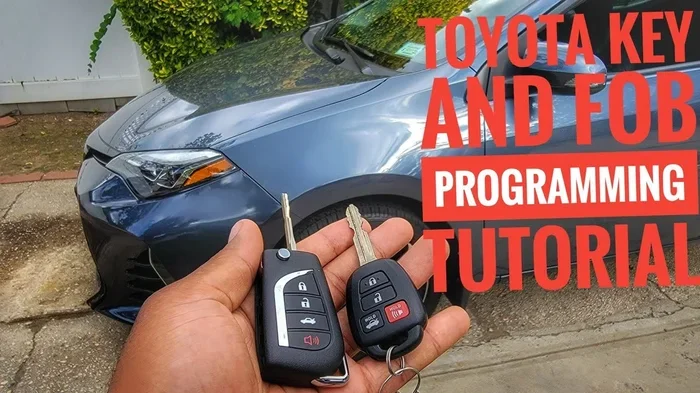
Many Toyota keys combine a mechanical blade with a remote fob. These are common on models like the Toyota Camry, Corolla, and RAV4 from the 2000s and 2010s. Reprogramming the remote buttons is separate from programming the transponder chip for the immobilizer. In most cases, the same self-programming sequence that teaches the car to recognize the key also programs the remote functions. However, on some older models, you may need to program the remote separately using a sequence of button presses on the fob itself. We will cover both scenarios in the step-by-step guide below.
Step-by-Step Guide to Reprogramming Your Toyota Key
Now that you understand the basics, let’s walk through the actual reprogramming process. I will use a common Toyota procedure that works for many models. Always double-check the exact steps for your specific year and model in your owner’s manual. The following guide is a reliable starting point for most Toyota vehicles from 2003 to 2020.
Preparation Before You Start
Preparation is the most important step. Rushing in without the right key or with a dead fob battery will waste your time. Follow these prep steps:
- Get inside your Toyota and close all doors. Make sure the driver’s door is fully shut.
- Insert the working key into the ignition cylinder. If you have a smart key, place the fob on the key grip or the designated spot near the start button.
- Check the fob battery if you are reprogramming a smart key. A weak battery can cause the programming to fail. Replace it with a fresh CR2032 if needed.
- Have the new blank key ready. It should be uncut if you are only programming the transponder, or pre-cut to match your lock cylinders if you need it to start the car immediately.
Entering Programming Mode
To enter programming mode, you will use the existing key to signal the car that you want to add a new key. Here is the standard sequence:
- Insert the working key into the ignition.
- Turn the key to the ON position (just before starting the engine) and then quickly turn it back to OFF. Do this within 5 seconds.
- Remove the key from the ignition.
- Repeat the ON-OFF cycle two more times within a total of 10 to 15 seconds. You will have done three ON-OFF cycles in total.
- Leave the key in the OFF position and remove it from the ignition.
- Within 3 to 5 seconds, the doors should lock and then unlock automatically, or the hazard lights will flash twice. This confirms you are in programming mode. If nothing happens, start over and be faster with the key turns.
Adding a New Key to the System
Once programming mode is active, you have a short window to add the new key. Do not delay.
- Insert the new, unprogrammed key into the ignition.
- Turn it to the ON position and hold it there for 3 to 5 seconds. Do not start the engine.
- Turn the key back to OFF and remove it.
- The doors will lock and unlock again to confirm the new key has been accepted. You may also hear a chirp from the alarm system.
- Repeat this process if you are adding more than one new key. The car can usually store up to four or five keys, depending on the model.
- Exit programming mode by waiting 30 seconds with no key activity, or by inserting the working key and turning it to ON once.
Testing the New Key
Testing is essential. Do not assume the key works until you verify it. Try the following:
- Insert the new key and attempt to start the engine. The ignition should allow the engine to crank.
- Press the lock and unlock buttons on the fob if your key has remote functions. All doors should respond.
- Test the push-button start if you have a smart key. Place the fob near the start button and press it with the brake pedal pressed.
- If the new key does not work, repeat the programming sequence. Make sure you stayed within the time limits. A slow key turn is the most common cause of failure.
When to Call a Professional Locksmith or Dealer
While reprogramming a Toyota key at home is possible for most owners, there are situations where professional help is the better choice. Knowing when to call a locksmith or dealer can save you time, frustration, and potential damage to your car’s computer.
Situations That Require Expert Help
You should seek professional assistance if any of the following apply to you:
- You have no working keys at all. The self-programming method requires at least one programmed key to enter the mode. Without a working key, the car will not let you add a new one through the DIY method. A locksmith or dealer can use a master key or a diagnostic tool to bypass this limitation.
- Your Toyota model does not support self-programming. Some older Toyota models from the 1990s and very early 2000s lack the onboard programming feature. These vehicles require a key programmer tool that connects to the OBD-II port. A locksmith often has these tools and the expertise to use them.
- You have tried multiple times and the car will not accept the new key. If the programming mode keeps failing, you may have a faulty key, a dead fob battery, or an underlying electrical issue. A professional can diagnose the real problem.
- You need a key with remote functions programmed. On some models, the transponder and remote are programmed separately. If the key starts the car but the remote does not work, you may need a specialized tool to program the remote portion.
Cost Comparison: DIY vs. Dealer
The cost difference is significant. A Toyota dealer typically charges between $200 and $500 for a key fob programming service, depending on the model and whether you need a new key cut as well. A locksmith might charge $100 to $250 for the same job, especially if you bring the key to them pre-cut. Doing it yourself costs nothing but the price of a blank key, which is often $20 to $50. The DIY route saves you the labor fee and the trip to the dealer. Even if you need to buy an OBD-II scanner for more complex jobs, the tool pays for itself after one key programming session.
Common Mistakes to Avoid During Toyota Key Programming
Even with clear instructions, mistakes can happen. I have seen many people struggle because of simple oversights. Here are the most common errors and how to avoid them.
Skipping the Reset Step
After programming a new key, it is tempting to walk away immediately. But if you do not properly exit programming mode, the car may not recognize the new key the next time you try to start it. Always wait for the confirmation lock/unlock cycle before removing the key. If you exit too early, the new key may not be saved. On the other hand, leaving the key in the ignition for too long can also cause issues. Follow the timing precisely.
Using an Incompatible Key
Not all blank keys are the same. A key that works for a 2010 Toyota Camry may not work for a 2015 Toyota RAV4. The transponder chip inside the key head must match the frequency and protocol expected by your Toyota’s immobilizer. Before purchasing a blank key, check the part number and ensure it is compatible with your specific model and year. Buying the wrong key wastes money and time.
Ignoring Battery Warnings
If your smart key fob has a weak battery, the programming process often fails silently. The car may not detect the fob’s signal during the programming window. Always replace the fob battery with a fresh one before starting. Keep the new battery in your pocket until you need it. Also, make sure your car battery is fully charged. A low car battery can interrupt the programming sequence and corrupt the system, requiring a more involved reset.
Rushing the Key Turns
The timing window for entering programming mode is tight. Turning the key to ON and OFF too slowly will prevent the car from recognizing the sequence. Practice the motion a few times without the new key first. Be decisive but not violent. A smooth, quick turn is all you need. If you are using a smart key, do not remove the fob from the vehicle too quickly after the final cycle. The car needs a few seconds to register the absence of the old key and enter the mode.
Expert Insights and Final Thoughts
Reprogramming a Toyota key is one of the most satisfying DIY automotive tasks you can do. It requires no special skills, just patience and attention to detail. I always tell people to read the entire process once before they touch their keys. Understanding the flow reduces anxiety and helps you avoid mistakes. If your first attempt does not work, do not panic. Wait a minute, then try again. The system is designed to be forgiving.
One pro tip I always share is to keep a spare key programmed at all times. Once you have successfully added a new key, test it thoroughly and then store it in a safe, accessible place. Having a second working key means you will never be stranded if your primary key is lost or damaged. It also gives you the freedom to reprogram that spare key again in the future if needed.
The process for Can a Toyota Key Be Reprogrammed is well within the reach of any car owner. You do not need to be a mechanic or a tech expert. With the right preparation and a calm approach, you can save hundreds of dollars and learn a valuable skill. The next time you need a new Toyota key, remember that the dealer is not your only option. Try the steps in this guide first. You might be surprised how easy it is.
In summary, Can a Toyota Key Be Reprogrammed at home without a dealer? Yes, for the vast majority of Toyota models. You need a working key, a compatible blank key, and about 15 minutes of your time. Follow the programming sequence carefully, avoid the common mistakes listed above, and test your new key before you drive away. If you hit a roadblock, a locksmith can step in with advanced tools. But for most Toyota owners, the answer to reprogramming is right in their own driveway.
Frequently Asked Questions
Can a Toyota Key Be Reprogrammed if I Lost All My Keys?
It is more difficult but still possible in many cases. Without a working key, the DIY self-programming method will not work because you cannot enter programming mode. You will need a professional locksmith who can use a master key or a diagnostic tool to force the car into a programming state. Some Toyota models also allow a dealer to reprogram the system with a special procedure that bypasses the key requirement.
How Much Does It Cost to Reprogram a Toyota Key at a Dealer?
Dealer programming fees typically range from $200 to $500 for a single key, depending on the Toyota model and whether the key includes a remote fob. This cost covers the labor and the use of their proprietary programming equipment. If you only need the transponder programmed and already have a cut key, a locksmith can often do it for $100 to $250, and doing it yourself costs only the price of a blank key.
What Tools Do I Need to Reprogram a Toyota Key at Home?
For most Toyota models, you only need a working key, a blank replacement key or fob, and about 15 minutes. For smart keys, have a fresh CR2032 battery ready. Some models or lost-key scenarios require an OBD-II scanner that supports Toyota key programming. The scanner is not always necessary but is a helpful backup tool for stubborn systems.
Can I Reprogram a Toyota Smart Key After Replacing the Battery?
Yes, replacing the battery in a Toyota smart key fob often requires reprogramming the fob to the car. The process is the same as adding a new key. Enter programming mode with the existing working fob, then place the new fob near the push-button start or the ignition cylinder and follow the steps. The car will relearn the fob’s signal and the keyless entry and start functions will work again.
Why Won’t My New Toyota Key Work After Reprogramming?
The most common reasons are rushing the key turns, using an incompatible blank key, or a weak fob battery. Double-check that your new key is the correct part number for your Toyota model. Ensure you completed the programming sequence within the time window. Try replacing the fob battery with a fresh CR2032. If all else fails, repeat the process slowly and deliberately, waiting for the lock/unlock confirmation each time.
Is It Safe to Reprogram a Toyota Key Yourself?
Yes, it is completely safe. The self-programming feature is built into the Toyota by the manufacturer for exactly this purpose. You are not bypassing any security systems or risking damage to the car’s computer. As long as you follow the steps correctly and use a compatible key, the process is straightforward and risk-free. It is a standard feature documented in Toyota owner’s manuals.