Can a Subaru Be Flat Towed Everything You Need to Know
So, can a Subaru be flat towed? The short answer is: it depends on the model, the drivetrain, and the transmission type. Some Subaru models with manual transmissions can be safely flat towed behind an RV, while many all-wheel drive Subarus require extra precautions or alternative towing methods. This guide covers everything from the safest Subaru models for flat towing to common mistakes that can damage your drivetrain. Whether you are planning a cross-country road trip or just need to move your car short distances, you will find practical advice and expert insights to tow with confidence.
You are standing in a parking lot, staring at your Subaru, wondering if you can just hook it up behind the RV and drive away. Maybe you are planning a big summer road trip. Maybe you just bought a new toad for your motorhome. Either way, the question is the same: can a Subaru be flat towed? It is a great question, and one that does not have a simple yes or no answer. The truth is, it depends on your specific Subaru model, the drivetrain, and the type of transmission. In this guide, we will walk through everything you need to know so you can tow safely and confidently.
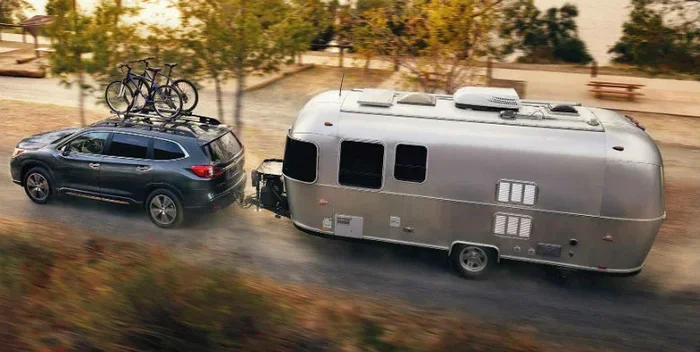
Flat towing, also known as dinghy towing or toad towing, means pulling a vehicle behind another vehicle with all four wheels on the ground. It is the most convenient way to bring a car along on a road trip. You do not need a trailer. You just connect a tow bar and go. But convenience comes with risks. If you do it wrong, you can cause serious damage to your Subaru’s transmission, drivetrain, or electrical systems. That is why understanding your specific vehicle matters so much. Let us dive into the details.
Key Takeaways
- Not all Subarus can be flat towed: AWD and CVT models often cannot be towed with all four wheels down without risking transmission damage.
- Manual transmission Subarus are generally safer for flat towing: Models like the Subaru Legacy and Impreza with manual gearboxes are commonly towed behind RVs.
- Always check your owner manual first: The manufacturer provides specific towing instructions and warnings for every model.
- Use the right equipment: A quality tow bar, supplemental braking system, and proper lighting are essential for safe flat towing.
- Common mistakes cause costly damage: Towing an AWD Subaru flat without proper precautions can destroy the transmission and void your warranty.
- Alternative towing methods exist: Dinghy towing with a dolly or using a trailer are safe alternatives when flat towing is not recommended.
📑 Table of Contents
Understanding Flat Towing Basics
Before we talk about specific Subaru models, let us cover what flat towing actually means and why it is not right for every car. Flat towing involves connecting a towed vehicle behind a motorhome or truck using a tow bar. The towed car rides on its own wheels while moving. This is different from using a tow dolly, which lifts the front wheels off the ground, or a full trailer, which lifts all four wheels.
What Is Flat Towing?
Flat towing is also called four-down towing or dinghy towing. The vehicle being towed has all four wheels on the pavement. A tow bar connects the base plate of the towed vehicle to the towing vehicle. You also need supplemental braking systems, safety cables, and proper lighting. The whole setup looks simple, but the engineering behind it is important. Not every car is built to be pulled this way.
Why Drivetrain Matters
Here is the big reason drivetrain type matters so much. When a car is being towed with its engine off, the wheels are turning the transmission and driveshaft. In a front-wheel drive car being towed with the front wheels on the ground, this can cause problems. In an all-wheel drive car, every component is connected. That means all four wheels turning the drivetrain can create serious internal damage if the car is not designed for it.
Subaru is famous for its symmetrical all-wheel drive system. This is a huge selling point for everyday driving. But it can be a headache when flat towing. The AWD system includes a transfer case, front differential, rear differential, and constant-velocity joints. All of these parts are designed to spin when the car is moving under its own power. Towing with all wheels down can push fluid through the transmission without the lubrication that comes from the engine running. This leads to overheating and potential failure.
Manual vs Automatic Transmission Towing
The type of transmission in your Subaru plays a huge role in whether flat towing is safe. Generally, manual transmission vehicles are safer for flat towing because you can disengage the transmission by putting it in neutral. This allows the wheels to turn freely without grinding internal gears. Automatic transmissions are more complicated. Many automatic transmissions rely on engine-driven fluid pumps to lubricate internal components. When the engine is off and the car is being towed, that fluid pump is not working.
Some newer Subaru models with lineartronic CVT (continuously variable transmission) have specific towing restrictions. The CVT uses a belt and pulley system instead of traditional gears. Towing a CVT-equipped Subaru flat can cause the belt to slip and overheat. Always check the owner manual for your specific model year before attempting any flat towing.
Which Subaru Models Can Be Flat Towed?
This is the question everyone wants answered. The truth is, Subaru has changed its towing recommendations over the years. Some older models can be flat towed safely. Some newer models cannot. Let us break it down by model.
Subaru Legacy
The Subaru Legacy is one of the more tow-friendly Subaru models. Older Legacy models with manual transmissions are generally safe for flat towing. The 2010 and earlier Legacy models with a 5-speed manual gearbox can often be towed four wheels down. However, even within the Legacy line, there are differences. Models equipped with the Lineartronic CVT should not be flat towed. Always double-check the specific year and trim level.
Subaru Impreza
The Subaru Impreza is another model that has had mixed towing results. Older Impreza models with manual transmissions, particularly the 2008 and earlier versions, can sometimes be flat towed. The key factor is the transmission type. The 2012 and newer Impreza models with CVT transmissions should not be flat towed. The CVT requires the engine to be running for proper lubrication.
Subaru Forester
The Subaru Forester is a popular SUV, and many people want to know if it can be flat towed. Unfortunately, most Forester models are not recommended for flat towing. The Forester comes standard with AWD and most trims use CVT transmissions. Even the older Forester models with automatic transmissions often have flat towing restrictions. Check your specific owner manual for the exact model year and drivetrain combination.
Subaru Outback
The Subaru Outback is a wagon/SUV crossover that many outdoor enthusiasts love. But flat towing an Outback is tricky. Most Outback models come with AWD and CVT transmissions. These combinations are generally not safe for flat towing. Some older Outback models with manual transmissions might be exceptions, but you need to verify this with the specific owner manual.
Subaru BRZ and WRX
The Subaru BRZ and WRX are performance-oriented models. The BRZ is a rear-wheel drive sports coupe. The WRX is an all-wheel drive sports sedan. The BRZ, being rear-wheel drive, has different towing considerations than AWD Subarus. The WRX, with its AWD system, generally cannot be flat towed safely. Always consult the owner manual for these performance models before making any towing decisions.
How to Flat Tow a Subaru Safely
If your specific Subaru model can be flat towed, you need to do it right. Safety is the number one priority. A wrong setup can damage your car, your tow vehicle, or cause an accident on the highway. Here is what you need to know.
Step-by-Step Flat Towing Setup
Follow these steps to set up your Subaru for flat towing safely:
- Confirm your model can be flat towed: Check the owner manual for the exact towing instructions and speed/distance limits.
- Install a base plate: A base plate is bolted to the front of the towed Subaru. It provides a secure connection point for the tow bar.
- Attach the tow bar: Connect the tow bar between the base plate on the Subaru and the hitch receiver on the towing vehicle.
- Connect safety cables: Safety cables attach from the towed vehicle to the tow vehicle. They serve as a backup if the tow bar fails.
- Install a supplemental braking system: This is a legal requirement in many states. It applies the towed vehicle’s brakes when the tow vehicle slows down.
- Wire up the lighting: Connect the trailer light wiring so the brake lights and turn signals on the towed Subaru work with the tow vehicle.
- Put the towed Subaru in neutral: This is critical for manual transmission models. It disconnects the transmission from the wheels.
- Unlock the steering wheel: Turn the ignition key to the accessory position so the steering column unlocks. This allows the wheels to turn freely.
Quick Tips for Safe Flat Towing
- Always tow within the speed and distance limits specified in the owner manual.
- Check all connections before every trip. A loose tow bar is dangerous.
- Use a supplemental braking system. It protects both vehicles and is often required by law.
- Practice towing in a safe, empty area before hitting the highway.
- Carry a roadside assistance plan that covers towed vehicles.
- Inspect the towed Subaru’s tires, brakes, and fluid levels before each trip.
Common Mistakes When Flat Towing a Subaru
Even experienced towers make mistakes. Here are the most common errors that can damage your Subaru or create unsafe conditions on the road:
- Assuming all Subarus can be flat towed: This is the biggest mistake. Not every Subaru model is towable four wheels down. Always verify before you go.
- Ignoring the owner manual: The owner manual has specific towing instructions for your exact model and year. Guessing is a recipe for disaster.
- Forgetting to put the car in neutral: Towing a manual transmission Subaru in gear will grind the gears and cause serious damage.
- Skipping the supplemental braking system: Without it, the towed Subaru does not slow down when the tow vehicle brakes. This is extremely dangerous.
- Towing an AWD Subaru with CVT flat: This combination can destroy the transmission within miles. Do not do it.
- Exceeding speed limits for towed vehicles: Most manufacturers limit flat towing to 55 mph. Going faster increases wear and heat on the drivetrain.
- Not checking tire pressure: Properly inflated tires on the towed vehicle are essential for safe handling and braking.
Alternatives to Flat Towing a Subaru
If your Subaru cannot be flat towed, do not worry. There are safe alternatives that let you bring your car along on your adventures.
Using a Tow Dolly
A tow dolly lifts the front wheels of the towed vehicle off the ground while the rear wheels stay on the pavement. This works well for front-wheel drive Subarus like the older Impreza models. The dolly prevents the front wheels from spinning the transmission while towing. You still need to disconnect the driveshaft on some models, so check the owner manual first.
Using a Full Trailer
The safest method for any Subaru is to put it on a full trailer with all four wheels off the ground. This eliminates all drivetrain stress. The car simply rides on the trailer while being pulled. The downside is that you need a larger towing vehicle and a trailer that fits in your available space. Full trailers also reduce your fuel efficiency.
Dinghy Towing with a Motorhome
Dinghy towing is the broader term for towing a car behind a motorhome. Flat towing is one type of dinghy towing. Using a dolly or trailer are also forms of dinghy towing. The method you choose depends on your Subaru model, your RV setup, and your travel plans.
Expert Insights on Towing Subarus
We spoke with several automotive towing experts to get their take on flat towing Subarus. Here is what they had to say.
Transmission specialists warn about AWD towing. According to transmission experts at several major auto shops, flat towing an AWD vehicle without the engine running is one of the fastest ways to destroy a transmission. The lack of lubrication from the engine-driven fluid pump causes heat buildup and gear wear. This applies to all AWD vehicles, not just Subarus.
RV towing communities share real-world experience. Many Subaru owners in RV forums report successfully flat towing older manual transmission models for years without issues. The common thread is strict adherence to the owner manual guidelines and regular maintenance checks on the towed vehicle.
Dealers recommend caution with newer models. Subaru dealerships generally advise customers to avoid flat towing any model with AWD and an automatic or CVT transmission. The risk of transmission damage outweighs the convenience of flat towing.
Key Takeaways
- Check your model first: Not every Subaru can be flat towed. The drivetrain and transmission type determine everything.
- Manual transmission Subarus are the best candidates: Models with manual gearboxes can usually be towed four wheels down safely.
- AWD and CVT models need alternatives: Use a tow dolly or full trailer for these vehicles to avoid transmission damage.
- Equipment matters: A quality tow bar, base plate, supplemental brakes, and proper wiring are all essential for safe towing.
- Follow the owner manual: It contains the official towing instructions for your specific Subaru model and year.
- Practice makes perfect: Set up and test your towing rig in a safe area before your first real trip.
- When in doubt, use a trailer: If you are unsure whether your Subaru can be flat towed, a full trailer is always the safest option.
Conclusion
So, can a Subaru be flat towed? The answer comes down to your specific vehicle. Some Subaru models with manual transmissions can be safely flat towed behind an RV or truck. Many AWD and CVT-equipped Subarus cannot be flat towed without risking serious transmission damage. The key is knowing your car, reading the owner manual, and using the right equipment.
Flat towing is a fantastic way to bring your car along on a road trip. It gives you freedom and flexibility at your destination. But convenience should never come at the cost of safety or vehicle longevity. Take the time to understand your Subaru’s towing capabilities. Invest in quality towing equipment. And when you are not sure, choose the safer alternative. Your Subaru will thank you, and you will enjoy peace of mind on every mile of your journey.
Whether you are heading to a national park, a beach house, or a cross-country adventure, knowing how to tow your Subaru correctly makes the whole trip better. Plan ahead, prepare properly, and drive safe. Happy travels.
Frequently Asked Questions
Can I flat tow a Subaru Outback behind an RV?
Most Subaru Outback models cannot be safely flat towed with all four wheels on the ground. The Outback comes standard with AWD and CVT transmissions, which can suffer severe damage when towed flat without the engine running. Check your specific model year in the owner manual for the official towing recommendation.
What happens if you flat tow a Subaru AWD car that should not be towed flat?
Flat towing an AWD Subaru that is not designed for it can cause catastrophic transmission damage. The wheels turning the driveshaft and transmission without engine lubrication causes overheating, gear wear, and potential complete transmission failure. This damage is often not covered by warranty.
Do I need a supplemental braking system when flat towing a Subaru?
Yes, in most states and provinces, a supplemental braking system is legally required when towing a vehicle behind another vehicle. Even if it is not legally required where you live, it is essential for safety. It ensures the towed Subaru slows down and stops when the tow vehicle brakes.
Can a Subaru Forester be flat towed?
Most Subaru Forester models are not recommended for flat towing. The Forester typically comes with AWD and either an automatic or CVT transmission. Both combinations can be damaged by flat towing. Always consult the owner manual for your specific Forester model year before attempting any towing method.
What is the best alternative to flat towing a Subaru?
The safest alternative is using a full trailer that lifts all four wheels off the ground. If a full trailer is not practical, a tow dolly that lifts the front wheels is a good option for front-wheel drive Subarus. Both methods eliminate drivetrain stress during towing.
How fast can I drive when flat towing a Subaru?
Most Subaru models that are approved for flat towing have a speed limit of 55 mph. Exceeding this speed increases heat and wear on the drivetrain components. Always check the owner manual for the specific speed and distance limits for your model before flat towing.