How Many Miles Does a Camry Get on a Full Tank Guide
The Toyota Camry typically gets between 400 and 600 miles on a full tank, depending on the model year, engine type, and driving conditions. The Camry fuel tank holds around 15.8 to 16 gallons, and combined MPG ratings range from 28 to 40+ miles per gallon. Whether you drive a gas or hybrid Camry, understanding your fuel range helps plan trips and save money.
There is something satisfying about knowing exactly how far your car can go before you need to stop for gas. If you own a Toyota Camry or are thinking about buying one, understanding your Camry fuel range is one of the smartest things you can do. A full tank of gas means different things depending on the model, the engine, and how you drive. This guide breaks it all down so you know exactly what to expect.
The Toyota Camry has been one of the most popular sedans in America for decades. People love it for reliability, comfort, and fuel efficiency. But how many miles does a Camry actually get on a full tank? The answer depends on several factors, and we are going to walk through every one of them. By the end of this guide, you will know your Camry gas mileage better than most car dealers do.
Whether you drive a newer hybrid or an older gas model, this article covers everything. We will look at tank sizes, MPG ratings, real-world driving conditions, and practical tips to stretch every gallon. Let us dive in and get you the answers you need.
Key Takeaways
- Tank Size Matters: The Camry gas tank holds roughly 15.8 to 16 gallons, which directly affects how far you can go.
- Hybrid Camrys Go Farther: A hybrid Camry can achieve 500 to 600+ miles per full tank thanks to superior fuel economy.
- City vs Highway Changes Everything: Highway driving typically delivers 35+ MPG while city driving averages 28 to 32 MPG.
- Real-World Range Varies: Your actual Camry miles on full tank depends on driving habits, terrain, temperature, and cargo weight.
- Older Models Use More Fuel: Earlier Camry models generally get fewer miles per gallon than recent generations.
- Simple Habits Boost Range: Steady speeds, proper tire pressure, and reduced AC use can significantly improve fuel economy.
📑 Table of Contents
Understanding the Camry Fuel Tank Capacity
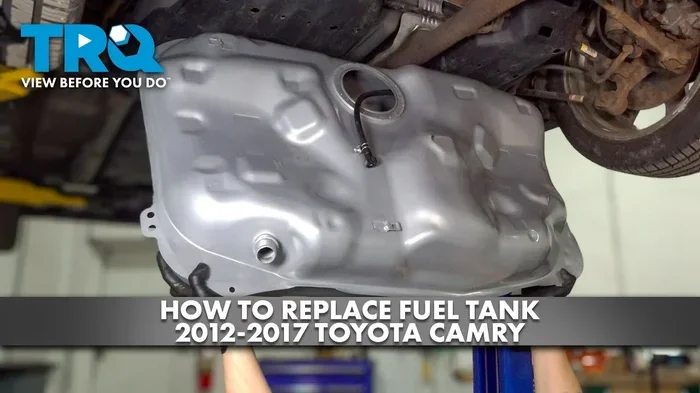
The first thing you need to know is how much fuel your Camry actually holds. The Camry fuel tank size plays a big role in determining your total range. A bigger tank means more miles between fill-ups, but it also adds weight. Toyota has kept the Camry tank size fairly consistent across recent model years.
Standard Gas Tank Size
Most Toyota Camry models come with a fuel tank that holds approximately 15.8 to 16 gallons. This is a solid size that balances range with not adding too much weight to the car. The 2024 Camry, for example, uses a 16-gallon tank across most trim levels. This gives drivers a good baseline for calculating their total miles on a full tank.
If you are comparing the Camry to other sedans, the tank size is pretty standard. The Honda Accord and Nissan Altima also carry tanks in the 15 to 18-gallon range. What sets the Camry apart is how efficiently it uses that fuel. A larger tank does not help much if the car burns through it quickly.
How Tank Size Affects Your Range
Here is a simple way to think about it. If your Camry gets 30 miles per gallon and your tank holds 16 gallons, you multiply 30 by 16. That gives you 480 miles of potential range. Change the MPG to 40, and suddenly you are looking at 640 miles. The tank size stays the same, but the fuel economy makes a huge difference in how many miles you actually cover.
Keep in mind that the number on the dipstick or the fuel gauge is not always exact. The Camry gas tank may show a little more or less fuel depending on how level the ground is, how you drove before shutting off the engine, and even the temperature. These small variations add up over time.
Understanding your tank size also helps when you are planning road trips. If you know you have roughly 16 gallons and your average MPG is around 32, you can estimate your stops. This is especially useful when you are driving through areas with fewer gas stations or on long stretches of highway.
City vs Highway: Real-World MPG for the Camry
The way you drive has a massive impact on your Camry miles on full tank. City driving and highway driving are two very different experiences for your engine, and they produce very different fuel economy numbers. Let us break down what you can expect in each scenario.
City Driving MPG
City driving typically means stop-and-go traffic, frequent idling, and lower average speeds. The Camry gets its best fuel economy when it is moving at a steady pace, so city driving is naturally less efficient. Most modern Camry models achieve around 28 to 32 MPG in city conditions.
Older Camry models from the early 2010s might only manage 22 to 26 MPG in the city. Newer models with advanced engine technology and hybrid systems do much better. The Toyota Camry MPG rating for city driving has improved significantly over the past decade, thanks to features like variable valve timing, direct injection, and electric motor assist in hybrid versions.
If your daily commute involves a lot of city driving, you will notice that you fill up more often. A Camry doing mostly city miles might give you around 400 to 450 miles on a full tank. That is still a solid range, but it is noticeably less than what highway driving offers.
Highway Driving MPG
Highway driving is where the Camry really shines. Steady speeds, less stopping, and smoother airflow all contribute to better fuel economy. Most Camry models deliver 35 to 40 MPG on the highway, and hybrid models can push past 50 MPG in ideal conditions.
If you regularly drive long distances on interstate highways, you can expect a full tank range of 500 to 650 miles or more. This is one of the reasons the Camry is such a popular choice for road trips and long commutes. You can cover serious distance without constantly thinking about your next gas stop.
Here is a quick comparison of what you might expect:
- City MPG (2024 Camry): 28 to 32 miles per gallon
- Highway MPG (2024 Camry): 35 to 41 miles per gallon
- Hybrid City MPG: 51 to 53 miles per gallon
- Hybrid Highway MPG: 53 to 54 miles per gallon
These numbers come from EPA estimates, and your real-world results may vary. Driving speed, air conditioning use, wind conditions, and cargo load all play a role. But these figures give you a reliable starting point for estimating your Camry fuel range.
How Far Can a Camry Go on a Full Tank?
This is the question most people really want answered. How many miles can you actually drive before the needle hits empty? The answer depends on your specific model, driving style, and conditions. But we can give you solid estimates based on real-world data and manufacturer specs.
Gas Camry Full Tank Range
A standard gas-powered Camry with a 16-gallon tank and an average combined MPG of 32 can travel roughly 512 miles on a full tank. That is a very comfortable range for most drivers. You could drive from one city to another several states away without needing to refuel.
Older gas Camrys with smaller tanks or less efficient engines might get closer to 350 to 450 miles per full tank. The key factor is the miles per gallon rating. A car that gets 25 MPG with a 16-gallon tank will only go about 400 miles. The same car getting 35 MPG will push past 550 miles. The difference is significant, and it all comes down to efficiency.
Many drivers also wonder how far they can push it after the fuel light comes on. The Camry typically has about 2 to 3 gallons of reserve fuel left when the warning light activates. At 30 MPG, that gives you an extra 60 to 90 miles of range. However, relying on this reserve is not recommended for regular driving. It is better to refuel as soon as it is convenient.
If you want to learn more about how far a car can go on empty, check out our guide on how far can a car go on empty for additional insights on pushing your fuel range limits safely.
Hybrid Camry Full Tank Range
The hybrid Camry changes the game entirely. With a combined fuel economy of 52 MPG or more, a hybrid Camry with a 16-gallon tank can achieve an impressive 700 to 800 miles on a single fill-up. That is genuinely remarkable for a midsize sedan.
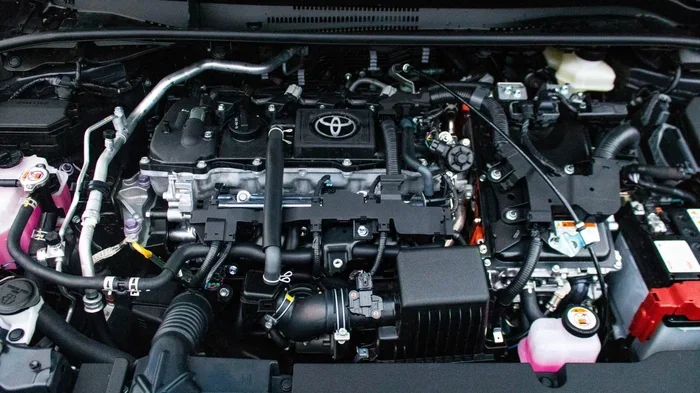
The hybrid system uses a combination of a gasoline engine and an electric motor to maximize efficiency. In city driving, the electric motor handles much of the work, which is why hybrid Camrys get such strong city MPG numbers. On the highway, the gas engine takes over more, but the hybrid still delivers excellent fuel economy.
This means fewer trips to the gas station and more money saved over time. If you drive 1,500 miles per month, a hybrid Camry might need just two fill-ups, while a gas model might need three or four. Over a year, that adds up to significant savings.
Hybrid vs Gas Camry: Which Goes Farther?
The hybrid Camry and the gas Camry offer very different fuel range experiences. Both are excellent vehicles, but they serve different needs and driving styles. Let us compare them side by side so you can understand which one fits your situation best.
Fuel Economy Comparison
The hybrid Camry consistently outperforms the gas version in fuel economy. Here is a closer look at how they compare:
- Gas Camry Combined MPG: 28 to 32 MPG depending on trim and engine
- Hybrid Camry Combined MPG: 52 to 54 MPG across all trims
- Gas City MPG: 28 to 32 MPG
- Hybrid City MPG: 51 to 53 MPG
- Gas Highway MPG: 35 to 41 MPG
- Hybrid Highway MPG: 53 to 54 MPG
The hybrid Camry uses nearly half the fuel of the gas version for the same distance. This translates directly into a much longer range per tank. If you are someone who drives a lot or wants to minimize fuel costs, the hybrid is the clear winner.
Cost Over Time
While the hybrid Camry typically costs more upfront, the fuel savings can offset that difference over time. A hybrid Camry driver who covers 15,000 miles per year could save $800 to $1,200 annually on fuel compared to a gas Camry driver. Over five years, that is $4,000 to $6,000 in savings.
Of course, your actual savings depend on gas prices, your driving habits, and how much city versus highway driving you do. But the numbers are compelling, and they show why more and more buyers are choosing the hybrid option.
If you are curious about long-term ownership and how many miles a Camry can last overall, check out our article on can a Camry last 300,000 miles for a deep dive into Camry longevity and reliability.
Tips to Maximize Your Camry’s Fuel Range
Want to get the most miles out of every tank? There are several practical steps you can take to improve your Camry fuel economy and extend your driving range. These tips work for both gas and hybrid models.
Drive Smoothly and Steadily
Aggressive driving kills fuel economy. Rapid acceleration, hard braking, and speeding all burn through gas much faster than smooth, steady driving. Try to maintain a consistent speed, especially on the highway. Using cruise control at a steady 60 to 65 mph is one of the best ways to maximize your MPG.
Anticipate stops and slow down gradually instead of braking hard at the last second. This not only saves fuel but also reduces wear on your brakes. Over time, these small changes add up to meaningful improvements in your Camry gas mileage.
Keep Your Tires Properly Inflated
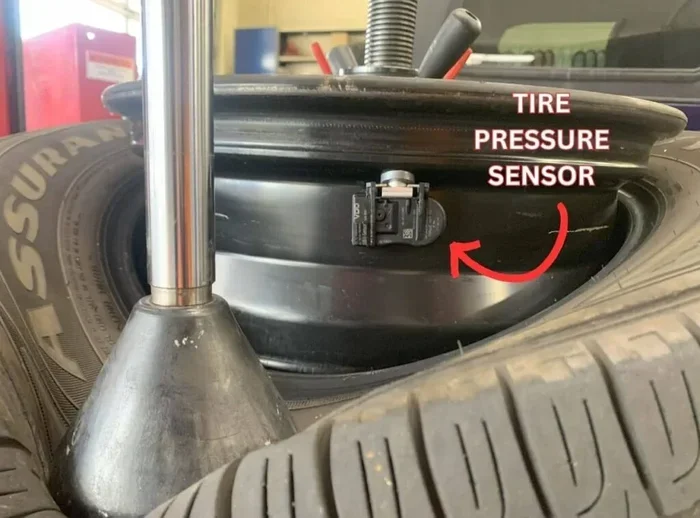
Underinflated tires create more rolling resistance, which forces your engine to work harder. Check your tire pressure at least once a month and before long trips. The recommended pressure for a Camry is typically listed on the driver’s side door jamb. Keeping tires at the right pressure can improve fuel economy by up to 3 percent.
Reduce Excess Weight and Drag
Extra weight in your car means your engine has to work harder. Remove any unnecessary items from your trunk and cargo area. If you carry a roof rack or cargo carrier, take it off when you are not using it. Roof racks create aerodynamic drag that can reduce fuel economy by 5 to 10 percent at highway speeds.
Use Air Conditioning Wisely
Running the AC puts an extra load on your engine, especially in stop-and-go traffic. On the highway, using the AC at a steady speed is actually more efficient than rolling down the windows, which creates drag. The key is finding the right balance for your driving situation.
On hot days, try setting the AC to a comfortable but not arctic temperature. Every degree cooler you set it uses slightly more fuel. Small adjustments here and there can help you squeeze out a few extra miles per gallon.
Keep Up with Maintenance
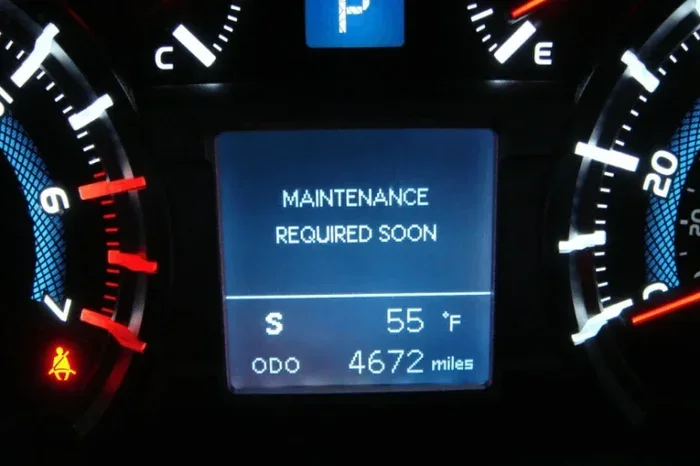
A well-maintained Camry runs more efficiently and uses less fuel. Regular oil changes, clean air filters, spark plug replacements, and fuel system cleaning all contribute to better fuel economy. Follow the maintenance schedule in your owner’s manual, and do not ignore warning lights or unusual symptoms.
Something as simple as a dirty air filter can reduce your MPG by a few percentage points. That might not sound like much, but over thousands of miles, it adds up to extra fuel costs and fewer miles per tank.
Camry Fuel Economy Over the Years
The Toyota Camry has evolved significantly since its introduction in 1982. Each generation has brought improvements in fuel economy, engine technology, and overall efficiency. Understanding this history helps you appreciate how far the Camry has come in terms of miles per gallon and driving range.
Early Camry models from the 1980s and 1990s were much less fuel-efficient by today’s standards. A 1990s Camry might have achieved 18 to 22 MPG combined. The tank was smaller too, often around 16 gallons, which meant a total range of roughly 300 to 350 miles per full tank.
As emissions regulations tightened and technology advanced, Toyota improved the Camry’s efficiency. The 2000s brought fuel injection, variable valve timing, and lighter materials. By the mid-2000s, Camrys were achieving 25 to 30 MPG combined, a significant leap forward.
The introduction of the hybrid Camry in 2012 was a game-changer. The hybrid system pushed fuel economy into the 40 MPG range for city driving, something a gas-only Camry could not match. Today’s hybrid Camry models deliver over 50 MPG combined, giving drivers the best of both worlds: power and efficiency.
If you are considering a used Camry, the model year matters a lot for fuel economy. A 2018 or newer model will give you noticeably better range than a 2005 or 2010 model. When shopping for a used Camry, always check the fuel economy ratings and consider how they fit your driving needs.
For more information about how many miles a car in general can last, including the Camry, visit our article on how many miles can a car last to understand the full picture of vehicle longevity.
Final Thoughts on Camry Full Tank Range
The Toyota Camry is one of the best sedans for fuel range on the market. Whether you choose the gas or hybrid version, you get a solid combination of tank size and fuel efficiency that keeps you on the road longer between fill-ups. A gas Camry typically delivers 450 to 550 miles per full tank, while a hybrid Camry can push past 700 miles in the right conditions.
Your actual Camry miles on full tank will depend on how you drive, where you drive, and how well you maintain the vehicle. By following the tips in this guide, you can maximize your fuel economy and get the most out of every gallon. The Camry is a car that rewards smart, steady driving with impressive range and reliability.
Keep track of your fuel economy over time, and you will start to notice patterns. Maybe your MPG drops in winter or improves when you use cruise control on long trips. Understanding these patterns helps you make better decisions about when and where to fill up, how to plan your trips, and how to save money on fuel.
The bottom line is simple: the Camry is a fuel-efficient, long-range sedan that can handle everything from daily commutes to cross-country road trips. With a full tank, you can go far, and with the right driving habits, you can go even farther.
Frequently Asked Questions
How many miles can a 2024 Camry go on a full tank?
A 2024 gas Camry with a 16-gallon tank and an average MPG of 32 can travel approximately 512 miles on a full tank. The hybrid version with 52 MPG can go roughly 832 miles, making it one of the longest-range sedans available.
Does the Camry hybrid really get 50+ MPG?
Yes, the hybrid Camry consistently delivers 51 to 54 MPG in combined driving. The electric motor assists the gasoline engine, especially in city conditions, which is why the hybrid achieves such strong fuel economy numbers compared to the gas-only model.
How accurate is the Camry’s fuel gauge estimate?
The fuel gauge gives a general idea, but it is not always precise. Factors like driving style, terrain, temperature, and fuel quality can affect how accurately the gauge reflects your actual remaining range. It is best to use your recent MPG as a personal reference point.
Can I improve my Camry’s MPG with driving habits?
Absolutely. Smooth acceleration, steady highway speeds, proper tire pressure, and reduced excess weight can all improve your Camry fuel economy by 10 to 20 percent. Small changes in how you drive add up to significant fuel savings over time.
Why does my Camry get fewer miles per gallon in winter?
Cold weather affects fuel economy in several ways. The engine takes longer to reach optimal temperature, winter fuel blends have slightly less energy, and increased use of heaters and defrosters adds load. These factors can reduce your MPG by 10 to 20 percent during cold months.
How often should I fill up my Camry to maintain fuel system health?
It is best not to let your tank drop below a quarter full. Running the tank very low can strain the fuel pump and allow sediment to clog the fuel filter. Keeping your tank at least a quarter full helps maintain the fuel system and ensures consistent Camry fuel range over time.