What Vans Can Fit an 8×4 Sheet of Plywood and Lumber
Finding the right van for an 8×4 sheet of plywood or lumber is easier than you think. Full-size cargo vans like the Mercedes Sprinter and Ford Transit can handle these large sheet goods with ease. Mid-size vans work too, but you may need to angle the sheet or use a roof rack. This guide covers every van option, key dimensions, and practical hauling tips to help you move sheet goods safely and efficiently.
Have you ever tried to fit a full sheet of plywood into a van and wondered if it would even fit? You are not alone. What vans can fit an 8×4 sheet is one of the most common questions among DIYers, contractors, and anyone who needs to move construction materials. Whether you are building a deck, renovating a kitchen, or just picking up supplies from the hardware store, knowing which van can handle an 8×4 sheet makes your job so much easier.
The good news is that several van options work well for hauling sheet goods. From full-size cargo vans to mid-size options, there is a solution for almost every need. In this guide, we will walk you through the exact van models, interior dimensions, and practical tips that will help you haul an 8×4 sheet of plywood and lumber without any headaches. Let us get into it.
Key Takeaways
- Full-size vans are the best choice: Models like the Mercedes Sprinter and Ford Transit offer enough interior length to fit an 8×4 sheet flat.
- Mid-size vans can work with adjustments: You may need to angle the sheet or fold down seats to fit an 8×4 sheet of plywood and lumber.
- Interior dimensions matter more than exterior size: Floor length, width, and height all play a role in whether your load fits.
- Always secure your load properly: Loose sheet goods are dangerous and can shift during driving.
- Consider a roof rack for extra capacity: If your van is slightly too short, a roof rack can carry the sheet on top.
- Weight limits are just as important as space: An 8×4 sheet of plywood weighs around 60 to 80 pounds, and lumber adds significant weight.
📑 Table of Contents
Understanding the 8×4 Sheet Size and Why It Matters
Standard Plywood and Lumber Dimensions
Before we dive into vans, let us talk about the size we are working with. An 8×4 sheet measures 8 feet long and 4 feet wide. That is 32 square feet of material. Standard sheet plywood comes in this size almost universally in the United States and many other countries. You will find plywood, MDF, OSB, and hardboard all sold in 8×4 sheets.
A single sheet of 1/2-inch plywood weighs roughly 60 pounds. Thicker sheets, like 3/4-inch plywood, can weigh closer to 80 pounds. Add a few pieces of lumber to the load, and your cargo space needs to be substantial. This is why choosing the right vehicle matters so much.
Why the 8×4 Size Is So Common
The 8×4 size is the standard because it fits on most half-ton truck beds and large van floors. Manufacturers design their tools and machinery around this dimension. If you are buying construction materials or sheet goods from any home improvement store, the 8×4 sheet is what you will find on the shelves.
This also means that most van bed length comparisons are built around fitting this specific size. When van manufacturers talk about cargo capacity, they often reference the 8×4 sheet as the benchmark. That is how important this one size is in the hauling world.
What Vans Can Fit an 8×4 Sheet of Plywood and Lumber
The short answer is that full-size cargo vans and some mid-size vans can fit an 8×4 sheet. But the details matter a lot. Let us break down the different van categories and what you can expect from each.
Full-Size Cargo Vans
Full-size cargo vans are the gold standard for hauling sheet goods. These vans have interior lengths that easily accommodate an 8×4 sheet laid flat. The most popular models include:
- Mercedes-Benz Sprinter – Available in extended wheelbase versions with up to 17 feet of interior floor length.
- Ford Transit – The high-roof, long-body version offers over 14 feet of usable floor space.
- Ram ProMaster – Features a flat floor design and up to 16 feet of interior length.
- Volkswagen Crafter – Offers generous cargo space and is popular in commercial applications.
All of these vans can fit an 8×4 sheet flat on the floor without any tricks. You simply slide the sheet in through the sliding doors and lay it down. The cargo van interior is wide enough too, typically around 4.5 to 5.5 feet across, which gives you room to stack additional materials on top or beside the sheet.
Mid-Size Vans
Mid-size vans like the Mercedes Vito, Ford Transit Connect, and Renault Trafic are popular choices for small businesses. They offer a good balance of size and drivability. But can they fit an 8×4 sheet?
The answer is sometimes. The interior floor length of most mid-size vans ranges from 9 to 12 feet. An 8×4 sheet is 8 feet long, so it can technically fit. However, you need to be careful. With the seats in place, you may only have 7 to 9 feet of flat floor space. You will likely need to fold down or remove the rear seats to get the sheet in flat.
If you cannot remove the seats, you can angle the sheet diagonally. This works, but it leaves part of the sheet sticking out into the cabin. That is fine for short trips, but it is not ideal for highway driving. If you are doing DIY moving or lumber hauling regularly, a full-size van is a much better choice.
Compact Vans and Their Limitations
Compact vans like the Ford Transit Connect (short wheelbase) or smaller commercial vans generally cannot fit an 8×4 sheet flat on the floor. The interior length is typically around 6 to 8 feet, which is simply not enough. You might be able to fit the sheet diagonally or hang it off the side, but this is impractical and unsafe.
If you only have access to a compact van, consider renting a larger vehicle for the job. Most rental companies offer full-size cargo vans that are specifically designed for hauling large materials. It is worth the extra cost for the peace of mind.
Interior Dimensions You Need to Know
When figuring out what vans can fit an 8×4 sheet, the interior dimensions are everything. The exterior size of the van does not tell you the full story. Here is what you need to measure or look up before you buy or rent.
Floor Length Matters Most
The floor length is the first thing to check. An 8×4 sheet is 8 feet long, so you need at least 8 feet of flat floor space. But here is the thing: you also need a few extra inches for loading and unloading. A van with exactly 8 feet of floor length will make it very tight to get the sheet in and out.
For comfortable loading, aim for a van with at least 10 to 12 feet of interior floor length. This gives you room to maneuver the sheet, position it properly, and secure it without straining. Full-size vans like the Sprinter and ProMaster easily meet this requirement.
Width and Height Considerations
The width of the van floor is also important. An 8×4 sheet is 4 feet wide, so you need at least 4 feet of clear floor width. Most full-size cargo vans offer 4.5 to 5.5 feet of width, which is plenty. Mid-size vans are closer to 4 to 4.5 feet, which works but leaves less room for error.
Height matters too, especially if you plan to stack materials. The interior height of full-size vans ranges from 4.5 to 5.5 feet. This means you can stack a second sheet of plywood on top of the first one, which doubles your hauling capacity. If you are hauling multiple sheets, this vertical space is a huge advantage.
Sliding Doors vs. Fixed Doors
Sliding doors make a big difference when loading large sheet goods. A sliding van door opens wide and gives you a generous entry point. You can slide the 8×4 sheet right in without having to angle it through a narrow rear door.
Fixed rear doors require more maneuvering. You have to tilt the sheet and work it through the door opening, which can be frustrating and risky. If you are hauling construction materials regularly, choose a van with sliding doors on both sides. It will save you time and effort on every single trip.
Comparing Popular Van Models for 8×4 Sheet Hauling
Not all vans are created equal when it comes to hauling sheet goods. Here is a comparison of popular models and how they handle an 8×4 sheet of plywood and lumber.
| Van Model | Interior Floor Length | Interior Width | Fits 8×4 Flat? | Best For |
|---|---|---|---|---|
| Mercedes Sprinter (Extended) | Up to 17 ft | Up to 5.5 ft | Yes, easily | Contractors and pros |
| Ford Transit (Long, High Roof) | Up to 14 ft | Up to 5.1 ft | Yes, easily | Medium to large jobs |
| Ram ProMaster | Up to 16 ft | Up to 5.0 ft | Yes, easily | Flat floor loading |
| Mercedes Vito (Long) | Up to 12 ft | Up to 4.7 ft | Yes, with seats removed | Small businesses |
| Ford Transit Connect | Up to 9 ft | Up to 4.2 ft | Tight, angled | Light loads only |
| Renault Trafic | Up to 10 ft | Up to 4.6 ft | Yes, with seats removed | Occasional hauling |
As you can see from the table, full-size vans are the clear winners for hauling sheet goods. They offer the most interior space, the easiest loading, and the best overall experience. Mid-size vans can work, but they require more effort and planning.
Tips for Hauling 8×4 Sheets Safely
Fitting the sheet into the van is only half the battle. You also need to make sure it stays secure during transit. Loose sheet goods are one of the most common causes of load shifts and road accidents. Here are some essential tips to keep in mind.
Use a Roof Rack for Extra Capacity
If your van has a roof rack, you can carry the 8×4 sheet on top of the vehicle. This is a great option if your van is slightly too short to fit the sheet flat on the floor. Just make sure the roof rack is rated for the weight of the sheet. A single sheet of plywood weighs 60 to 80 pounds, and the rack needs to handle that plus any wind resistance at highway speeds.
When loading a sheet on the roof, always have a helper. Lifting an 8×4 sheet above your head is dangerous if you do it alone. Use proper lifting techniques, bend at the knees, and keep your back straight. If you are hauling lumber as well, stack it securely on the roof rack and strap everything down tight.
Secure Your Load Properly
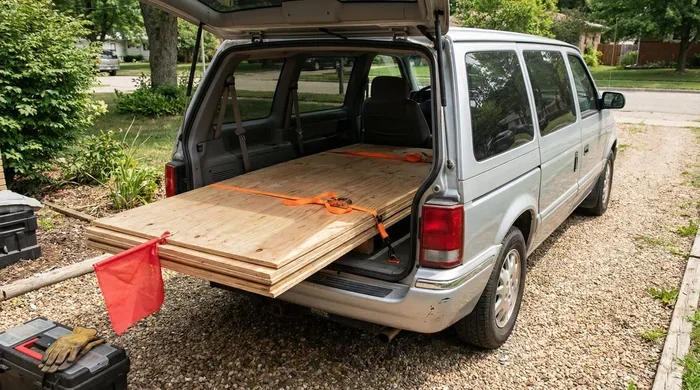
Once your sheet is inside the van, tie it down. Use ratchet straps or bungee cords to secure the sheet to the floor anchor points or tie-down hooks. Most full-size vans come with built-in tie-down points, so use them.
Do not rely on friction alone. A sheet of plywood can slide around easily, especially on a wet or dusty van floor. Place a moving blanket or rubber mat under the sheet to increase friction, and then strap it down securely. This simple step can prevent a lot of trouble on the road.
Check Your Van’s Weight Capacity
Space is only one concern. You also need to think about weight capacity. An 8×4 sheet of 1/2-inch plywood weighs about 60 pounds. A sheet of 3/4-inch plywood weighs closer to 80 pounds. Add a few pieces of 2×4 lumber, and you are looking at 150 to 200 pounds total.
Most full-size cargo vans have a payload capacity of 2,000 to 4,000 pounds, so you have plenty of room. But if you are using a smaller van or a commercial van with a lower payload rating, check the numbers before you load up. Exceeding the weight limit can affect handling, braking, and safety.
Drive Carefully with a Large Load
Hauling an 8×4 sheet changes how your van drives. The load raises the center of gravity, especially if it is stacked high. Take turns slowly, brake gently, and avoid sudden maneuvers. If the sheet is on the roof, the effect is even more pronounced because of the increased height.
Keep your speed reasonable and give yourself extra stopping distance. A properly secured load should not shift, but it is always better to be safe than sorry. If you notice any movement in the rearview mirror, pull over and recheck your straps.
Common Mistakes When Hauling Sheet Goods
Even experienced DIYers make mistakes when hauling sheet goods. Here are the most common ones and how to avoid them.
Mistake 1: Not measuring the van before you buy. Do not assume a van will fit an 8×4 sheet just because it looks big enough. Always check the exact interior dimensions. Floor length, floor width, and interior height all matter.
Mistake 2: Overloading the van. It is tempting to throw in as much material as possible, but exceeding the payload capacity is dangerous. Check your van’s weight rating and stay within limits.
Mistake 3: Skipping the straps. A loose sheet of plywood in a moving van is a hazard. Always secure your load with straps or cords before you drive.
Mistake 4: Ignoring the weight distribution. Place heavy sheets on the floor and lighter items on top. Keep the weight low and centered over the van’s axle for the best handling.
Mistake 5: Trying to go it alone. Loading and unloading an 8×4 sheet is a two-person job at minimum. Trying to do it alone risks injury and damage to the material. Get a friend or hire a helper if needed.
Quick Tips for Hauling Success
- Always measure the interior of the van before loading. Do not guess.
- Use a dolly or hand truck to move heavy sheets into the van.
- Place a moving blanket or rubber mat under the sheet to prevent sliding.
- Strap the sheet down at multiple points for maximum security.
- If the sheet is too long, consider a roof rack instead of forcing it inside.
- Keep a weight distribution chart in your van for reference.
- Check your mirrors frequently to make sure nothing has shifted.
Expert Insights on Hauling Sheet Goods
Experienced contractors and van owners know that preparation is everything. According to industry professionals, the key to hauling sheet goods safely is a three-step process: measure, secure, and drive carefully. Before every trip, take a minute to check your van’s interior dimensions, inspect your straps and tie-downs, and plan your route to avoid low bridges or tight turns.
Many pros also recommend investing in a van conversion that includes custom shelving and tie-down systems. These setups make hauling construction materials faster and safer. If you haul sheet goods regularly, the investment pays for itself in just a few trips.
One more tip from the pros: always carry a spare strap or two. Straps can fail, and having a backup could save you from a dangerous situation on the road. Keep them in your van at all times, even on short trips.
Conclusion
So, what vans can fit an 8×4 sheet of plywood and lumber? The answer is clear: full-size cargo vans like the Mercedes Sprinter, Ford Transit, and Ram ProMaster are your best options. They offer the interior space, width, and height to handle 8×4 sheets with ease. Mid-size vans can work too, but they require more planning and adjustments.
Remember that interior dimensions matter more than exterior size. Check the floor length, width, and height of any van before you commit. Secure your load properly with straps and tie-downs, and always respect your van’s weight capacity. With the right van and the right approach, hauling sheet goods becomes a straightforward task instead of a stressful one.
Whether you are a contractor hauling materials to a job site or a DIYer picking up supplies for a weekend project, the right van makes all the difference. Take the time to choose wisely, and your next hauling trip will be smooth, safe, and hassle-free.
Frequently Asked Questions
Can a standard cargo van fit an 8×4 sheet of plywood?
Most standard cargo vans cannot fit an 8×4 sheet flat on the floor. The interior length of a standard cargo van is typically around 8 to 10 feet, which is borderline. You may be able to fit the sheet diagonally or with the seats folded down, but it will be tight. A full-size cargo van with at least 12 feet of interior length is the most reliable option.
What is the best van for hauling plywood and lumber?
The Mercedes Sprinter, Ford Transit, and Ram ProMaster are widely considered the best vans for hauling plywood and lumber. They offer generous interior lengths, wide floors, and high payload capacities. These full-size cargo vans can fit an 8×4 sheet flat and still have room for additional materials.
Can I put an 8×4 sheet of plywood on a roof rack?
Yes, you can put an 8×4 sheet on a roof rack if your van is equipped with one. Make sure the roof rack is rated for the weight, which is typically 60 to 80 pounds per sheet. Always use ratchet straps to secure the sheet, and drive cautiously due to the increased height and wind resistance.
How much does an 8×4 sheet of plywood weigh?
An 8×4 sheet of 1/2-inch plywood weighs approximately 60 pounds. A 3/4-inch sheet weighs around 80 pounds. The weight varies depending on the type of wood and thickness. Always check the weight before loading to make sure you do not exceed your van’s payload capacity.
Do I need a special license to haul sheet goods in a van?
For most standard cargo vans, you do not need a special license. A regular driver’s license is sufficient as long as the van weighs under 26,000 pounds GVWR. However, if you are operating a large commercial vehicle, check your local regulations to ensure compliance with licensing and weight requirements.
What is the cheapest way to haul an 8×4 sheet if I do not own a van?
The cheapest option is to rent a full-size cargo van from a rental company like Enterprise, Penske, or U-Haul. Rental rates typically range from $50 to $100 per day. Alternatively, you can ask a friend with a full-size van for help, or hire a local handyman service for a small fee. Renting is usually the most cost-effective solution for occasional hauling needs.