What Is the Most Common Cause of Code P0171 Explained
Code P0171 is an engine trouble code that signals a lean fuel condition in your vehicle. The most common cause is a vacuum leak that lets unmetered air into the engine. Other frequent culprits include a dirty mass airflow sensor, a failing oxygen sensor, or low fuel pressure. Fixing the root cause quickly can save you from costly repairs down the road.
If your check engine light just popped on and your diagnostic scanner shows code P0171, you are probably wondering what went wrong. This is one of the most common engine codes that mechanics and car owners encounter. The good news is that you do not need to be a mechanic to understand what it means and what to do about it.
In this guide, we will break down everything you need to know about code P0171. We will cover the most common causes, how mechanics diagnose the problem, and what you can do to fix it. By the end, you will feel confident about tackling this issue head-on.
Key Takeaways
- Vacuum leaks are the #1 cause: Unmetered air entering the engine is the most common trigger for code P0171.
- Dirty sensors can fool your ECU: A contaminated mass airflow sensor or oxygen sensor often leads to a lean condition.
- Fuel delivery problems matter: A weak fuel pump or clogged injector can starve the engine of fuel.
- Don’t ignore the check engine light: Driving with code P0171 can damage your catalytic converter over time.
- DIY diagnosis is possible: Many causes can be found with basic tools and a little patience.
- Professional help may be needed: Complex issues like internal engine problems require a mechanic’s expertise.
- Prevention saves money: Regular maintenance keeps your air-fuel ratio balanced and your engine running smoothly.
📑 Table of Contents
What Does Code P0171 Mean?
Let us start with the basics. Code P0171 is a standard OBD-II trouble code that your vehicle’s powertrain control module sets when it detects a lean condition in Bank 1 of the engine. “Bank 1” refers to the side of the engine that contains the first cylinder. A “lean” condition means there is too much air and not enough fuel in the air-fuel mixture.
Your engine needs a precise balance of air and fuel to run correctly. The ideal ratio is about 14.7 parts air to 1 part fuel. When the ECU senses that the mixture has shifted too far toward lean, it triggers this code. The engine control unit is essentially saying, “Hey, there is not enough fuel getting to the combustion chamber.”
Some common symptoms you might notice include rough idling, reduced power, poor fuel economy, and stalling. In some cases, you may not feel any obvious symptoms at all. That is why it is important to address the code promptly, even if your car seems to be driving fine.
The Most Common Cause of Code P0171
So, what is the most common cause of code P0171? The answer is a vacuum leak. A vacuum leak allows unmeasured air to sneak into the intake manifold, which throws off the carefully calibrated air-fuel ratio. The ECU sees extra air but does not compensate with more fuel, resulting in a lean condition.
How Vacuum Leaks Happen
Vacuum leaks can occur in several places. The intake manifold gasket can degrade over time and develop tiny cracks. Rubber vacuum hoses become brittle with age and can crack or disconnect. The throttle body gasket is another common failure point. Even a loose or cracked PCV valve hose can introduce enough unmetered air to trigger code P0171.
Here are the most frequent spots where vacuum leaks develop:
- Intake manifold gasket: This seal wears out over time, especially in older vehicles.
- Vacuum hoses: Small rubber tubes that connect to various engine components can dry-rot and crack.
- Throttle body gasket: The seal between the throttle body and intake manifold can fail.
- PCV valve and hose: The positive crankcase ventilation system uses vacuum, and leaks here are common.
- Brake booster hose: This large vacuum line can develop leaks at the connection points.
- EVAP system lines: Evaporative emission lines can crack or become disconnected.
Finding a vacuum leak can be tricky, but it is the first thing any good mechanic will check when diagnosing code P0171. A popular method is using a smoke machine, which pushes smoke into the intake system and reveals leaks visually. A simpler DIY approach is spraying carburetor cleaner around suspected areas while the engine is running. If the idle changes when you spray a certain spot, you have found your leak.
Other Common Causes of Code P0171
While a vacuum leak is the top suspect, several other issues can also cause code P0171. Let us walk through them so you have a complete picture.
Dirty or Faulty Mass Airflow Sensor
The mass airflow sensor, often called the MAF sensor, measures the amount of air entering the engine. When this sensor gets dirty or fails, it sends incorrect data to the ECU. If the MAF sensor underreports airflow, the ECU will not add enough fuel, and you get a lean condition.
A dirty MAF sensor is extremely common, especially in vehicles that do not get regular maintenance. Dirt, oil vapor, and debris can coat the sensing element over time. Cleaning the MAF sensor with a dedicated cleaner is often all it takes to resolve the issue. Just be careful not to touch the delicate wire or film inside the sensor.
Failing Oxygen Sensor
The oxygen sensor, also known as the O2 sensor, monitors the amount of oxygen in the exhaust gases. It provides real-time feedback to the ECU so the fuel mixture can be adjusted constantly. When the O2 sensor goes bad, it may send a constant lean signal even when the mixture is actually correct.
Oxygen sensors have a limited lifespan, typically around 60,000 to 100,000 miles. If your vehicle has high mileage and you see code P0171, the O2 sensor is definitely worth checking. Replacing a faulty oxygen sensor is relatively affordable and is one of the more straightforward repairs you can do.
Low Fuel Pressure
Your engine relies on the fuel pump to deliver the right amount of fuel at the correct pressure. If the fuel pump is weak or the fuel filter is clogged, fuel delivery drops. The ECU tries to compensate, but it cannot add fuel that is not there. The result is a lean mixture and code P0171.
Fuel pressure can be tested with a gauge attached to the fuel rail. Compare the reading to your vehicle’s specifications. If the pressure is below spec, check the fuel filter first, as it is the cheapest and easiest fix. If the filter is fine, the fuel pump may need replacement.
Clogged or Dirty Fuel Injectors
Fuel injectors spray fuel into the combustion chamber in a precise pattern. Over time, carbon deposits and contaminants can clog the injector nozzles. This reduces the amount of fuel delivered and creates a lean condition.
Using a fuel system cleaner additive can sometimes clear minor deposits. For more severe clogs, the injectors may need to be removed and professionally cleaned or replaced. Regular use of quality fuel and periodic fuel system maintenance can help prevent this issue.
Exhaust Leaks
An exhaust leak upstream of the oxygen sensor can introduce outside air into the exhaust system. This extra air tricks the O2 sensor into thinking the mixture is lean. The ECU then reduces fuel delivery, which can compound the problem.
Exhaust leaks often show up as a hissing or ticking noise from the engine, especially on startup. Inspect the exhaust manifold gasket and any flexible joints in the exhaust system. Even a small crack in the manifold can cause enough of an air leak to trigger code P0171.
How Mechanics Diagnose Code P0171
Diagnosing code P0171 follows a systematic approach. Professional mechanics typically follow a step-by-step process to narrow down the cause. Here is what the diagnostic process usually looks like.
Step 1: Scan for Additional Codes
A single code rarely tells the whole story. Mechanics will run a full diagnostic scan to see if there are any related codes, such as P0174 (lean condition on Bank 2) or codes related to the MAF sensor or O2 sensor. Related codes can point directly to the root cause.
Step 2: Check for Vacuum Leaks
Since vacuum leaks are the most common cause of code P0171, this is where the inspection starts. Mechanics will visually inspect all vacuum hoses and connections. They may also use a smoke test or the propane enrichment method to pinpoint the exact location of a leak.
Step 3: Inspect the MAF Sensor
The next step is to check the mass airflow sensor. A dirty MAF sensor is a very common culprit, especially in vehicles with higher mileage. Cleaning or replacing the sensor often resolves the lean condition code quickly.
Step 4: Test Fuel Pressure
A fuel pressure test helps determine whether the fuel pump and fuel delivery system are working correctly. Low fuel pressure points to a weak pump, clogged filter, or faulty pressure regulator.
Step 5: Evaluate the Oxygen Sensor
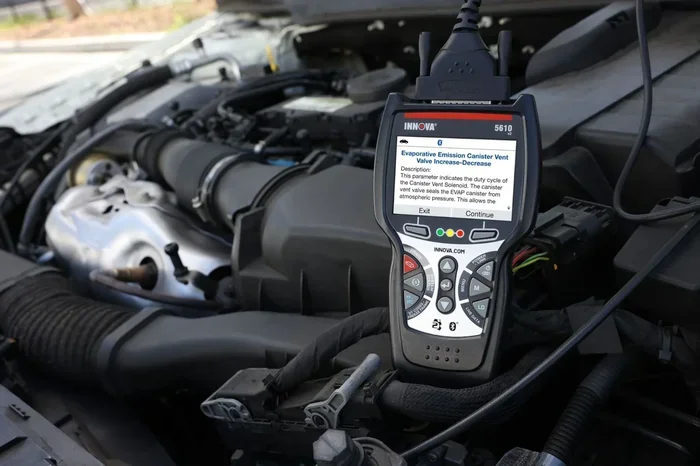
Using a scan tool, the mechanic will watch the O2 sensor data in real time. A healthy oxygen sensor should fluctuate between rich and lean readings rapidly. A sensor that is stuck on one side of the spectrum is likely failing.
Can You Drive with Code P0171?
The short answer is yes, but you should not make a habit of it. Driving with code P0171 for a short distance to get to a repair shop is generally safe. However, prolonged driving with a lean condition can cause real damage to your engine.
When the air-fuel mixture is too lean, combustion temperatures rise. Higher temperatures can lead to engine knocking, also known as detonation. Over time, this can damage pistons, head gaskets, and even the catalytic converter. The catalytic converter is especially vulnerable because it has to process hotter exhaust gases than it was designed for.
Replacing a catalytic converter is one of the most expensive repairs on any vehicle. So while you do not need to panic if the code appears, you should get it checked out sooner rather than later. Ignoring code P0171 is a gamble that can end up costing you a lot more in the long run.
How to Fix Code P0171
The fix for code P0171 depends entirely on what is causing it. There is no one-size-fits-all solution. Here are the most common repairs and what you can expect.
- Repairing a vacuum leak: Replace cracked hoses, gaskets, or seals. Cost typically ranges from $50 to $300 depending on the location.
- Cleaning the MAF sensor: Use a dedicated MAF cleaner spray. Cost is under $20 for the cleaner, plus your time.
- Replacing the O2 sensor: Parts and labor usually run between $100 and $300.
- Replacing the fuel filter: A simple and inexpensive fix, often between $50 and $150.
- Replacing the fuel pump: This is a more involved repair, typically costing $400 to $800.
- Cleaning or replacing fuel injectors: Professional cleaning runs $100 to $300. Replacement can be $300 to $800 per injector.
- Fixing an exhaust leak: Cost varies widely based on the location, ranging from $100 to $500.
The best approach is to start with the least expensive and most common fixes first. A vacuum leak or dirty MAF sensor costs very little to address. Fuel pump and injector replacements are more involved and should only be pursued after simpler causes are ruled out.
Preventing Code P0171 in the Future
Prevention is always better than cure, and this applies to code P0171 as well. Regular maintenance goes a long way toward keeping your air-fuel ratio balanced and your engine running properly.
Here are some practical tips to help you avoid dealing with this code again:
- Follow your vehicle’s maintenance schedule: Stick to the recommended service intervals for spark plugs, air filters, and fuel filters.
- Use quality fuel: Top-tier gasoline contains detergents that help keep your fuel system clean.
- Address check engine lights promptly: Do not ignore warning lights. Early detection prevents small problems from becoming big ones.
- Inspect vacuum hoses periodically: Check rubber hoses for cracks or wear, especially on older vehicles.
- Keep the engine bay clean: Dirt and debris can contaminate sensors over time. A clean engine bay helps sensors last longer.
- Use fuel system cleaner additives: Adding a quality fuel system cleaner every few thousand miles can help prevent injector clogging.
Taking these simple steps can save you time, money, and the headache of dealing with a lean condition code on the side of the road.
Expert Insights on Code P0171
We asked several experienced automotive technicians about their most common encounters with code P0171. Here is what they had to say.
Mike R., ASE-certified master technician: “In my 15 years of experience, a vacuum leak is the number one cause of code P0171 I see. It is often something simple like a cracked hose or a failed intake manifold gasket. Always start with the basics before moving on to expensive parts replacements.”
Sarah T., dealership service advisor: “Many customers panic when they see code P0171, but most of the time it is a straightforward fix. The most important thing is to not delay the diagnosis. A lean condition can cause more damage if you keep driving on it.”
James L., independent shop owner: “I always tell my customers to pay attention to how the car is driving. If the code appeared right after a repair or service, something was likely disturbed. A loose intake hose or a misplaced vacuum line is surprisingly common after oil changes and air filter replacements.”
Key Takeaways
- Code P0171 signals a lean fuel condition in Bank 1 of your engine.
- A vacuum leak is the most common cause of code P0171, allowing unmetered air into the intake system.
- A dirty MAF sensor can send incorrect air measurement data to the ECU, causing a lean mixture.
- Failing oxygen sensors may send false lean readings that trigger the code unnecessarily.
- Low fuel pressure from a weak pump or clogged filter starves the engine of fuel.
- Ignoring code P0171 can lead to expensive damage to your catalytic converter and engine internals.
- Regular maintenance and prompt attention to warning signs can prevent most causes of this code.
Conclusion
Code P0171 can feel intimidating when it first shows up on your diagnostic scanner, but it is one of the most well-understood engine codes in the automotive world. The most common cause of code P0171 is a vacuum leak that introduces unmetered air into the intake system. Other frequent culprits include a dirty mass airflow sensor, a failing oxygen sensor, low fuel pressure, and clogged fuel injectors.
The key is to diagnose the problem systematically and start with the simplest, most affordable fixes. In many cases, resolving code P0171 is a straightforward repair that does not require a trip to the shop. Whether you are a DIY enthusiast or prefer to leave it to the professionals, understanding what triggers this code puts you in a much better position to handle it effectively.
Do not let a check engine light sit on your dashboard for weeks on end. The sooner you address code P0171, the better your chances of avoiding expensive downstream damage. Your engine will thank you for it.
Frequently Asked Questions
What is the most common cause of code P0171?
The most common cause of code P0171 is a vacuum leak in the intake system. When unmetered air enters the engine through a cracked hose, failed gasket, or loose connection, the ECU cannot properly balance the air-fuel mixture, resulting in a lean condition.
Can a dirty air filter cause code P0171?
A severely clogged air filter can restrict airflow and potentially contribute to a lean condition, but this is rare. Most air filter issues cause rich conditions rather than lean ones. Code P0171 is more commonly caused by vacuum leaks, faulty sensors, or fuel delivery problems.
How much does it cost to fix code P0171?
The cost depends entirely on the root cause. Fixing a vacuum leak might cost $50 to $300, while replacing a fuel pump can run $400 to $800. A MAF sensor cleaning costs under $20, and an oxygen sensor replacement typically runs $100 to $300.
Is it safe to drive with code P0171?
Driving a short distance with code P0171 is generally safe, but prolonged driving can cause engine damage. A lean mixture raises combustion temperatures, which can harm pistons, head gaskets, and the catalytic converter over time.
Will code P0171 clear itself?
Code P0171 will not clear itself until the underlying problem is fixed. Even if the check engine light temporarily goes off, the root cause is still present. The code will return once the ECU detects the lean condition again.
How do mechanics find a vacuum leak that causes code P0171?
Mechanics use several methods to find vacuum leaks. The most common are smoke testing, which pushes smoke into the intake system to reveal leaks, and the propane enrichment method, where a technician sprays propane around suspected areas and watches for RPM changes on the scanner.