How Many Cans of Freon Does a Car Take to Recharge
Most cars need 2 to 4 cans of freon to fully recharge the AC system. The exact amount depends on your vehicle size, AC system type, and whether you have a leak. Small cars typically use 2 cans, while larger trucks and SUVs may need up to 4 cans. Always check your owner manual and use an AC pressure gauge for accuracy.
There is nothing worse than climbing into your car on a hot summer day and turning on the AC only to get warm air blasting back at you. It is a frustrating experience that makes you want to crawl out of your own vehicle. The most common culprit behind weak or warm air from your car AC is low refrigerant, commonly known as freon. But here is the question everyone asks: how many cans of freon does a car take to recharge?
The answer is not always a simple number. It depends on several factors like your vehicle type, the age of your AC system, and whether there is a leak draining your refrigerant. In this guide, we will walk you through everything you need to know about recharging your car’s AC. You will learn the exact amount of freon your vehicle needs, how to check your current levels, and whether you should tackle the job yourself or visit a mechanic.
## Understanding Your Car’s AC System
Before we dive into the numbers, it helps to understand how your car’s air conditioning system works. The AC system is a sealed loop that circulates refrigerant through several key components. Each part plays a specific role in cooling the air that blows into your cabin.
### How the AC System Works
The process starts with the compressor. This component pressurizes the refrigerant gas and sends it to the condenser. The condenser then releases heat from the refrigerant, turning it into a high-pressure liquid. From there, the liquid moves through the expansion valve or orifice tube, where it drops in pressure and temperature. Finally, the evaporator absorbs heat from your car’s cabin air, producing the cool breeze you feel through your vents.
This cycle repeats continuously while your AC is running. If any part of this loop fails or if the refrigerant level drops too low, the system cannot cool properly.
### The Role of Freon in Your Car
Freon is the common name for the refrigerant used in automotive AC systems. It is the substance that actually absorbs and releases heat to create cool air. Without enough freon, the system simply cannot do its job. Think of freon as the lifeblood of your car’s AC. Just like your body needs blood to function, your AC system needs the right amount of refrigerant to produce cold air.
### Types of Refrigerant Used in Vehicles
Not all freon is the same. Different vehicles use different types of refrigerant depending on their model year and manufacturer. Here are the most common types you will encounter:
- R-12 (Freon): Used in vehicles made before 1994. This type has been phased out due to environmental concerns and is now illegal to use in most places.
- R-134a: The most common refrigerant in cars made between 1994 and 2020. It is safe, widely available, and affordable.
- R-1234yf: The newer standard for vehicles made after 2020. It has a lower global warming potential and is becoming the industry norm.
Always check which type your car uses before purchasing any recharge kit. Using the wrong refrigerant can cause serious damage to your AC system.
## How Much Freon Does Your Car Actually Need?
Now let us get to the heart of the matter. How many cans of freon does a car take to recharge? The general answer is that most passenger cars need between 2 and 4 cans of R-134a refrigerant. However, the exact amount varies based on several factors.
### Factors That Determine Freon Quantity
Several things influence how much freon your car needs. Let us break them down:
- Vehicle size: Compact cars and sedans typically need 2 cans. Mid-size sedans and crossovers usually require 2 to 3 cans. Full-size trucks and SUVs often need 3 to 4 cans because they have larger cabin volumes and longer refrigerant lines.
- AC system design: Some vehicles have more complex AC systems with dual zones or rear climate control. These systems hold more refrigerant than basic single-zone setups.
- System condition: If your AC system has a leak, you will lose refrigerant over time. A system with a slow leak may only need a partial recharge, while a completely empty system needs a full charge.
- Ambient temperature: In extremely hot climates, the system may need a slightly higher charge to maintain comfortable cooling.
### Typical Freon Requirements by Vehicle Type
Here is a general breakdown of how much freon different types of vehicles typically need:
- Compact cars (Honda Civic, Toyota Corolla): 2 cans (approximately 28 ounces total)
- Mid-size sedans (Toyota Camry, Honda Accord): 2 to 3 cans (approximately 28 to 42 ounces)
- Full-size SUVs (Chevy Tahoe, Ford Explorer): 3 to 4 cans (approximately 42 to 56 ounces)
- Trucks (Ford F-150, Ram 1500): 3 to 4 cans (approximately 42 to 56 ounces)
- Luxury vehicles with dual-zone AC: 4 or more cans depending on the system
These numbers are general estimates. Always check your vehicle’s service manual for the exact specification. The manual will tell you the precise refrigerant capacity for your specific model and year.
### Why Overfilling Is Just as Bad as Underfilling
One of the biggest mistakes people make is adding too much freon. Overcharging your AC system can cause just as many problems as undercharging. When there is too much refrigerant in the system, the pressure builds up beyond safe levels. This can lead to compressor damage, poor cooling performance, and even system failure. Always stick to the manufacturer’s recommended charge amount.
## How to Check Your Current Freon Level
Before you add any freon, you should check how much refrigerant is already in the system. This helps you determine exactly how much more you need. There are a few ways to do this.
### Using an AC Pressure Gauge
The most accurate method is to use an AC pressure gauge set. These tools connect to the service ports on your car’s AC system and measure the pressure on both the low-side and high-side lines. Here is how to do it:
- Start your car and turn the AC to maximum cool with the fan on high.
- Locate the low-side service port (usually on the larger diameter line near the firewall).
- Connect the low-side gauge to the service port.
- Read the pressure and compare it to the manufacturer’s specifications.
Normal low-side pressure for R-134a at 70 to 80 degrees Fahrenheit should be around 25 to 45 PSI. If the pressure is significantly lower, your system is low on freon.
### Using an AC Recharge Kit with Gauge
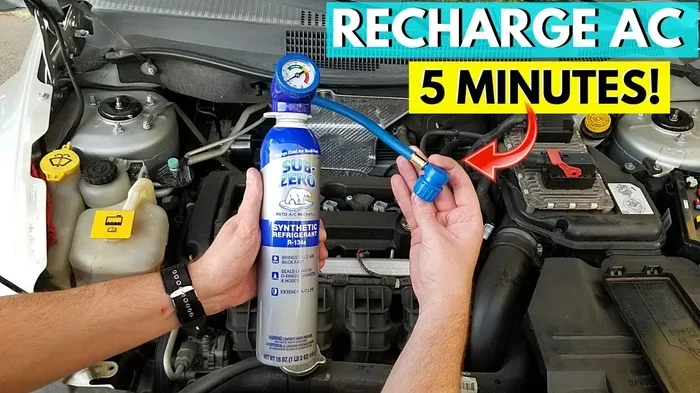
Many DIY AC recharge kits come with a built-in gauge. These are easier to use than standalone gauges and are perfect for beginners. The kit includes a can of refrigerant with a hose and gauge attached. You simply connect it to the low-side port and let the system draw in the freon until the gauge shows the correct pressure.
### Visual Signs of Low Freon
You can also look for visual clues that your freon is low. Common signs include:
- Warm air from the vents: The most obvious sign that your AC is not working properly.
- AC clutch not engaging: If you do not hear the clutch click when you turn on the AC, low pressure may be preventing it from engaging.
- Visible oil leaks: Refrigerant carries oil through the system. If you see oily residue around AC lines or fittings, there may be a leak causing freon loss.
- Reduced cooling performance: The AC blows cool air but not as cold as it used to.
## Step-by-Step Guide to Recharging Your Car’s AC
If you have checked your freon level and confirmed it is low, you can recharge the system yourself. Recharging your car AC is one of the most common DIY automotive tasks. It is straightforward and takes about 30 minutes.
### What You Will Need
Before you start, gather these supplies:
- AC recharge kit with the correct refrigerant type for your vehicle
- AC pressure gauge (if not included in the kit)
- Safety glasses and gloves
- Thermometer to measure vent temperature
- Your vehicle owner manual for reference
### Step 1: Prepare the Vehicle
Park your car in a shaded area or a well-ventilated garage. Turn the engine on and set the AC to maximum cool with the fan on the highest setting. This ensures the system is running and ready to accept refrigerant.
### Step 2: Locate the Low-Side Service Port
Open the hood and locate the low-side service port. It is usually on the larger diameter AC line near the firewall or on the compressor itself. The low-side port has a larger fitting than the high-side port, so it is hard to confuse them.
### Step 3: Connect the Recharge Kit
Attach the recharge hose to the low-side service port. Make sure the connection is secure. If your kit has a built-in gauge, the reading should start to move once you connect it.
### Step 4: Add Freon Slowly
Turn the can of refrigerant upside down and slowly open the valve on the recharge hose. Let the system pull in the freon gradually. Do not rush this process. Watch the gauge on the kit and stop adding refrigerant when the pressure reaches the recommended level for your vehicle.
### Step 5: Check the Results
Once you have added the recommended amount, start the engine and let the AC run for 5 to 10 minutes. Check the vent temperature with a thermometer. You should feel noticeably colder air coming from the vents. If the air is still warm, you may need to add a little more freon or investigate for leaks.
### Quick Tips for a Successful Recharge
Pro tips to make your AC recharge go smoothly:
- Always add freon with the engine running and the AC on maximum cool.
- Never overfill the system. It is better to add a little at a time and check the pressure.
- If the can gets too cold to hold, wrap it in warm water to help the refrigerant flow.
- Work in a well-ventilated area. Refrigerant fumes can be harmful in enclosed spaces.
- Keep the can upright when storing and tilted slightly when dispensing.
## Common Mistakes When Recharging Freon
Even with a simple job like AC recharge, people make mistakes that can cause problems. Here are the most common errors to avoid.
### Adding Freon Without Finding a Leak
This is the number one mistake. If your system lost freon, there is a reason. Maybe there is a tiny leak in a hose, a worn seal, or a cracked component. Simply adding more freon without fixing the leak means you will be recharging your AC every few weeks. Not only is this wasteful, but it also wastes your money. Before recharging, inspect the entire system for leaks. You can use a UV leak detection dye or an electronic leak detector for this purpose.
### Using the Wrong Refrigerant Type
Never mix different types of refrigerant. R-134a and R-1234yf are not interchangeable. Using the wrong type can damage seals, compressors, and other AC components. Always verify your vehicle’s refrigerant type before purchasing any supplies.
### Overcharging the System
More freon does not mean better cooling. Overcharging raises system pressure beyond safe limits and can actually reduce cooling performance. It can also damage the compressor and other expensive components. Always follow the manufacturer’s recommended charge amount exactly.
### Ignoring the Compressor Clutch
If the AC compressor clutch does not engage when you turn on the AC, adding freon may not solve the problem. A non-engaging clutch could indicate an electrical issue, a faulty compressor, or a completely empty system. Diagnose the root cause before simply adding refrigerant.
### Skipping the Oil Check
Refrigerant systems carry a small amount of compressor oil. If your system has been low on freon for a long time, the oil may have leaked out too. In such cases, adding freon alone may not be enough. You may need to add compressor oil as well. Check your service manual for oil specifications.
## When to Call a Professional Instead
DIY AC recharge is a great option for simple low-freon situations. But there are times when you should leave the job to a professional mechanic.
### Signs You Need Professional Help
Consider calling a certified mechanic if you notice any of the following:
- The AC blows warm air even after a full recharge: This could indicate a compressor failure, blocked expansion valve, or electrical problem.
- You see visible damage to AC lines or components: Physical damage requires professional repair and possibly part replacement.
- The system needs frequent recharges: If you are recharging your AC every month or two, there is definitely a leak that needs professional diagnosis and repair.
- You hear unusual noises from the AC system: Grinding, squealing, or clicking sounds could signal compressor or bearing failure.
- Your car uses R-1234yf refrigerant: This newer refrigerant requires special equipment and EPA certification to handle. Most DIY recharge kits are not compatible with R-1234yf systems.
### How Much Does Professional AC Recharge Cost?
If you decide to visit a mechanic, expect to pay between $150 and $300 for a professional AC recharge service. This typically includes checking for leaks, evacuating the old refrigerant, vacuuming the system, and recharging with the correct amount of new freon. The cost varies based on your location, vehicle type, and whether any repairs are needed.
### The Cost of Ignoring AC Problems
Putting off AC repairs can lead to bigger and more expensive problems down the road. A small leak that costs $50 to fix today can turn into a compressor failure that costs $500 or more to repair. Address AC issues promptly to avoid costly repairs later.
## Maintaining Your Car’s AC System
Recharging your AC is one thing. Keeping it in good shape long-term is another. Here are some simple maintenance tips that will help your car AC last longer and perform better.
### Run Your AC Regularly
Even in winter, run your AC for about 10 minutes every week or two. This keeps the compressor lubricated and the seals soft. Seals can dry out and crack if the AC system sits unused for too long, leading to refrigerant leaks.
### Replace Cabin Air Filters
A dirty cabin air filter restricts airflow and makes your AC work harder. Replace your cabin filter according to your vehicle’s maintenance schedule. This simple step improves cooling performance and air quality inside your car.
### Inspect AC Lines and Connections Annually
Once a year, visually inspect the AC lines and connections under the hood. Look for signs of oil residue, cracks, or loose fittings. Catching a small leak early can save you from a major repair later.
### Keep the Condenser Clean
The condenser sits in front of the radiator and can accumulate dirt, bugs, and debris over time. A dirty condenser restricts airflow and reduces cooling efficiency. Hose it down gently when you wash your car.
### Park in the Shade When Possible
Parking in the shade reduces the heat load on your AC system. Your car stays cooler longer, and the AC does not have to work as hard to bring the cabin temperature down. This simple habit can extend the life of your AC components.
## Frequently Asked Questions
Can I recharge my car AC myself?
Yes, recharging your car AC is one of the easiest DIY automotive tasks. You just need an AC recharge kit, which costs between $20 and $50 at most auto parts stores. Follow the instructions carefully, and you can have cold air blowing again in about 30 minutes. However, if you are not comfortable working on your car, a mechanic can do it quickly and affordably.
How long does an AC recharge last?
A properly done AC recharge should last for years. If your system is in good condition with no leaks, the refrigerant will cycle through the closed loop indefinitely. However, if there is a small leak, you may notice the AC getting warm again after a few weeks or months. The key is to fix any leaks before recharging so the refrigerant stays in the system.
What happens if I put too much freon in my car?
Overcharging your AC system with too much freon causes high pressure inside the lines. This can lead to poor cooling, hard compressor operation, and in severe cases, compressor failure or ruptured hoses. Always measure carefully and stick to the manufacturer’s recommended charge amount. If you accidentally overcharge, a mechanic can safely remove the excess refrigerant.
Is it safe to drive with low freon?
Driving with low freon is generally safe for the vehicle, but it makes your driving experience very uncomfortable. The AC will not cool properly, which can be dangerous on hot days. Additionally, running the AC with low refrigerant for extended periods can strain the compressor and lead to more expensive repairs over time.
Can low freon cause engine problems?
Yes, in some cases. The AC compressor is driven by the engine, and if the system is severely low on refrigerant, the compressor may not engage properly. This can cause the serpentine belt to slip or put extra load on the engine. In rare cases, a failing AC compressor can cause engine stalling or reduced performance.
How do I know if my car uses R-134a or R-1234yf?
You can find the refrigerant type on a sticker under the hood or in your vehicle owner manual. Cars made before 1994 typically used R-12. Most cars from 1994 to 2020 use R-134a. Vehicles made after 2020 increasingly use R-1234yf. Always verify the type before purchasing any refrigerant or recharge kit.
## Conclusion
Knowing how many cans of freon your car takes to recharge is essential information for every car owner. Most passenger cars need 2 to 4 cans of R-134a refrigerant, but the exact amount depends on your vehicle size, AC system design, and current refrigerant level. By following the steps in this guide, you can check your freon levels, recharge your AC safely, and keep your car cool all summer long.
Remember to always check for leaks before recharging, use the correct refrigerant type, and never overfill the system. If you are unsure or your AC problems persist after a recharge, do not hesitate to visit a professional mechanic. Taking care of your car AC system today saves you time, money, and discomfort tomorrow.
The most important takeaway is simple: a well-maintained AC system keeps you comfortable and safe on the road. So the next time your car AC starts blowing warm air, you will know exactly what to do. Grab your recharge kit, check the levels, and get back to enjoying a cool ride.
Key Takeaways
- Standard freon amount: Most passenger cars require 2 to 4 cans of R-134a refrigerant for a full recharge.
- Vehicle size matters: Compact cars need less freon, while trucks and SUVs need more due to larger cabin space and longer refrigerant lines.
- Check for leaks first: Recharging without fixing a leak wastes money and freon. Always inspect the system before adding refrigerant.
- Use the right type: Older cars use R-12 freon, while newer models use R-134a or R-1234yf. Using the wrong type can damage your system.
- DIY is possible: With the right tools and a recharge kit, you can do it yourself in about 30 minutes.
- Professional help recommended: If you suspect a major leak or compressor failure, see a certified mechanic.
Frequently Asked Questions
What is How Many Cans of Freon Does a Car Take??
How Many Cans of Freon Does a Car Take? is an important topic with many practical applications.