Window Tint Percentage Guide Everything You Must Know
The window tint percentage guide covers everything from VLT levels to legal limits and tint types. Whether you want heat rejection, UV protection, or a sleek look, understanding tint percentages is essential. This guide breaks down every number, law, and option so you can make the best choice for your vehicle.
Have you ever looked at a car and wondered why its windows look so dark or so light? The answer lies in the window tint percentage. This number controls how much light gets through your car windows, and it matters more than most people realize.
Whether you want to beat the summer heat, protect your interior from sun damage, or just add a sleek look to your ride, understanding window tint percentage is the first step. This guide breaks it all down in simple terms. You will learn what the numbers mean, which tints are legal, and how to pick the right one for your car.
By the end of this guide, you will feel confident choosing the right tint shade for your vehicle. No jargon. No confusion. Just clear, practical advice that works.
Key Takeaways
- VLT percentage determines how much light passes through your tint.
- Each state has different legal tint limits for front and rear windows.
- Ceramic, carbon, and dyed tints each offer unique benefits.
- Choosing the wrong tint can lead to fines or failed inspections.
- Professional installation ensures longevity and bubble-free results.
- Tint percentage affects both comfort and safety while driving.
- Knowing your local laws saves money and keeps you compliant.
📑 Table of Contents
- What Is Window Tint Percentage?
- Types of Window Tint Films
- Why Tint Percentage Matters
- Understanding Legal Tint Limits
- How to Choose the Right Tint Percentage
- Window Tint Installation Tips
- Window Tint Percentage Chart
- Common Myths About Window Tint
- How Long Does Tint Last?
- Cost of Window Tinting
- Final Thoughts
What Is Window Tint Percentage?
The window tint percentage refers to the Visible Light Transmission (VLT) level. VLT measures how much visible light passes through the tint film and into your car. A lower percentage means less light gets through, making the tint darker. A higher percentage means more light passes through, keeping the window lighter.
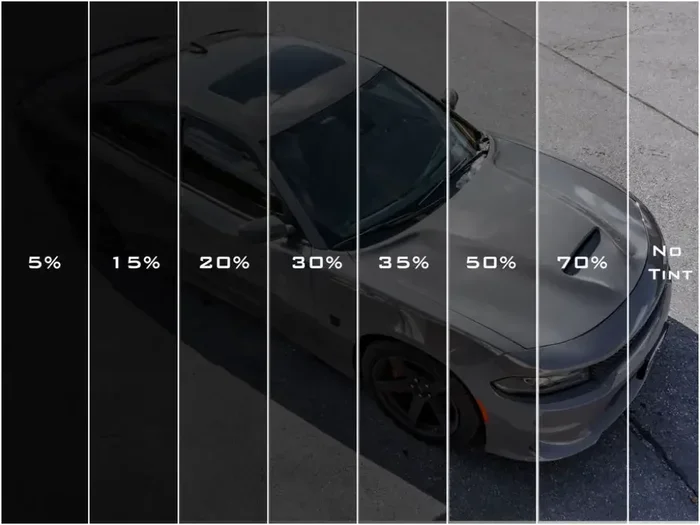
For example, a 5% tint lets in only 5% of outside light. This makes the window very dark. A 70% tint lets in 70% of light, so it looks almost clear. The tint percentage is printed on the film or included in the product specifications.
How VLT Works
Here is a simple way to think about it. Imagine wearing sunglasses. Darker sunglasses block more light. Lighter sunglasses let more light through. Window tint percentage works the same way. The number on the tint film tells you exactly how much light gets through.
Most factory windows already block some light. Standard car glass usually has a VLT around 70% to 80%. When you add tint film, you reduce that number further. The combined effect matters when checking tinting regulations in your area.
Types of Window Tint Films
Not all tint film is the same. Different materials offer different levels of darkness, heat rejection, and durability. Here is a look at the most common types used in car window tint applications.
Dyed Tint
Dyed tint is the most affordable option. It uses a layer of dye to absorb sunlight and reduce glare. Dyed tint film comes in various tint shades and looks great at an affordable price.
However, dyed tint fades over time. It may also bubble or peel after a few years. If you want a budget option for short-term use, dyed tint works well. But for long-lasting performance, you might want to consider other options.
Metallic Tint
Metallic tint contains tiny metallic particles that reflect heat away from your car. This type of car window tint offers excellent heat rejection and a shiny, mirror-like appearance.
The downside is that metallic tint can interfere with cell phone signals and GPS reception. If you rely heavily on your phone for navigation, this could be a concern. Still, many drivers love the performance and look of metallic tint film.
Carbon Tint
Carbon tint offers a matte finish that does not fade over time. It blocks a high percentage of infrared rays, which are responsible for heat buildup inside your car.
Carbon tint film does not interfere with electronics. It also looks sleek and modern. Many car enthusiasts prefer carbon tint because it combines durability with a clean, non-reflective appearance.
Ceramic Tint
Ceramic tint is the premium option. It uses nano-ceramic particles to block heat and UV rays without affecting visibility or signal reception. Ceramic tint film offers the best heat rejection of any tint type.
The downside is the price. Ceramic tint costs more than dyed, metallic, or carbon options. But if you want top-tier performance and longevity, it is worth every penny. Many professional installers recommend ceramic tint shade for customers who want the best results.
Why Tint Percentage Matters
The window tint percentage you choose affects more than just how your car looks. It impacts your comfort, safety, and even your wallet. Here is why getting the right percentage matters.
Heat Rejection and Comfort
A darker tint percentage blocks more solar energy. This keeps your car cooler in hot weather. During summer, parked cars can reach extreme temperatures. The right tint film can reduce interior heat by up to 70%.
This means less reliance on your air conditioning. Less AC use means better fuel economy over time. A tint shade with good heat rejection makes every drive more comfortable.
UV Protection
Ultraviolet rays can cause skin damage and fade your car’s interior. Quality car window tint blocks up to 99% of harmful UV rays. This protects your skin during long drives and preserves your seats, dashboard, and steering wheel.
Even a lighter tint percentage can offer strong UV protection. The key is choosing a film with good UV-blocking properties, regardless of the darkness level.
Glare Reduction
Driving with too much sunlight or headlight glare can be dangerous. The right window tint percentage reduces glare significantly. This improves visibility and makes night driving safer.
Glare reduction is one of the most practical benefits of adding tint film to your car. It does not just look good, it actually helps you drive better.
Privacy and Security
Darker tints provide more privacy for you and your passengers. They make it harder for people outside to see into your car. This can deter thieves who look for easy targets.
However, you must balance privacy with safety. Too dark a tint shade can reduce your ability to see outside, especially at night. Always choose a percentage that keeps you safe and legal.
Understanding Legal Tint Limits
Every state has its own window tint laws. These rules dictate how dark your tint can be on each window. Ignoring these tinting regulations can lead to fines, failed inspections, and even having to remove your tint.
Front Side Windows
Most states require the front side windows to have a higher VLT. This ensures the driver has good visibility. Common legal limits range from 50% to 70% VLT for front side windows.
Some states allow darker tints if the front windshield has a legal strip. Always check your local legal tint limit before purchasing tint film. The rules vary significantly from state to state.
Rear Side Windows and Rear Windshield
The rear windows usually have more relaxed tint rules. Many states allow darker tint percentage levels on back windows. Some states allow nearly any shade on rear seats.
However, if your rear window is tinted, many states require dual side mirrors. This ensures you can still see behind you while driving. Check your local tint laws to avoid any surprises.
Front Windshield Tint
Tinting the front windshield is the most regulated area. Most states only allow a strip of tint along the top of the windshield. This strip is usually above the manufacturer’s AS-1 line.
Full windshield tinting is generally illegal in most states. The exception is often for medical exemptions. Always follow tinting regulations carefully when considering front windshield applications.
How to Choose the Right Tint Percentage
Choosing the right window tint percentage depends on your goals, your state laws, and your personal preferences. Here is a practical guide to help you decide.
Consider Your Climate
If you live in a hot, sunny area, you want a lower VLT for maximum heat rejection. A 5% to 20% tint shade will keep your car significantly cooler. In cooler climates, you might prefer a lighter tint percentage for more natural light.
Think About Your Driving Habits
Do you drive mostly during the day or at night? Night drivers should choose a lighter tint percentage to maintain good visibility. Daytime drivers can go darker without as much concern.
If you drive in heavy traffic or on rural roads, consider how much visibility you need. Safety should always come first when selecting your car window tint.
Check Your State Laws
This is the most important step. Before buying any tint film, look up your state’s tint laws. You can usually find this information on your state’s Department of Motor Vehicles website.
Some states allow medical exemptions for darker tints. If you have a skin condition or light sensitivity, ask your doctor about a tint exemption. This can give you more flexibility with your tint percentage choice.
Balance Style and Function
Do you want your car to look sleek and sporty? A darker tint shade on all windows creates a uniform, polished look. Do you prefer a more subtle appearance? A lighter tint percentage on the front windows paired with a darker rear can look great.
Many car owners choose a gradient approach. This means darker tint on the rear windows and lighter tint on the front. It looks stylish while keeping the driver’s visibility strong.
Window Tint Installation Tips
Getting your tint film installed correctly is just as important as choosing the right percentage. A bad installation can lead to bubbles, peeling, and poor performance.
DIY vs. Professional Installation
Some people choose to install their own car window tint. DIY kits are affordable and widely available. However, professional installation ensures a bubble-free, long-lasting finish.
If you are new to tint installation, hiring a professional is the safer choice. They have the tools, experience, and clean environments needed for a perfect result. Plus, many shops offer warranties on their work.
Common Mistakes to Avoid
- Choosing a tint that is too dark for your state laws. This can result in fines and forced removal.
- Skipping the cure time. New tint film needs time to fully adhere. Avoid rolling down your windows for at least 3 to 5 days.
- Cleaning your windows too soon. Wait at least a week before cleaning the tinted windows.
- Ignoring bubble formation. Small bubbles may resolve on their own. Large bubbles need professional attention.
- Buying cheap tint film. Low-quality tint shade fades quickly and offers poor heat rejection.
Window Tint Percentage Chart
To help you visualize the options, here is a simple breakdown of common window tint percentage levels and what they mean in practice.
| Tint Percentage | Darkness Level | Best For |
|---|---|---|
| 50% – 70% | Light | UV protection, glare reduction, factory look |
| 35% – 50% | Medium | Balanced style and function, daily driving |
| 20% – 35% | Dark | Heat rejection, privacy, sporty look |
| 5% – 20% | Very Dark | Maximum privacy, luxury look, hot climates |
This tint percentage chart gives you a general idea. Your actual experience may vary based on the type of tint film and your state laws. Always verify the legal tint limit in your area before making a final decision.
Common Myths About Window Tint
There are many misconceptions about window tint percentage and car window tint. Let us clear up a few of the most common ones.
Myth: Darker tint means better UV protection. Truth: UV protection depends on the film material, not the darkness. A light ceramic tint can block more UV rays than a dark dyed tint.
Myth: Tint will bubble or peel quickly. Truth: High-quality tint film from reputable brands lasts 5 to 10 years or more. The key is choosing quality materials and professional installation.
Myth: You cannot see through tinted windows at night. Truth: As long as you choose a legal tint percentage and your windows are clean, visibility remains good at night. The tint shade does not change how you see in the dark.
Myth: All tint percentages are illegal in some states. Truth: Every state allows some level of tint. Even if you cannot go very dark, there is always a legal option that works for you.
How Long Does Tint Last?
The lifespan of your tint film depends on the type and quality of the material. Dyed tint typically lasts 2 to 5 years. Carbon tint lasts 5 to 8 years. Ceramic tint can last 10 to 15 years or more with proper care.
To extend the life of your car window tint, avoid harsh cleaners. Do not use ammonia-based window sprays. Stick with soft cloths and tint-safe cleaning products. Also, avoid rolling down your windows during the cure period.
Proper care keeps your tint percentage looking great for years. A well-maintained tint not only looks better but also performs better at blocking heat and UV rays.
Cost of Window Tinting
The cost of window tinting varies based on the type of film, the number of windows, and whether you choose DIY or professional installation. Dyed tint is the most affordable. Ceramic tint is the most expensive.
On average, a full tint installation costs between $100 and $400 for a standard sedan. SUVs and larger vehicles cost more due to more window surface area. Premium ceramic tints can push costs higher, but the durability and performance justify the investment.
Remember, the cheapest option is not always the best. A quality tint film with good heat rejection and UV protection pays for itself over time through comfort and interior protection.
Final Thoughts
The window tint percentage guide shows that choosing the right tint is about more than just looks. It is about comfort, safety, legal compliance, and long-term value. Whether you pick a light tint percentage for subtle protection or a dark tint shade for maximum heat rejection, the key is making an informed choice.
Know your state laws. Understand what VLT means. Pick the right tint film for your climate and driving habits. And invest in quality installation. Follow these steps, and your car window tint will serve you well for years to come.
Take your time, do your research, and enjoy the benefits of a properly tinted vehicle. The right window tint percentage makes every drive more comfortable and your car look better too.
Frequently Asked Questions
What does window tint percentage mean?
The window tint percentage refers to the Visible Light Transmission (VLT) level. It tells you how much outside light passes through the tint film into your car. A lower percentage means a darker tint, while a higher percentage means a lighter tint.
What is the legal tint percentage for front windows?
Legal limits vary by state, but most states require front side windows to have a VLT of 50% or higher. Some states allow as low as 35% for front windows. Always check your local tint laws before tinting your front windows to avoid fines or penalties.
Can I tint my front windshield?
Most states only allow a small strip of tint along the top of the front windshield. Full windshield tinting is generally illegal. The allowed strip width varies by state, so check your local tinting regulations for specific rules.
What is the best tint percentage for heat rejection?
Darker tints with lower VLT percentages block more heat. A 5% to 20% tint shade offers excellent heat rejection. However, ceramic and carbon tints provide strong heat blocking even at higher percentages, giving you more flexibility with darkness and legality.
How long does car window tint last?
The lifespan depends on the type of tint film. Dyed tint lasts 2 to 5 years, carbon lasts 5 to 8 years, and ceramic can last 10 to 15 years or more. Proper care, avoiding harsh cleaners, and following cure time guidelines help extend the life of your car window tint.
Should I tint my car myself or hire a professional?
Professional installation gives the best results with fewer bubbles and peeling issues. DIY kits are cheaper but require patience and skill. If you want a flawless, long-lasting tint installation, hiring a professional is the recommended choice for most car owners.
=== CONCLUSION ===
The window tint percentage guide gives you everything you need to make the right choice for your vehicle. From understanding VLT levels to navigating state laws and picking the best tint film, you now have the knowledge to move forward with confidence.
Remember, the right tint percentage balances style, comfort, safety, and legality. Take the time to research your options, choose quality materials, and invest in proper installation. Your car, your comfort, and your wallet will thank you for it.