Here Is What to Do When Your Trunk Wont Open Today
Dealing with a trunk that won’t open is frustrating, but you are not stuck. This guide walks you through the most common reasons your trunk won’t open and gives you simple, proven fixes you can try right now. From dead key fob batteries to broken trunk latches, we cover every scenario so you can get back on the road quickly.
There is nothing worse than standing next to your car, bags of groceries in hand, and realizing your trunk won’t open. You press the button, pull the handle, and nothing happens. It is one of those small car problems that feels enormous in the moment. Whether you are dealing with a trunk stuck closed or a trunk that refuses to budge from the inside, this guide has you covered. We will walk you through every possible reason your trunk won’t open and give you practical, step-by-step solutions you can use today. No need to panic or call a tow truck just yet.
Most trunk problems are simple to fix, and many of them cost nothing at all. You might be surprised how often the culprit is something as basic as a dead key fob battery or a rusty trunk latch. Other times, the issue points to a deeper mechanical problem that needs a professional eye. Either way, understanding what is happening under the hood puts you back in control. Let us dive into the most common reasons your trunk release stops working and how to solve each one.
Key Takeaways
- Dead key fob battery is the #1 cause: A weak battery in your remote often stops the trunk release from working, and replacing it is quick and cheap.
- Manual trunk release options exist in every car: Every vehicle has a hidden emergency trunk release lever or handle you can use.
- Lubrication fixes many trunk latch problems: Simple grease or silicone spray can solve sticking trunk latch issues in minutes.
- Blown fuses can shut down your trunk release entirely: Check your fuse box before calling a mechanic.
- Regular maintenance prevents most trunk problems: A little upkeep goes a long way in avoiding a stuck trunk.
- Know when to call a pro: Some issues like a broken trunk actuator need professional diagnosis and repair.
📑 Table of Contents
Common Reasons Your Trunk Won’t Open
Before you start pulling on handles and pressing buttons, it helps to understand what could be causing the problem. Every car has a trunk release system made up of several parts working together. When one part fails, the whole system stops. Here are the most common reasons your trunk won’t open.
Dead Key Fob Battery
This is the number one reason people find themselves staring at a closed trunk. Your key fob sends a signal to the car’s trunk release system, but when the battery dies, that signal never reaches the car. You might still be able to lock and unlock your doors, but the trunk function often requires a stronger signal. If you have a trunk release button on your key fob and it is not working, a dead battery is the first thing to check. Replacing the battery takes about two minutes and costs less than five dollars.
Faulty Trunk Latch Mechanism
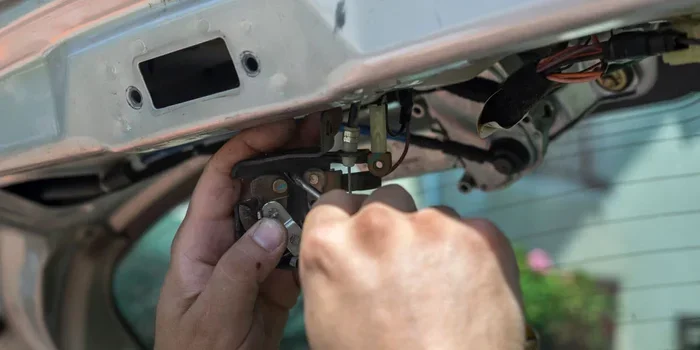
The trunk latch is the metal piece that connects your trunk lid to the car body. Over time, dirt, grime, and rust build up on the latch, making it stiff or stuck. A corroded trunk latch can prevent the trunk from opening even when the release signal works perfectly. This is especially common in older cars or vehicles that sit outside in wet or salty conditions. Sometimes the latch simply wears out after years of use and needs to be replaced entirely.
Broken Trunk Release Cable
Many cars use a physical cable that connects the trunk handle to the latch mechanism. If this cable snaps, stretches, or disconnects, pulling the trunk handle does nothing. You might hear a rattling sound inside the trunk lid when you try to open it. A broken release cable is a common problem in high-mileage vehicles. The good news is replacing the cable is a straightforward repair that most mechanics can handle quickly.
Trunk Actuator Failure
Modern cars often use an electric trunk actuator, which is a small motor that powers the trunk latch open. When this actuator fails, you will hear nothing when you press the trunk release button. No click, no motor sound, nothing. Trunk actuator failure can happen from electrical issues, water damage, or simply old age. This is one of those car trunk problems that usually requires a mechanic or a skilled DIYer to replace the part.
Trunk Stuck Closed Due to Temperature
Extreme cold can freeze your trunk shut, especially if moisture gets into the trunk seal or latch area. Ice builds up around the trunk hinge and latch, physically preventing the trunk from opening. This is a common issue in winter months and can catch people off guard. The same thing can happen in extreme heat, where metal parts expand and create extra friction in the trunk mechanism.
Blown Fuse in the Trunk Circuit
Every electrical system in your car runs through fuses, and the trunk release is no exception. If a fuse blows in the trunk circuit, the entire system goes dead. You will get no response from the trunk release button, the key fob, or any interior controls. Checking your fuse box is one of the easiest diagnostic steps you can take, and it costs nothing. Your car’s owner manual will tell you exactly which fuse controls the trunk release.
How to Diagnose the Problem
Now that you know the common causes, let us talk about how to figure out what is wrong with your specific situation. Diagnosing the problem saves you time and money because you will know exactly what fix to apply.
Check the Key Fob Signal
Start with the simplest check. Stand close to your car and press the trunk release button on the key fob. Do you hear any sound at all? A click or a hum from the trunk area means the signal is reaching the car, and the problem is likely mechanical. No sound at all suggests an electrical issue or a dead fob battery. Try using the physical key to unlock the trunk if your car has a keyhole on the trunk handle. If the trunk opens with the key but not the fob, you have confirmed the fob is the problem.
Listen for Clicking or Grinding Sounds
When you press the trunk release, pay close attention to what you hear. A single click usually means the signal reached the trunk latch but the latch itself is stuck. Grinding or rattling sounds suggest a broken cable or a failing actuator. Silence means the electrical signal is not getting through at all, which points to a fuse, wiring, or actuator issue.
Inspect the Trunk Handle and Surrounding Area
Look closely at the trunk handle on both the outside and inside of the car. Is the handle loose, wobbly, or stuck? A loose handle often means the cable underneath has disconnected. Also check the trunk seal, which is the rubber gasket around the trunk lid. If the seal is damaged or dirty, it can create extra resistance that makes the trunk hard to open. A quick wipe-down of the seal and latch area can sometimes solve the problem entirely.
Simple Fixes You Can Try at Home
Before you call a mechanic, try these DIY fixes. Most of them require nothing more than basic tools and a few minutes of your time.
Replace the Key Fob Battery
This is the fastest and easiest fix for a trunk that will not respond. Open your key fob, remove the old battery, and insert a new one. Most key fobs use a CR2032 battery, which you can find at any grocery store or pharmacy. After replacing the battery, test the trunk release from a few feet away. In most cases, this one simple step solves the entire problem. Keep a spare battery in your glove box so you are never caught off guard again.
Use the Manual Trunk Release
Every car made in the last two decades has a manual emergency trunk release. This is usually a lever or handle located inside the vehicle, often behind the trunk lid trim panel or near the driver’s seat. Check your owner’s manual to find the exact location. Pulling this lever releases the trunk latch mechanically, even if the electrical system is completely dead. This is one of the most important things to know about your own car, and it can save you in an emergency.
Lubricate the Trunk Latch and Hinge
If the trunk latch feels stiff or sticky, a little lubricant can work wonders. Spray a silicone-based lubricant or white lithium grease onto the trunk latch, the hinge points, and any moving parts. Open and close the trunk a few times to work the lubricant in. Wipe away any excess with a clean cloth. Avoid using WD-40 as a long-term solution because it can attract dirt and gum up over time. Silicone spray or dedicated latch grease works much better for trunk maintenance.
Check the Trunk Fuse
Pop open your fuse box and locate the fuse for the trunk release system. Your owner’s manual will have a diagram showing which fuse controls what. Pull the fuse out and inspect it visually. If the metal strip inside is broken, you have a blown fuse. Replace it with a new fuse of the same amperage. This costs pennies and takes less than a minute. If the new fuse blows again right away, that signals a deeper electrical problem that needs professional attention.
Reset the Trunk Release System
Sometimes the trunk release system simply needs a reset. Disconnect your car battery for about fifteen minutes, then reconnect it. This clears any error codes and resets the electronic trunk control module. It is like giving your car’s computer a fresh start. After reconnecting, try the trunk release again. This trick works surprisingly often for electrical gremlins that have no obvious cause.
When to Call a Professional Mechanic
Not every trunk problem is a DIY fix, and knowing when to call for help saves you from making things worse. If you have tried the simple fixes above and your trunk still will not open, it is time to bring in the experts.
A broken trunk actuator, a severely corroded trunk latch, or a damaged trunk hinge are all repairs that benefit from professional tools and experience. Trying to force a stuck trunk open can cause further damage to the trunk seal, the lid, or the surrounding body panels. A mechanic can diagnose the exact issue quickly and often has the right parts on hand for same-day repair.
Also call a professional if you notice any signs of electrical problems beyond just the trunk. If your dashboard lights are flickering, your doors won’t lock, or other electrical features are acting up, the issue may be bigger than just the trunk release system. A qualified mechanic can run a full electrical diagnostic and catch problems before they become expensive repairs.
The average cost to repair a trunk release issue ranges from twenty dollars for a simple fuse replacement to two hundred dollars or more for an actuator or latch replacement. Most repairs take less than an hour, so the cost is usually reasonable. Always ask for a clear estimate before any work begins.
Preventing Trunk Problems Before They Start
The best way to deal with a trunk that won’t open is to prevent the problem from happening in the first place. A little regular maintenance goes a long way in keeping your trunk release system working smoothly for years.
- Lubricate the trunk latch and hinges every six months. This prevents rust and keeps everything moving freely.
- Replace your key fob battery once a year. Do not wait until it dies completely. A proactive swap prevents surprises.
- Keep the trunk seal clean and conditioned. Wipe the rubber gasket with a damp cloth and apply a rubber protectant to prevent cracking and drying.
- Check your fuses during regular oil changes. A quick visual inspection can catch a failing fuse before it causes a problem.
- Avoid overloading the trunk. Excess weight puts stress on the trunk hinge and latch, leading to premature wear and potential trunk stuck issues.
Taking these small steps means you will spend less time dealing with a trunk that won’t open and more time enjoying your car. Prevention is always easier and cheaper than repair.
Quick Tips and Common Mistakes
Here are some quick tips that can make a real difference when your trunk won’t open. And yes, there are some common mistakes that make things worse, so watch out for those too.
Quick Tips:
- Always carry your physical key as a backup. Electronic systems fail, but a metal key never needs a battery.
- Keep a can of silicone spray in your garage for quick trunk maintenance.
- If your trunk is stuck due to cold weather, pour warm (not hot) water over the latch area to melt ice gently.
- Never force the trunk open with excessive pressure. You risk damaging the trunk seal, hinges, or the trunk lid itself.
- Know where your manual trunk release is located before you need it in an emergency.
Common Mistakes to Avoid:
- Do not try to pry the trunk open with a screwdriver or other tool. This almost always causes cosmetic damage and can make the real problem worse.
- Do not ignore a trunk that is getting harder to open over time. Stiffness is an early warning sign that lubrication or maintenance is needed.
- Do not assume the problem is electrical when it could be mechanical. Always start with the simplest checks first.
- Do not use the wrong type of lubricant on trunk parts. Oil-based lubricants attract dirt and can create more problems than they solve.
Expert Insights on Trunk Release Systems
Automotive experts agree that most trunk release issues fall into three categories: electrical, mechanical, or environmental. Electrical issues like a dead key fob battery or blown fuse account for the majority of cases. Mechanical failures such as a broken trunk cable or worn actuator are the next most common. Environmental factors like extreme temperatures and moisture play a role in accelerating wear and tear on trunk components.
Car care professionals recommend treating your trunk release system with the same attention you give your engine or brakes. A little regular care prevents the kind of frustrating situations where you are standing next to your car with a trunk that won’t open. If you notice any unusual sounds, resistance, or inconsistency when operating your trunk, address it early. Small problems become big repairs when ignored.
One expert tip from seasoned mechanics is to always keep your owner’s manual accessible. It contains specific information about your car’s trunk release system, including fuse locations, manual release procedures, and recommended maintenance schedules. This small habit can save you significant time and money when issues arise.
Conclusion
A trunk that won’t open is one of those car problems that feels urgent and overwhelming, but the reality is that most causes are simple and fixable. Whether it is a dead key fob battery, a stuck trunk latch, or a blown fuse, you now have the knowledge and tools to tackle the problem head-on. Start with the simplest fixes and work your way up to more complex solutions. And remember, every car has a manual trunk release option that can get you out of a tight spot.
Regular maintenance is your best defense against trunk problems. A little lubrication, a fresh battery in your key fob, and a quick fuse check during routine car care can keep your trunk release system working flawlessly for years to come. When in doubt, do not hesitate to call a professional mechanic. They have the experience and tools to handle even the most stubborn trunk issues.
Now you know exactly what to do when your trunk won’t open. The next time it happens, stay calm, work through the steps, and you will have that trunk open in no time.
Frequently Asked Questions
Why does my trunk release button not work but the doors unlock fine?
This usually means the trunk release has a separate circuit from your door locks. The most common cause is a dead key fob battery, since the trunk function often needs a stronger signal. Try replacing the battery first. If that does not work, check the trunk-specific fuse in your fuse box.
Can I open my trunk from the inside of the car?
Yes, almost every car has a manual trunk release lever or handle located inside the vehicle. It is usually found behind the trunk lid trim panel or near the driver’s seat area. Check your owner’s manual for the exact location in your specific vehicle.
How much does it cost to repair a trunk actuator?
The cost typically ranges from one hundred to three hundred dollars, depending on your car’s make and model. The part itself costs between fifty and one hundred fifty dollars, and labor adds another fifty to one hundred fifty dollars. Some mechanics offer flat-rate pricing for trunk repairs, so always ask for an estimate upfront.
What should I do if my trunk is frozen shut in winter?
Pour warm water (not boiling) over the trunk latch and seal area to gently melt the ice. Never use hot water directly on frozen metal parts, as the sudden temperature change can cause cracks. You can also spray a silicone lubricant on the latch and seal before winter to prevent freezing.
Is it safe to drive with a trunk that won’t close properly?
It is not recommended. An improperly closed trunk can open while driving, creating a serious safety hazard. Cargo can spill onto the road, and an open trunk at highway speeds can affect your vehicle’s handling. Have the trunk repaired before driving the car if possible.
How often should I maintain my trunk release system?
Lubricate the trunk latch and hinges at least twice a year, or every six months. Replace your key fob battery annually. Inspect the trunk seal for cracks or damage every few months. Regular maintenance like this prevents most trunk problems before they start.