How the Bugatti Veyron Aerodynamics Enhance Top Speed
The Bugatti Veyron is a masterpiece of aerodynamic engineering that was built to push the limits of speed. Its sleek body shape, active aerodynamics, and carefully designed underbody work together to reduce drag and increase downforce. Bugatti Veyron aerodynamics play a huge role in helping this hypercar reach speeds over 250 miles per hour while staying stable and safe on the road.
Key Takeaways
- Active aerodynamics adjust in real time to balance speed and stability.
- The drag coefficient of the Veyron is remarkably low for a car of its size and power.
- Wind tunnel testing was essential in shaping every curve and surface of the Veyron.
- Underbody airflow design creates ground effect that pulls the car closer to the road at high speeds.
- Maintaining aerodynamic components is critical for preserving top performance over time.
- The rear wing and front splitter work as a balanced system to manage airflow direction.
- Bugatti Veyron aerodynamics set a new standard for hypercar design that still influences modern cars today.
📑 Table of Contents
- What Makes the Bugatti Veyron an Aerodynamic Masterpiece
- The Science Behind Aerodynamic Drag and Speed
- Key Aerodynamic Features of the Bugatti Veyron
- How Aerodynamics Improve High-Speed Stability
- Wind Tunnel Testing and Real-World Performance
- Maintaining Aerodynamic Performance Over Time
- How Bugatti Veyron Aerodynamics Influenced Modern Hypercar Design
- Conclusion
What Makes the Bugatti Veyron an Aerodynamic Masterpiece
When the Bugatti Veyron first hit the roads, it turned heads for more than just its massive W16 engine. The real secret behind its incredible speed was Bugatti Veyron aerodynamics. Every curve, every vent, and every surface was shaped with one goal in mind: cutting through the air as efficiently as possible.
Most people think of a car’s speed as coming from its engine alone. But the truth is, all that power means nothing if the air around you is working against you. The Veyron was designed to solve this problem from the ground up. Engineers spent countless hours refining the shape of the car to make sure air flowed smoothly over, under, and around the vehicle.
The result was a car that could hit speeds over 250 miles per hour without losing control. That kind of performance doesn’t happen by accident. It happens because of obsessive attention to aerodynamic detail. Bugatti Veyron aerodynamics remain one of the most impressive achievements in automotive history.
If you have ever wondered how a car weighing over 4,000 pounds can move so fast, the answer lies in the air. The Veyron was built to be part car, part airplane. Its design treats the air not as an obstacle but as a tool that can be shaped and directed.
The Role of Drag Reduction
Drag is the force that pushes against a moving car. The faster you go, the harder the air pushes back. The Veyron’s shape was specifically designed to minimize this resistance. Its long, low profile helps air glide over the body instead of hitting a wall and creating turbulence.
Every surface on the Veyron was smoothed and angled to keep airflow attached. Even small details like door handles were flush-mounted to avoid creating extra drag. These tiny improvements add up to a massive difference at high speeds.
The Science Behind Aerodynamic Drag and Speed
Understanding Bugatti Veyron aerodynamics starts with understanding drag. Drag is the air resistance that fights against a vehicle as it moves forward. At low speeds, drag is not a big deal. But once you start pushing past 150 miles per hour, it becomes the single biggest enemy of speed.
The formula for drag depends on a few key factors. The shape of the car matters most. A boxy shape creates a lot of drag. A sleek, tapered shape creates much less. The Veyron’s designers chose the latter approach. They wanted every inch of the car to contribute to slicing through the air.
Drag coefficient is the number engineers use to measure how aerodynamic a shape is. The lower the number, the less air resistance the car faces. The Bugatti Veyron has a drag coefficient of around 0.41, which is impressive for such a large and powerful car. Compare that to a typical SUV, which often has a drag coefficient above 0.5, and you start to see how much work went into the Veyron’s design.
Why Drag Coefficient Matters
A lower drag coefficient means the car uses less energy to push through the air. This translates directly into higher top speeds and better fuel efficiency. For a car with over 1,000 horsepower, reducing drag was essential to making sure all that power actually turned into speed instead of just pushing air aside.
The Veyron’s engineers also paid close attention to the front end of the car. The shape of the bumper, the grille, and the headlights all work together to guide air around the vehicle smoothly. Even the windshield angle was carefully calculated to reduce the wake of turbulent air behind the car.
Key Aerodynamic Features of the Bugatti Veyron
Bugatti Veyron aerodynamics are made up of several key features that work together as a system. No single part does all the work. Instead, every component plays a specific role in managing airflow.
The Active Rear Wing
One of the most visible aerodynamic features on the Veyron is its active rear wing. This wing can change its angle depending on driving conditions. At low speeds, the wing stays flat to reduce drag. At high speeds, it tilts upward to create downforce, pressing the car firmly onto the road.
This adaptive system is what sets the Veyron apart from many other hypercars. Instead of a fixed wing that is always creating drag or always creating downforce, the Veyron’s wing adjusts to give the best of both worlds. It is a perfect example of how Bugatti Veyron aerodynamics balance speed and stability.
The Front Splitter and Air Intakes
The front splitter is a flat piece of material that extends below the front bumper. Its job is to split the airflow, directing some air over the car and some underneath. This helps reduce lift, which is the force that tries to make the front of the car rise at high speeds.
The Veyron also has several carefully placed air intakes. These openings feed cool air to the engine and brakes. But they are shaped and positioned to minimize drag while still providing the airflow the car needs. Every vent on the Veyron has a purpose, and nothing is there just for looks.
The Underbody Diffuser
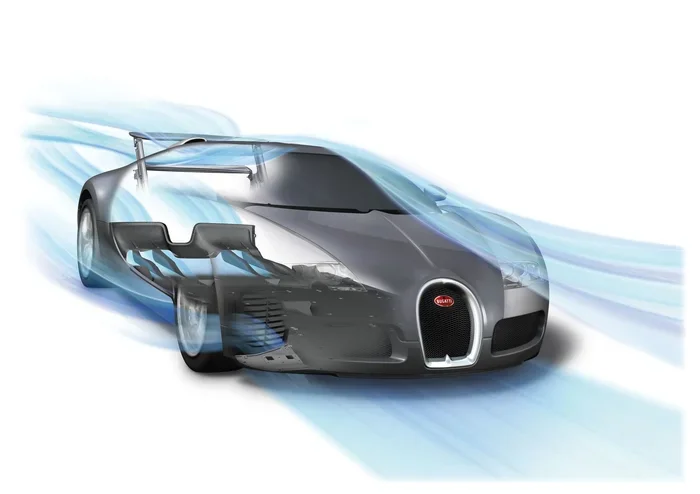
Underneath the Veyron, the airflow is managed just as carefully as it is on top. The underbody features a diffuser, which is a shaped section that accelerates air as it flows beneath the car. This creates a low-pressure area underneath, which pulls the car down toward the road.
This effect is known as ground effect, and it is the same principle used in Formula 1 cars. The Veyron uses it to stay planted at extreme speeds. The diffuser works hand in hand with the flat underbody panels to create a smooth path for air to travel underneath the car.
Side Skirts and Wheel Arch Design
The side skirts on the Veyron help seal off the airflow along the sides of the car. They prevent air from spilling in under the vehicle, which would disrupt the underbody airflow and reduce the effectiveness of the diffuser.
The wheel arches are also shaped to allow air to flow smoothly around the wheels. Wheels are one of the biggest sources of drag on any car because they spin through the air. The Veyron’s wheel arch design minimizes the turbulence created by the rotating wheels.
How Aerodynamics Improve High-Speed Stability
Speed means nothing if a car cannot stay stable. At 200-plus miles per hour, even a small gust of wind or a slight change in road surface can cause a loss of control. Bugatti Veyron aerodynamics were designed to prevent this from happening.
The Veyron generates downforce at high speeds, which pushes the car down onto the road. This increases the grip of the tires and helps the driver maintain control. The balance between front and rear downforce was carefully tuned so that the car stays neutral, meaning it does not want to push forward (understeer) or swing out (oversteer).
The Balance Between Downforce and Drag
One of the biggest challenges in aerodynamic design is balancing downforce with drag. More downforce usually means more drag, and more drag means less top speed. The Veyron’s engineers had to find the sweet spot where the car generates enough downforce to stay stable without sacrificing too much speed.
The active aerodynamics system helps with this balance. By adjusting the rear wing and managing airflow through various channels, the Veyron can shift its aerodynamic profile depending on what the driver needs. At top speed, the system prioritizes low drag. In corners, it prioritizes downforce.
Cooling and Aerodynamics Working Together
Another clever aspect of Bugatti Veyron aerodynamics is how cooling is integrated into the aero design. The massive W16 engine generates an enormous amount of heat, and keeping it cool at top speed is critical. The air intakes and channels are designed to feed cool air to the engine while also managing the overall airflow around the car.
For comparison, maintaining airflow for cooling is similar to how important it is to know how many quarts of oil for a Ford F150 to keep its engine running properly. In both cases, proper fluid and airflow management keeps the engine healthy and performing at its best.
Wind Tunnel Testing and Real-World Performance
You cannot design a car like the Bugatti Veyron on a computer alone. The engineers relied heavily on wind tunnel testing to refine the aerodynamics. In a wind tunnel, a scale model or full-size car is placed in a stream of air, and sensors measure how the air flows around it.
Bugatti used some of the most advanced wind tunnel facilities available. Engineers could test different body shapes, wing angles, and underbody designs to see which configurations produced the best results. This iterative process of testing, tweaking, and retesting is what made the Veyron’s aerodynamics so effective.
From Wind Tunnel to Road
Wind tunnel data was combined with real-world testing on the track and on public roads. This dual approach ensured that the aerodynamics worked not just in controlled conditions but also in unpredictable real-world situations like crosswinds, rain, and changing road surfaces.
The Veyron was tested at its top speed on the Ehra-Lessien test track in Germany, which features a long straightaway perfect for high-speed runs. The data collected during these tests confirmed that the aerodynamic design delivered on its promises. The car was stable, predictable, and incredibly fast.
Interestingly, even the way you drive a car if the key fob battery dies involves understanding how the vehicle interacts with its environment, and the Veyron’s aerodynamic systems are no different. Every detail matters when you are pushing a car to its absolute limits.
Continuous Refinement Over the Years
Bugatti did not stop improving the Veyron after its initial release. Over the years, they introduced updated versions like the Super Sport and Grand Sport, each with refined aerodynamics. The Super Sport, for example, had an even lower drag coefficient and a more aggressive rear wing, pushing the top speed even higher.
This commitment to continuous improvement shows how important aerodynamics were to the Veyron’s identity. Bugatti understood that speed was not just about raw power. It was about using the air to your advantage in every possible way.
Maintaining Aerodynamic Performance Over Time
Even the most advanced aerodynamic design can lose its effectiveness if the car is not properly maintained. The Veyron’s aerodynamic features rely on smooth surfaces, precise alignments, and intact components to work correctly.
Here are some tips for keeping the Bugatti Veyron aerodynamics in top shape:
- Keep the body clean and smooth. Dirt, bugs, and debris on the body can disrupt airflow and increase drag. Regular washing and waxing help maintain the sleek surface that the aerodynamics depend on.
- Inspect the active wing mechanism. The rear wing moves based on driving conditions. Make sure the mechanism is functioning properly during routine service checks.
- Check for damage to the underbody. The diffuser and underbody panels need to be intact and undamaged. Even a small dent can disrupt airflow and reduce downforce.
- Replace worn seals and gaskets. Air leaks around doors, windows, and the engine compartment can upset the carefully designed airflow paths.
- Follow the maintenance schedule. Just like knowing how much car you can afford based on your salary helps you make smart ownership decisions, following the recommended maintenance schedule ensures your Veyron performs as it was designed to.
Proper maintenance also includes checking the alignment of the wheels and suspension. Misaligned wheels can change the way air flows around the car, reducing the effectiveness of the aerodynamic features. Regular alignment checks are a simple but important part of keeping the Veyron performing at its best.
How Bugatti Veyron Aerodynamics Influenced Modern Hypercar Design
The aerodynamic innovations introduced by the Bugatti Veyron have had a lasting impact on the automotive industry. Nearly every modern hypercar and supercar now uses some form of active aerodynamics, underbody diffusers, and carefully engineered airflow channels that the Veyron helped popularize.
Before the Veyron, most road cars treated aerodynamics as an afterthought. The Veyron proved that airflow management could be a central part of the design process. Today, cars from brands like Lamborghini, Ferrari, and McLaren all owe a debt to the aerodynamic principles that Bugatti refined with the Veyron.
The lessons learned from Bugatti Veyron aerodynamics continue to shape how engineers approach hypercar design. Active aerodynamics, ground effect underbody design, and real-time aero adjustment are now standard features in the fastest cars on the planet. The Veyron was truly ahead of its time.
Conclusion
Bugatti Veyron aerodynamics represent one of the greatest achievements in automotive engineering. From the active rear wing to the underbody diffuser, every feature was designed with one purpose in mind: making the car faster, more stable, and more efficient at extreme speeds.
The Veyron proved that aerodynamics are just as important as horsepower when it comes to top speed. By carefully managing the air around the car, Bugatti created a vehicle that could push past 250 miles per hour while remaining safe and controllable. The engineering behind Bugatti Veyron aerodynamics continues to inspire and influence car designers around the world today.
If you ever get the chance to see a Veyron up close, take a moment to look at the shape of the car. Every line, every curve, and every vent tells a story of obsessive engineering and a relentless pursuit of speed. The Veyron is not just a fast car. It is a rolling lesson in how air can be tamed to push the boundaries of what is possible on four wheels.
Frequently Asked Questions
What are Bugatti Veyron aerodynamics?
Bugatti Veyron aerodynamics refers to the design features and engineering systems that manage airflow around the car to reduce drag and increase downforce. These include the active rear wing, front splitter, underbody diffuser, and carefully shaped body panels that work together to help the car reach and maintain extreme speeds.
How do aerodynamics affect a car’s top speed?
Aerodynamics affect top speed by reducing the drag that air creates against a moving vehicle. The less drag a car faces, the less power it needs to overcome air resistance. The Veyron’s aerodynamic design minimizes drag, allowing its massive engine to translate more power into forward speed rather than fighting the air.
What is the drag coefficient of the Bugatti Veyron?
The Bugatti Veyron has a drag coefficient of approximately 0.41. This is remarkably low for a car of its size and weight, reflecting the extensive effort engineers put into shaping the body to cut through the air efficiently.
Why is the rear wing on the Veyron active?
The active rear wing adjusts its angle based on driving conditions. At low speeds, it stays flat to reduce drag. At high speeds, it tilts to create downforce, which presses the car down onto the road and improves stability and grip.
How does the underbody diffuser work on the Veyron?
The underbody diffuser accelerates airflow beneath the car, creating a low-pressure area that pulls the car down toward the road. This ground effect increases downforce without adding drag, helping the Veyron stay stable at extreme speeds.
Can aerodynamic features degrade over time?
Yes, aerodynamic features can degrade over time if not properly maintained. Dirt, damage, misalignment, and worn seals can all disrupt the carefully designed airflow paths. Regular maintenance and inspections help ensure the aerodynamics continue to perform as intended.