How Many Ferrari Enzo Supercars Were Actually Made
The Ferrari Enzo is one of the most iconic and rare supercars ever built, with only 399 units produced between 2002 and 2004. This limited production run made the Enzo a dream car for collectors and gearheads alike. Let us dive into the fascinating story behind the numbers, the specs, and why the Enzo still commands massive prices today.
Key Takeaways
- Only 399 Ferrari Enzos were ever made: This number makes it one of the rarest Ferrari models in history.
- The Enzo was built from 2002 to 2004: Production ran for just over two years, making it a true limited edition.
- It featured Formula 1 technology: The Enzo borrowed directly from Ferrari’s racing program, including an F1-style gearbox.
- Today, Enzos sell for well over $1 million: Some auction examples have fetched $3 million or more.
- One prototype was also built: The 400th car was a pre-production prototype, bringing total builds to 400.
- The Enzo was named after Ferrari’s founder: Enzo Ferrari, a tribute to the man behind the brand.
- It succeeded the Ferrari F50 and was later replaced by the LaFerrari: The Enzo sits in a legendary lineage of Ferrari flagship supercars.
📑 Table of Contents
- How Many Ferrari Enzo Supercars Were Actually Made
- The History Behind the Ferrari Enzo Production Numbers
- Ferrari Enzo Specifications and Technical Details
- The Market Value and Collectibility of the Ferrari Enzo
- The Legacy of the Ferrari Enzo
- How to Spot a Real Ferrari Enzo and What to Look For
- Quick Tips for Ferrari Enzo Enthusiasts
- Common Mistakes People Make About the Ferrari Enzo
- Expert Insights on the Ferrari Enzo’s Production and Legacy
- Key Takeaways
- Frequently Asked Questions
- Final Thoughts on the Ferrari Enzo
How Many Ferrari Enzo Supercars Were Actually Made
The Ferrari Enzo is a name that sends shivers down the spine of every car enthusiast. It represents the absolute peak of Ferrari engineering in the early 2000s. But here is a question that comes up constantly: how many Ferrari Enzos were actually made? The answer is simpler than you might think. Ferrari built exactly 399 production units of the Enzo between 2002 and 2004. One additional pre-production prototype brought the total to 400.
That number might sound small, but it was completely intentional. Ferrari designed the Enzo as a limited production supercar from the very start. The goal was not mass sales. The goal was to create something extraordinary that honored the brand’s racing heritage and celebrated the company’s Formula 1 dominance. Every single Enzo was hand-built at the Maranello factory in Italy. Each one carried a serial number, and each one is now a highly collectible piece of automotive history.
In this article, we will explore the full story of the Ferrari Enzo production run. We will look at why Ferrari chose to limit the numbers, what made this car so special, and how the Enzo fits into the broader world of rare Ferrari supercars. Whether you are a die-hard Ferrari fan or just curious about one of the most legendary cars ever built, this guide covers everything you need to know.
The History Behind the Ferrari Enzo Production Numbers
Why Ferrari Limited Production to Just 399 Units
Ferrari has always had a special relationship with limited production numbers. The company does not build cars for everyone. Ferrari builds cars for a very select group of people who appreciate the brand’s racing DNA. The decision to cap Enzo production at 399 units was not arbitrary. It was a deliberate strategy rooted in Ferrari’s philosophy.
First, limiting production creates exclusivity. When only 399 cars exist in the world, every single one becomes instantly desirable. Second, Ferrari wanted to reward its most loyal and dedicated customers. The Enzo was not available to just anyone. Buyers had to be invited or had to have a strong purchasing history with the brand. Third, the limited number helped preserve the car’s long-term value. Ferrari understood that rarity drives demand, and demand drives price.
The Enzo also replaced the Ferrari F50, which was another limited-production flagship model. The F50 had 349 units produced, and Ferrari wanted to continue that tradition of exclusivity with its successor. The number 399 was chosen because it felt right for the brand. It was high enough to generate revenue and low enough to maintain mystique.
The Role of Formula 1 Success in the Enzo’s Creation
Ferrari’s dominance in Formula 1 during the early 2000s played a huge role in the Enzo’s development. The car was named after Enzo Ferrari, the company’s legendary founder who passed away in 1988. Naming the car after him was a fitting tribute to a man who lived and breathed racing.
When Ferrari won the Formula 1 Constructors’ Championship in 2000, 2001, and 2002, the company was at the height of its powers. The Enzo was designed to showcase the technology that Ferrari had developed on the race track. Every system in the car, from the engine to the gearbox, was inspired by Formula 1 engineering. This connection to racing made the Enzo more than just a fast car. It was a rolling monument to Ferrari’s racing legacy.
Ferrari Enzo Specifications and Technical Details
The V12 Engine That Defined a Generation
Under the hood of the Ferrari Enzo sits a 6.0-liter V12 engine that produces an astonishing 660 horsepower. This naturally aspirated powerplant was derived directly from Ferrari’s Formula 1 engine program. It revved to over 8,000 RPM and delivered power in a linear, brutal fashion that few cars could match.
The engine was paired with a F1-style automated manual gearbox with six gears. This gearbox, known as the F1 gearbox, used paddle shifters mounted behind the steering wheel. It could shift gears in just 150 milliseconds, which was faster than any human could operate a traditional manual transmission. This technology was borrowed straight from Ferrari’s Formula 1 cars, and it made the Enzo feel like a race car for the road.
The Enzo could accelerate from 0 to 60 mph in about 3.1 seconds. The top speed was electronically limited to 217 mph. But the real magic of the Enzo was not just its raw numbers. It was the way the car communicated with the driver. Every gear change, every throttle response felt immediate and connected. That is what separates the Enzo from ordinary supercars.
Carbon Fiber Body and Advanced Aerodynamics
The Ferrari Enzo was one of the first road cars to use a full carbon fiber monocoque chassis. This construction method was standard in Formula 1 but was still relatively new for road cars at the time. The carbon fiber body made the Enzo incredibly light for its power output, which contributed to its blistering performance.
Ferrari also paid enormous attention to aerodynamics. The Enzo’s shape was designed in a wind tunnel to maximize downforce and minimize drag. The car featured active aerodynamics that adjusted based on driving conditions. At high speeds, the rear wing and underbody channels generated massive downforce, keeping the car planted and stable. This focus on aerodynamics was another direct influence from Ferrari’s Formula 1 technology.
Interior and Technology Features
Inside the Enzo, you will find a driver-focused cockpit that prioritizes function over comfort. The seats are lightweight and designed to hold the driver firmly in place during aggressive driving. The dashboard is simple and digital, with a display that shows vital performance data. Ferrari did not load the Enzo with luxury features. The car was built to be a pure driving machine.
The Enzo also featured F1 traction control and F1 ABS braking systems. These electronic aids helped the driver manage the enormous power output without losing control. They were derived from the same systems used in Ferrari’s Formula 1 cars, adapted for road use. For many enthusiasts, this blend of cutting-edge technology and raw performance is what makes the Enzo so special.
The Market Value and Collectibility of the Ferrari Enzo
Why Enzos Command Premium Prices Today
Today, the Ferrari Enzo price on the secondary market is staggering. Depending on condition, mileage, and provenance, a Ferrari Enzo can sell for anywhere from $1.5 million to over $3 million at auction. Some particularly rare examples have fetched even higher prices. The reason for these prices is simple: supply and demand.
With only 399 production cars ever made, the supply side of the equation is fixed. There is no way to build more Enzos. Meanwhile, demand continues to grow. Each year, more collectors and enthusiasts discover the Enzo and want one for their garage. The car’s collectible value has only appreciated over time, making it one of the best investments in the automotive world.
Several factors influence the price of a specific Enzo. Cars with low mileage and original documentation command the highest prices. Enzos that were owned by celebrities or famous collectors also carry a premium. And cars with unique histories, such as those sold at charity auctions, can fetch extraordinary sums. For example, one Enzo was sold at auction for charity and brought in over $1 million for the cause.
Enzo vs. Other Rare Ferrari Supercars
To put the Enzo’s rarity into perspective, let us compare it to other rare Ferrari models from the same era:
- Ferrari Enzo: 399 units produced (2002-2004)
- Ferrari F50: 349 units produced (1995-1997)
- Ferrari LaFerrari: 499 units produced (2013-2016)
- Ferrari F40: 1,311 units produced (1987-1992)
- Ferrari 250 GTO: 36 units produced (1962-1964)
As you can see, the Enzo sits in a very exclusive club. The 250 GTO is rarer, but it is also decades older. The LaFerrari is technically rarer in terms of total numbers, but it is newer and more widely known. The Enzo occupies a unique sweet spot in Ferrari history. It is rare enough to be exclusive, but not so rare that it is impossible to find one. This balance has helped the Enzo maintain strong demand and value over the years.
| Model | Production Years | Units Built | Engine | Top Speed (mph) |
|---|---|---|---|---|
| Ferrari Enzo | 2002-2004 | 399 | 6.0L V12 (660 hp) | 217 |
| Ferrari F50 | 1995-1997 | 349 | 4.7L V10 (520 hp) | 202 |
| Ferrari LaFerrari | 2013-2016 | 499 | 6.3L V12 + Hybrid (950 hp) | 217 |
| Ferrari F40 | 1987-1992 | 1,311 | 2.9L Twin-Turbo V8 (471 hp) | 201 |
| Ferrari 250 GTO | 1962-1964 | 36 | 3.0L V12 (300 hp) | 174 |
The Legacy of the Ferrari Enzo
How the Enzo Influenced Future Ferrari Models
The Ferrari Enzo set the template for all subsequent Ferrari flagship supercars. Its combination of Formula 1 technology, limited production, and road-going usability became the blueprint for future models. When Ferrari introduced the LaFerrari in 2013, it followed the same formula. A hybrid powertrain, F1-derived technology, and a limited run of just 499 units. The Enzo proved that this approach worked, and Ferrari has stuck with it ever since.
The Enzo also helped establish Ferrari’s reputation as the premier builder of mid-engine supercars. The mid-engine layout, where the engine sits behind the driver but ahead of the rear axle, provides optimal weight distribution and handling. Ferrari has used this layout in nearly every flagship model since the Enzo, including the LaFerrari, the Ferrari SF90 Stradale, and the upcoming Ferrari Purosangue alternatives.
The Enzo’s Place in Automotive History
Looking back, the Ferrari Enzo represents a turning point in automotive history. It was one of the first supercars to fully embrace Formula 1 technology for road use. Before the Enzo, cars like the McLaren F1 and the Bugatti EB110 were impressive, but they did not have the direct racing connection that the Enzo offered. Ferrari proved that road cars could be infused with the same technology that won Formula 1 championships, and the results were extraordinary.
The Enzo also marked the end of an era for naturally aspirated Ferrari engines. Every Enzo was built with a pure, naturally aspirated V12 that could rev to 8,000 RPM and beyond. Today, most Ferrari models use turbochargers or hybrid systems to meet emissions regulations. The naturally aspirated V12 is becoming a thing of the past, which makes the Enzo even more special to enthusiasts who value that raw, unfiltered engine sound.
Stories and Anecdotes from Enzo Owners
Many Ferrari Enzo owners have fascinating stories about how they acquired their cars. Some were longtime Ferrari customers who were invited to purchase an Enzo directly from the factory. Others won their Enzos at charity auctions or purchased them from fellow collectors. A few lucky buyers even found Enzos at small dealerships, though this is extremely rare.
One notable story involves a Ferrari Enzo that was involved in a high-profile accident early in its life. The car was subsequently repaired and returned to service, but the story added to its legend. Another famous Enzo was owned by a celebrity who used it as a daily driver, which is almost unheard of for a car worth over $1 million. These stories add personality and character to each individual Enzo, making them more than just machines. They become part of automotive folklore.
How to Spot a Real Ferrari Enzo and What to Look For
Key Identification Features
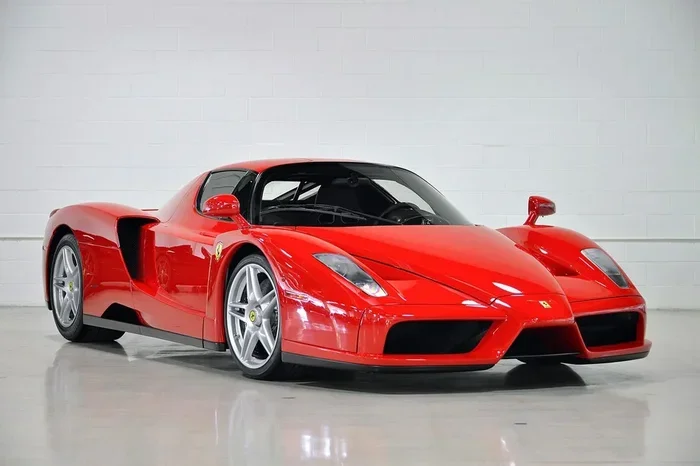
If you ever have the chance to see a Ferrari Enzo in person, there are several features that distinguish it from other Ferrari models. The Enzo has a very distinctive body shape with sharp lines and aggressive curves. The front end features a wide, low stance with large air intakes. The rear has a massive wing and wide exhaust pipes that are unmistakable.
Inside, look for the Enzo-specific seats, dashboard, and steering wheel. The car does not share interior components with other Ferrari models. The serial number plate is located on the dashboard and should match the documentation. Every Enzo also comes with a certificate of authenticity from Ferrari, which is essential for verifying the car’s legitimacy.
Common Mistakes to Avoid When Buying an Enzo
If you are in the market for a Ferrari Enzo, there are several pitfalls to watch out for. First, always verify the car’s provenance and service history. A well-documented Enzo with full Ferrari service records is worth significantly more than one without. Second, be wary of modified Enzos. While some modifications are tasteful, others can detract from the car’s value and originality.
Third, have the car inspected by a Ferrari specialist before purchasing. The Enzo is a complex machine with advanced technology, and not all mechanics are qualified to work on it. Fourth, check for accident history. Even minor accidents can affect the car’s structural integrity and value. Finally, make sure all documentation, including the original purchase invoice and ownership history, is in order.
Quick Tips for Ferrari Enzo Enthusiasts
- Join a Ferrari enthusiast club: Connecting with other Enzo owners gives you access to events, meetups, and valuable information about maintaining and caring for your car.
- Store the car properly: A climate-controlled garage is ideal for preserving the Enzo’s interior, paint, and mechanical components.
- Keep all documentation: Original purchase papers, service records, and the certificate of authenticity should be stored safely and permanently.
- Drive the car regularly: Unlike some collectibles that sit untouched, the Enzo was built to be driven. Regular use keeps the mechanical components in good working order.
- Insure the car with a specialist: Standard car insurance will not cover the full value of a Ferrari Enzo. You need a policy from a specialist in high-value and collector vehicles.
- Stay informed about market trends: The value of rare Ferraris can fluctuate. Keep an eye at auction results and private sales to understand where the market is heading.
Common Mistakes People Make About the Ferrari Enzo
One of the biggest misconceptions about the Ferrari Enzo is that it was a mass-produced supercar. Some people assume that thousands of Enzos were built because they see them at car shows and in magazines. In reality, only 399 were produced for customers, making it one of the rarest Ferrari models ever made.
Another common mistake is confusing the Enzo with the Ferrari Enzo Ferrari, which is a different model entirely. The full name of the car is simply “Ferrari Enzo,” and it is sometimes informally referred to as the “Ferrari Enzo Ferrari” because of the founder’s name. Both names refer to the same car.
People also underestimate the importance of the Enzo’s maintenance history. Because these cars are over 20 years old now, regular maintenance is critical. Skipping services or using inexperienced mechanics can lead to costly repairs and diminished value. Always work with a qualified Ferrari technician or authorized Ferrari service center.
Finally, some buyers focus too much on the car’s investment potential and forget to enjoy it. The Ferrari Enzo is not just a financial asset. It is a machine built to deliver an unforgettable driving experience. The sound of that V12 engine, the feel of the F1 gearbox, and the sight of that carbon fiber body in person are experiences that no amount of money can replicate.
Expert Insights on the Ferrari Enzo’s Production and Legacy
According to automotive historians and Ferrari experts, the Enzo represents a turning point in the company’s approach to limited-production supercars. Before the Enzo, Ferrari’s flagship models like the F40 and F50 were already rare, but the Enzo took exclusivity to a new level. The direct Formula 1 technology transfer was unprecedented for a road car, and it set a new standard that competitors like McLaren, Pagani, and Lamborghini would later try to match.
Ferrari’s decision to name the car after its founder was also significant. It was a deliberate move to connect the Enzo to the company’s heritage and legacy. Enzo Ferrari built the company on a foundation of racing passion and engineering excellence, and the Enzo embodies those principles more than any other road car.
Today, the Enzo is widely regarded as one of the greatest Ferrari supercars ever built. It consistently ranks at the top of “best Ferrari” lists alongside the 250 GTO, the Testarossa, and the LaFerrari. Its combination of rarity, performance, technology, and historical significance makes it a true icon of the automotive world.
Key Takeaways
- Only 399 Ferrari Enzos were ever made: This production number makes it one of the rarest Ferrari models in history.
- The Enzo was built from 2002 to 2004: A two-year production run that cemented its status as a limited edition.
- Formula 1 technology was central to the Enzo: From the V12 engine to the F1 gearbox, the car was a road-legal race car.
- The Enzo now sells for $1.5 million to $3 million or more: Its collectible value has only grown since production ended.
- One prototype brought total production to 400: The 400th car was a pre-production unit, not sold to a customer.
- The Enzo sits in a legendary lineage of Ferrari flagship supercars: It succeeded the F50 and was later replaced by the LaFerrari.
- Proper maintenance and documentation are critical: These factors significantly affect the Enzo’s value and long-term preservation.
Frequently Asked Questions
How many Ferrari Enzos were produced in total?
Ferrari produced exactly 399 Ferrari Enzo units for customers between 2002 and 2004. One additional pre-production prototype was also built, bringing the total number to 400. Every Enzo was hand-built at the Ferrari factory in Maranello, Italy, and each came with its own serial number and certificate of authenticity.
Why was the Ferrari Enzo production limited to just 399 units?
Ferrari limited Enzo production to maintain exclusivity and preserve the car’s long-term value. The company wanted to reward its most loyal customers and create a car that would become a highly sought-after collector’s item. The limited numbers also reflected Ferrari’s philosophy of building cars for passionate enthusiasts rather than mass-market buyers.
What is the current market value of a Ferrari Enzo?
The Ferrari Enzo price varies depending on condition, mileage, and provenance, but most examples sell for between $1.5 million and $3 million at auction. Some exceptionally rare or well-documented Enzos have fetched prices above $3 million. The car’s value has generally appreciated over time, making it one of the best-performing collector car investments in recent history.
What makes the Ferrari Enzo different from other Ferrari supercars?
The Enzo stands out because of its direct connection to Ferrari’s Formula 1 program. It featured technology borrowed from the company’s racing cars, including an F1-style automated gearbox, a carbon fiber monocoque chassis, and active aerodynamics. The naturally aspirated 660-horsepower V12 engine was also derived from Ferrari’s racing program, making the Enzo one of the most technologically advanced road cars of its era.
Can I still buy a Ferrari Enzo today?
Yes, but you will need to look on the secondary market. No new Ferrari Enzos are available from dealers since production ended in 2004. You can find Enzos at auction houses, specialty car dealers, and private sales. Be prepared for a significant financial commitment, as prices continue to rise due to the car’s rarity and desirability.
What was the Ferrari Enzo’s top speed and acceleration?
The Ferrari Enzo had a top speed of 217 mph and could accelerate from 0 to 60 mph in approximately 3.1 seconds. These figures were impressive for the early 2000s and remain competitive today. The car’s performance was made possible by its lightweight carbon fiber construction, powerful V12 engine, and advanced aerodynamics derived from Formula 1 technology.
Final Thoughts on the Ferrari Enzo
The Ferrari Enzo is more than just a car. It is a symbol of Ferrari’s commitment to excellence, innovation, and racing heritage. With only 399 units produced, it is one of the most rare and valuable Ferrari models ever created. Every Enzo tells a story, not just of engineering brilliance, but of a company that refused to compromise on its vision.
Whether you are a collector, a gearhead, or simply someone who appreciates automotive history, the Ferrari Enzo deserves your attention. It represents a perfect moment in time when Ferrari’s Formula 1 success translated directly into a road-going masterpiece. The Ferrari Enzo production run may have been short, but its impact on the automotive world will last forever.
If you have ever dreamed of owning one of these incredible machines, now is the time to start researching. The world of rare Ferrari supercars is vast and rewarding, and the Enzo sits right at the heart of it. Learn as much as you can, connect with fellow enthusiasts, and who knows, one day you might find yourself behind the wheel of one of the most iconic cars ever built.