How Do You Know Which Tire Is Low on Your Toyota Car
Knowing which tire is low on your Toyota is essential for safety, fuel efficiency, and tire longevity. Your Toyota comes equipped with a Tire Pressure Monitoring System (TPMS) that alerts you when pressure drops below safe levels. You can also check tire pressure manually using a gauge or by checking your tire pressure on the Toyota app for real-time readings. This guide covers every method, warning sign, and fix so you can stay safe on the road.
Key Takeaways
- TPMS Warning Light: The dashboard tire pressure light is your first indicator that a tire is low.
- Manual Checks Matter: A tire pressure gauge gives you exact readings and helps you identify which specific tire needs air.
- Toyota App Integration: You can check tire pressure on the Toyota app for convenient, real-time monitoring.
- Physical Signs Are Clues: Uneven wear, pulling to one side, and a rough ride can all point to low tire pressure.
- Temperature Changes Affect Pressure: Cold weather can cause temporary pressure drops, so check your tires seasonally.
- Regular Maintenance Prevents Problems: Routine tire checks save money on fuel and extend tire life.
📑 Table of Contents
- Why Knowing Which Tire Is Low on Your Toyota Matters
- Understanding the Toyota Tire Pressure Monitoring System (TPMS)
- Warning Signs That a Tire Is Low on Your Toyota
- How to Check Tire Pressure Manually on Your Toyota
- Common Causes of Low Tire Pressure on Toyota Vehicles
- The Risks of Driving on Low Tires
- How to Fix and Prevent Low Tire Pressure
- Quick Tips for Toyota Tire Pressure Management
- Conclusion
Why Knowing Which Tire Is Low on Your Toyota Matters
Driving with a low tire is more dangerous than most people think. It affects your handling, reduces fuel efficiency, and can cause a blowout if left unchecked. If you own a Toyota, you have access to some great tools that help you monitor tire pressure. But not everyone knows how to use them properly.
This guide walks you through every way to tell if a tire is low on your Toyota. Whether you rely on your dashboard lights or prefer a hands-on approach, you will find clear, practical steps here. We also cover what causes low pressure and how to fix it before it becomes a bigger problem.
Let us start with the most common warning sign. Your Toyota has a built-in system designed to alert you the moment tire pressure drops. Understanding how it works is the first step to staying safe.
Understanding the Toyota Tire Pressure Monitoring System (TPMS)
What Is TPMS and How Does It Work?
Every modern Toyota comes with a Tire Pressure Monitoring System, commonly known as TPMS. This system uses sensors inside each wheel to measure air pressure in real time. When pressure falls below the recommended level, a warning light appears on your dashboard.
The TPMS light looks like a horseshoe shape with an exclamation point in the center. When you see this light, do not ignore it. It means at least one of your tires has lost significant air.
There are two types of TPMS systems. Direct TPMS uses sensors mounted inside each tire valve. These sensors send actual pressure readings to your car’s computer. Indirect TPMS uses the wheel speed sensors already in your anti-lock braking system. It detects a low tire by comparing how fast each wheel spins. A tire with low pressure has a smaller rolling radius, so it spins faster than the others.
What the TPMS Light Tells You
The TPMS light can behave differently depending on the situation. Here is what each behavior means:
- Light stays on steadily: One or more tires have pressure below the safe threshold. Check all tires right away.
- Light flashes then stays on: There may be a malfunction with the TPMS system itself. Visit a service center.
- Light comes on briefly when starting the car: This is normal. It means the system is performing a self-check.
If your Toyota TPMS light comes on while driving, pull over safely and inspect your tires. Sometimes the issue is as simple as a slow leak from a nail or a loose valve stem.
Warning Signs That a Tire Is Low on Your Toyota
Dashboard Warning Lights
The most obvious sign is the TPMS warning light. But some Toyotas also display individual tire pressure readings on the instrument cluster or infotainment screen. If your model does this, you can see exactly which tire is low without even leaving the driver’s seat.
Newer Toyota models allow you to view tire pressure data through the multi-information display. You can check each tire individually and see the exact PSI reading. This makes it very easy to tell which tire is low at a glance.
Physical Signs You Can Notice While Driving
Your car often tells you when a tire is low before the dashboard light even comes on. Watch for these signs:
- Pulling to one side: A low tire causes the car to drift toward that side.
- Vibration or wobbling: Underinflated tires create an uneven ride, especially at higher speeds.
- Increased road noise: A soft tire makes more contact with the road, producing more hum.
- Longer braking distances: Low pressure reduces grip, which increases stopping time.
- Visible tire deformation: In severe cases, the tire sidewall may appear visibly flattened.
If you notice any of these signs, stop and check your tires as soon as it is safe to do so.
Using the Toyota App to Monitor Tire Pressure
Many Toyota owners do not realize they can check tire pressure on the Toyota app using their smartphone. The Toyota app connects to your vehicle through the connected services platform. It provides real-time data including tire pressure readings for each individual tire.
This is especially helpful if you want to check your tires before getting in the car. You can also set up notifications so the app alerts you when pressure drops. It is one of the most convenient ways to stay on top of your tire health without ever popping the hood.
How to Check Tire Pressure Manually on Your Toyota
Using a Tire Pressure Gauge
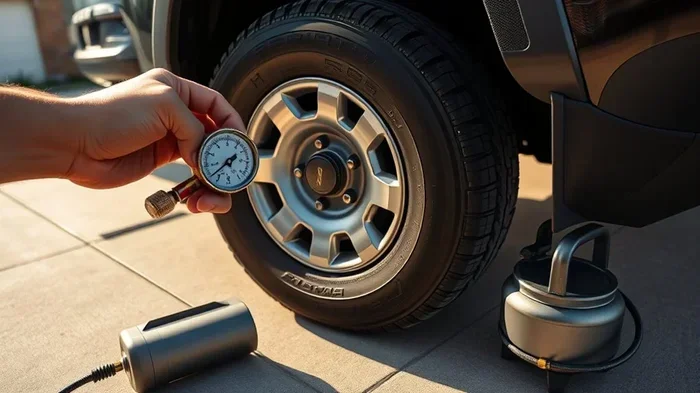
A manual tire pressure gauge is the most reliable way to check your tires. You can pick one up at any auto parts store for just a few dollars. Here is how to use one:
- Remove the valve cap from the tire.
- Press the gauge firmly onto the valve stem.
- Read the PSI number on the gauge display.
- Compare the reading to your Toyota’s recommended pressure.
- Repeat for all four tires, plus the spare if applicable.
Make sure you check your tires when they are cold. Driving heats up the air inside the tire, which raises the pressure reading and gives you a false sense of safety.
Finding the Correct Tire Pressure for Your Toyota
Every Toyota model has a recommended tire pressure listed in the owner’s manual. You can also find this information on a sticker located on the driver’s side door jamb. The sticker shows the recommended PSI for both front and rear tires.
Do not use the maximum pressure listed on the tire sidewall. That number is the tire’s maximum capacity, not the recommended pressure for your specific vehicle. Always follow the Toyota-recommended PSI for the best performance and safety.
How to Tell Which Tire Is Low Without a Gauge
Sometimes you do not have a gauge handy, and you need to know how to tell which tire is low without a gauge. There are a few visual and physical methods you can use:
- Visual inspection: Look at each tire from the front. A low tire will appear noticeably flatter on one side compared to the others.
- Thumb test: Press your thumb into the tire sidewall. A properly inflated tire will feel firm. A low tire will feel soft and give way easily.
- Weight shift test: Push down on each corner of the car. If one corner sinks lower than the others, that tire may be low.
These methods are not as precise as a gauge, but they can help you identify a seriously low tire quickly. For regular maintenance, always use a proper gauge.
Common Causes of Low Tire Pressure on Toyota Vehicles
Slow Leaks and Punctures
The most common cause of low tire pressure is a slow leak. This can happen from a nail, a screw, a sharp rock, or even a worn valve stem. Slow leaks are tricky because the tire loses air gradually over days or weeks. You might not notice until the TPMS light comes on.
If you frequently need to add air to the same tire, there is likely a puncture or a damaged valve stem. Have a mechanic inspect the tire to find and fix the leak before it becomes a safety hazard.
Temperature Changes
Cold weather causes air inside tires to contract, which lowers the pressure. In winter, you might notice the TPMS light coming on even though your tires are fine. A drop of 10 degrees Fahrenheit can reduce tire pressure by about 1 PSI.
This is normal and usually not a cause for alarm. Simply add air to bring the tires back to the recommended PSI. Checking your tire pressure seasonally helps you stay ahead of temperature-related drops.
Normal Air Loss Over Time
Even without a puncture, tires naturally lose a small amount of air over time. On average, a tire loses about 1 PSI per month. This is why regular checks are important. A tire that was perfectly fine last month could be slightly low today.
Making tire pressure checks part of your monthly routine goes a long way in maintaining your Toyota’s performance and safety.
The Risks of Driving on Low Tires
Safety Hazards
Driving on an underinflated tire is a serious safety risk. A low tire has a larger contact area with the road, which leads to overheating. Overheated tires are more prone to blowouts, especially at highway speeds. A blowout at high speed can cause you to lose control of the vehicle entirely.
Low tires also affect your handling and steering. Your Toyota may pull to one side, making it harder to steer in a straight line. In emergency situations, this reduced control can be the difference between a safe stop and a collision.
Impact on Fuel Economy and Tire Life
Underinflated tires create more rolling resistance, which means your engine has to work harder. This directly reduces your fuel economy. Studies show that tires underinflated by just 10 PSI can reduce fuel efficiency by up to 10 percent. Over time, that adds up at the gas pump.
Low tires also wear out faster on the outer edges of the tread. This means you will need to replace them sooner, which costs more money. Properly inflated tires wear evenly and last significantly longer.
On a related note, keeping your Toyota well-maintained extends beyond just the tires. For example, knowing how to know if you need power steering fluid is another simple check that keeps your car running smoothly and safely.
How to Fix and Prevent Low Tire Pressure
Inflating Your Tires Properly
Once you have identified a low tire, the fix is straightforward. Here is what to do:
- Find an air pump at a gas station, tire shop, or use a portable compressor at home.
- Remove the valve cap and attach the air hose to the valve stem.
- Add air in short bursts, checking the pressure with your gauge after each burst.
- Stop when the PSI matches the recommended level for your Toyota.
- Replace the valve cap to keep dirt and moisture out.
If you overinflate, do not panic. You can release a small amount of air by pressing the small pin inside the valve stem with a pen cap or a key.
When to Replace Your Tires
Sometimes a tire cannot hold air no matter how much you add. This means the tire is damaged and needs replacement. Signs that it is time for a new tire include:
- Cracks or bulges in the sidewall.
- Tread depth below 2/32 of an inch (use the penny test).
- Frequent punctures in the same tire.
- Visible damage from a collision or impact.
Replacing a tire promptly ensures your safety and prevents further damage to your Toyota’s suspension and alignment.
Regular Maintenance Tips
Prevention is always better than cure. Here are some simple habits that keep your Toyota tires in great shape:
- Check tire pressure at least once a month.
- Check pressure before long road trips.
- Rotate your tires every 5,000 to 7,500 miles.
- Keep a tire pressure gauge in your glove box.
- Use the Toyota app to monitor pressure remotely.
- Inspect tires for visible damage during regular washes.
These small habits save you money, keep you safe, and help your Toyota run at its best for years to come.
Quick Tips for Toyota Tire Pressure Management
- Check pressure in the morning before you drive for the most accurate reading.
- Do not forget the spare tire. It can also lose air over time.
- Reset your TPMS after inflating tires to the correct pressure. The reset button is usually located near the steering column or in the infotainment menu.
- Keep a log of your tire pressure readings to track trends over time.
- Inspect valve stems regularly for cracks or leaks.
Conclusion
Knowing which tire is low on your Toyota is a simple but vital part of vehicle ownership. Whether you rely on the TPMS warning light, the Toyota app, or a manual pressure gauge, staying on top of your tire pressure keeps you safe and saves money. A few minutes of regular maintenance goes a long way toward preventing costly repairs and dangerous situations on the road.
Make tire checks a habit. Check pressure monthly, inspect for visible damage, and address low tires immediately. Your Toyota will reward you with better fuel economy, smoother handling, and longer-lasting tires. Stay proactive, stay safe, and enjoy every mile in your Toyota.
Frequently Asked Questions
How do I know which tire is low without a gauge?
You can visually inspect each tire and look for one that appears flatter than the others. The thumb test also works, where you press down on the tire sidewall to feel for softness. However, using a gauge is the most accurate method to confirm low pressure.
Why does my Toyota TPMS light come on even when tires look fine?
Temperature changes are the most common reason. Cold weather causes air to contract and temporarily lowers pressure. If the light stays on, add air to the recommended PSI and the light should turn off after a few miles of driving.
Can I check my Toyota tire pressure using the Toyota app?
Yes, many Toyota models support tire pressure monitoring through the Toyota app. You can view real-time pressure readings for each tire right from your smartphone. This is a convenient way to check your tires before getting behind the wheel.
How often should I check my Toyota tire pressure?
You should check your tire pressure at least once a month and before any long road trips. Tires naturally lose about 1 PSI per month, so regular checks help you catch low pressure early.
What happens if I keep driving on a low tire?
Driving on a low tire increases the risk of a blowout, reduces fuel efficiency, and causes uneven tire wear. It also affects your steering and braking performance. If you notice a low tire, inflate it to the proper pressure as soon as possible.
How do I reset the TPMS light on my Toyota?
Most Toyota models have a TPMS reset button located beneath the steering column or in the infotainment settings menu. After inflating your tires to the correct pressure, press and hold the reset button until the light blinks and turns off. Consult your owner’s manual for model-specific instructions.