Can You Replace Just One Headlight And Pass Inspection
Yes, you can replace just one headlight and pass inspection in most states. Many drivers worry that swapping a single bulb will fail their safety check, but that is rarely the case. The key is matching color temperature, ensuring proper alignment, and using the right bulb type. Replacing a single headlight is often cheaper and faster than changing both at once. This guide walks you through everything you need to know to stay compliant and drive safely.
Have you ever been driving at night and noticed one of your headlights is dim or completely dead? It is a frustrating experience, and it makes you wonder whether you can just replace that one bulb. The good news is that you can replace just one headlight and pass inspection in most states. You do not need to change both sides at the same time. This article will walk you through everything you need to know about headlight replacement, inspection requirements, costs, and common mistakes to avoid.
Whether your headlight went out because of a burned-out filament, a cracked lens, or simple age, the fix is usually straightforward. Many car owners hesitate because they fear the mechanic will tell them both lights need replacing. That is not always true. Let us break down the facts so you can make the right decision for your wallet and your safety.
Key Takeaways
- Replace one headlight: Most states allow replacing a single headlight and still pass inspection.
- Match bulb type and color: Use the same bulb type and color temperature as the working headlight.
- Alignment matters: Proper headlight aiming is essential for passing inspection and safe driving.
- Cost varies: Replacing one headlight can cost between $20 and $150 depending on bulb type.
- Common mistakes: Mixing bulb types, ignoring alignment, and using wrong wattage cause inspection failures.
- DIY is easy: Most single headlight replacements take 15-30 minutes at home.
- Check local laws: Always verify your state’s specific vehicle inspection requirements before replacing.
📑 Table of Contents
- Why You Might Need to Replace Just One Headlight
- Can You Replace Just One Headlight And Pass Inspection?
- How to Replace a Single Headlight Step by Step
- Headlight Types and Cost Comparison
- Common Mistakes When Replacing One Headlight
- Expert Tips for Passing Inspection with a New Headlight
- How Long Does a Headlight Bulb Last?
- Safety Considerations: Why Both Headlights Matter
- Frequently Asked Questions About Replacing One Headlight
- Final Thoughts on Replacing Just One Headlight
Why You Might Need to Replace Just One Headlight
Headlights do not always fail at the same time. In fact, it is quite common for one headlight to burn out while the other keeps working fine. Here are some reasons why this happens:
- Normal wear and tear: Headlight bulbs have a limited lifespan. Halogen bulbs typically last between 450 and 1,000 hours.
- Vibration damage: Driving on rough roads can damage the filament inside the bulb over time.
- Moisture intrusion: A cracked headlight lens lets water in, which can short out the bulb.
- Electrical issues: A bad ground wire or corroded connector can cause one side to fail.
- Impact damage: Debris on the road can crack the lens or damage the bulb directly.
No matter the cause, replacing just the failed bulb makes sense in most cases. You save money, save time, and still keep your vehicle safe for nighttime driving.
When Both Headlights Are Not Equally Damaged
Sometimes one headlight fails and the other is still working but getting old. You might be tempted to replace both at once. That is a smart move if the second bulb is also nearing the end of its life. But if the working headlight is relatively new, there is no need to replace it just because the other one died. Replacing one headlight is perfectly acceptable and will not cause any electrical or safety issues.
Can You Replace Just One Headlight And Pass Inspection?
This is the question most drivers want answered. The short answer is yes, you can replace just one headlight and pass inspection. However, there are a few conditions you need to meet. Vehicle inspection stations check for safety, and a single working headlight is generally considered safe as long as it meets certain standards.
What Inspectors Look For
During a vehicle safety inspection, inspectors check several things related to your headlights. Understanding what they look for can help you prepare:
- Bulb functionality: Both headlights must turn on and produce light. One working headlight is usually enough to pass.
- Color temperature: The bulb color must match the factory specification. Blue or purple-tinted bulbs often fail inspection.
- Lens condition: Cracked or heavily fogged lenses can cause a failure, even if the bulb works fine.
- Alignment: Headlights must be properly aimed. Misaligned lights can blind oncoming drivers and fail the check.
- Brightness: The replacement bulb must meet the manufacturer’s recommended wattage and lumen output.
State-by-State Differences
Inspection rules vary from state to state. Some states are stricter than others when it comes to lighting requirements. Here is a quick look at how different regions handle single headlight replacements:
| State Region | Single Headlight Allowed? | Additional Requirements |
|---|---|---|
| Most U.S. States | Yes | Both lights must work; color and alignment must match |
| California | Yes | Bulb must match OEM spec; no aftermarket tinting |
| Texas | Yes | Both headlights must be functional; proper aim required |
| New York | Yes | Lenses must be clear; no discoloration allowed |
| Florida | Yes | Standard white or yellowish bulbs only |
As you can see, most states allow you to replace just one headlight. The key is making sure the replacement meets the same standards as the original equipment. Always check your local Department of Motor Vehicles website for the latest rules.
How to Replace a Single Headlight Step by Step
Replacing a headlight bulb is one of the easiest maintenance tasks you can do at home. You do not need to be a mechanic. Most replacements take between 15 and 30 minutes. Here is a simple guide to help you through the process.
Step 1: Gather Your Tools and Materials
Before you start, make sure you have everything you need:
- The correct replacement bulb (check your owner’s manual for the part number)
- Clean gloves (latex or nitrile)
- A clean cloth or paper towel
- A small screwdriver (if needed for housing clips)
- A flashlight for visibility
Pro tip: Always touch the bulb with gloves. The oils from your skin can create hot spots on the glass and shorten the bulb’s lifespan. This is one of the most common mistakes people make during headlight replacement.
Step 2: Access the Headlight Assembly
Open the hood and locate the back of the headlight assembly. You will see a plug connected to the bulb. Depending on your vehicle, you may need to remove a cover or unclip a housing to get access. Take your time and be gentle with the clips and connectors.
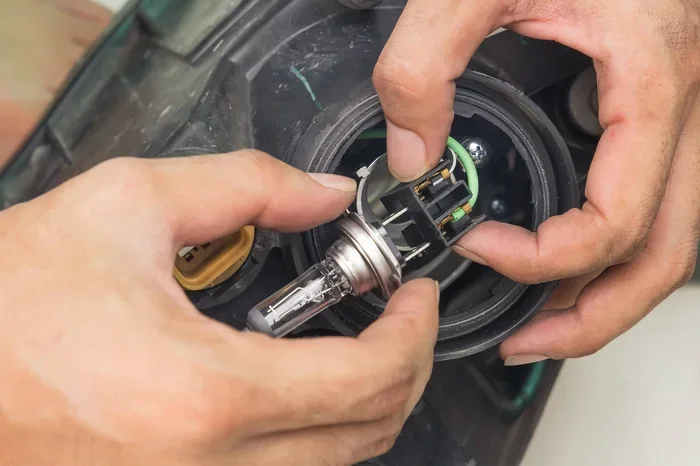
Step 3: Remove the Old Bulb
Unplug the electrical connector from the back of the bulb. Then, carefully twist the old bulb counterclockwise to release it from the socket. Pull it straight out. If the bulb is stuck, do not force it. Double-check that you have released all retaining clips or springs.
Step 4: Install the New Bulb
Take your new bulb out of the packaging using clean gloves. Insert it into the socket and twist it clockwise until it locks in place. Reconnect the electrical plug. Make sure it clicks in securely.
Step 5: Test and Align
Turn on your headlights and check that the new bulb works. Then, park your car about 25 feet from a wall and check the light pattern. If the beam is too high or too low, you will need to adjust the aim. Proper alignment is critical for both safety and passing inspection.
Headlight Types and Cost Comparison
Not all headlight bulbs are the same. The type you choose affects brightness, lifespan, and cost. Here is a breakdown of the most common options:
Halogen Bulbs
Halogen bulbs are the most common type found in older and mid-range vehicles. They are affordable and easy to find. A single halogen bulb typically costs between $15 and $40. They produce a warm white light that is close to factory standards. Halogen bulbs are a great choice for replacing just one headlight because they match most stock setups perfectly.
LED Bulbs
LED bulbs are becoming more popular due to their brightness and energy efficiency. They last significantly longer than halogen bulbs. However, they cost more, usually between $40 and $150 per bulb. Some LED bulbs may not be street legal in all states, so check your local regulations before purchasing.
HID (High-Intensity Discharge) Bulbs
HID bulbs produce a very bright, bluish-white light. They are common in luxury vehicles. A single HID bulb can cost $50 to $100 or more. They require a ballast to operate, which adds complexity. Replacing one HID headlight is straightforward, but matching the color temperature of the existing bulb is important for inspection.
Cost Comparison Table
| Bulb Type | Average Cost (Single Bulb) | Lifespan (Hours) | Brightness Level |
|---|---|---|---|
| Halogen | $15 – $40 | 450 – 1,000 | Standard |
| LED | $40 – $150 | 2,000 – 30,000 | High |
| HID | $50 – $100+ | 2,000 – 3,000 | Very High |
When budgeting for headlight replacement cost, also factor in the cost of any tools you might need. Most of the time, you only need a screwdriver and a pair of gloves. The bulb itself is the main expense.
Common Mistakes When Replacing One Headlight
Even though replacing a single headlight is simple, people still make mistakes that can lead to inspection failures or premature bulb burnout. Here are the most common errors to avoid:
Mixing Bulb Types
One of the biggest mistakes is putting a different type of bulb in the replacement headlight. For example, if your working headlight uses a halogen H11 bulb, do not install an LED H11 unless it is specifically designed to work with your vehicle’s electrical system. Mixing bulb types can cause flickering, error messages, or even damage to the wiring harness.
Ignoring Headlight Alignment
A new bulb does not automatically mean the light is aimed correctly. If the headlight assembly was loose or the bulb was not seated properly, the beam could be pointed too high or too low. This not only fails inspection but also creates a safety hazard for other drivers. Always check alignment after any headlight bulb replacement.
Using the Wrong Wattage
Installing a bulb with a higher wattage than recommended might seem like a good idea for extra brightness. But it can overload the wiring, blow fuses, or even cause a fire. Always stick to the manufacturer’s recommended wattage for your vehicle.
Touching the Bulb Glass with Bare Hands
We mentioned this earlier, but it bears repeating. The oils from your fingers can create weak spots on the bulb glass. When the bulb heats up during use, those weak spots can cause the bulb to crack or burst. Always use gloves when handling any headlight replacement bulb.
Forgetting to Check the Lens
A new bulb will not fix a cracked or foggy headlight lens. Inspect the lens carefully before you install the new bulb. If the lens is damaged, you may need to replace the entire headlight assembly or use a headlight restoration kit to fix the lens before inspection.
Expert Tips for Passing Inspection with a New Headlight
Getting your vehicle through inspection after replacing just one headlight is easy if you follow a few expert tips. These small steps can make a big difference:
Clean Your Headlights Before Inspection
Dirty headlights reduce visibility and can cause an inspection failure. Use a headlight restoration kit or even a simple toothpaste and baking soda paste to restore clarity to cloudy lenses. Clean both headlights, not just the new one. Inspectors notice the overall condition of the lighting system.
Bring the Old Bulb With You
If you are going to a shop for inspection, bring the old bulb with you. This shows the inspector that you replaced it with a matching OEM-spec bulb. It also helps if the inspector wants to verify the bulb type matches the vehicle’s original equipment.
Check Both Low Beam and High Beam
Some inspection stations test both the low beam and high beam. Make sure your new bulb works in both modes if your vehicle uses a dual-filament bulb like a 9005 or H4. Test both beams before heading to the inspection station.
Drive With Your Headlights On During the Test
This sounds obvious, but some drivers forget to turn on their headlights during the inspection. Make sure both headlights are on and functioning before the inspector walks up to your vehicle.
Get a Pre-Inspection Check
Many auto parts stores and repair shops offer free pre-inspection checks. They will test your headlights, brakes, and other safety items before the actual inspection. This is a great way to catch any issues early and avoid a failed inspection.
How Long Does a Headlight Bulb Last?
Understanding the lifespan of your headlight bulbs can help you plan replacements before they fail. Here is what you can expect from each bulb type:
- Halogen bulbs: 450 to 1,000 hours of use. These are the shortest-lasting but most affordable option.
- LED bulbs: 2,000 to 30,000 hours. They can last the lifetime of the vehicle in many cases.
- HID bulbs: 2,000 to 3,000 hours. They last longer than halogen but shorter than LED.
If one headlight has burned out, the other one may not be far behind. Keep track of when you replaced your bulbs and plan ahead. Replacing bulbs in pairs every few years is a good practice, even if only one has failed.
Safety Considerations: Why Both Headlights Matter
Even though you can legally replace just one headlight and pass inspection, it is important to understand why having two working headlights matters. Driving with only one working headlight reduces your visibility and makes it harder for other drivers to see you on the road.
Studies show that vehicles with only one functioning headlight are more likely to be involved in nighttime accidents. The light output from a single headlight is not enough to properly illuminate the road at highway speeds. As soon as possible after passing inspection, consider replacing the second headlight if it is showing signs of dimming or aging.
Your safety and the safety of others should always come first. Replacing just one headlight solves an immediate problem, but staying proactive about both headlights keeps you safe on every drive.
Frequently Asked Questions About Replacing One Headlight
Here are some of the most common questions drivers have about replacing a single headlight and passing inspection:
Will replacing one headlight void my vehicle warranty?
No, replacing a headlight bulb yourself or at a shop will not void your vehicle warranty. However, if the replacement causes damage to other components, that specific damage might not be covered. Always use the correct bulb type and follow proper installation procedures.
Can I use a different brand bulb for the replacement?
Yes, you can use a different brand as long as the bulb matches the OEM specifications for your vehicle. Check the part number, wattage, and base type before purchasing. Using a reputable brand ensures reliability and consistent light output.
How much does it cost to replace one headlight at a shop?
If you take your car to a shop, expect to pay between $50 and $150 for parts and labor. The bulb itself is usually the biggest cost. DIY replacement only costs the price of the bulb, which makes it a much more affordable option.
Do I need to replace the headlight assembly if the lens is cracked?
Not always. Small cracks can sometimes be repaired with a headlight restoration kit. However, large cracks or significant moisture inside the assembly usually require a full replacement. A cracked lens can also allow water to damage the bulb and electrical connections.
What happens if I fail inspection because of a headlight issue?
If you fail inspection, you will receive a rejection notice explaining the issue. Most shops will re-inspect your vehicle for free or at a reduced cost after you make the necessary repairs. Fix the issue and return to the inspection station as soon as possible.
Can I replace my headlight bulb with an LED bulb?
Yes, but make sure the LED bulb is DOT-compliant and compatible with your vehicle. Some LED bulbs can cause hyperflashing or error messages on the dashboard. Check your owner’s manual and consult a professional if you are unsure.
Final Thoughts on Replacing Just One Headlight
Replacing just one headlight and passing inspection is entirely possible and perfectly legal in most states. You do not need to replace both bulbs at the same time unless both are failing. The key is choosing the right bulb, installing it correctly, and making sure the alignment and lens condition meet inspection standards.
Whether you do it yourself or take it to a shop, the process is simple and affordable. A single headlight replacement can cost as little as $15 for a halogen bulb and take less than half an hour of your time. By following the tips in this guide, you can keep your vehicle safe, legal, and road-ready.
Remember to check your local inspection requirements before heading to the station. Keep both headlights maintained for the best visibility and safety. And most importantly, do not wait too long to replace that second headlight if it is showing signs of wear. A little proactive maintenance goes a long way in keeping you and others safe on the road.
Replacing one headlight is easy, affordable, and inspection-friendly. Now that you know the facts, you can handle this common car maintenance task with confidence.