Everything You Need to Know About Boot Space in Car
Boot space in car refers to the cargo area behind the rear seats where you store luggage, groceries, and daily essentials. Knowing your boot space measurements helps you pick the right vehicle and pack smarter. This guide covers everything from how boot space is measured to practical tips for getting the most out of every cubic centimeter.
Key Takeaways
- Boot space matters daily: Whether you commute or road trip, having enough cargo room reduces stress and keeps your car organized.
- Measurement standards vary: Different brands use different methods, so always compare boot space numbers carefully before buying.
- SUVs and hatchbacks lead: These body styles typically offer the most generous boot space in car designs.
- Fold flat seats double your space: This simple trick transforms a small boot into a massive cargo area.
- Organizers make a big difference: Boot liners, dividers, and nets keep items secure and prevent clutter.
- Think about your lifestyle: Match your boot needs to your actual usage — families need more space than solo drivers.
- Don’t overlook depth and shape: A wide, deep boot is more useful than a tall but narrow one.
📑 Table of Contents
- What Is Boot Space in a Car and Why Does It Matter
- How Boot Space in Car Is Measured
- Best Cars with the Most Boot Space
- How to Maximize Your Boot Space in Car
- Common Mistakes That Waste Boot Space
- How to Choose the Right Car Based on Boot Space
- Key Facts About Boot Space You Should Know
- Expert Tips for Getting the Most from Your Boot
- Conclusion
What Is Boot Space in a Car and Why Does It Matter
The Basics of Boot Space
Let us start with the basics. Boot space in car is the enclosed storage area located behind the rear seats. You might also hear people call it the trunk in some countries. This is where you put suitcases, shopping bags, sports gear, and anything else you need to carry.
The size of this space varies a lot from one vehicle to another. A small city hatchback might offer around 250 liters. A large SUV can give you well over 700 liters. That is a massive difference, and it affects your daily life more than you might think.
When we talk about car boot size, we are really talking about how much your vehicle can hold. This matters for so many reasons. It affects your comfort on road trips. It affects whether you can fit a pram or a large piece of furniture. It even affects how organized your daily commute feels.
Why Boot Space Matters for Daily Driving
Most people underestimate how much they carry every day. Think about your routine. You might have a laptop bag, a gym bag, groceries, a jacket, and maybe a child’s backpack. That adds up fast. Having enough boot space in car means you never have to cram things into the footwell or leave items behind.
For families, this is even more critical. You need room for nappies, toys, car seats, and weekend bags. A generous cargo area in car transforms family life. It makes school runs easier and holiday trips far less stressful.
Even if you are a single driver, boot space plays a big role. It determines whether you can pick up bulk groceries without making two trips. It decides if you can bring home that flat-pack bookshelf from IKEA. Small details like these add up to a much better driving experience.
How Boot Space in Car Is Measured
Understanding Liters and Cubic Feet
Boot capacity is usually measured in liters or cubic feet. In Europe and most global markets, you will see numbers in liters. In the United States and a few other regions, cubic feet is more common. But what do these numbers actually mean?
One liter equals about 0.035 cubic feet. So a boot rated at 400 liters is roughly 14 cubic feet. These numbers give you a rough idea of volume, but they do not tell the whole story. The shape, depth, and opening width of the boot matter just as much as the raw number.
When comparing boot space measurements, always look at the width and depth too. A boot that is 400 liters but very shallow might not fit a large suitcase upright. A slightly smaller boot that is deeper could be far more practical.
VDA Standard vs. Other Measurement Methods
Here is something many buyers do not know. Not all manufacturers measure boot space the same way. The VDA (Verband der Automobilindustrie) standard is one of the most common methods. It measures the space from the rear seat base to the boot lid, with the seats in their upright position.
Some brands measure with the seats folded down. Others exclude the floor height or include areas that are not fully rectangular. This means the same liter figure can look different depending on the method used. Always check how the boot capacity in car was measured before making comparisons.
Quick tip: if a manufacturer does not state the measurement method, look at reviews or official spec sheets for more details. This small step can save you from disappointment later.
Best Cars with the Most Boot Space
SUVs with Huge Cargo Areas
SUVs are the kings of boot space in car design. Their large, boxy shapes naturally create more room. Models like the Toyota RAV4, Ford Kuga, and Hyundai Tucson offer boot space well above 500 liters. With the rear seats folded, some of these vehicles exceed 1,500 liters.
If you need serious cargo room, a full-size SUV is hard to beat. The Kia Sorento and Ford Explorer can offer over 2,000 liters with seats down. These are ideal for families who travel often or anyone who regularly moves large items.
Here are some popular SUVs known for their generous luggage capacity:
- Toyota RAV4 — around 580 liters with seats up
- Ford Kuga — approximately 595 liters with seats up
- Hyundai Tucson — about 619 liters with seats up
- Kia Sorento — up to 724 liters with seats up
- Volkswagen Tiguan — roughly 610 liters with seats up
Sedans and Hatchbacks with Surprising Storage
You do not need an SUV to get great car storage space. Many sedans and hatchbacks surprise buyers with their clever design. The Volkswagen Golf, for example, offers around 380 liters in the boot. That is plenty for a family of four on a weekend away.
Hatchbacks are especially good because their wide opening makes loading easier. You do not need to bend down as much, and tall items fit more naturally. The Skoda Octavia is a standout here, with a boot that holds around 610 liters — impressive for a family sedan.
Even some compact cars punch above their weight. The Honda Jazz, with its Magic Seats, offers flexible storage that feels much larger than its numbers suggest. Always test the actual boot space dimensions before you decide, because numbers on paper do not always match real-world usability.
How to Maximize Your Boot Space in Car
Fold Flat Seats and Clever Storage Hacks
The single best trick for increasing boot space in car is folding the rear seats flat. Most modern vehicles offer this feature, and it instantly doubles or even triples your cargo area. You can fit bikes, large furniture, or multiple large suitcases with ease.
Beyond folding seats, there are other smart hacks. Use vertical dividers to keep bags upright. Place heavier items at the bottom so they do not crush lighter ones. Roll soft items like jackets instead of folding them — this saves a surprising amount of room.
Another great tip is to use the space above the rear seats if your car allows it. Some vehicles have a shelf or net behind the front seats. This is perfect for items you need quick access to, like a rain jacket or a travel pillow.
Boot Organizers and Accessories
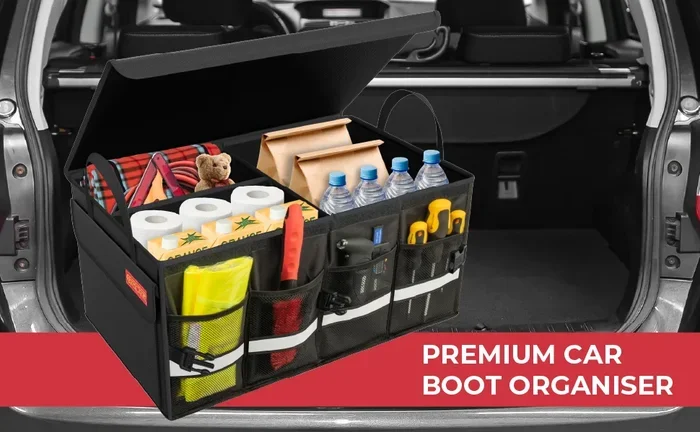
A car boot organizer is one of the simplest upgrades you can make. These come in many shapes and sizes. Some are foldable fabric trays that sit on the boot floor. Others are rigid plastic bins that slide in and out easily.
Boot liners are another essential. They protect the carpet from dirt, spills, and scratches. You can get custom-fit liners that match your specific car model perfectly. They keep the boot clean and make it easy to hose out after a muddy hike.
Here are some boot space accessories worth considering:
- Net dividers — keep items from sliding around during drives
- Boot trays — protect the floor and contain messes
- Collapsible boxes — create separate zones for different items
- Hooks and straps — secure loose bags and bottles
- Roof boxes and racks — add extra storage for bulky items
These small investments pay off quickly. They keep your boot tidy, protect your belongings, and make every trip more pleasant.
Common Mistakes That Waste Boot Space
Overpacking and Poor Loading Habits
One of the biggest mistakes people make is just throwing things in without a plan. This wastes space and makes everything unstable during driving. When you load your car boot without thinking, you end up with gaps and awkward gaps where nothing fits properly.
Take a few minutes before every trip. Think about what you need and in what order. Items you need at the destination go in first or in the most accessible spot. Heavy items go low, light items go on top. This sounds simple, but it makes a huge difference in how much you can actually fit.
Another common error is ignoring the shape of your items. A round bin wastes more space than a rectangular one. Square containers stack neatly and use every centimeter. This is a small change that frees up surprising extra room.
Ignoring Car Boot Liners and Accessories
Skipping a boot liner is a mistake that costs you more than you think. Without a liner, spills stain the carpet and dirt builds up over time. Cleaning becomes a chore, and eventually the carpet degrades, which can hurt your car’s resale value.
Similarly, ignoring organizers leads to clutter. When your boot is a messy jumble, you cannot use the full volume effectively. Things get buried and forgotten. A simple boot organizer transforms this chaos into a neat, efficient storage system.
Do not forget about roof storage either. If you regularly carry items that do not fit inside, a roof box or roof rack frees up all your boot space in car for other things. Just make sure it is properly secured and does not exceed your vehicle’s weight limit.
How to Choose the Right Car Based on Boot Space
Matching Boot Size to Your Lifestyle
Choosing the right car starts with honest self-assessment. How do you actually use your vehicle? If you commute alone and carry just a laptop bag, even a small hatchback will do. But if you have children, a dog, and regular grocery runs, you need much more.
Think about your typical week. Do you go skiing or camping? Do you shop in bulk once a week? Do you pick up friends or family often? Each of these activities demands different amounts of cargo area in car. Write down your needs and use them as a guide when shopping.
A good rule of thumb is to test the boot with items you actually carry. Bring your largest suitcase, your golf bag, or your child’s stroller to the dealership. See how they fit. Numbers on a spec sheet mean nothing if the real-world experience does not match.
Family Cars vs. Solo Commuters
Families and solo drivers have very different boot space in car needs. A family needs room for car seats, multiple passengers’ bags, and often a stroller or pushchair. In this case, an SUV or a large estate car makes the most sense.
For solo commuters, a compact sedan or hatchback is often more than enough. You want a car that is easy to park and maneuver, and a smaller boot keeps the overall size manageable. The key is finding a balance between practicality and convenience.
Couples without children fall somewhere in between. A mid-size hatchback or a compact SUV usually hits the sweet spot. You get enough room for weekend trips and grocery hauls without driving a massive vehicle every day.
Whatever your situation, always test drive with your typical cargo. This one step separates smart buyers from buyers who regret their choice later.
Key Facts About Boot Space You Should Know
Let us cover a few quick facts that many buyers overlook. First, boot space in car is not just about volume. The shape of the boot matters enormously. A wide, rectangular boot is far more usable than a narrow, deep one that only fits certain items.
Second, the opening size is critical. A large boot with a small, high opening is frustrating to load. You want a wide, low opening that lets you slide items in easily. This is why hatchbacks and SUVs often score better in real-world usability than sedans with their narrower boot lids.
Third, consider how the boot is divided. Some vehicles have a split-level boot floor. The lower section is great for heavy items, while the upper shelf keeps lighter items at a convenient height. This design feature can make a big difference in how you use the space.
Finally, remember that maximum boot space in car usually comes with the rear seats folded. Always check whether the seats fold completely flat or leave a step. A completely flat floor is far more useful than one with a lip in the middle.
Expert Tips for Getting the Most from Your Boot
Experienced car owners know a few tricks that make a real difference. First, use vacuum-sealed bags for clothing on trips. They shrink your luggage volume by up to 75 percent. This is a game-changer for fitting everything into a smaller boot.
Second, keep a car boot organizer permanently in your vehicle. It takes five minutes to toss everything in at home, and you save time at your destination. You do not have to unpack and repack every single trip.
Third, think vertically. Use the space between the boot wall and the seats. Narrow gaps can hold bottles, umbrellas, or small bags with the help of a simple shelf or net. Every bit of space counts when you are trying to fit everything in.
Fourth, check your vehicle’s weight limit. A large boot full of heavy items can approach the maximum payload capacity. Overloading affects handling and safety. Always stay within your car’s recommended limits for safe driving.
These tips might seem small, but they add up to a much better experience every time you get behind the wheel. The goal is to make your boot space in car work as hard as you do.
Conclusion
Boot space in car is one of the most practical factors you should consider when choosing or using a vehicle. It affects your daily comfort, your family’s convenience, and your ability to handle unexpected cargo needs. From understanding how it is measured to learning clever ways to maximize it, this guide has covered the essentials you need.
Whether you are shopping for a new car or trying to get more from your current one, the tips in this article will help. Measure your needs honestly. Compare boot space in car options carefully. Invest in the right accessories. And always test the real-world usability before you commit.
The right boot space makes every journey better. It reduces stress, keeps your belongings safe, and gives you the freedom to carry what you need. Take the time to get this right, and you will thank yourself every time you open that boot.
Frequently Asked Questions
What is the average boot space in a family car?
Most family cars offer between 400 and 550 liters of boot space. This is enough for several large suitcases, grocery bags, and everyday items. SUVs in this category often exceed 500 liters, giving you even more room for cargo.
How do I measure my car’s boot space accurately?
To measure your boot space, place the rear seats upright and fill the boot with 1-liter water bottles or sandbags. Count how many you fit to get a practical estimate. Official measurements from manufacturers use standardized methods, but real-world testing gives you the most useful picture.
Does a larger boot space mean a better car?
Not necessarily. The best boot space depends on your needs. A large boot is great if you carry lots of gear, but it can make a car harder to park and less fuel-efficient. Focus on finding the right balance for your lifestyle rather than simply chasing the biggest number.
Can I increase my car’s boot space without buying a new vehicle?
Yes, absolutely. Folding rear seats flat instantly creates more room. Adding a boot organizer, using vacuum-sealed bags for clothing, and removing unused items from the car can all free up significant space. Roof boxes and racks are another great option for extra storage.
Which car type has the most boot space?
Full-size SUVs and large estate cars typically offer the most boot space. Models like the Kia Sorento and Volkswagen Tiguan provide over 700 liters with seats up, and well over 1,500 liters with seats folded. Hatchbacks also offer excellent space relative to their size.
Is boot space the same as trunk space?
Yes, they refer to the same thing. Boot is the British and international term, while trunk is the American term. Both describe the enclosed storage area at the rear of the car. The measurement and functionality are identical regardless of the term used.
=== CONCLUSION ===
Boot space in car is far more than just a number on a spec sheet. It is a daily factor that shapes how you use your vehicle. From family road trips to simple grocery runs, having enough cargo room makes everything easier and more enjoyable.
Use the tips and insights in this guide to make smarter decisions. Measure what you actually need. Compare vehicles carefully. And invest in simple accessories that unlock every cubic centimeter of your boot. With the right approach, you will always have room for what matters most.