Anti Scratch Coating for Cars Protects Paint From Damage
Anti scratch coating for cars is a protective layer that shields your vehicle’s paint from chips, swirl marks, and everyday damage. This durable solution works by creating a hard barrier on top of your clear coat, making your car more resistant to scratches and environmental harm. Whether you park outdoors or commute daily, applying a quality coating can save you money on paint repairs and keep your ride looking fresh.
Every car owner knows the frustration of finding a new scratch on their vehicle. Whether it comes from a shopping cart in a parking lot, a stray branch on the road, or just everyday washing, paint damage adds up fast. anti scratch coating for cars offers a smart way to guard your vehicle against these threats.
This protective layer sits on top of your car’s paint and takes the hit instead of your clear coat. It works like a shield, absorbing small impacts and resisting abrasion before any damage reaches the actual paint below. The result is a car that looks newer for longer, with less time and money spent on fixes.
In this guide, we will cover everything you need to know about scratch resistant car coatings. You will learn how they work, what types exist, how to apply them, and which options deliver the best value. By the end, you will feel confident choosing the right protection for your vehicle.
Key Takeaways
- Scratch Prevention: Anti scratch coatings add a hardened layer that absorbs minor impacts and resists abrasion on your car’s paint surface.
- Easy Application: Most coatings can be applied at home with basic tools, though professional application ensures the best long-term results.
- Cost Savings: Protecting your paint now avoids expensive repainting or paint correction jobs down the road.
- Multiple Options Available: From ceramic coatings to paint protection film, there is a solution for every budget and need.
- Long-Lasting Protection: Quality coatings can last anywhere from one to five years depending on the product and maintenance routine.
- UV and Environmental Defense: These coatings also block harmful UV rays, bird droppings, tree sap, and road chemicals that degrade paint over time.
- Maintains Resale Value: A well-protected exterior helps preserve your car’s appearance, which directly impacts its trade-in or resale price.
📑 Table of Contents
- What Is Anti Scratch Coating for Cars?
- How Does Anti Scratch Coating Work?
- Benefits of Using Anti Scratch Coating
- Types of Anti Scratch Coatings for Cars
- How to Apply Anti Scratch Coating on Your Car
- Common Mistakes to Avoid
- Expert Insights on Paint Protection
- Key Takeaways
- Frequently Asked Questions
- Conclusion
What Is Anti Scratch Coating for Cars?
Anti scratch coating for cars is a liquid or film-based product that bonds to your vehicle’s exterior surface. It forms a transparent barrier between your paint and the outside world. This barrier takes the abuse from minor scratches, swirl marks, and environmental contaminants.
The coating sits above your car’s clear coat, which is the thin, glossy layer that gives paint its shine. When something scratches your car, the coating absorbs the damage first. This means your actual paint stays safe underneath. Think of it like a screen protector on your phone, but for your entire vehicle.
These products come in different forms. Some are liquid coatings you wipe on and buff off. Others are solid films you lay over panels. Each type offers a different level of protection, durability, and ease of use. We will explore these options in detail later in this article.
Most coatings on the market today focus on paint protection and surface hardness. They use advanced materials like ceramics, polymers, or transparent films to create a durable shell. The best products also offer extra benefits like UV protection and hydrophobic properties, which help water and dirt slide off your car.
How Does It Differ from Wax or Sealant?
Traditional car wax and sealant add a layer of protection, but they are relatively soft. They sit on the surface and wear away with rain, car washes, and UV exposure. You typically need to reapply wax every few weeks to maintain protection.
Scratch resistant coatings go much deeper. They bond chemically or physically to the paint surface, creating a harder, longer-lasting shield. While wax might last a month or two, a quality ceramic or polymer coating can protect your car for one to five years. The difference in durability is huge, which is why more car owners are making the switch.
How Does Anti Scratch Coating Work?
Understanding how anti scratch coating for cars works helps you appreciate why it is so effective. The science behind these products is simpler than it sounds, and the results speak for themselves.
Most liquid coatings contain nanoparticles or ceramic particles that bond to the paint at a microscopic level. When you apply the coating, these particles fill in tiny pores and imperfections in the clear coat. They then cure, forming a hard, glass-like layer on top of the paint.
This hardened layer has a higher pencil hardness rating than bare paint or wax. Pencil hardness measures how resistant a surface is to scratching. The higher the rating, the more scratch resistant the material. Quality coatings can reach hardness levels that make it very difficult for everyday hazards to cause damage.
The Role of Surface Hardness
Surface hardness is the key factor in scratch resistance. Your car’s clear coat has a certain hardness level, and anything harder than that can scratch it. Dust, sand, and even aggressive washing can create micro scratches over time, known as swirl marks.
A scratch resistant coating raises the hardness of the surface. Now, when dust or debris contacts your car, the coating takes the hit instead of the paint. The coating may show minor marks, but those are easy to remove during regular washing. Your actual paint underneath stays untouched and protected.
Hydrophobic and Self-Cleaning Properties
Many automotive coatings also include hydrophobic properties. This means the surface repels water. When rain hits your coated car, the water beads up and rolls off, carrying dirt and contaminants with it.
This self-cleaning effect reduces the amount of grime that sits on your paint. Less grime means fewer opportunities for scratches and swirl marks to form. It also makes washing your car faster and easier, which is a welcome benefit for any car owner.
Benefits of Using Anti Scratch Coating
Adding anti scratch coating for cars to your vehicle care routine comes with many advantages. Let us look at the most important benefits that make this investment worthwhile.
1. Long-Term Paint Protection
The biggest benefit is long-lasting protection for your car’s paint. Instead of worrying about every small bump or scratch, you can drive with confidence knowing your coating has your back. This is especially valuable for cars parked on streets or in lots where accidental contact is common.
2. Improved Appearance
Quality coatings enhance the depth and gloss of your paint. They create a smooth, reflective surface that makes your car look freshly detailed every time you drive it. Over time, unprotected paint can look dull and oxidized. A coating keeps that showroom shine alive much longer.
3. Easier Maintenance
Because coated surfaces repel water and dirt, washing your car becomes less of a chore. Brake dust, bug splatter, and bird droppings are easier to remove from a coated surface. You spend less time scrubbing and more time enjoying your clean car.
4. Cost Savings on Repairs
Paint correction and touch-up jobs can be expensive. A single deep scratch repair might cost several hundred dollars. Over the life of your car, these costs add up quickly. A car scratch coating costs a fraction of that and prevents much of this damage from occurring in the first place.
5. UV and Environmental Defense
Sun exposure, acid rain, road salt, and bird droppings all damage paint over time. UV rays fade and oxidize your clear coat, while chemicals etch into the paint surface. A protective coating blocks these elements, keeping your paint looking vibrant and healthy for years.
Types of Anti Scratch Coatings for Cars
Not all coatings are the same. Different products use different materials and technologies to protect your car. Understanding the main types helps you choose the right one for your needs and budget.
Ceramic Coatings
Ceramic coatings are among the most popular options today. They use silicon dioxide particles that bond to the paint and cure into an extremely hard layer. These coatings offer excellent scratch resistance, UV protection, and hydrophobic performance.
Professional-grade ceramic coatings can last three to five years with proper care. They are more expensive than wax or sealant, but the longevity and protection level make them a strong choice for anyone who wants serious paint defense.
Paint Protection Film (PPF)
Paint protection film, also known as clear bra, is a transparent urethane film applied directly to painted surfaces. It is the most physical form of scratch protection available. The film absorbs impacts from rocks, debris, and minor contact that would otherwise chip or scratch your paint.
PPF is especially popular on front bumpers, hoods, and side mirrors, where road debris damage is most common. High-quality films are self-healing, meaning minor scratches disappear when exposed to heat. This makes PPF an excellent choice for daily drivers and vehicles that see a lot of highway miles.
Polymer and Hybrid Coatings
Polymer coatings blend synthetic compounds with traditional protection methods. They are easier to apply than ceramic coatings and offer good scratch resistance at a lower price point. Hybrid coatings combine elements of ceramic and polymer technology for balanced performance.
These options are great for car owners who want solid protection without the higher cost or longer curing times of full ceramic systems. They typically last one to two years and are a good entry point for those new to paint protection.
Comparison of Coating Types
| Feature | Ceramic Coating | Paint Protection Film | Polymer Coating |
|---|---|---|---|
| Scratch Resistance | High | Very High | Moderate |
| Durability | 3-5 years | 5-10 years | 1-2 years |
| Hydrophobic Effect | Excellent | Good | Moderate |
| Ease of Application | Moderate | Difficult | Easy |
| Cost | Moderate to High | High | Low to Moderate |
| Self-Healing | No | Yes | No |
How to Apply Anti Scratch Coating on Your Car
Applying anti scratch coating for cars is a process that requires patience and attention to detail. While professional detailers can handle this for you, many coatings are designed for DIY application. Here is a step-by-step guide to get great results at home.
Step 1: Wash and Decontaminate the Paint
Start with a clean surface. Wash your car thoroughly using a pH-neutral car wash soap. Rinse well and dry with a microfiber towel. After washing, use a clay bar or iron remover to pull out embedded contaminants like brake dust and industrial fallout from the paint surface.
Any dirt or residue left on the paint will prevent the coating from bonding properly. Take your time with this step because the quality of your preparation directly affects the final result.
Step 2: Polish the Paint (If Needed)
If your car has swirl marks, light scratches, or oxidation, consider using a paint correction process before applying the coating. Polishing removes these surface imperfections and creates a smooth canvas for the coating to bond to.
You do not need to polish if your paint is in good condition. But for older vehicles or those that have never been detailed, a light polish can dramatically improve the final look and performance of your coating.
Step 3: Apply the Coating
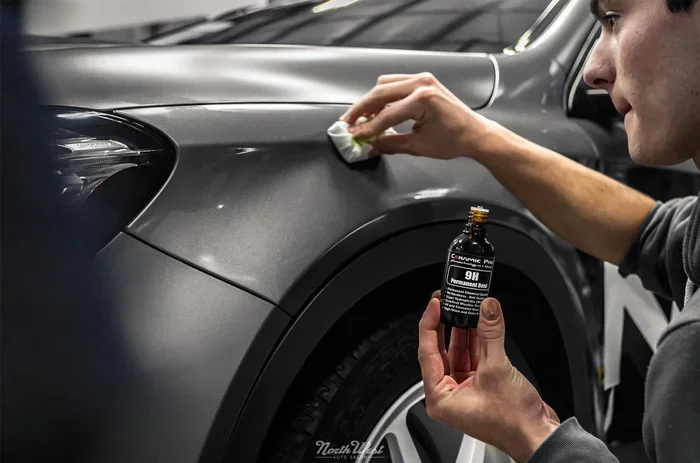
Follow the manufacturer’s instructions carefully. Most liquid coatings are applied using an applicator pad in small, overlapping sections. Spread the coating thinly and evenly across the panel. Let it flash for the recommended time, then buff off the residue with a clean microfiber towel.
Work in a shaded area and avoid applying in direct sunlight or high humidity. These conditions can cause the coating to cure too quickly or unevenly, leading to streaks or poor bonding.
Step 4: Allow Full Cure Time
Most coatings need 24 to 48 hours to fully cure. During this time, keep the car dry and away from rain, dust, and water. Avoid washing or touching the surface. Once cured, the coating hardens and reaches its full scratch-resistant potential.
Quick Tips for Best Results
- Always wear gloves during application to avoid leaving fingerprints or oils on the surface.
- Use separate applicator pads for different sections of the car to prevent cross-contamination.
- Check the weather forecast before starting. Ideal conditions are between 50 and 80 degrees Fahrenheit with low humidity.
- Apply multiple thin coats rather than one thick coat for better bonding and durability.
- Keep a spray bottle of quick detailer nearby to wipe away any excess coating that hardens before you can buff it.
Common Mistakes to Avoid
Even with the best anti scratch coating for cars, mistakes during application can reduce its effectiveness. Here are the most common errors car owners make and how to avoid them.
Skipping Surface Preparation
The biggest mistake is applying a coating to a dirty or contaminated surface. If your paint has wax, grease, or embedded particles, the coating will not bond correctly. This leads to peeling, uneven protection, and a shorter lifespan for the product.
Always start with clean, decontaminated, and polished paint. This step cannot be skipped if you want professional-grade results.
Applying Too Much Product
Thick layers of coating do not provide better protection. In fact, they cause more problems. Excess product cures unevenly, creates hazy patches, and is harder to buff off. Use thin, even layers and follow the product instructions closely.
Ignoring Cure Times
Exposing your freshly coated car to water, rain, or car washes before the coating fully cures can ruin the bond. Always respect the manufacturer’s cure time recommendations. When in doubt, wait longer rather than shorter.
Choosing the Wrong Product for Your Needs
Not every coating suits every situation. If you live in an area with harsh winters and road salt, you need a durable ceramic or PPF solution. If you just want basic protection and easier washing, a polymer spray may be enough. Match the product to your environment and driving habits.
Expert Insights on Paint Protection
Professional detailers and automotive experts agree that scratch resistant coatings are one of the best investments you can make for your vehicle. According to industry professionals, the key is choosing a product that matches your level of commitment and budget.
“The best coating is the one you will actually apply and maintain,” says a leading car detailing expert. “A budget-friendly polymer coating applied correctly will outperform an expensive ceramic coating applied carelessly.”
Experts also recommend combining methods for maximum protection. Many professional detailers apply a ceramic coating over paint protection film on high-impact areas like the front bumper and hood. This layered approach gives you the best of both worlds, combining the impact resistance of PPF with the hydrophobic and gloss-enhancing properties of ceramic coatings.
Regular maintenance also plays a big role. Using a pH-neutral car wash, avoiding automatic car washes with harsh brushes, and applying a maintenance spray between full coating applications all help extend the life of your protection.
How Long Does Anti Scratch Coating Last?
Durability depends on the type of coating and how well you maintain it. Ceramic coatings typically last three to five years. Paint protection film can endure five to ten years or more with proper care. Polymer coatings and spray sealants usually last six months to two years.
Factors that affect longevity include your climate, how often you wash your car, and whether you park indoors or outdoors. Cars exposed to harsh sun, salt, and pollution will see faster wear on any coating. Regular maintenance and periodic reapplication keep your protection at peak performance.
Key Takeaways
- Scratch Prevention: Anti scratch coating for cars adds a hardened layer that absorbs minor impacts and resists abrasion on your car’s paint surface.
- Easy Application: Most coatings can be applied at home with basic tools, though professional application ensures the best long-term results.
- Cost Savings: Protecting your paint now avoids expensive repainting or paint correction jobs down the road.
- Multiple Options Available: From ceramic coatings to paint protection film, there is a solution for every budget and need.
- Long-Lasting Protection: Quality coatings can last anywhere from one to five years depending on the product and maintenance routine.
- UV and Environmental Defense: These coatings also block harmful UV rays, bird droppings, tree sap, and road chemicals that degrade paint over time.
- Maintains Resale Value: A well-protected exterior helps preserve your car’s appearance, which directly impacts its trade-in or resale price.
Frequently Asked Questions
Is anti scratch coating for cars worth the investment?
Absolutely. The cost of a quality coating is a small fraction of what you would pay for paint repair or repainting. Beyond the financial savings, it keeps your car looking better for longer and reduces the time you spend on maintenance. Most car owners see the value within the first year of protection.
Can I apply anti scratch coating myself?
Yes, most liquid coatings are designed for DIY application. You will need basic supplies like an applicator pad, microfiber towels, and a clean workspace. If you are comfortable waxing your car, you can apply a coating. However, for the best results, especially with ceramic coatings, professional installation is recommended.
Will anti scratch coating remove existing scratches?
No, coatings do not remove existing scratches. They prevent new ones from forming and protect the paint from further damage. If you have existing scratches, you should address them with paint correction or touch-up before applying the coating. This ensures the coating bonds to a smooth, clean surface for maximum effectiveness.
How often should I reapply anti scratch coating?
Reapplication depends on the type of coating you use. Ceramic coatings typically need reapplication every three to five years. Polymer coatings may need attention every one to two years. PPF can last five to ten years or longer. Regular maintenance sprays can extend the life of any coating between full reapplications.
Is paint protection film the same as anti scratch coating?
Paint protection film is a type of scratch protection, but it works differently than liquid coatings. PPF is a physical film that absorbs impacts, while liquid coatings create a hardened chemical bond with the paint. Both serve the same purpose of protecting your car’s exterior, but PPF offers superior impact resistance while liquid coatings provide better hydrophobic and gloss benefits.
What is the best anti scratch coating for daily drivers?
For daily drivers, a ceramic coating or a high-quality polymer coating offers the best balance of protection and ease of use. Ceramic coatings provide the longest-lasting defense against scratches and environmental damage. If you prefer a simpler solution, a spray-on polymer sealant is easy to apply and reapply as needed. Choose based on how much protection you need and how much effort you want to put into maintenance.
Conclusion
Anti scratch coating for cars is one of the smartest decisions you can make for your vehicle’s long-term appearance and value. Whether you choose a ceramic coating, paint protection film, or a polymer solution, the key is to act now before damage occurs. Every day without protection is a day your paint is vulnerable to scratches, UV damage, and environmental contaminants.
The right coating creates a durable shield that absorbs impacts, repels water, and keeps your paint looking vibrant for years. With proper application and regular maintenance, your investment pays for itself many times over through avoided repair costs and a consistently great-looking vehicle.
Take the time to research your options, prepare your surface properly, and apply your chosen product with care. Your car’s paint will thank you, and every drive will feel better knowing your vehicle is well-protected. Start exploring scratch resistant car coatings today and give your car the defense it deserves.