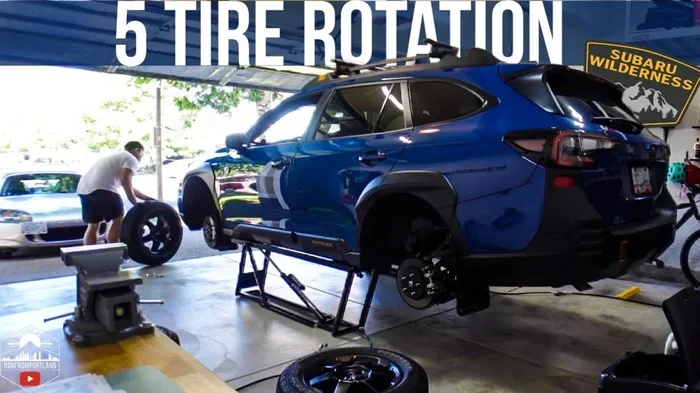
How to Rotate Subaru Tires for Optimal Performance
Rotating your Subaru tires regularly is one of the simplest ways to extend their life and keep your ride safe. Whether you drive a Subaru Outback, Forester, or another model, this guide walks you through the rotation pattern, timing, and cost. You will learn when to rotate, how to do it yourself, and why it matters for all-wheel drive systems.
Every Subaru owner wants their tires to last as long as possible. But here is the truth: tires wear out unevenly, especially on Subaru vehicles with all-wheel drive. The front tires handle steering and braking, while the rear tires carry the bulk of the traction load. Without regular rotation, you end up with one set of tires worn down and the other still looking half new.
Rotating Subaru tires is not complicated. It takes about 30 minutes if you do it yourself, or less than an hour at a shop. The real question is not whether you should rotate them but how often and which pattern to use. This guide gives you everything you need to know. From the best rotation pattern for your specific Subaru model to the tools you need and the mistakes to avoid, we have you covered.
Let us get into it. Your tires work hard every day, carrying you through rain, snow, and highway miles. A little maintenance goes a long way toward keeping them in great shape for the long haul.
Key Takeaways
- Regular rotation prevents uneven wear: Subarus especially need consistent swaps between front and rear tires.
- Rotate every 5,000 to 7,500 miles: This aligns with most Subaru maintenance schedules and keeps tread even.
- Directional and non-directional tires need different patterns: Knowing your tire type is essential before you start.
- DIY rotation saves money: With basic tools like a hubcap remover and a torque wrench, you can do it at home.
- Professional rotation costs between $25 and $50: Much cheaper than replacing tires early due to uneven wear.
- Check for signs of uneven wear: Vibrations, pulling, or visible bald spots mean it is time to rotate or inspect further.
📑 Table of Contents
- Why Tire Rotation Matters for Subaru Owners
- The Subaru Tire Rotation Pattern
- How Often Should You Rotate Subaru Tires
- Tools and Steps for DIY Tire Rotation
- Tire Rotation Cost: Professional vs. DIY
- Common Tire Rotation Mistakes to Avoid
- How Tire Rotation Fits Into Your Subaru Maintenance Schedule
- Final Thoughts on Rotating Your Subaru Tires
Why Tire Rotation Matters for Subaru Owners
Tire rotation means moving each tire to a different position on your vehicle. This balances out the wear patterns that develop over time. For Subaru owners, this is especially important because of the unique way all-wheel drive systems distribute power to all four wheels.
How Uneven Wear Happens on Subarus
Subarus send power to all four wheels, but the front tires still do more work in several key areas. They handle steering, which causes the outer edges of the front tires to wear faster. They also absorb more of the braking force, which wears down the treads more quickly. The rear tires, on the other hand, mainly provide stability and traction.
Over thousands of miles, this imbalance adds up. You might notice the front tires look smooth on the inside while the rear tires still have plenty of tread on the edges. This is a clear sign that rotation is overdue.
Another factor is your driving style. If you do a lot of city driving with frequent turns, the front tires wear even faster. Highway driving tends to wear all four tires more evenly, but not perfectly. No matter how you drive, rotation helps correct these differences before they become a safety issue.
The Connection Between Tire Rotation and Tire Longevity
Here is a simple fact: well-maintained tires last significantly longer than neglected ones. According to tire industry experts, regular rotation can extend tire life by 20 to 30 percent. That is the difference between getting 50,000 miles out of a set and only getting 35,000. When you think about how many miles a car can last with proper care, maintaining your tires is one of the easiest and most cost-effective steps you can take.
Even wear also means better performance. Tires with even tread depth provide more consistent grip in wet conditions, more predictable handling, and improved fuel efficiency. It is a win-win situation that takes very little effort.
The Subaru Tire Rotation Pattern
Not all rotation patterns work for every vehicle. The right pattern depends on your Subaru model, your tire type, and whether your tires are directional or non-directional. Using the wrong pattern can actually make wear worse, so it is important to get this right.
Directional vs. Non-Directional Tires
Directional tires have a tread pattern designed to roll in one direction only. They usually feature V-shaped grooves that channel water away efficiently. If your Subaru came with directional tires, you cannot simply swap the front and rear tires side to side. Instead, you must swap front to rear on the same side of the vehicle.
Non-directional tires have a symmetrical or asymmetrical tread pattern that works in either direction. These are more flexible and allow for more rotation patterns. Most aftermarket tires and many factory-equipped tires fall into this category.
Standard Rotation Patterns for Subarus
For non-directional tires on a rear-wheel drive or all-wheel drive Subaru, the recommended pattern is straightforward. Move the front left tire to the rear left position. Move the rear right tire to the front left position. Move the front right tire to the rear right position. Move the rear left tire to the front right position. This creates a cross pattern that balances wear across all four tires.
For directional tires, the pattern is simpler. Swap the front left with the rear left, and swap the front right with the rear right. The tires stay on the same side of the vehicle but switch front and rear positions.
If you have a staggered setup where the rear tires are wider than the front, you cannot rotate the tires at all. In this case, you will need to replace tires in pairs or wait until all four tires need replacement. Check your owner manual or consult a Subaru specialist to confirm your setup.
How Often Should You Rotate Subaru Tires
The general recommendation is to rotate your Subaru tires every 5,000 to 7,500 miles. This aligns well with the typical oil change interval, which makes it easy to remember. Many Subaru owners rotate their tires every other oil change, which usually lands around the 6,000 to 7,500-mile mark.
Signs Your Tires Need Rotation
Do not wait for the mileage counter to tell you. Your tires will give you signs that rotation is needed. Watch for these common indicators:
- Uneven tread wear: One tire shows significantly more wear than the others. The front tires wearing down faster than the rears is a classic sign.
- Vibrations while driving: If you feel a shaking or vibrating through the steering wheel or the seat, uneven tire wear may be the cause.
- Pulling to one side: A car that pulls left or right on a straight road can indicate tire wear imbalance or alignment issues.
- Visible bald spots: Smooth patches or bald areas on the tread are a serious concern and need immediate attention.
- Reduced traction: If your Subaru feels less grippy in wet or snowy conditions, the tread depth may be uneven across the tires.
If you notice any of these signs, rotate your tires right away. If the problem persists after rotation, you may need a wheel alignment or new tires. Catching these issues early can save you from costly repairs down the road.
Subaru-Specific Maintenance Intervals
Subaru recommends rotating tires as part of their scheduled maintenance. Check your owner manual for the specific interval for your model year. Some newer Subarus have maintenance reminder systems that alert you when rotation is due. If your vehicle has this feature, make sure it is set correctly and not ignored.
For Subaru models like the Outback and Forester, the AWD system puts extra stress on the tires because all four wheels receive power. This makes regular rotation even more critical. Neglecting rotation on an AWD Subaru can lead to premature wear on the drivetrain components as well, since mismatched tire sizes cause extra strain on the center differential.
Tools and Steps for DIY Tire Rotation
Want to save some money and rotate your tires at home? It is easier than most people think. You do not need a professional lift or fancy equipment. A few basic tools and a flat, level surface are all you need.
Tools You Will Need
- Car jack and jack stands: You need to lift the vehicle safely. Never work under a car supported only by a jack.
- Lug wrench: A cross-pattern lug wrench gives you the leverage needed to loosen tight lug nuts.
- Torque wrench: This ensures you tighten the lug nuts to the correct specification, which is crucial for safety.
- Hubcap remover: If your wheels have hubcaps, you will need a flat tool or dedicated hubcap remover to take them off.
- Marker or chalk: Use this to mark each tire’s original position so you can track the rotation.
- Gloves and a flashlight: Comfort and visibility make the job much easier, especially if you are working in a garage.
Step-by-Step Rotation Guide
Follow these steps to rotate your Subaru tires safely and correctly:
- Park on a flat surface and engage the parking brake. Make sure the car is stable before you start.
- Loosen the lug nuts on all four wheels while the car is still on the ground. Do not remove them completely yet.
- Lift one corner with the jack and place a jack stand underneath. Repeat for all four corners.
- Remove the hubcaps if your wheels have them. A simple hubcap remover tool makes this quick and easy.
- Remove the lug nuts completely and take off each tire. Place them in the order of their original positions.
- Mount the tires in their new positions according to the rotation pattern for your tire type. Hand-tighten the lug nuts first.
- Lower the car off the jack stands. Then use the torque wrench to tighten each lug nut to the factory specification in a star pattern.
- Check tire pressure on all four tires and adjust as needed. Reset the tire pressure monitoring system if required.
That is it. In about 30 minutes, you have completed a full tire rotation. The key is to stay organized and keep track of which tire went where. Marking them at the start makes this much simpler.
Quick Tips for a Smooth DIY Rotation
- Work on a cool surface. Hot tires can be dangerous to handle and may give false pressure readings.
- Never skip the torque wrench. Over-tightened lug nuts can warp brake rotors, and under-tightened ones are a safety hazard.
- Inspect each tire for damage while it is off the car. Look for cuts, bulges, or embedded objects like nails or screws.
- Check the spare tire while you are at it. Make sure it is properly inflated and the jack and tools are in good condition.
- If you notice that the tires are very difficult to remove, spray penetrating oil on the lug nuts and wait a few minutes before trying again.
Tire Rotation Cost: Professional vs. DIY
One of the most common questions Subaru owners ask is how much it costs to rotate tires. The answer depends on whether you do it yourself or pay a professional.
What to Expect at a Shop
Most tire shops and dealerships charge between $25 and $50 for a tire rotation. Some shops include rotation as part of a free tire service package if you purchased your tires from them. If you bring your car in for an oil change, many shops will rotate the tires at a discounted rate or even for free.
The labor involved is minimal. A technician spends about 15 to 30 minutes on the job. This is why the cost is so low compared to other maintenance services. It is a quick, straightforward process that does not require specialized equipment beyond a basic lift and torque wrench.
DIY Savings
If you rotate your own tires, the only cost is your time and the use of basic tools. Most car owners already own a jack, lug wrench, and torque wrench. If you do not, a basic set costs around $50 to $100 and will pay for itself after just one or two rotations.
Doing it yourself also gives you the opportunity to inspect your tires closely, check for damage, and spot potential problems early. Many Subaru owners find that the DIY approach builds a better understanding of their vehicle and gives them confidence in handling basic maintenance tasks.
When to See a Professional
There are times when professional help is the better choice. If your Subaru has a staggered tire setup, a technician can advise on whether rotation is possible or if you need to wait for full replacement. If you notice that your car pulls to one side after rotation, there may be an underlying alignment issue that needs professional attention.
Also, if you are not comfortable working under your car, there is no shame in letting a professional handle it. Safety always comes first. Many local shops offer tire rotation as a standalone service or as part of a maintenance package, making it convenient and affordable.
Common Tire Rotation Mistakes to Avoid
Even a simple task like tire rotation can go wrong if you are not careful. Here are the most common mistakes Subaru owners make and how to avoid them.
- Skipping rotation altogether: This is the biggest mistake. Many owners forget or put it off until the tires are already showing uneven wear. Set a reminder on your phone or calendar to stay on track.
- Using the wrong rotation pattern: Directional tires must follow the front-to-rear pattern on the same side. Using a cross pattern on directional tires can reduce their performance and wear them unevenly.
- Ignoring tire pressure: Always check and adjust tire pressure after rotation. Incorrect pressure accelerates uneven wear and reduces fuel efficiency.
- Not tightening lug nuts properly: Both over-tightening and under-tightening are dangerous. Use a torque wrench and follow the factory specification listed in your owner manual.
- Forgetting to reset the TPMS: Some Subaru models require a TPMS reset after tire rotation. Check your manual for the specific procedure for your model year.
- Mixing tire types: Never mix directional and non-directional tires on the same axle. This can cause handling problems and uneven wear.
Avoiding these mistakes keeps your tires performing at their best and ensures that your rotation efforts actually deliver the results you expect.
How Tire Rotation Fits Into Your Subaru Maintenance Schedule
Tire rotation is just one piece of the puzzle when it comes to keeping your Subaru in top shape. It works hand in hand with other maintenance tasks to keep your vehicle safe and reliable. Think of it as part of a bigger routine that protects your investment.
Most Subaru owners follow a maintenance schedule that includes oil changes every 5,000 to 7,500 miles, brake inspections every 15,000 miles, and tire rotations every 5,000 to 7,500 miles. When you align these services, you save time and money by combining trips to the shop. Many dealerships and independent shops offer bundled maintenance packages that include rotation, oil changes, and inspections at a discounted rate.
Keeping up with your maintenance schedule also helps maintain your Subaru’s resale value. A well-documented service history shows potential buyers that the vehicle has been cared for properly. Tires are one of the first things a buyer inspects, and even tread wear across all four tires signals that the previous owner took good care of the vehicle.
Beyond rotation, other tire-related maintenance tasks deserve your attention. Regularly checking tire pressure, inspecting tread depth with a penny test, and looking for visible damage all contribute to tire health. When you combine these habits with consistent rotation, your tires will serve you well for many miles to come.
Final Thoughts on Rotating Your Subaru Tires
Rotating Subaru tires is one of the most impactful yet overlooked maintenance tasks for Subaru owners. It takes minimal time, costs very little, and delivers noticeable results in tire longevity, handling, and safety. Whether you choose to do it yourself or visit a shop, the key is consistency. Stick to your rotation schedule and pay attention to the signs your tires give you.
Your Subaru is built to go the distance. With proper tire care, including regular rotation, you can count on those tires to carry you through countless miles of driving. Take the next 30 minutes to check your rotation schedule and make sure you are on track. Your tires and your wallet will thank you.
Frequently Asked Questions
Can I rotate my Subaru tires myself?
Yes, you absolutely can. With a jack, jack stands, lug wrench, and torque wrench, you can complete a tire rotation in about 30 minutes. Just make sure you follow the correct rotation pattern for your tire type and tighten the lug nuts to the factory torque specification.
How much does it cost to rotate Subaru tires at a shop?
Most shops charge between $25 and $50 for a tire rotation. Some dealerships and tire shops include rotation for free if you purchased your tires from them or are getting an oil change at the same time.
What happens if I don’t rotate my Subaru tires?
Without rotation, your tires wear unevenly. The front tires typically wear down faster, especially on Subarus with all-wheel drive. This leads to premature tire replacement, reduced traction, and potentially unsafe driving conditions.
Can I rotate directional tires on a Subaru?
Yes, but you must follow the front-to-rear pattern on the same side of the vehicle. You cannot swap directional tires side to side. Check the arrow on the tire sidewall to confirm the rotation direction before you start.
How do I know which rotation pattern my Subaru uses?
Check your Subaru owner manual for the recommended pattern. The pattern depends on whether your tires are directional or non-directional and whether your Subaru has a staggered setup with different sized front and rear tires.
Does tire rotation affect alignment?
Rotation itself does not affect alignment. However, if you notice your car pulling to one side after rotation, you may have an existing alignment issue that was masked by uneven tire wear. In that case, get a wheel alignment check.