How to Reset MPG on the Subaru Outback for Better Mileage
Resetting the MPG on your Subaru Outback is a quick and easy process that helps you track fuel efficiency accurately. Whether you just filled up the tank or want to start fresh with your fuel economy monitoring, this guide walks you through every step. You will also learn practical tips to boost your Subaru Outback mileage and save money at the pump.
Have you ever looked at your Subaru Outback’s dashboard and wondered what all those numbers really mean? The MPG readout is one of the most useful tools your vehicle offers. But sometimes, that number gets stuck or just doesn’t feel right. That is when you need to know how to reset MPG on a Subaru Outback. It is a simple task that anyone can do in just a few minutes.
Keeping your fuel economy data fresh helps you understand how your driving habits affect your wallet. A reset gives you a clean starting point. From there, you can track improvements and make adjustments. This guide covers everything you need to know about resetting your MPG and getting better mileage from your Subaru Outback.
Key Takeaways
- Easy Reset Process: Resetting MPG on a Subaru Outback takes just a few minutes using the dashboard controls.
- Better Fuel Tracking: A fresh MPG reset gives you accurate data on your current driving habits.
- Save Money: Monitoring and improving your MPG can lead to significant savings over time.
- Simple Maintenance: Regular resets help you stay aware of changes in fuel economy.
- Better Mileage Tips: Small driving changes can make a big difference in your Subaru Outback fuel efficiency.
📑 Table of Contents
Understanding MPG on Your Subaru Outback
MPG stands for miles per gallon. It tells you how far your car can travel on one gallon of fuel. The Subaru Outback is known for being a reliable and efficient SUV. But your actual MPG can change based on how you drive, where you drive, and how well you maintain the vehicle.
Most Subaru Outback models come with a trip computer. This computer displays real-time fuel economy data. You can see your current MPG, average MPG, and even estimated range. The estimated range tells you how far you can go before needing to refuel. This is closely related to how far can a car go on empty, which many drivers find useful to understand.
Why Does MPG Fluctuate?
Your MPG is not a fixed number. It changes every time you drive. Several factors influence your fuel economy:
- Driving Style: Aggressive acceleration and hard braking waste fuel.
- Speed: Driving at high speeds reduces your MPG significantly.
- Terrain: Hilly roads use more fuel than flat highways.
- Weather: Cold weather can lower your fuel efficiency.
- Vehicle Load: Carrying extra weight reduces your MPG.
- Tire Pressure: Underinflated tires cause your engine to work harder.
Understanding these factors helps you make sense of your MPG readings. It also shows you where you can make improvements. Resetting your MPG lets you measure the impact of any changes you make.
Step-by-Step Guide to Reset MPG on a Subaru Outback
Resetting your MPG on a Subaru Outback is straightforward. The exact steps may vary slightly depending on your model year. But the general process is the same across most generations. Here is how to do it.
Step 1: Locate the Trip Computer Controls
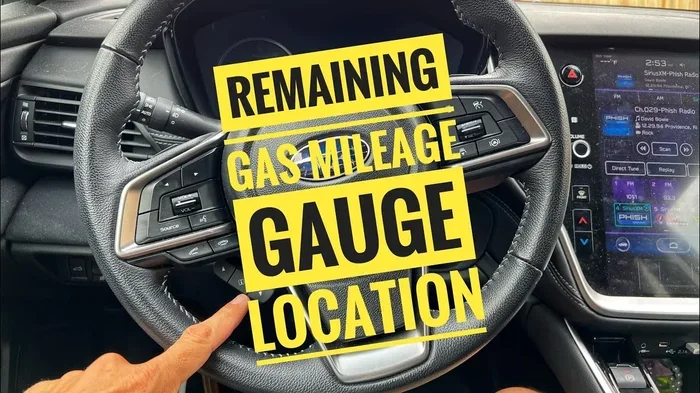
First, find the controls for your trip computer. On most Subaru Outback models, these are located on the steering wheel or the dashboard panel near the instrument cluster. Look for buttons labeled “TRIP” or “RESET.” Some models use a thumb wheel or a set of arrow buttons on the left side of the steering column.
If you are not sure where the controls are, check your owner’s manual. It will have a diagram showing each button and its function. The manual is a great resource for any Subaru owner.
Step 2: Turn the Ignition to the ON Position
Press the start button or turn the key to the “ON” position. You do not need to start the engine. The dashboard lights should come on, and the trip computer screen should be active. If your vehicle has a digital display screen, it should show your current trip data.
Step 3: Navigate to the MPG Display
Use the trip computer buttons to scroll through the display options. You will see different screens showing various readings. Look for the screen that displays your current or average MPG. On some models, you may need to press the “TRIP” button multiple times to cycle through the options.
Once you find the MPG screen, stop there. This is the screen you will be resetting.
Step 4: Press and Hold the RESET Button
Press and hold the RESET button for about two to three seconds. The display should flash and then reset to zero. On some Subaru Outback models, the screen may show “0.0” or “—” to indicate the reset was successful.
Release the button once the screen resets. Your MPG tracking has now started fresh from zero.
Step 5: Verify the Reset
Drive your vehicle for a short distance and check the MPG display again. You should see a new reading starting to build. If the number does not change or stays at zero after driving, try the reset process again. Sometimes the system needs a short drive to register new data.
Why Resetting MPG Helps You Save Money
You might wonder why resetting your MPG matters so much. The answer is simple: accurate data leads to better decisions. When your MPG reading is based on a clean start, you get a true picture of your current fuel economy.
Think of it this way. Imagine tracking your spending on a budget that never resets. Old data mixes with new data, and you lose track of what is really happening. The same thing happens with your MPG. Over time, old readings can skew your understanding of how efficiently you are driving.
By resetting your MPG regularly, you can:
- Measure the impact of driving changes: See if slowing down or smoothing your acceleration actually improves your fuel economy.
- Track seasonal differences: Compare your summer MPG to your winter MPG and understand the impact of weather.
- Monitor maintenance needs: A sudden drop in MPG can signal a problem that needs attention.
- Set goals: Challenge yourself to improve your MPG each month and see real progress.
These small steps add up over time. They can help you save a surprising amount of money on fuel. For context, the average Subaru Outback gets around 26 to 33 MPG depending on the model and driving conditions. Even a small improvement of 1 or 2 MPG can save you hundreds of dollars per year.
Tips to Improve Your Subaru Outback Fuel Economy
Resetting your MPG is only half the battle. The real goal is to improve your fuel economy so you spend less at the pump. Here are some proven tips to help you get better mileage from your Subaru Outback.
Drive Smoothly and Steadily
One of the biggest factors in fuel economy is how you drive. Aggressive driving wastes gas. Instead, accelerate gently and maintain a steady speed. Use cruise control on highways when it is safe to do so. Smooth driving can improve your MPG by up to 15 percent.
Keep Your Tires Properly Inflated
Underinflated tires create extra rolling resistance. This forces your engine to work harder and use more fuel. Check your tire pressure at least once a month. The recommended pressure for your Subaru Outback can be found on the driver’s side door jamb or in the owner’s manual.
Reduce Unnecessary Weight
Every extra pound your vehicle carries uses more fuel. Clean out your trunk and remove any items you do not need. If you use a roof rack, take it off when it is not in use. Roof racks create drag that reduces your fuel efficiency.
Use the Right Fuel
Most Subaru Outback models run well on regular unleaded gasoline. Using premium fuel when it is not required will not improve your MPG. Check your owner’s manual to confirm the recommended fuel type for your specific model.
Keep Up with Maintenance
Regular maintenance keeps your vehicle running efficiently. Change your oil on schedule, replace air filters when needed, and keep your engine tuned. A well-maintained Subaru Outback will always deliver better fuel economy than one that is neglected.
Plan Your Trips Wisely
Combining errands into one trip saves fuel compared to making multiple short trips. Cold starts use more gas, so warming up your vehicle for too long is also wasteful. Try to plan your routes to avoid heavy traffic and excessive idling.
For more information on how much fuel your vehicle can hold, check out our guide on how many gallons is a full tank of gas. Understanding your fuel tank capacity helps you plan your trips and estimate costs.
Common Mistakes When Tracking MPG
Many drivers make mistakes when trying to track or improve their fuel economy. Avoiding these common errors will help you get the most accurate readings and the best results.
Only Resetting After a Fill-Up
Some drivers only reset their MPG after filling the tank. While this is a good practice, it is not the only time you should reset. If you notice a sudden change in your driving habits or conditions, a mid-trip reset can give you more useful data.
Ignoring the Distance Driven
MPG is only meaningful when paired with distance. Always note how many miles you drove between resets. This gives you context for your MPG reading and helps you spot trends over time.
Relying Only on the Dashboard Computer
The trip computer in your Subaru Outback is helpful, but it is not perfect. Some systems estimate MPG rather than calculating it precisely. For the most accurate readings, try tracking your fuel purchases manually. Record the number of gallons you buy and the miles you drive between fill-ups.
Not Accounting for Fuel Quality
Fuel quality can vary between stations. Lower-quality fuel may not burn as efficiently, which can affect your MPG. Try to fill up at reputable stations and notice any changes in your fuel economy.
Comparing City and Highway MPG Incorrectly
City driving and highway driving produce very different MPG numbers. City driving involves more stops and starts, which lowers your MPG. Highway driving allows for steady speeds, which improves it. Always compare similar driving conditions when tracking your progress.
When to Seek Professional Help
Resetting your MPG is a simple task, but sometimes fuel economy issues go deeper than a reset. If you have reset your MPG and still notice a significant drop in fuel efficiency, it may be time to see a professional.
Here are some signs that something more serious is going on:
- Sudden MPG Drop: If your MPG falls sharply without any change in driving habits, have your vehicle inspected.
- Check Engine Light: A lit check engine light can indicate problems that affect fuel economy.
- Unusual Smells or Sounds: Burning smells or strange noises paired with poor MPG are red flags.
- Excessive Idling: If your vehicle idles roughly or stalls, the fuel system may need attention.
- Poor Acceleration: Sluggish performance combined with low MPG could signal engine or transmission issues.
Regular Subaru Outback maintenance can prevent many of these problems. Keeping up with oil changes, air filter replacements, and fuel system cleanings helps your vehicle run at its best. If you are curious about how long your Subaru can last with proper care, our article on how many miles can a car last provides valuable insights into vehicle longevity and maintenance.
Understanding your fuel range is also important. Knowing how far you can go on a full tank helps you plan trips and avoid running low. You can learn more about fuel range by reading our piece on how far can a car go on empty.
Key Takeaways
- Resetting MPG is Simple: Use the trip computer controls on your steering wheel or dashboard to reset in just a few steps.
- Fresh Data Matters: A clean MPG reset gives you accurate readings to track your true fuel economy.
- Small Changes Add Up: Smooth driving, proper tire pressure, and regular maintenance all improve your Subaru Outback MPG.
- Avoid Common Tracking Mistakes: Do not rely solely on the dashboard computer, and always compare similar driving conditions.
- Know When to Get Help: A persistent drop in MPG despite a reset may signal a deeper mechanical issue.
Frequently Asked Questions
How often should I reset the MPG on my Subaru Outback?
There is no set rule for how often to reset your MPG. Many drivers reset it every time they fill up the tank. Others reset it at the start of each month to track monthly fuel economy. The best approach is to reset it whenever you want a fresh baseline for comparison. Regular resets help you spot trends and measure the impact of any changes you make to your driving habits.
Can resetting MPG fix poor fuel economy?
Resetting your MPG does not fix poor fuel economy by itself. It simply clears old data so you can start tracking fresh numbers. If your fuel economy is consistently low, you need to address the underlying cause. This could be anything from driving habits to vehicle maintenance issues. Use the reset as a tool to measure progress, not as a solution to poor MPG.
Does the Subaru Outback have a manual MPG reset button?
Yes, most Subaru Outback models have a manual reset function through the trip computer. The reset is usually accessed via buttons on the steering wheel or dashboard. You may need to hold the reset button for a few seconds while viewing the MPG screen. Refer to your owner’s manual for the exact steps for your specific model year, as the process can vary slightly between generations.
What is the average MPG for a Subaru Outback?
The average MPG for a Subaru Outback ranges from about 26 MPG in the city to 33 MPG on the highway for newer models. Older models or those with all-wheel drive may see slightly lower numbers. Your actual MPG will depend on your driving style, road conditions, and vehicle maintenance. Tracking your MPG after a reset gives you the most accurate picture of your personal fuel economy.
Will a dirty air filter affect my Subaru Outback MPG?
Yes, a dirty air filter can reduce your fuel economy. When airflow to the engine is restricted, the engine has to work harder to burn fuel efficiently. This leads to lower MPG and reduced performance. Replacing your air filter regularly is one of the simplest and most affordable ways to keep your Subaru Outback running efficiently and maintaining good fuel economy.
Is it better to track MPG manually or use the trip computer?
Both methods have their benefits. The trip computer gives you real-time data and is very convenient. However, it can sometimes be slightly inaccurate. Manual tracking, where you record gallons purchased and miles driven, tends to be more precise. Many experienced drivers use both methods together. They use the trip computer for day-to-day monitoring and manual tracking for long-term accuracy.
Conclusion
Knowing how to reset MPG on a Subaru Outback is a valuable skill for any owner. It takes just a few minutes and gives you powerful data about your fuel economy. With a fresh reset, you can track your progress, spot problems early, and make changes that save you money at the pump.
Combine your MPG resets with smart driving habits and regular maintenance. The results will speak for themselves. You will notice better fuel economy, lower fuel costs, and a deeper understanding of how your Subaru Outback performs. Start today by resetting your MPG and taking the first step toward better mileage. Your wallet will thank you every time you fill up.