Is It Worth Replacing a Hybrid Battery for Sure Now
Replacing a hybrid battery can feel scary and expensive, but it might be the smartest move you make for your car. A failing hybrid battery hurts fuel economy, causes weird warning lights, and can leave you stranded. This guide breaks down the real costs, clear warning signs, and honest answers about whether a hybrid battery replacement actually pays off in the long run.
You are cruising down the road in your trusty hybrid, and suddenly the dashboard lights up like a Christmas tree. The fuel gauge is dropping faster than usual. The car feels sluggish. And you start thinking — is it time to replace the hybrid battery? Maybe you have been Googling “is it worth replacing a hybrid battery” for days now, and every article just makes things more confusing.
Here is the honest truth. Replacing a hybrid battery is not cheap, but it is also not always a death sentence for your car. Whether it is worth it depends on your vehicle, your budget, and how much longer you plan to keep the car. This guide will walk you through every angle so you can make a smart, confident decision.
We will cover the real costs, the warning signs you should never ignore, and whether a new battery actually pays for itself over time. No fluff. No jargon. Just clear, practical advice from people who know this stuff.
Key Takeaways
- Hybrid battery replacement costs range from $1,000 to $6,000+ depending on the vehicle, battery type, and whether you go OEM or aftermarket.
- Watch for warning signs like reduced fuel economy, strange warning lights, and rough idle — these often point to a degrading hybrid battery.
- A dead hybrid battery can sometimes be recharged or repaired module by module, which costs far less than a full replacement.
- Hybrid batteries typically last 8 to 15 years or 100,000 to 200,000 miles, but driving habits and climate play a big role.
- DIY replacement is possible for some models, but high-voltage safety risks make professional installation the safer choice for most owners.
- Replacing the battery can restore your fuel economy and extend the car’s usable life by several more years.
📑 Table of Contents
What Happens When a Hybrid Battery Starts Failing?
Hybrid cars use two power sources — a gas engine and an electric motor powered by a high-voltage battery pack. When the battery starts to degrade, both systems feel the impact. The car has to work harder, the gas engine kicks in more often, and everything becomes less efficient.
Loss of Fuel Economy
This is the first and most noticeable sign. A healthy hybrid battery helps the gas engine by handling low-speed driving, stopping and going in traffic, and regenerative braking. When the battery weakens, the gas engine picks up all the slack. You will notice you are filling up the tank more often, and the miles per gallon number on your dashboard drops significantly.
For example, a Toyota Prius that normally gets 50 miles per gallon might suddenly drop to 35 or even lower. That is a big hit at the pump, and over time, it adds up fast.
Warning Lights and Error Codes
Most hybrids have a dedicated warning light for the battery system. You might see a red or yellow triangle, a battery icon, or even the dreaded check engine light. Modern hybrids also store error codes that a mechanic can read with a diagnostic tool. These codes often point directly to the hybrid battery pack or individual battery modules.
If you ignore these warnings, the problem gets worse. A minor module failure can turn into a full battery replacement if you do not address it early.
Reduced Power and Performance
A weak hybrid battery means less electric assist. You might notice the car feels sluggish during acceleration, especially when merging onto highways or climbing hills. Some drivers report a “limp mode” where the car limits speed and power to protect itself. This is the vehicle’s way of saying, “Hey, something is seriously wrong with the battery.”
Can You Still Drive a Hybrid with a Bad Battery?
Technically, yes. Many hybrids can still run on gas alone when the battery fails completely. But the driving experience suffers, fuel costs go up, and you risk getting stranded if the battery dies entirely. If you are wondering whether you can drive a hybrid without the battery, the short answer is that you can — but you really should not for long.
It is always better to address battery issues early rather than waiting until the car barely runs.
How Much Does Hybrid Battery Replacement Cost?
The cost of replacing a hybrid battery is the number one reason people ask whether it is worth it. And honestly, the price tag can make anyone pause. But the real question is whether the cost is justified by the benefits.
OEM vs. Aftermarket Batteries
OEM (original equipment manufacturer) batteries come directly from the carmaker. They are designed to match your vehicle exactly and usually come with a warranty. Aftermarket batteries are made by third-party companies and tend to cost less. However, the quality can vary widely, and some aftermarket options do not last as long.
Here is a rough comparison of what you can expect to pay:
- OEM hybrid battery replacement: $3,000 to $6,000+ depending on the vehicle model.
- Aftermarket hybrid battery replacement: $1,500 to $3,500, though quality varies.
- Refurbished or rebuilt battery packs: $1,000 to $2,500, which can be a solid middle-ground option.
The wide range depends on the car brand, battery chemistry, and where you live. Labor costs also add up, especially if the battery pack is hard to access or requires specialized tools.
Module Replacement vs. Full Pack Replacement
Not all battery failures mean you need to replace the entire pack. Many times, only one or two modules inside the battery pack have gone bad. A skilled technician can test each module individually and replace just the faulty ones. This approach, sometimes called hybrid battery module replacement, can save you thousands of dollars compared to a full pack swap.
For instance, a dead module replacement might cost $500 to $1,500, while a full replacement runs $3,000 or more. Always ask your mechanic to diagnose the specific issue before committing to a full replacement.
Can a Dead Hybrid Battery Be Recharged?
Sometimes, yes. If the battery has simply discharged or experienced a minor electrical issue, a professional recharge might bring it back to life. This is a much cheaper option, often costing just a few hundred dollars. However, if the battery cells are physically damaged or have degraded beyond recovery, recharging will not help. A qualified technician can test your battery and tell you whether recharging is a viable option.
Signs Your Hybrid Battery Needs Replacement
Catching a failing hybrid battery early can save you a lot of money and hassle. Here are the most common signs that your battery is on its way out.
- Dropping fuel economy: You are filling up more often, and your MPG has dropped noticeably.
- Warning lights on the dashboard: Battery or check engine lights that stay on or flicker intermittently.
- Rough or uneven idle: The car shakes or feels unstable when stopped at a light.
- Reduced electric-only driving: The car no longer runs on electric power at low speeds or in stop-and-go traffic.
- Unusual noises: Clicking, buzzing, or whining sounds coming from the battery area or under the car.
- Battery won’t hold a charge: The car starts fine but loses charge quickly or shows a low battery percentage.
- Age and mileage: If your hybrid battery is over 10 years old or past 150,000 miles, degradation is normal and expected.
If you notice two or more of these signs together, it is time to get your battery professionally tested. Many auto shops offer free or low-cost hybrid battery diagnostics.
How to Test Your Hybrid Battery Health
You can use a multimeter to check the voltage of individual battery modules, but this requires some technical knowledge and safety precautions. High-voltage hybrid batteries carry serious risks if handled incorrectly. Always disconnect the high-voltage system before touching any battery components, or better yet, let a professional do the testing for you.
A professional diagnostic scan will read the battery’s state of health, identify weak or failed modules, and give you a clear picture of whether replacement is needed or if the battery can still be saved with a repair.
Can You Replace a Hybrid Battery Yourself?
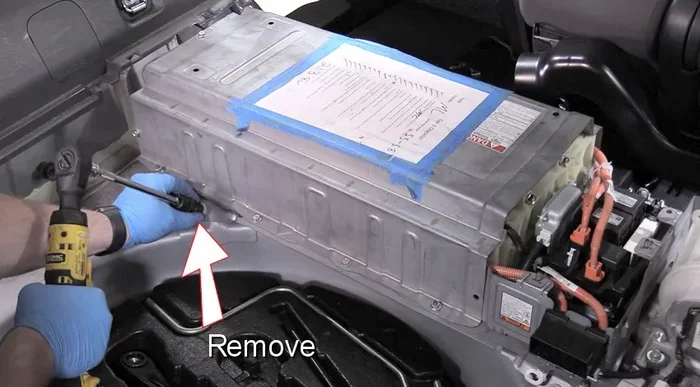
The short answer is yes, but with major caveats. Replacing a hybrid battery yourself is possible for some vehicle models, especially those with accessible battery packs. However, hybrid batteries operate at high voltages that can be lethal if handled improperly. Safety should always come first.
What You Need to Know Before Attempting DIY Replacement
- High-voltage risk: Hybrid battery packs can carry 200 to 400 volts or more. A shock from this kind of system can cause serious injury or death.
- Specialized tools: You need insulated tools, proper wiring diagrams, and a battery management system scanner to reset the system after installation.
- Weight and handling: Hybrid battery packs are heavy, often weighing 50 to 80 pounds or more. Moving and installing them requires care and sometimes a second pair of hands.
- Warranty implications: DIY replacement may void your vehicle’s warranty, especially if the battery is still covered.
If you have experience working on cars, understand high-voltage safety protocols, and have the right tools, replacing the battery yourself can save you hundreds in labor costs. But if you are unsure, paying a professional is the safer and smarter choice.
For a detailed guide on the DIY process, check out our article on can you replace a hybrid battery yourself for step-by-step instructions and safety tips.
When to Call a Professional
If your car is still under warranty, always go through the dealership or an authorized service center. They can replace the battery at little or no cost to you. Even if your warranty has expired, a reputable mechanic or hybrid specialist will have the training, tools, and experience to do the job safely and correctly.
How Long Should a Hybrid Battery Last?
Hybrid battery lifespan depends on several factors, including the type of battery, your driving habits, and the climate you live in. Most manufacturers design hybrid batteries to last the lifetime of the vehicle, but real-world conditions tell a different story.
Average Hybrid Battery Lifespan
On average, a hybrid battery lasts between 8 and 15 years, or roughly 100,000 to 200,000 miles. Some drivers have reported getting well beyond 200,000 miles on their original battery pack, while others have needed a replacement much earlier.
For example, many Toyota Prius owners report excellent long-term battery durability, with some batteries lasting well past 200,000 miles with proper care. You can read more about Prius battery longevity in our article on can a Prius battery last 200,000 miles.
Factors That Affect Battery Degradation
- Driving habits: Frequent short trips and stop-and-go city driving put more strain on the battery than steady highway driving.
- Climate: Extreme heat and extreme cold both accelerate battery degradation. Hot climates are especially tough on hybrid batteries.
- Charging habits: Keeping the battery between 20% and 80% charge helps extend its life. Constantly draining it to zero or charging it to 100% speeds up wear.
- Regenerative braking usage: How often and how hard you use regenerative braking affects the battery’s charge cycles and overall health.
- Vehicle age and mileage: As the car ages, the battery naturally degrades. This is normal and expected.
Understanding these factors can help you take steps to prolong your battery’s life and delay the need for replacement.
Tips to Extend Your Hybrid Battery Life
- Avoid extreme temperatures when possible. Park in the shade during summer and use a garage in winter.
- Drive at steady speeds when you can. Highway driving is gentler on the battery than constant city stop-and-go.
- Do not let the battery drain completely. Try to keep the charge level in a healthy range.
- Get regular maintenance checks. A professional can spot early signs of battery degradation before it becomes a serious problem.
- Use regenerative braking wisely. Gentle, consistent braking helps the battery recharge efficiently without excessive wear.
So, Is It Really Worth Replacing a Hybrid Battery?
Now we get to the big question. After looking at the costs, the warning signs, and the lifespan, is replacing a hybrid battery actually worth it? The answer depends on your specific situation.
When Replacement Is Worth It
- You plan to keep the car for several more years. A new battery can add 5 to 10 years of reliable driving to your vehicle.
- Your fuel costs are skyrocketing. A new hybrid battery restores your fuel economy, saving you money at the pump every month.
- The car is otherwise in great shape. If the engine, transmission, and body are all solid, replacing the battery makes the car feel like new again.
- You have warranty or extended coverage. If the battery is still under warranty, the cost to you might be zero or very minimal.
- You love the car and its features. Sometimes the sentimental or practical value of the car justifies the investment.
When Replacement Might Not Be Worth It
- The car has high overall mileage and other major issues. If the engine, transmission, or body need expensive repairs too, a new battery might not make financial sense.
- The replacement cost is close to the car’s resale value. If you are paying $5,000 for a battery on a car worth $6,000, you might be better off selling the car as-is or for parts.
- You are planning to buy a new car soon. If you are upgrading anyway, spending big on a battery replacement does not make sense.
The Bottom Line
For most hybrid owners, replacing the battery is worth it if the rest of the car is in good condition. The restored fuel economy, improved performance, and extended vehicle life often justify the upfront cost. But every situation is different, and you should weigh your options carefully before making a decision.
If you are unsure whether your battery can be saved, start with a diagnostic test. Sometimes a simple module replacement or recharge solves the problem for a fraction of the cost of a full pack swap. And if the battery truly is dead, knowing your options — from OEM to aftermarket to refurbished — puts you in the best position to make a smart choice.
Remember, a hybrid battery is not a disposable part. It is a major component that defines how your car operates. Treating it with care, monitoring its health, and addressing issues early will help you get the most out of your investment.
Whether you drive a Toyota Prius, a Honda Civic Hybrid, or any other hybrid model, the principles are the same. Take care of the battery, and the battery will take care of you. And if replacement becomes necessary, you now have the knowledge to make the best decision for your wallet and your car.
Frequently Asked Questions
How long does a hybrid battery last before needing replacement?
Most hybrid batteries last between 8 and 15 years, or roughly 100,000 to 200,000 miles. However, factors like driving habits, climate, and maintenance can significantly shorten or extend that lifespan. Regular battery health checks help you catch problems early.
Is it cheaper to replace a hybrid battery yourself?
DIY replacement can save you on labor costs, but hybrid batteries carry high voltage that poses serious safety risks. Unless you have experience with high-voltage automotive systems and the right tools, professional installation is the safer and more reliable choice.
Can you drive a hybrid car with a dead battery?
Most hybrids can run on gas alone if the battery dies, but the driving experience suffers significantly. You will notice poor fuel economy, reduced power, and warning lights. It is not recommended to drive long distances with a dead hybrid battery.
What is the average cost of replacing a hybrid battery?
Hybrid battery replacement costs typically range from $1,000 to $6,000 or more. OEM batteries cost more than aftermarket options, and module-only repairs are usually cheaper than replacing the entire pack. Labor costs vary by location and vehicle model.
Does replacing a hybrid battery restore fuel economy?
Yes, in most cases a new or refurbished hybrid battery restores the fuel economy you originally experienced with the car. This can lead to significant savings at the pump over time, especially if your old battery was causing poor MPG.
Are aftermarket hybrid batteries reliable?
Aftermarket hybrid batteries vary widely in quality. Some offer excellent performance and longevity, while others may not last as long as OEM batteries. Always research the brand, read reviews, and check the warranty before purchasing an aftermarket replacement.