How to Fix Low Tire Pressure and Keep Your Ride Safe
Low tire pressure is one of the most common car problems, but fixing it is simple and affordable. This guide walks you through checking, inflating, and maintaining proper tire pressure to keep your ride safe and efficient. You will learn the signs of underinflated tires, the tools you need, and expert tips to prevent future issues.
Have you ever noticed your car pulling to one side or felt a rough ride that just does not feel right? Low tire pressure might be the culprit. It is one of the simplest car problems to fix, yet many drivers ignore it until it becomes a bigger issue. How to Fix Low Tire Pressure is a skill every driver should have in their toolkit.
Driving on underinflated tires is dangerous. It reduces your grip on the road, lowers your fuel economy, and causes uneven tire wear. In fact, the NHTSA reports that tire problems contribute to thousands of accidents each year. The good news is that checking and fixing your tire pressure takes just a few minutes and costs almost nothing.
In this guide, we will walk you through everything you need to know. From reading your tire pressure light to inflating your tires the right way, we have you covered. Whether you are a complete beginner or just need a refresher, you will find practical steps and real tips that work.
Key Takeaways
- Check tire pressure monthly: Regular checks catch problems early and keep you safe on the road.
- Use a quality tire pressure gauge: A reliable gauge gives you accurate readings every time.
- Inflate to the recommended PSI: Never guess the right pressure. Check your door jamb or owner manual.
- Address leaks promptly: Slow leaks from valve stems or punctures can waste fuel and damage tires.
- Reset your TPMS after inflating: This clears warning lights and keeps your system working properly.
- Rotate tires regularly: Even wear extends tire life and improves tire pressure consistency across all four wheels.
📑 Table of Contents
Why Tire Pressure Matters
Your tires are the only part of your car that touches the road. That means they affect everything from braking to handling to comfort. When your tires do not have enough air, the whole performance of your vehicle drops.
Underinflated tires create more rolling resistance. This means your engine has to work harder, which burns more fuel. Studies show that tires underinflated by just 10 PSI can reduce fuel economy by up to 3%. Over time, that adds up at the pump.
Safety is the bigger concern. Low tire pressure causes overheating, which can lead to blowouts. It also makes your car slower to respond when you turn or brake. In wet conditions, underinflated tires are even more dangerous because they cannot channel water away from the road surface as effectively.
If you have ever wondered whether your tire pressure monitoring system is reliable, the answer is yes. But it only alerts you when pressure drops significantly. By the time the light comes on, your tires may already be underinflated by 25% or more. That is why monthly manual checks are so important.
The Cost of Ignoring Low Tire Pressure
Ignoring low tire pressure can cost you in more ways than one. Here is a quick look at what happens when you skip tire checks:
- Reduced fuel efficiency: Your car burns more gas because the tires create extra friction.
- Uneven tire wear: The outer edges of the tread wear down faster, shortening tire life by thousands of miles.
- Poor handling: Your car feels sluggish or unresponsive in turns and emergency maneuvers.
- Increased risk of blowouts: Underinflated tires flex more, causing overheating and potential failure.
- Higher repair costs: Replacing a blown tire costs far more than a few minutes of inflation.
Some drivers ask, can low coolant cause a car to shake, and while that is a different issue, low tire pressure can also cause vibrations. The key difference is that tire-related shaking usually gets worse at higher speeds and improves when you slow down.
Signs Your Tire Pressure Is Low
Your car gives you several warning signs when tire pressure drops. Learning to spot these early can save you from bigger problems down the road.
The Tire Pressure Warning Light
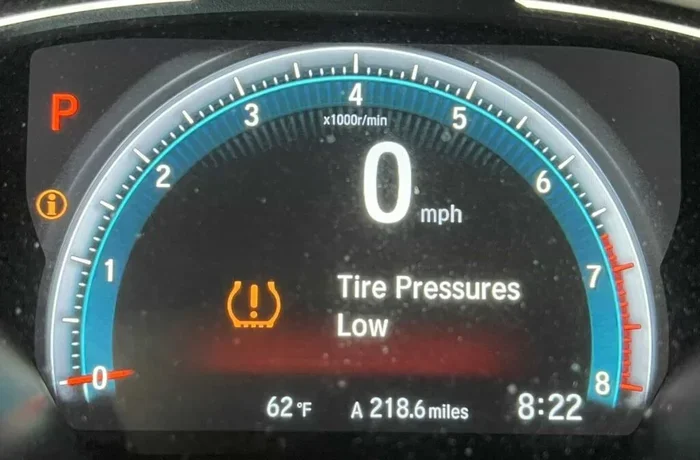
The most obvious sign is the TPMS warning light on your dashboard. It looks like a horseshoe shape with an exclamation point in the center. When this light turns on, do not ignore it. Check your tire pressure as soon as possible.
If you drive a Toyota, you might also check Can You See Tire Pressure On The Toyota App for a quick digital reading right from your phone. This is a handy feature that many modern Toyota owners use to stay on top of their tire health.
Physical Warning Signs
Beyond the dashboard light, your car and body can tell you a lot. Here are common signs of low tire pressure:
- Visual sagging: The tire looks flatter on one side, especially after the car sits overnight.
- Increased road noise: Underinflated tires create more friction, which means more humming or thumping sounds.
- Poor fuel economy: You notice you are filling up more often than usual.
- Pulling to one side: The car drifts left or right even when you hold the steering straight.
- Soft or spongy feel: The steering feels less responsive, especially during turns.
- Uneven tire wear: The outer edges of the tread look more worn than the center.
If you notice any of these signs, do not wait. Pull over safely and check your tires. Even a few PSI below the recommended level can affect how your car handles.
How Tire Pressure Changes With Weather
Here is something many people do not realize: air pressure inside tires drops as the temperature falls. For every 10-degree drop in outside temperature, tire pressure can decrease by about 1 PSI. This is why many drivers notice low tire pressure warnings in the winter.
This seasonal change is completely normal. However, it means you should check your tire pressure more often during cold months. A quick top-off can make a big difference in safety and performance.
How to Check Your Tire Pressure
Checking tire pressure is the first step to fixing the problem. You need the right tool and the right number. Here is exactly how to do it.
Step 1: Find the Recommended PSI
Do not guess the right pressure. Every vehicle has a recommended tire pressure listed in two places:
- The driver side door jamb: Open the door and look for a sticker on the frame. It lists the recommended PSI for both front and rear tires.
- The owner manual: This is the most reliable source. Check the maintenance section for exact numbers.
Never use the number printed on the tire sidewall. That number is the maximum pressure the tire can handle, not the recommended pressure for your vehicle.
Step 2: Get a Tire Pressure Gauge
A tire pressure gauge is inexpensive and essential. You can buy a digital or analog gauge at any auto parts store for under $15. Digital gauges are easier to read, but analog ones work just as well when used correctly.
Pro tip: Keep a gauge in your glove box. Gas station air pumps often have inaccurate gauges. Having your own ensures you always get a reliable reading.
Step 3: Check When Tires Are Cold
Always check tire pressure when the tires are cold. This means the car has been parked for at least three hours or driven less than a mile. Driving heats up the air inside the tire, which raises the pressure reading and gives you a false sense of security.
Step 4: Read the Gauge
Remove the valve cap from the tire. Press the gauge firmly onto the valve stem. You should hear a brief hiss, but it should be quick. Wait for the reading and compare it to the recommended PSI.
If the reading is low, you need to add air. If it is high, you can release some by pressing the small pin inside the valve stem. Go slowly and recheck frequently.
How to Fix Low Tire Pressure
Now that you know your tire pressure is low, let us fix it. This is the core of our guide on how to fix low tire pressure and keep your ride safe.
Method 1: Use an Air Compressor at a Gas Station
The most common way to fix low tire pressure is to use an air compressor. Most gas stations have coin-operated compressors. Here is the process:
- Park close to the air pump so the hose reaches all four tires.
- Remove the valve cap from the first tire.
- Press the compressor nozzle firmly onto the valve stem.
- Add air in short bursts. Check the pressure after each burst.
- Stop when you reach the recommended PSI.
- Replace the valve cap.
- Repeat for all four tires.
Most gas station compressors are free or cost $1 to $2. It is one of the cheapest and easiest ways to maintain your tires.
Method 2: Use a Portable Tire Inflator
If you do not want to go to a gas station, a portable tire inflator is a great investment. These small devices plug into your car’s 12V outlet and inflate tires quickly. Many models have a built-in gauge, so you can check pressure on the go.
Portable inflators are especially useful for drivers who frequently travel to remote areas or deal with slow leaks. They are compact enough to keep in your trunk year-round.
Method 3: Visit a Dealership or Tire Shop
If you are not comfortable doing it yourself, a quick trip to a tire shop or dealership works perfectly. Most shops will check and inflate your tires for free or for a small fee. Some dealerships also offer complimentary tire checks during routine service visits.
Method 4: Fix a Slow Leak
Sometimes low tire pressure is not just about needing air. A slow leak means air is escaping over time. Common causes of slow leaks include:
- Damaged valve stem: The rubber or metal stem can crack or corrode over time.
- Puncture in the tire: A nail, screw, or sharp object can create a small hole.
- Poor seal between rim and tire: Corrosion on the rim can prevent a tight seal.
- Temperature changes: Cold weather naturally reduces pressure, but a large drop suggests a leak.
If you suspect a slow leak, apply soapy water to the tire and valve stem. Look for bubbles forming. Bubbles indicate where air is escaping. Small punctures can often be repaired with a plug kit or by a professional.
Keep in mind that if your tire pressure light stays on after you inflate the tires, you may need to reset the TPMS. The reset procedure varies by vehicle, but it is usually found in the settings menu on the dashboard or in the owner manual.
Quick Tips for Fixing Low Tire Pressure
Quick Tip 1: Always carry a portable tire gauge and a small inflator in your car. You never know when you will need them.
Quick Tip 2: Check tire pressure before long road trips. A five-minute check can prevent a blowout on the highway.
Quick Tip 3: Do not forget the spare tire. It loses pressure too, and you will want it ready if you need it.
Quick Tip 4: Inflate tires to the recommended PSI, not the maximum PSI on the tire sidewall. Overinflating is just as dangerous as underinflating.
Preventing Low Tire Pressure in the Future
Fixing low tire pressure is great, but preventing it is even better. A few simple habits can keep your tires in top shape all year long.
Make It a Monthly Habit
Set a reminder on your phone to check tire pressure once a month. It takes less than 10 minutes and can extend the life of your tires by thousands of miles. Consistency is the key to avoiding surprise low-pressure situations.
Invest in Quality Tires
Cheap tires lose air faster and wear out unevenly. Investing in quality tires from a reputable brand pays off in safety, comfort, and longevity. If you are unsure about your current tires, ask your mechanic for an inspection.
Regular tire maintenance goes hand in hand with tire pressure checks. Services like tire rotations help ensure even wear across all four tires. Many drivers ask, Are Tire Rotations Worth The Money, and the answer is absolutely yes. Rotations promote even tread wear, which helps maintain consistent tire pressure and improves overall handling.
Keep Your Valve Stems in Good Shape
The valve stem is a small but important part of your tire. A damaged or missing valve cap lets air escape slowly over time. Replace valve caps after every tire check, and inspect the stems for cracks or damage during routine maintenance.
Watch for Temperature Changes
As we mentioned, cold weather reduces tire pressure. During fall and winter, check your tires more frequently. A quick top-off during seasonal changes can prevent the TPMS light from coming on unexpectedly.
Address Warning Signs Immediately
Do not wait for the TPMS light to come on. If you notice any physical signs of low pressure, such as sagging tires or increased road noise, check and inflate right away. Catching problems early prevents costly repairs and keeps you safe.
Common Mistakes to Avoid
Even well-meaning drivers make mistakes when it comes to tire pressure. Here are the most common ones to watch out for:
- Relying only on the TPMS light: The light only activates when pressure is significantly low. By then, your tires may already be damaged.
- Using the wrong PSI number: The number on the tire sidewall is the maximum, not the recommended pressure. Always check your door jamb sticker.
- Checking tires when hot: Driving heats the air inside the tire, giving a falsely high reading. Always check when cold.
- Ignoring the spare tire: A flat spare tire defeats the purpose of having one. Check it at least twice a year.
- Overinflating to compensate: More air is not always better. Overinflated tires ride harshly and wear the center of the tread faster.
- Neglecting slow leaks: A tire that loses a little air each week might have a slow leak. Address it before it becomes a flat.
Some of these mistakes overlap with other car issues. For example, if you experience vibrations while driving, you might wonder if can low coolant cause a car to shake. While low coolant is a separate problem, it highlights the importance of paying attention to your car’s signals and addressing issues early.
Expert Insights on Tire Pressure Maintenance
We spoke with certified automotive technicians about the most common tire pressure mistakes they see. Here is what the experts had to say:
Tip from a master technician: “I see customers come in with completely flat tires almost every week. Most of the time, it was a slow leak they could have caught with a simple monthly check. A $12 gauge and five minutes of your time can save you hundreds of dollars in tire replacements.”
Advice on seasonal changes: “Fall and spring are the best times to do a thorough tire check. Temperature swings of 30 degrees or more can drop your pressure by 3 to 5 PSI in a single week. Do not wait for the warning light.”
On TPMS reliability: “The tire pressure monitoring system is a great safety feature, but it is a late-warning system. Think of it as your backup, not your primary method of checking pressure. Manual checks are still essential.”
On tire longevity: “Properly inflated tires last 20 to 30 percent longer than underinflated ones. That is a significant savings over the life of your vehicle. It also improves your safety every time you drive.”
Conclusion
Knowing how to fix low tire pressure is one of the simplest and most valuable skills you can have as a driver. It takes just a few minutes, costs very little, and keeps you safe on every trip. From checking your pressure monthly to inflating tires correctly and fixing slow leaks, each step makes a real difference.
Remember to use the recommended PSI for your vehicle, never rely solely on the TPMS light, and make tire checks a regular habit. Your tires are the foundation of your car’s safety, comfort, and performance. Take care of them, and they will take care of you.
Start today. Grab a tire pressure gauge, check all four tires, and make any needed adjustments. Your future self and your wallet will thank you. Safe driving starts with properly inflated tires, and now you have everything you need to keep them in great shape.
Frequently Asked Questions
What is the recommended tire pressure for most cars?
Most passenger cars recommend a tire pressure between 30 and 35 PSI. However, the exact number varies by vehicle. Always check the sticker on your driver side door jamb or your owner manual for the correct PSI. Never use the number printed on the tire sidewall as your guide.
Can I drive with the tire pressure light on?
It is not recommended. The tire pressure light means at least one tire is significantly underinflated, which affects handling, braking, and fuel economy. If you must drive a short distance, do so carefully and at reduced speeds. Get to a gas station or air pump as soon as possible to check and inflate your tires.
How often should I check my tire pressure?
Check your tire pressure at least once a month and before any long road trips. Air slowly leaks through tires over time, and temperature changes can cause pressure to drop. A quick monthly check takes only a few minutes and can prevent bigger problems.
Do I need to reset my TPMS after inflating my tires?
Yes, in most vehicles. After inflating your tires to the correct pressure, you may need to reset the TPMS. The reset button is usually located near the steering column or in the infotainment settings. Refer to your owner manual for the exact reset procedure for your specific model.
What causes slow tire leaks?
Common causes of slow leaks include damaged valve stems, small punctures from nails or screws, corrosion between the rim and tire, and worn tire beads. If you notice your tire losing pressure gradually, apply soapy water to the tire and valve stem to look for bubbles. A professional can then repair or replace the affected part.
Is it safe to use a portable tire inflator?
Yes, portable tire inflators are safe and very convenient. They plug into your car’s 12V outlet and work well for topping off tires. Just make sure to follow the manufacturer’s instructions and do not overinflate. Most portable inflators have built-in pressure gauges to help you avoid going over the recommended PSI.
=== CONCLUSION ===
Taking care of your tire pressure is one of the easiest ways to stay safe and save money on the road. The steps we covered in this guide give you everything you need to handle low tire pressure with confidence. From monthly checks to using the right tools, these habits will serve you well for years to come.
Do not wait for the warning light or a flat tire to take action. Start today, and make tire pressure checks a regular part of your car maintenance routine. Your tires, your fuel bill, and your peace of mind will all thank you.