How Do They Measure Window Tint And What You Need To Know
How Do They Measure Window Tint? The process relies on Visible Light Transmission (VLT) percentages, specialized tint meters, and spectrophotometer technology. Understanding these measurements helps you choose the right window tint film for your vehicle. Legal tint limits vary by state, so knowing the numbers keeps you compliant and safe.
Have you ever wondered how how do they measure window tint in the first place? It is not just a guess or a visual check. There is real science, precise tools, and industry standards behind every tint percentage you see on a film label. Whether you are shopping for car window tinting or just curious about your current setup, understanding the measurement process matters a lot.
Window tint measurement affects everything from your driving comfort to staying within the law. Tint darkness, UV protection, and heat rejection are all measured using different methods. In this guide, we break down exactly how professionals and manufacturers determine these numbers. By the end, you will know exactly what those percentages mean and why they matter for your vehicle.
Key Takeaways
- VLT Percentage Is Key: Visible Light Transmission determines how much light passes through your tint.
- Tint Meters Give Accurate Readings: Digital tint meters are the most reliable tools for measuring film darkness.
- Different Tint Types Measure Differently: Ceramic, carbon, and metalized tints each have unique properties.
- Legal Limits Vary by State: Each region has its own window tint laws you must follow.
- Professional Installation Matters: A pro ensures your tint is measured and applied correctly.
- UV and Heat Rejection Are Measured Separately: Darkness and protection are not the same thing.
📑 Table of Contents
What Is Window Tint and Why Does Measurement Matter?
Window tint is a thin film applied to glass surfaces on cars, homes, and buildings. People use it for privacy, comfort, and protection from the sun. But not all tint is created equal. The quality and performance of a tint depend heavily on how it is measured.
When we talk about how do they measure window tint, we are really talking about a few core metrics. The most important one is Visible Light Transmission, or VLT. This number tells you how much light the tint allows to pass through. A lower VLT means a darker tint. A higher VLT means more light gets through.
Measurement matters because it directly impacts safety and legality. Too dark and you might fail a vehicle inspection. Too light and you might not get the protection you paid for. Tint shade accuracy also affects how well your film blocks glare and UV rays. That is why precise measurement is the foundation of any good tint installation.
Why VLT Percentage Is the Gold Standard
The window tint percentage system is the universal way to communicate tint darkness. When a shop says they offer “35% tint,” they mean the film allows 35% of visible light through. This standard makes it easy to compare products across brands and styles. It also helps regulators set legal tint limits for vehicles.
Here is a simple way to think about it. Imagine holding a tint sample up to a light source. The VLT tells you exactly how much of that light makes it to the other side. This is not a rough estimate. It is a precise measurement taken with calibrated instruments. That consistency is what makes VLT so reliable and widely used.
The Science Behind Measuring Window Tint
Measuring window tint is not just about holding a device against glass. There is real physics involved. Light behaves in complex ways when it hits a tinted surface. Some light passes through. Some gets absorbed. Some bounces back. To understand how do they measure window tint, you need to understand these interactions.
The key metric manufacturers focus on is Visible Light Transmission. But they also measure infrared rejection, UV blocking, and solar heat rejection. Each of these tells you something different about the film’s performance. A dark tint might block a lot of light but not much heat. A high-performance ceramic tint might reject heat without making the glass very dark.
How Light Interacts with Tint Film
When light hits a window tint, three things happen. First, some light transmits through the film. Second, some light gets absorbed by the film material. Third, some light reflects off the surface. The balance of these three actions determines the tint’s overall performance.
Manufacturers use a device called a spectrophotometer to measure these interactions. This instrument sends light through the film at different wavelengths. It then records how much light passes through at each wavelength. The result is a detailed profile of the film’s performance. This is how they get those precise VLT numbers you see on product packaging.
What a Spectrophotometer Actually Does
A spectrophotometer is the gold standard tool for measuring window tint. It works by shining a controlled beam of light through the film sample. Sensors on the other side measure the intensity of the light that makes it through. The device then calculates the percentage of light transmitted.
This tool can measure across the entire light spectrum. That means it does not just check visible light. It also measures ultraviolet and infrared wavelengths. This gives a complete picture of what the tint can do. For consumers, this data translates into real benefits like less cabin heat and better skin protection.
Common Methods Used to Measure Window Tint
So how do professionals actually get those numbers? There are a few standard methods used in the industry. Each has its strengths and limitations. Let us walk through the most common ones used to measure tint darkness and performance.
Using a Digital Tint Meter
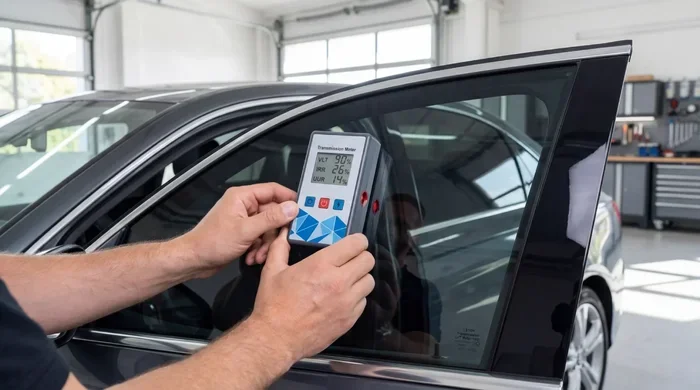
A tint meter is the most common tool used on-site. These handheld devices are placed directly against the glass. They send a beam of light through the film and glass combined. The meter then displays the VLT percentage on a digital screen.
Digital tint meters are fast and easy to use. They give instant readings that are quite accurate. Many auto shops use them to verify tint compliance before a vehicle inspection. You can also buy consumer-grade tint meters online if you want to check your own film at home.
Here are some tips for getting accurate readings with a tint meter:
- Clean the glass surface thoroughly before measuring.
- Place the meter flat against the window with no gaps.
- Take multiple readings from different spots on the same window.
- Avoid measuring in direct sunlight, which can skew results.
- Calibrate your meter regularly according to the manufacturer’s instructions.
Laboratory Testing with Spectrophotometers
For the most precise measurements, manufacturers rely on laboratory-grade spectrophotometers. These machines are far more advanced than handheld tint meters. They can analyze light transmission across hundreds of wavelengths simultaneously.
This method is used during the product development phase. It helps manufacturers fine-tune their window tint film formulations. It also ensures batch-to-batch consistency. When you buy a reputable tint product, you can trust that its VLT rating was verified this way.
Visual Comparison Methods
Some shops still use visual comparison methods. They hold a tint sample against a reference chart with known VLT levels. While this method is quick, it is not very precise. Lighting conditions and human perception can introduce errors.
Visual methods are fine for a rough estimate. But if you need an exact window tint percentage, always rely on a digital meter or lab test. Never judge tint darkness by eye alone. What looks “medium” to one person might be “light” to another.
Window Tint Types and How They Are Measured Differently
Not all window tint films are the same. Different types of tint use different materials and technologies. This affects how they are measured and what kind of performance you can expect. Let us look at the most popular tint film types and how each one is evaluated.
Ceramic Tint
Ceramic window tint is one of the highest-performing options available. It uses nano-ceramic particles embedded in the film. These particles block heat and UV rays without interfering with electronic signals. That means your GPS, phone, and radio stay perfectly clear.
Ceramic tints are measured using the same VLT and spectrophotometer methods. However, they often show higher infrared rejection rates than other types. A ceramic film might have a VLT of 50% but reject up to 90% of infrared heat. This makes it a favorite for people who want comfort without extreme darkness.
Carbon Tint
Carbon window tint uses carbon particles to achieve its performance. It has a matte finish that looks sleek and modern. Carbon tints are known for excellent fade resistance and solid heat rejection.
When measuring carbon tint, the VLT is typically lower than ceramic options. A 35% carbon tint will feel noticeably darker than a 35% ceramic tint. The measurement process is the same, but the visual appearance can differ. Carbon tints also tend to have strong UV protection ratings, often blocking 99% of harmful rays.
Metalized Tint
Metalized window tint contains tiny metallic particles within the film. These particles reflect heat and add strength to the glass. Metalized tints often have a shiny, reflective appearance.
Measuring metalized tint requires special attention. The metallic layer can sometimes interfere with tint meter readings. Professionals may need to account for reflectivity when taking measurements. Despite this, metalized tints offer strong heat rejection and durability. They are a popular budget-friendly option for car window tinting.
Dyed Tint
Dyed window tint is the most basic and affordable option. It uses a layer of dye to absorb sunlight and reduce glare. Dyed tints are easy to measure because they do not have metallic or ceramic layers that could interfere with readings.
However, dyed tints tend to fade over time. Their VLT can change as the dye degrades. This means re-measuring after several years of sun exposure is a good idea. For basic privacy tint needs, dyed film works well. But for long-term performance, ceramic or carbon options are better.
Legal Tint Limits and Why Measurement Matters
Every state and country has its own window tint laws. These laws define the maximum or minimum tint darkness allowed on different windows. How do they measure window tint for legal compliance? The answer is simple: they use VLT percentages as the standard reference.
Let us look at a quick comparison of common legal tint limits in the United States:
- Front Side Windows: Most states require 70% or higher VLT.
- Rear Side Windows: Often allow 35% to 50% VLT, depending on the state.
- Rear Windshield: Many states permit tint above the manufacturer’s AS-1 line.
- Windshield: Usually restricted to a non-reflective strip at the top.
What Happens If Your Tint Is Too Dark?
If your tint falls below the legal VLT limit, you could face fines or be required to remove it. During a traffic stop, an officer may use a handheld tint meter to check your windows. This is a quick and non-invasive way to verify compliance.
Some people try to cheat the system by applying tint that looks lighter than it actually is. This rarely works. Modern tint measurement tools are very accurate. The best approach is to choose a reputable installer who understands local laws and uses proper equipment.
Medical Exemptions and Special Permits
Some states offer medical exemptions for darker tint. People with certain skin conditions or light sensitivities may qualify for higher VLT allowances. To get an exemption, you typically need a doctor’s note and official documentation.
Even with an exemption, your tint must still be measured and verified. The tint measurement process does not change. The only difference is the acceptable VLT range. Always check your local regulations before applying any tint, especially if you are seeking an exemption.
Tips for Choosing the Right Window Tint
Now that you understand how tint is measured, you can make a smarter choice. Here are some practical tips to help you pick the right window tint film for your needs.
Know Your Priorities
Before you visit a shop, think about what matters most to you. Is it heat rejection? UV protection? Privacy? Glare reduction? Each priority corresponds to different film properties and measurements. Knowing your goals will help you narrow down the options.
Ask About VLT and IR Rejection
When shopping for tint, always ask for the VLT and infrared rejection ratings. A high VLT does not always mean low heat rejection. Some films allow plenty of light through while still blocking significant heat. This is especially true for ceramic and high-end carbon tints.
Check the Warranty
Quality tint installation comes with a warranty. Look for films that offer at least a five-year warranty against bubbling, peeling, and fading. A good warranty reflects confidence in the product’s performance and durability.
Go With a Professional Installer
DIY tint kits are tempting, but professional installation makes a big difference. A trained technician ensures the film is applied evenly, free of bubbles and dust. They also know how to measure and verify the final VLT. This attention to detail keeps you compliant and happy with the results.
Quick Tips for First-Time Buyers
- Start with a mid-range VLT like 35% for a balanced look and performance.
- Choose ceramic or carbon for the best long-term results.
- Avoid the cheapest options, as they often fade and bubble quickly.
- Ask the installer to show you the VLT reading on their tint meter.
- Verify your state’s legal tint limits before making a final decision.
Common Mistakes to Avoid
Many people make avoidable mistakes when choosing window tint. One of the biggest is judging tint by its appearance alone. A tint can look light but still reject a lot of heat. Another common error is ignoring local laws. Even if you love a dark tint, it is not worth the fine if it is illegal in your area.
Some buyers also skip the warranty question entirely. Always ask about the warranty before signing any contract. A reputable shop will be happy to provide these details. If they hesitate, that is a red flag worth paying attention to.
Expert Insights on Tint Measurement
Industry professionals emphasize the importance of using calibrated tools. A tint meter that has not been calibrated can give misleading readings. This is why certified installers invest in regular equipment maintenance. For consumers, this means you should always ask whether the shop uses calibrated, up-to-date measurement devices.
Experts also recommend understanding the difference between visible light transmission and total solar energy rejection. These are two different measurements. VLT measures visible light only. Total solar energy rejection measures all solar radiation, including heat and UV. Both numbers matter when evaluating a tint’s overall performance.
Key Takeaways
- VLT Percentage Is the Standard: It is the universal way to communicate tint darkness and is used for legal compliance worldwide.
- Digital Tint Meters Are Fast and Accurate: These handheld devices give instant readings and are the go-to tool for on-site measurement.
- Spectrophotometers Offer Lab-Grade Precision: Manufacturers use these instruments to develop and verify high-quality tint films.
- Tint Type Affects Performance: Ceramic, carbon, metalized, and dyed tints each measure and perform differently.
- Legal Limits Vary by Location: Always check your local window tint laws before choosing a tint darkness level.
- Professional Installation Ensures Accuracy: A pro will measure, apply, and verify your tint for the best results.
Conclusion
Understanding how do they measure window tint empowers you as a consumer. You no longer have to rely on guesswork or shop talk. You can ask informed questions, compare products with confidence, and make sure your tint meets both your needs and the law. Visible Light Transmission, measured with tools like tint meters and spectrophotometers, is the backbone of the entire industry.
Whether you are interested in ceramic tint, carbon tint, or a budget-friendly dyed option, knowing the measurement process helps you get the best value. Always work with a reputable installer, verify your VLT readings, and stay informed about your local regulations. The right tint can transform your driving experience with better comfort, protection, and style.
Take the time to learn the numbers. Your windows, your wallet, and your peace of mind will thank you. How do they measure window tint? Now you know the answer inside and out.
Frequently Asked Questions
What does VLT mean in window tint?
VLT stands for Visible Light Transmission. It measures the percentage of visible light that passes through the tint film. A lower VLT means a darker tint, while a higher VLT means more light gets through.
Can I measure my own window tint at home?
Yes, you can buy a digital tint meter online and measure your tint yourself. These devices are affordable and give reasonably accurate readings. Just make sure to clean your glass and take multiple readings for the most reliable result.
What is the legal tint limit for front windows?
In most U.S. states, front side windows must have a VLT of 70% or higher. However, laws vary by state and country. Always check your local regulations before applying tint to your front windows.
Does darker tint mean better heat rejection?
Not necessarily. Some lighter tints, especially ceramic options, can reject more heat than darker dyed tints. Heat rejection depends on the film’s technology and materials, not just its darkness level.
How often should I recheck my tint’s VLT?
You should check your tint’s VLT if you notice fading or discoloration. Most quality tints hold their VLT for several years. If you are concerned about legal compliance, a quick check with a tint meter is a good idea every couple of years.
What is the difference between a tint meter and a spectrophotometer?
A tint meter is a handheld device used for quick on-site readings. A spectrophotometer is a lab-grade instrument that provides detailed analysis across multiple light wavelengths. Both measure VLT, but the spectrophotometer offers more precision and detail.


