How to Reset Loss of Tire Pressure on Audi Quickly
Resetting the loss of tire pressure warning on your Audi is straightforward and can save you time and money. Whether your Audi TPMS light is flashing due to a temperature drop, a slow leak, or a faulty sensor, this guide walks you through the exact steps to clear the warning. You will learn how to check your tire pressure monitoring system, identify the root cause, and perform a TPMS reset in under 15 minutes.
That little tire-shaped warning light on your Audi dashboard can send anyone into a panic. You are driving along, minding your own business, and suddenly the loss of tire pressure warning pops up. Your heart drops. What now? The good news is that this is one of the most common dashboard alerts, and in most cases, you can fix it yourself in minutes.
Whether you drive an Audi A4, an Audi Q5, or any other model in the lineup, the process to reset the tire pressure monitoring system is surprisingly simple. This guide will walk you through every step, from figuring out why the light came on in the first place to clearing the warning and getting back on the road with confidence.
We will cover everything you need to know. You will learn the most common reasons your Audi tire pressure light activates, how to check your tire pressure the right way, the exact reset steps for different Audi models, and when it is smart to visit a mechanic instead of going it alone. Let us dive in.
Key Takeaways
- Quick Reset: You can reset the tire pressure warning on most Audi models using the dashboard menu or a physical button in under 5 minutes.
- Common Causes: Temperature changes, slow punctures, and faulty TPMS sensors are the top reasons the warning light appears.
- Safety First: Always check your actual tire pressure with a gauge before resetting the system.
- Model-Specific Steps: Different Audi models (A4, Q5, A6) may have slightly different reset procedures.
- When to See a Pro: If the light keeps coming back, your TPMS sensor may need replacement or reprogramming.
📑 Table of Contents
- Understanding the Audi Tire Pressure Warning Light
- How to Check Your Audi Tire Pressure
- How to Reset Loss of Tire Pressure on Audi
- Common Mistakes People Make When Resetting Tire Pressure
- When to See a Professional Mechanic
- Preventing Future Tire Pressure Issues on Your Audi
- Quick Tips for a Successful TPMS Reset
- Final Thoughts
Understanding the Audi Tire Pressure Warning Light
What Does the Tire Pressure Light Look Like?
The TPMS warning light on an Audi looks like a horseshoe or a tire cross-section with an exclamation mark in the center. It typically appears as a yellow or amber icon on your dashboard. When you see this light, your Audi is telling you that one or more tires are significantly below the recommended pressure.
Sometimes the light flashes first and then stays solid. A flashing light often points to a malfunction in the tire pressure sensor itself rather than an actual pressure problem. A solid light usually means the system has detected real low pressure in at least one tire.
Why Does the Tire Pressure Light Come On?
There are several reasons the loss of tire pressure warning might activate on your Audi. Understanding the cause helps you choose the right fix. Here are the most common culprits:
- Temperature drops: Cold weather causes air inside tires to contract, lowering pressure. A sudden cold front can trigger the light even if your tires were fine yesterday.
- Slow punctures: A small nail or screw can slowly leak air over days or weeks without you noticing.
- Faulty TPMS sensor: The sensor inside each tire can fail or lose its battery, sending a false warning.
- Recent tire changes: If you just rotated your tires or replaced one, the sensors may need recalibration.
- Air valve stem issues: A loose or damaged valve stem can let air seep out gradually.
If you have ever wondered whether you can monitor your tire pressure through a mobile app, check out our article on whether you can see tire pressure on the Toyota app for insights into tire pressure monitoring technology across different brands.
How to Check Your Audi Tire Pressure
Finding the Recommended Pressure
Before you do anything else, find the correct tire pressure for your specific Audi model. The recommended PSI (pounds per square inch) is printed on a sticker inside the driver’s door frame. You can also check your owner’s manual. Do not rely on the number printed on the tire itself, because that is the maximum pressure the tire can handle, not the pressure your Audi needs.
Most Audi models run between 30 and 35 PSI, but this varies by model and tire size. Always double-check the sticker for your exact vehicle.
Using a Tire Pressure Gauge
Grab a reliable tire pressure gauge from any auto parts store or gas station. Here is the simple process:
- Remove the valve cap from the tire.
- Press the gauge firmly onto the valve stem.
- Read the number on the gauge.
- Compare it to the recommended PSI on the door sticker.
- Repeat for all four tires, including the spare if applicable.
If any tire is below the recommended pressure, add air using an air compressor at a gas station or a portable tire inflator. If a tire is significantly low or flat, do not drive on it. Use a spare tire or call for roadside assistance.
How to Reset Loss of Tire Pressure on Audi
Reset Method for Audi A3, A4, and A6 Models
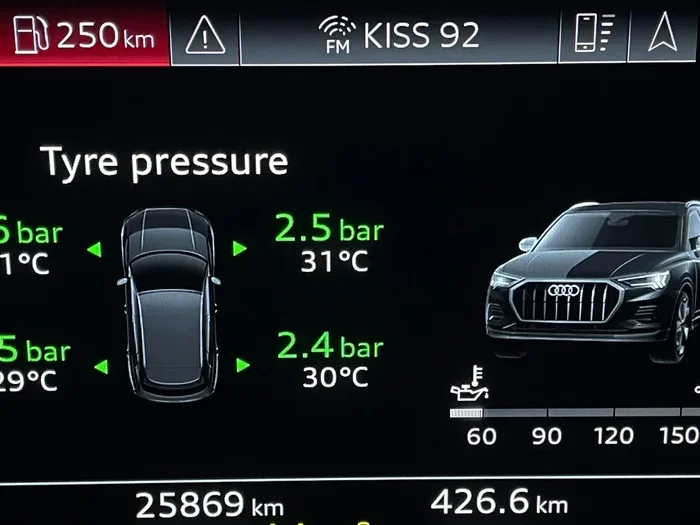
For most modern Audi sedans, the reset process is done through the vehicle’s onboard computer. Follow these steps:
- Start the engine and let the car idle for a few seconds.
- Press the Trip button on the steering wheel to access the main menu.
- Navigate to Vehicle settings using the steering wheel controls.
- Look for Tire Pressure or TPMS in the menu.
- Select Reset or Check Tire Pressure.
- Confirm the reset when prompted.
After the reset, drive the car for a few minutes. The system will recalibrate, and the warning light should turn off if all tires are at the correct pressure.
Reset Method for Audi Q3, Q5, and Q7 Models
Audi SUVs follow a similar process but with slight differences in the menu layout:
- Turn the ignition to the “on” position without starting the engine.
- Press the Car button on the MMI controller.
- Go to Vehicle Settings.
- Select Tire Pressure Monitoring.
- Choose Perform TPMS Reset.
- Confirm and wait for the confirmation message.
Once the reset is complete, start driving. The system needs a short drive cycle to relearn the tire pressures. The light should disappear within a few minutes of driving at normal speeds.
Reset Using the Physical Button
Some older Audi models have a dedicated TPMS reset button located beneath the steering column or near the gear shifter. If your Audi has this button:
- Turn the ignition to the “on” position.
- Press and hold the TPMS reset button for about 3 seconds.
- The warning light should blink three times and then turn off.
- Drive the car for 10 to 15 minutes to allow the system to recalibrate.
If you are dealing with persistent tire issues, regular tire rotations can help extend the life of your tires and prevent uneven wear that might contribute to pressure problems. Check out our article on whether tire rotations are worth the money for a deep dive into this essential maintenance habit.
Common Mistakes People Make When Resetting Tire Pressure
Resetting Without Checking the Actual Pressure
This is the biggest mistake people make. They see the light, reset it immediately, and drive away without ever checking if the tires actually have enough air. If there is a real leak, the light will come right back on. Always verify your tire pressure with a gauge before performing any reset.
Ignoring a Flashing Light
A flashing TPMS light is different from a solid one. A flash usually indicates a sensor malfunction, not a pressure issue. Resetting the system will not fix a broken sensor. You will need a diagnostic tool or a visit to the dealer to replace the faulty sensor.
Using the Wrong PSI
Overinflating your tires to “be safe” can be just as dangerous as driving on underinflated tires. Overinflated tires have a smaller contact patch, which reduces traction, increases wear in the center of the tread, and makes for a harsher ride. Always stick to the manufacturer’s recommended pressure.
Forgetting the Spare Tire
Some Audi models also monitor the spare tire pressure. If you have a full-size spare in the trunk, make sure it is at the correct PSI too. A neglected spare can trigger the TPMS warning even when all four road tires are fine.
When to See a Professional Mechanic
Most of the time, resetting the tire pressure light is a DIY job. But there are situations where professional help is the right call:
- The light keeps coming back: If you reset the system and the warning returns within a day or two, there is likely an underlying issue like a slow leak or a failing sensor.
- You cannot find the leak: Sometimes a puncture is too small to see. A mechanic can use a soap solution or electronic leak detector to find it.
- The TPMS sensor needs replacement: TPMS sensors have batteries that last about 5 to 10 years. When the battery dies, the sensor stops transmitting, and the light stays on. A mechanic can replace the sensor and reprogram it.
- You are unsure about the reset procedure: If you cannot find the reset option in your Audi’s menu, a dealer or qualified mechanic can walk you through it or do it for you.
Dashboard warning lights can sometimes be tricky. For example, a weak battery can cause multiple warning lights to appear on the dashboard, including the TPMS light. If you have noticed other strange warnings alongside the tire pressure light, you might want to check whether a bad battery can cause the wrench light to come on or trigger other dashboard alerts.
Preventing Future Tire Pressure Issues on Your Audi
The best way to deal with the loss of tire pressure warning is to prevent it from happening in the first place. Here are some simple habits that keep your Audi’s tires in great shape:
- Check tire pressure monthly: Make it a routine. A quick check once a month catches slow leaks early.
- Check before long trips: Always verify tire pressure before a road trip. Long drives put extra stress on tires.
- Check when tires are cold: Tire pressure rises as you drive. For the most accurate reading, check in the morning before you hit the road.
- Keep your valve stems caps on: Those little caps are not just cosmetic. They keep dirt and moisture out of the valve stem, which prevents slow leaks.
- Monitor temperature changes: In cold weather, tire pressure drops about 1 PSI for every 10 degrees Fahrenheit. Add a bit of air during winter months.
- Replace TPMS sensors on schedule: When your Audi hits the 5-year mark, consider having the TPMS sensors inspected or replaced proactively.
Taking care of your tires is part of overall car maintenance that keeps your Audi running smoothly and safely. Proper tire pressure improves fuel economy, extends tire life, and enhances handling and braking performance.
Quick Tips for a Successful TPMS Reset
- Always verify pressure first. Never reset without confirming your tires are properly inflated.
- Drive for 10 to 15 minutes after resetting. The system needs this drive cycle to relearn the pressure values.
- Check all four tires plus the spare. Missing one tire can cause the light to return.
- Keep a portable tire inflator in your trunk. It is a lifesaver for emergencies and quick top-offs.
- Refer to your owner’s manual. Your specific Audi model may have unique reset steps not covered in general guides.
Final Thoughts
Dealing with a loss of tire pressure warning on your Audi does not have to be stressful. With the right knowledge and a few simple tools, you can handle it yourself quickly and get back on the road with confidence. The key is to always check your actual tire pressure first, reset the system correctly for your specific model, and know when to seek professional help.
Remember that your tire pressure monitoring system is there to protect you. It is not just a nuisance light, it is a safety feature that alerts you to potential hazards on the road. Taking it seriously and addressing it promptly keeps you and your passengers safe.
Stay on top of your tire maintenance, keep a gauge handy, and do not ignore warning lights. Your Audi is a precision machine, and giving it the care it deserves, including proper tire pressure, pays off in performance, safety, and longevity. Drive safe, stay alert, and keep those tires properly inflated.
Frequently Asked Questions
Can I drive my Audi with the tire pressure light on?
It is not recommended. Driving on underinflated tires reduces handling, increases stopping distance, and can cause tire damage. Check your tire pressure as soon as the light comes on and add air if needed before driving long distances.
How much does it cost to replace a TPMS sensor on an Audi?
TPMS sensor replacement typically costs between 50 and 150 per sensor, including parts and labor. Some Audi models have integrated sensors inside the tire that require professional installation and programming.
Why does my Audi tire pressure light come on in cold weather?
Cold weather causes the air inside your tires to contract, which lowers the pressure. A drop of just a few PSI can trigger the TPMS warning. Adding air to the recommended level usually resolves the issue, and you can then reset the light.
How long does a TPMS reset take on an Audi?
The actual reset process takes about 2 to 3 minutes. However, the system needs a drive cycle of 10 to 15 minutes to fully recalibrate and confirm that all tires are at the correct pressure.
Will the tire pressure light reset itself after I add air?
On most Audi models, the light will not reset automatically. You need to manually initiate the TPMS reset through the vehicle settings menu or the physical reset button. After resetting, drive the car for a few minutes for the system to relearn.
How often should I check my Audi tire pressure?
Check your tire pressure at least once a month and before any long road trips. Temperature changes, especially during seasonal shifts, can cause pressure fluctuations that trigger the warning light.