Car Wont Start Then Starts Later Heres What To Do
When your car won’t start then starts later, it can be frustrating and confusing. This intermittent starting problem is often caused by a weak battery, faulty starter motor, bad ignition switch, or fuel pump issues. In this guide, we walk you through the most common causes, easy diagnostic steps, and practical fixes you can try today.
There’s nothing worse than turning your key or pressing the start button and hearing nothing. You wait a few minutes, try again, and suddenly your engine roars to life. This strange situation where your car won’t start then starts later leaves many drivers scratching their heads.
You might think it’s a ghost in the machine. But the truth is, intermittent starting problems are more common than you’d expect. They can point to several different issues, and the good news is that most of them are fixable. Whether it’s a tired battery or a sneaky faulty relay, understanding the root cause saves you time, money, and stress.
In this article, we break down every likely reason your car won’t start then starts later. We’ll cover the most common culprits, show you how to diagnose the problem yourself, and give you clear steps to fix it. By the end, you’ll know exactly what to look for and how to handle it like a pro.
Key Takeaways
- Weak or aging battery: The most common reason your car won’t start then starts later is a battery that struggles when cold or after sitting.
- Faulty starter motor or solenoid: A worn starter can fail intermittently before working again after a break.
- Bad ignition switch: A failing ignition switch sends inconsistent signals to your engine.
- Fuel pump problems: A weak fuel pump may not deliver enough pressure when you first turn the key.
- Corroded battery terminals: Dirty or corroded connections can interrupt the electrical flow temporarily.
- Security system lockout: Your car’s anti-theft system can sometimes prevent starting for a few minutes.
- Regular maintenance helps: Simple checks and timely part replacements can prevent most intermittent starting issues.
📑 Table of Contents
Why Your Car Won’t Start Then Starts Later
Intermittent starting issues can feel random, but they almost always have a logical explanation. When your car won’t start then starts later, it usually means one component is failing under specific conditions. Heat, cold, vibration, or time can all play a role.
Think of it like a light bulb that flickers before it burns out. The filament is weak, and it works sometimes but not others. Your car’s starting system works the same way. A part might be on its last legs and only fails intermittently.
The key is to pay attention to when the problem happens. Does it occur when the engine is hot? When it’s cold? After driving for a long time? These patterns give you powerful clues. Let’s dive into the most common reasons behind this annoying issue.
Cold Weather and Starting Problems
Cold temperatures are the enemy of car batteries. When it’s chilly outside, the chemical reaction inside your battery slows down. This means it can’t deliver full power right away. If your car won’t start then starts later on cold mornings, your battery is likely the first thing to check.
Old batteries lose their ability to hold a charge over time. A battery that’s three to five years old might work fine on a warm day but fail when temperatures drop. The good news is that a simple load test at any auto parts store can tell you exactly where your battery stands.
Heat-Related Starting Failures
Heat can be just as tricky as cold. When your engine runs hot, certain electrical components can malfunction temporarily. A faulty ignition switch or a weak fuel pump might stop working when hot and resume after cooling down. This is why some drivers notice their car won’t start then starts later only after a long drive on a hot day.
Overheating doesn’t just affect your engine. It can also stress your electrical connections and wiring. Heat expands metal and can cause loose connections to lose contact temporarily. Once things cool down, the connection restores, and your car starts normally again.
Common Causes of Intermittent Starting Problems
Now let’s look at the specific parts and systems that commonly cause your car won’t start then starts later situation. Understanding each one helps you narrow down the problem faster.
Weak or Failing Battery
A weak battery is the number one reason for intermittent starting problems. Your battery provides the electrical power needed to crank the engine. When it’s low on charge or old, it might not have enough juice to turn the starter motor.
Here are some signs your battery is struggling:
- Slow cranking: The engine turns over slowly when you turn the key.
- Dim headlights: Your lights are dimmer than usual when you start the car.
- Electrical issues: Power windows or the radio act up before starting.
- Corroded terminals: You see white or greenish buildup on the battery posts.
- Battery warning light: The dashboard battery light flickers or stays on.
A battery test is quick and usually free at most auto parts stores. If your battery is more than three years old, it’s worth replacing even if it still works sometimes. Prevention is always cheaper than repair.
Faulty Starter Motor
The starter motor is the heavy-duty electric motor that cranks your engine. When you turn the key, the starter engages the flywheel and gets things running. Over time, the internal brushes and bearings wear out.
A worn starter motor often fails intermittently. It might work perfectly one day and refuse to turn the engine the next. Sometimes it makes a clicking sound but doesn’t crank. Other times it works fine after you wait a few minutes and try again.
Starter motors are relatively affordable to replace, but the labor can vary depending on your vehicle’s design. Some cars have starters that are easy to reach, while others require removing other components first.
Bad Ignition Switch
The ignition switch is the part you interact with every time you turn your key or press the start button. It sends electrical signals to the starter, fuel system, and ignition coil. When it starts to fail, these signals become inconsistent.
A bad ignition switch can cause all sorts of strange behavior:
- The dashboard lights flicker when you turn the key.
- The engine doesn’t crank even though the lights come on.
- The car starts fine after you jiggle the key or wait a moment.
- You notice the problem gets worse over time.
Ignition switch failure is one of the most overlooked reasons for intermittent starting. If you’ve ruled out the battery and starter, this is a great next place to look.
Fuel Pump Issues
Your fuel pump pushes gasoline from the tank to the engine. It needs to build enough pressure for the engine to start and run smoothly. A weak fuel pump might not generate enough pressure when you first turn the key.
Here’s what often happens with a failing fuel pump:
- The car won’t start for a few minutes after sitting.
- You hear a faint or no humming sound when you turn the key to the “on” position.
- The engine sputters or stalls after starting.
- The problem gets worse when the fuel level is low.
The fuel pump is inside the gas tank, which makes it harder to replace. But catching a weak pump early can save you from getting stranded. If you notice any of these signs, get it checked soon.
Corroded or Loose Battery Connections
This is one of the simplest and most common causes of intermittent starting. Over time, battery terminals can develop corrosion — that white or bluish powdery buildup. Corrosion blocks the flow of electricity between the battery and the cables.
Loose cable connections can also cause your car won’t start then starts later problem. Vibration from driving can loosen terminals over time. When the connection is just barely making contact, the starter might not get enough power.
The fix is usually simple. You can clean the terminals with a wire brush and a baking soda solution. Tightening the cable clamps can also solve the problem. It’s a five-minute job that can save you a lot of trouble.
Security System Lockout
Modern cars have sophisticated anti-theft systems. These systems use transponder keys, immobilizer modules, and body control modules to prevent unauthorized starting. Sometimes, these systems can malfunction and lock out the engine temporarily.
You might notice that after a battery disconnect or a dead battery, the security light stays on on your dashboard. The car might refuse to start for a few minutes while the system relearns the key. Once it resets, the car starts normally again.
If you’ve recently had a battery replacement or jump-start, keep an eye on the security light. Letting the system fully reset before trying again can sometimes solve the problem.
Faulty Starter Relay or Solenoid
The starter relay and solenoid act as switches that send power to the starter motor. A bad relay might work sometimes and fail other times. This inconsistency can make your car won’t start then starts later problem hard to pin down.
Relays are small and inexpensive parts. Replacing one is usually a quick fix. You can often locate the relay in the fuse box under the hood. Check your owner’s manual for the exact location and relay number.
How to Diagnose the Root Cause
Before you start replacing parts, it helps to narrow down the cause. A little detective work can save you a lot of money and time. Here’s how to approach diagnosing why your car won’t start then starts later.
Listen Carefully to What Your Car Tells You
Your car speaks to you through sounds. Learning to listen can reveal a lot. When you turn the key, pay close attention to what you hear.
Do you hear a single click? That often points to a starter solenoid issue. Do you hear rapid clicking? That usually means the battery is too weak to power the starter. Do you hear nothing at all? The problem could be the ignition switch, a bad relay, or a connection issue.
If the engine cranks slowly, your battery or starter motor is likely struggling. If it cranks normally but won’t fire, the problem might be fuel or spark related.
Check the Dashboard Warning Lights
Your dashboard is a goldmine of diagnostic information. When you turn the key to the “on” position (before cranking), all the warning lights should light up briefly and then turn off. If any light stays on or behaves strangely, it’s a clue.
The battery light, check engine light, and security light are especially important. A flashing security light often means the immobilizer system has locked the engine. A battery light that stays on suggests a charging system problem.
Perform a Simple Voltage Test
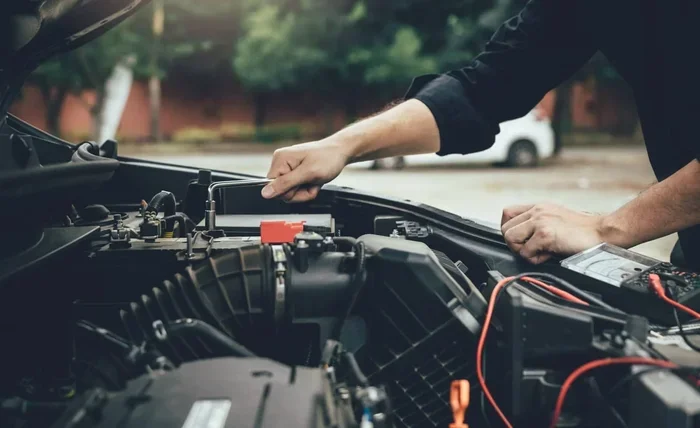
You don’t need expensive tools to check your battery. A basic multimeter costs under twenty dollars and is well worth the investment. Set it to measure DC voltage and touch the probes to the battery terminals.
A healthy battery should read 12.6 volts or higher when the engine is off. When you crank the engine, the voltage should stay above 10 volts. If it drops below 10 volts during cranking, your battery is weak. If the voltage is fine but the car still won’t start, the problem lies elsewhere.
Inspect the Battery Terminals and Cables
Open the hood and take a close look at your battery terminals. Look for white, green, or blue buildup. Feel for any looseness when you gently wiggle the cable clamps.
Clean terminals and tight connections can solve a surprising number of starting problems. Use a wire brush or a battery terminal cleaner to remove corrosion. Make sure the clamps are snug and secure. This simple step fixes many intermittent issues.
Scan for Error Codes
Modern cars store error codes in their computer systems. You can use an OBD-II scanner to read these codes. Many auto parts stores will scan your car for free.
Error codes can point you directly to the problem area. Codes related to the crankshaft position sensor, camshaft position sensor, or fuel system can help you focus your diagnosis. Even if the check engine light isn’t on, stored codes can reveal hidden issues.
Step-by-Step Fixes You Can Do Yourself
Some causes of intermittent starting are easy to fix at home. Here are practical steps you can take to address the most common problems that make your car won’t start then starts later.
Clean and Tighten Battery Connections
Start with the simplest fix first. Disconnect the battery cables (negative first, then positive). Use a wire brush or a battery terminal cleaner to remove corrosion from the terminals and cable ends. Reconnect the cables (positive first, then negative) and make sure they’re tight.
After cleaning, apply a thin layer of petroleum jelly or dielectric grease to the terminals. This helps prevent future corrosion. This fix takes less than ten minutes and costs almost nothing.
Jump-Start and Test the Battery
If your battery is weak, a jump-start can get you going temporarily. Use jumper cables and a working vehicle or a portable jump starter. Once the car is running, let it run for at least fifteen minutes to recharge the battery.
After a jump-start, drive the car for a while and then try restarting it. If it starts reliably after charging, your battery was the problem. If it still fails intermittently, the battery may need replacement even if it holds a charge while running.
Replace the Starter Relay
A faulty starter relay is an easy and inexpensive fix. Locate the relay in your fuse box (check your owner’s manual for the exact location). Remove the old relay and insert a new one of the same type.
This is one of the cheapest repairs you can do. Relays cost just a few dollars, and the job takes only a few minutes. If your car starts reliably after the swap, you’ve solved the problem without spending much money.
Replace the Ignition Switch
Replacing an ignition switch is a moderate DIY project. You’ll need basic tools like a screwdriver and a socket set. Disconnect the battery first, remove the steering column cover, and unclip the old switch.
Install the new switch, reconnect everything, and test it. Make sure to get the correct switch for your vehicle model and year. If you’re not comfortable with this repair, a mechanic can do it quickly and affordably.
Replace the Fuel Pump Filter
A clogged fuel filter can restrict fuel flow and cause starting problems. The fuel filter is usually located along the fuel line, either under the car or near the fuel tank. Replacing it is a straightforward job.
Check your owner’s manual for the recommended replacement interval. Most fuel filters should be replaced every 30,000 to 60,000 miles. A new filter costs between fifteen and fifty dollars and can make a big difference in starting performance.
When to Call a Professional Mechanic
While many starting problems can be fixed at home, some issues require professional help. Knowing when to call a mechanic saves you time and prevents costly mistakes.
You should call a professional if:
- You’ve checked the battery, terminals, and relay, but the problem persists.
- The check engine light is on and you can’t identify the error codes.
- You suspect the fuel pump or ignition coil needs replacement.
- The car starts sometimes but stalls immediately after starting.
- You notice a burning smell or hear unusual grinding noises.
- The problem happens only when the engine is hot.
Intermittent problems can be tricky to diagnose. A professional mechanic has specialized tools like oscilloscopes, fuel pressure gauges, and advanced diagnostic scanners. These tools can pinpoint issues that are invisible to the naked eye.
Don’t hesitate to get a second opinion if a mechanic suggests an expensive repair. Sometimes a simple fix like a loose ground wire or a corroded connector can mimic a major component failure. Always ask questions and understand what the repair involves before approving it.
Prevention Tips to Avoid Future Starting Problems
The best way to deal with intermittent starting problems is to prevent them from happening in the first place. A little regular maintenance goes a long way toward keeping your car reliable.
Maintain Your Battery Regularly
Check your battery terminals every few months for corrosion. Clean them if you see any buildup. Have your battery tested annually, especially if it’s more than two years old. Most auto parts stores offer free battery testing.
Consider investing in a battery maintainer if you park your car for extended periods. A maintainer keeps the battery charged and healthy, even when the car sits for weeks or months.
Keep Your Fuel System Clean
Use quality fuel and consider adding a fuel system cleaner every few tanks. Clean fuel injectors and a healthy fuel pump make starting easier and more reliable. Replace your fuel filter at the recommended intervals.
Try not to let your fuel tank drop below a quarter full. Running low on fuel can overheat the fuel pump and shorten its lifespan. Keeping a healthy fuel level also prevents moisture buildup in the tank.
Protect Your Electrical System
Make sure all electrical connections are secure and clean. Check your ground wires regularly, as a bad ground can cause all sorts of electrical gremlins. Address any flickering lights or unusual electrical behavior promptly.
After a jump-start or battery replacement, let the car run for a while to recharge fully. Modern vehicles have many electronic systems that draw power even when the engine is off. Give your alternator time to do its job.
Address Small Problems Before They Grow
Don’t ignore early warning signs. If your car is slow to start or the engine cranks a little differently than usual, get it checked. Small problems become big problems when left unaddressed.
Keep a maintenance log and track when you replace parts. This helps you spot patterns and stay ahead of potential issues. A few minutes of record-keeping can save you hours of diagnostic work later.
Key Takeaways
- Weak or aging battery: The most common reason your car won’t start then starts later is a battery that struggles when cold or after sitting.
- Faulty starter motor or solenoid: A worn starter can fail intermittently before working again after a break.
- Bad ignition switch: A failing ignition switch sends inconsistent signals to your engine.
- Fuel pump problems: A weak fuel pump may not deliver enough pressure when you first turn the key.
- Corroded battery terminals: Dirty or corroded connections can interrupt the electrical flow temporarily.
- Security system lockout: Your car’s anti-theft system can sometimes prevent starting for a few minutes.
- Regular maintenance helps: Simple checks and timely part replacements can prevent most intermittent starting issues.
Conclusion
Dealing with a car won’t start then starts later situation is frustrating, but it’s almost always solvable. The most common causes — a weak battery, faulty starter, bad ignition switch, or fuel pump issues — are all well understood and fixable. By paying attention to the patterns and symptoms, you can narrow down the cause and find the right solution.
Start with the simple fixes first. Clean your battery terminals, check your connections, and test your voltage. If those steps don’t solve the problem, move on to the more complex diagnostics. And don’t hesitate to call a professional when the issue goes beyond DIY repairs.
The key takeaway is that intermittent starting problems rarely fix themselves. They tend to get worse over time. Addressing the issue early saves you from getting stranded and from expensive repairs down the road. Take action today, and you’ll enjoy a more reliable and worry-free driving experience tomorrow.
Keep your car well-maintained, stay alert to warning signs, and remember that most starting problems have straightforward solutions. You’ve got this — and now you have the knowledge to handle it with confidence.
Frequently Asked Questions
Why does my car start fine after waiting a few minutes?
This usually happens because a weak component — like a battery, starter motor, or fuel pump — recovers temporarily after cooling down or resting. The part works again once conditions change slightly, which is why waiting helps. However, this pattern means the part is failing and should be replaced soon.
Can cold weather cause my car not to start and then start later?
Absolutely. Cold weather slows down the chemical reactions inside your battery, reducing its ability to deliver power. A battery that works fine in warm weather might fail in cold conditions. Keeping your battery healthy and replacing it on schedule helps prevent cold-weather starting issues.
Is it safe to keep driving if my car starts intermittently?
It’s not recommended. Intermittent starting problems can worsen over time and leave you stranded. Even if the car starts sometimes, a failing component can fail completely when you least expect it. Get the problem diagnosed and fixed as soon as possible.
How much does it cost to fix an intermittent starting problem?
The cost varies widely depending on the cause. Cleaning battery terminals costs almost nothing. Replacing a starter relay might run fifteen to fifty dollars. A new battery could cost fifty to two hundred dollars. More complex repairs like a fuel pump or ignition switch can run two hundred to five hundred dollars or more.
Can a bad ground wire cause my car to not start then start later?
Yes, a bad ground wire can absolutely cause intermittent starting problems. Ground wires provide the return path for electrical current. When the connection is loose or corroded, the electrical circuit can be incomplete, preventing the car from starting. Cleaning or replacing the ground wire often solves the issue.
How do I know if my fuel pump is failing?
Common signs include a whining noise from the fuel tank, the car struggling to start especially after sitting, engine stalling under load, and loss of power during acceleration. You can also have a mechanic test the fuel pressure with a gauge. Low fuel pressure usually points to a failing fuel pump.