Car Accessories LED Lights That Transform Your Ride
Car accessories LED lights are one of the easiest ways to upgrade your vehicle’s look and functionality. From interior ambient lighting to powerful LED light bars, these upgrades boost visibility, style, and resale value. In this guide, you will learn how to pick, install, and maintain the best LED lights for your car.
Key Takeaways
- LED lights last longer: Most car LED accessories last 30,000 to 50,000 hours, far outlasting traditional halogen bulbs.
- They save energy: LED car lights use up to 75% less power than incandescent options, keeping your battery healthy.
- Installation is DIY-friendly: Many car accessories LED lights kits come with plug-and-play wiring for easy setup.
- Legal compliance matters: Some LED colors and brightness levels may violate local traffic laws, so always check regulations.
- Budget options abound: You can find quality LED car lighting kits starting from under $20 for basic upgrades.
- Maintenance is minimal: LED lights rarely burn out, but cleaning and proper wiring care extend their lifespan significantly.
- Resale value improves: Well-installed car LED upgrades can increase your vehicle’s resale appeal by making it look more modern.
📑 Table of Contents
- Why LED Lights Are Taking Over the Car Accessories World
- Best Car Accessories LED Lights for Every Budget
- How to Install LED Lights in Your Car
- Car LED Lighting Laws and Safety Tips
- LED vs Traditional Car Lights: A Clear Comparison
- Maintaining Your Car LED Lights for Long Life
- Real-World Examples: How LED Lights Transform Rides
- Conclusion
Why LED Lights Are Taking Over the Car Accessories World
If you have been looking to upgrade your car, you have probably noticed one trend that keeps popping up. Car accessories LED lights are everywhere. And for good reason. They look amazing, they work incredibly well, and they are easier to install than ever before.
Gone are the days when car lighting meant basic halogen bulbs and dull fog lights. Today, drivers want something more. They want interior car lighting that sets the mood. They want underglow car lights that turn heads. They want LED headlights that cut through darkness like a knife.
LED technology has changed the game completely. These lights are brighter, cooler, and more energy-efficient than older options. They also last way longer. A standard car bulb might last 1,000 hours. A quality LED can go 30,000 hours or more. That is years of reliable use without swapping bulbs.
Another big reason LEDs dominate the car accessories market is versatility. You can find car LED upgrades for nearly every part of your vehicle. Dashboards, footwells, trunks, grilles, undercarriages, and even seat brackets all have LED options. The variety is honestly overwhelming in the best way.
Let us break down everything you need to know about car accessories LED lights. From picking the right products to installing them and staying legal, this guide has you covered.
The Rise of Automotive LED Popularity
Car enthusiasts have driven the LED revolution. Social media platforms like Instagram and TikTok are filled with stunning car builds featuring vibrant RGB car lights and sleek ambient setups. This visibility has pushed mainstream demand too.
Manufacturers have noticed. Most new cars now come with at least some LED lighting as standard. But aftermarket auto accessories lighting still offers far more variety. You can customize colors, brightness, and patterns that factory options simply do not provide.
The price drop in LED technology has also helped. What used to cost hundreds of dollars is now available for very affordable amounts. Even budget-conscious drivers can enjoy quality car lighting accessories without breaking the bank.
Best Car Accessories LED Lights for Every Budget
Not all LED car lights are created equal. Some are built for flashy looks. Others focus on practical function. The trick is finding the right balance for your needs and budget. Here is a breakdown of the best car accessories LED lights across different price ranges.
Budget Picks Under $30
You do not need to spend a fortune to get great results. At the budget level, you can find some surprisingly good products.
- LED strip lights for cars: These flexible strips stick under the dashboard, seats, or door panels. They often come with remotes for color changing. Prices start around $15 to $25.
- Interior LED bulbs: Replace your factory dome or map light bulbs with bright LED alternatives. Most kits cost under $20 and install in minutes.
- USB-powered LED kits: These plug into your cigarette lighter or USB port. They are perfect for temporary setups or renters who cannot drill into anything.
Budget LED products work well for basic upgrades. The LED brightness might not match premium options, but for the price, they deliver solid value.
Mid-Range Options ($30 to $100)
This is where things get fun. At this price point, you access better build quality, brighter output, and more features.
- Car LED interior kits: Full kits covering footwells, dash, doors, and trunk. Many include multiple color modes and app control.
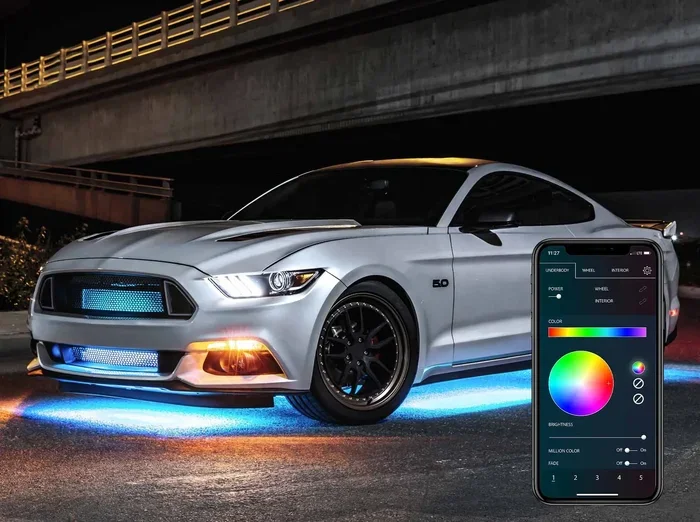
- LED light bars: Compact bars that mount under the grille or chassis. They create a beautiful glow effect known as underglow car lights.
- RGB dashboard lights: Replace your stock gauge lighting with colorful, programmable RGB options that match your car’s vibe.
Mid-range vehicle LED installation kits usually include better wiring, brighter diodes, and longer warranties. This is the sweet spot for most drivers.
Premium Upgrades Over $100
For those who want top-tier quality, premium options deliver. Think LED tail lights with custom designs, high-output LED headlights, and professional-grade light bars.
- Matrix LED headlight retrofit kits: These mimic luxury car lighting. They provide exceptional road visibility and a modern look.
- Full car LED conversion kits: Replace every halogen and incandescent bulb in your car with LEDs. Complete car LED upgrades like this create a cohesive, high-end appearance.
- Off-road LED lights: Heavy-duty light bars and pods built for trucks and SUVs. These are built tough and throw light far into the distance.
Premium car customization lights often come with advanced features like Bluetooth control, waterproof housing, and vehicle-specific mounting brackets.
Quick Comparison: Budget vs Mid-Range vs Premium
| Feature | Budget (Under $30) | Mid-Range ($30-$100) | Premium ($100+) |
|---|---|---|---|
| Brightness | Moderate | High | Very High |
| Durability | Average | Good | Excellent |
| Features | Basic colors | RGB + remote | App + Bluetooth |
| Installation | Very easy | Easy to moderate | Moderate to advanced |
| Lifespan | 15,000 hrs | 30,000 hrs | 50,000+ hrs |
How to Install LED Lights in Your Car
One of the biggest advantages of car accessories LED lights is simple installation. You do not need a mechanic or expensive tools. Most drivers can handle this in an afternoon. Here is a step-by-step approach.
Step 1: Plan Your Setup
Before touching any wires, decide what you want to light up. Common areas for car ambient lighting include:
- Under the dashboard
- Door panel interiors
- Footwells (the floor area near your feet)
- Trunk or cargo area
- Under the chassis for underglow effects
- Steering column area
Sketch out a rough plan. Measure the areas where you want to place strips or bars. This prevents buying the wrong size or running out of material.
Step 2: Gather Your Tools
Most vehicle LED installation jobs require basic items:
- Scissors or wire cutters
- Electrical tape or zip ties
- A screwdriver set
- A drill (only if mounting brackets)
- A multimeter (optional but helpful)
Keep your car’s manual handy too. You will need to know which fuses control certain lights for some setups.
Step 3: Clean and Prep Surfaces
Adhesive-backed LED strips need clean surfaces to stick properly. Wipe down every area with rubbing alcohol. This removes dust, grease, and residue. Poor adhesion is the number one complaint about LED strip installations, and dirty surfaces are usually the cause.
Step 4: Mount and Connect
Peel the backing and press your strips or bars into place. Route wires neatly along existing trim lines. Avoid pinching wires with closing doors or hoods. Use zip ties to secure loose wiring.
Connect the power source. Many LED light bars and strips plug directly into a 12V socket. Others tap into existing wiring. If you are tapping into wiring, use a fuse adapter to protect your car’s electrical system.
Step 5: Test Everything
Before you close up any panels, power on your new lights. Check every color mode, brightness level, and connection point. Look for flickering, dim spots, or loose connections. Fix issues now rather than later.
Expert Tip: Wiring Made Simple
Car LED wiring does not have to be scary. Stick to parallel connections when possible. This way, if one strip fails, the others keep working. Always match your LED voltage requirements with your power source. Most car LEDs run on 12V, which matches standard vehicle electrical systems perfectly.
Car LED Lighting Laws and Safety Tips
This is a section many drivers skip, and it is a big mistake. Car accessories LED lights are generally legal for interior use. But exterior modifications have stricter rules. Understanding the law keeps you safe and avoids tickets.
What Is Usually Legal
- Interior ambient lighting: Colors under the dashboard, in footwells, or behind trim panels are almost universally fine.
- Interior dome and map lights: Replacing factory bulbs with LEDs is universally accepted.
- Trunk or cargo area lights: These are considered functional and face no restrictions.
What Can Get You Into Trouble
- Underglow car lights visible from the outside: Many states ban under-vehicle lighting that projects color onto roads or other vehicles.
- Red or blue exterior lights: These colors are reserved for emergency vehicles. Using them on your car can lead to serious fines.
- Excessively bright headlights: Aftermarket LED headlights that are improperly aimed can blind other drivers and fail inspections.
- Flashing or strobing exterior lights: These can mimic emergency signals and are illegal in most areas.
Safety Tips for LED Installations
Beyond the law, safety should guide every decision.
- Never install LED lights near fuel lines or hot engine components.
- Use waterproof casings for any lights exposed to weather.
- Avoid overloading your car’s electrical system. Check total amperage draw before connecting multiple LED products.
- Keep interior LEDs dim enough that they do not distract your view of the road.
- Make sure all wiring connections are insulated and secure. Loose wires cause shorts, and shorts cause fires.
When in doubt, check your local and state vehicle codes. The laws around auto accessories lighting vary widely from one region to another.
LED vs Traditional Car Lights: A Clear Comparison
Still on the fence about switching to LEDs? Let us compare them directly with traditional options. This should make the decision clear.
Brightness and Visibility
LED lights produce more lumens per watt than incandescent or halogen bulbs. A 10-watt LED can outshine a 50-watt halogen bulb. This means better visibility on dark roads with less strain on your eyes. LED brightness is simply in a different league.
Energy Efficiency
Car LED power consumption is dramatically lower. LEDs convert most of their energy into light rather than heat. Incandescent bulbs waste about 90% of energy as heat. This efficiency translates to less load on your alternator and battery.
Lifespan
Here is where the gap really shows. Halogen bulbs burn out frequently. LEDs can last the entire life of a vehicle. Most quality car LED upgrades come with warranties of three to five years, and many last much longer in real-world use.
Heat Output
Traditional bulbs get very hot. This is a safety risk in enclosed areas like dashboards or trunk linings. LEDs run cool. They can even improve safety in areas where heat buildup was previously a concern.
Cost Over Time
LEDs may cost more upfront. But their long lifespan and low energy use make them far cheaper over time. You buy once and forget about replacement for years. With traditional bulbs, you keep buying replacements and paying for labor or hassle.
Comparison Table: LED vs Halogen vs Incandescent
| Category | LED | Halogen | Incandescent |
|---|---|---|---|
| Lifespan (hours) | 30,000-50,000 | 1,000-3,000 | 750-2,000 |
| Energy Use | Very Low | Moderate | High |
| Heat Output | Low | High | Very High |
| Brightness per Watt | Excellent | Fair | Poor |
| Upfront Cost | Higher | Low | Low |
| Long-term Cost | Very Low | Moderate | High |
Maintaining Your Car LED Lights for Long Life
One of the best things about car accessories LED lights is how little maintenance they need. But a little care goes a long way toward ensuring they last as long as advertised.
Keep Them Clean
Dust and grime reduce brightness over time. Wipe down LED strips and light bars with a soft, damp cloth every few weeks. For LED tail lights or headlights, use automotive glass cleaner to remove road film and bugs. Clean LEDs look noticeably brighter than dirty ones.
Check Wiring Connections Regularly
Vibrations from driving can loosen connections over time. Every few months, peek under your trim panels and make sure wires are secure. Look for signs of corrosion, fraying, or discoloration at connection points. Catch problems early before they become bigger issues.
Use a Voltage Regulator if Needed
Some older vehicles have fluctuating voltage levels. This can cause LED lights to flicker or dim. Adding a simple voltage regulator keeps power delivery steady. It is a small investment that protects your LEDs and keeps them performing at their best.
Avoid Overloading Circuits
If you add multiple LED products, spread them across different circuits. Do not chain too many strips to a single power source. Overloading causes dimming, overheating, and potential fuse blows. Each automotive LED product should have its own clean power path whenever possible.
Store Spare Parts
Keep a spare LED strip or a couple of extra bulbs in your trunk. If one section gets damaged in an accident or from wear, you can swap it out quickly without waiting for a new order. This is especially smart for drivers who frequently tow or haul, which increases vibration stress.
Quick Tips for LED Longevity
- Turn off your LED accessories when the car is off to reduce unnecessary wear.
- Use waterproof connectors for any exterior-mounted LEDs.
- Do not modify LED drivers or power supplies. This voids warranties and creates fire risk.
- If an LED starts flickering, replace it immediately. Flickering usually signals a dying diode or loose connection.
Real-World Examples: How LED Lights Transform Rides
Theory is great. But seeing real results makes it click. Here are a few examples of how different drivers use car customization lights to completely change their vehicles.
The Daily Commuter
Sarah drives a 2015 Honda Civic to work every day. She added LED strip lights for cars under her dashboard and along the door panels. She uses a soft white color during the day and switches to a warm amber at night. The result? Her interior feels like a completely different car. She spent under $40 on the kit and did the installation in 20 minutes.
The Weekend Warrior
Mike owns a lifted Jeep Wrangler. He mounted two LED light bars on the front grille and added underglow modules along the rocker panels. Off-road at night, his setup is incredible. He can see rocks and ruts clearly. His Jeep also looks absolutely stunning at car meets. He spent around $250 total and considers every penny worth it.
The Performance Enthusiast
Lisa drives a BMW 3 Series and wanted a premium look. She did a full car LED upgrade, replacing every interior bulb with color-matched LEDs and swapping her stock headlights for aftermarket matrix-style LEDs. Her car now has the look of a much newer model. Total cost was around $500, and the transformation drew compliments everywhere she drove.
Conclusion
Car accessories LED lights offer one of the best returns on investment for any vehicle owner. They make your car look better, drive safer, and feel more personal. Whether you start with a simple $20 strip or go all-in with a full conversion kit, the impact is immediate and impressive.
The options are vast. Budget-friendly picks work great for beginners. Mid-range kits deliver excellent quality and features. Premium upgrades create show-worthy results. Whatever your budget, there is a perfect car accessories LED lights setup waiting for you.
Take your time choosing products that fit your style and needs. Follow installation guides carefully. Stay aware of local lighting laws. And maintain your LEDs with basic upkeep. Do all of this, and you will enjoy stunning car lighting for years to come. Your ride deserves to shine, so make it happen.
Frequently Asked Questions
Are car accessories LED lights legal?
Interior LED lights are legal in most areas. However, exterior colors like red, blue, or flashing patterns may violate local traffic laws. Always check your state or country’s vehicle codes before installing any visible LED lighting on your car.
How long do car LED lights last?
Quality car LED lights typically last between 30,000 and 50,000 hours. This translates to roughly 10 to 15 years of normal use. Many manufacturers offer warranties of three to five years on their automotive LED products.
Can I install LED lights in my car myself?
Yes, most car accessories LED lights are designed for DIY installation. Plug-and-play kits require no wiring knowledge. More complex installations like LED headlight retrofits may need basic electrical skills, but online guides make it accessible for most drivers.
Do LED lights drain car battery?
LED lights consume very little power compared to traditional bulbs. A typical LED strip uses about 10 to 20 watts, which is far less than a standard car headlight. You would need to leave lights on for many hours before your battery is affected.
What is the best color for car interior LED lights?
White and warm white are the most popular choices for car interiors because they look clean and do not cause distraction. Blue and red are trendy but may be distracting while driving. Many drivers use adjustable RGB options to switch colors based on mood and setting.
Are underglow car lights safe?
Underglow lights can be safe if installed correctly and used responsibly. They should never be bright enough to distract other drivers. However, many states restrict or ban under-vehicle lighting that is visible from the outside. Check local laws before using underglow car lights on public roads.