How to Check Mazda 3 Transmission Fluid Step by Step
Checking your Mazda 3 transmission fluid is one of the simplest maintenance tasks you can do at home. This guide walks you through every step, from locating the dipstick to reading the fluid level correctly. You will learn what healthy fluid looks like, when to change it, and how to avoid common mistakes.
Owning a Mazda 3 is a great experience. The car drives well, looks sharp, and feels reliable on the road. But like any vehicle, it needs regular care to keep running its best. One of the most important yet overlooked maintenance tasks is checking the transmission fluid. Many drivers skip this simple step until something goes wrong. That is a mistake. Low or dirty fluid can lead to serious transmission problems. And fixing a damaged transmission costs a lot of money.
The good news is that checking Mazda 3 transmission fluid is easy. You do not need to be a mechanic. With a few basic tools and about ten minutes, you can do it yourself. This guide gives you a complete step-by-step walkthrough. You will learn where the dipstick is, how to read the level, what the fluid should look like, and when it is time for a change. We will also cover common mistakes so you do not accidentally cause damage. By the end, you will feel confident handling this task on your own.
Whether you drive a 2010 Mazda 3 or a 2024 model, the basics are the same. Small differences exist between model years, but the process remains straightforward. Let us dive in and make sure your Mazda 3 stays in top shape.
Key Takeaways
- Locate the dipstick: The Mazda 3 transmission dipstick is usually near the engine bay, and you can find it by following the labeled markings.
- Check when warm: Always check transmission fluid with the engine warm and running for the most accurate reading.
- Fluid color matters: Healthy ATF fluid should be reddish-pink. Dark brown or black fluid signals it is time for a change.
- Follow the owner manual: Different Mazda 3 model years may have slightly different procedures. Always refer to your specific manual.
- Watch for warning signs: Slipping gears, delayed shifting, or burning smells are red flags that your fluid may be low or degraded.
- Use the right fluid: Mazda recommends specific ATF types for the 3. Using the wrong fluid can damage your transmission over time.
📑 Table of Contents
- Why Checking Transmission Fluid Matters
- Tools and Preparation You Need
- Step-by-Step Guide to Checking Mazda 3 Transmission Fluid
- What Healthy vs. Bad Transmission Fluid Looks Like
- Common Mistakes to Avoid
- When to See a Professional
- Final Thoughts on Maintaining Your Mazda 3 Transmission
- Frequently Asked Questions
Why Checking Transmission Fluid Matters
Your Mazda 3 transmission is a complex system. It has hundreds of moving parts that need constant lubrication. Transmission fluid does three important jobs. It lubricates the gears, it cools the system, and it helps transfer power smoothly. Without enough clean fluid, these parts grind against each other. Over time, this causes wear and eventually failure.
Many drivers only think about transmission fluid when they notice a problem. By then, the damage may already be done. Regular checks help you catch issues early. A simple fluid top-off can prevent an expensive repair bill. Think of it as insurance for your transmission.
Here are the main reasons you should check your fluid regularly:
- Prevents overheating: Fresh fluid keeps the transmission cool during operation.
- Extends component life: Proper lubrication reduces wear on gears and clutch packs.
- Ensures smooth shifting: Adequate fluid levels help the transmission shift gears without hesitation.
- Saves money: A fluid check costs nothing. A transmission rebuild can cost thousands.
- Maintains resale value: Well-maintained vehicles hold their value better.
Most experts recommend checking your transmission fluid at least once a month. It takes just a few minutes. Make it part of your routine, and your Mazda 3 will thank you for years to come.
Tools and Preparation You Need
Before you start, gather a few items. You do not need anything fancy. Most of these things you probably already have in your garage or kitchen.
Here is what you will need:
- A clean rag or paper towel
- The correct transmission fluid for your Mazda 3 (check your owner manual)
- A funnel (optional but helpful)
- A level surface to park on
- Your Mazda 3 owner manual for reference
One important thing to know: checking transmission fluid while the engine is running gives the most accurate reading. The fluid expands when warm, so a cold reading can be misleading. This is different from checking engine oil, which is typically done with the engine off. Keep this in mind as you prepare.
Also, make sure you park on a flat surface. If the car is on a slope, the fluid level reading will not be accurate. Engage the parking brake and keep the engine running throughout the process. Warm the fluid up by idling the car for about two to three minutes before you check it.
Choosing the Right Transmission Fluid
Not all transmission fluids are the same. Mazda specifies a particular type for the 3, and using the wrong one can cause problems. The most common fluid for Mazda 3 models is Mazda ATF M-V or WS fluid. Check your owner manual or look at the cap on the transmission dipstick for the exact specification.
Using the wrong fluid can lead to slipping gears, rough shifting, and internal damage. If you are unsure, ask your local parts store or check the Mazda website for your specific model year. It is always better to double-check than to guess.
Step-by-Step Guide to Checking Mazda 3 Transmission Fluid
Now for the main event. This is where you actually check the fluid. Follow these steps carefully, and you will get an accurate reading every time.
Step 1: Park and Warm Up the Car
Start by parking your Mazda 3 on a flat, level surface. Engage the parking brake and make sure the car is stationary. Turn the engine on and let it idle for two to three minutes. This warms up the transmission fluid so it flows properly and gives you a true level reading.
Some people ask, does checking transmission fluid while running make a difference? Yes, it absolutely does. The fluid needs to be at operating temperature to give you the correct reading on the dipstick.
Step 2: Locate the Transmission Dipstick
Open the hood and find the transmission dipstick. On most Mazda 3 models, it is located near the back of the engine bay. It usually has a red or yellow handle. If you are not sure where it is, refer to your owner manual or look for labels near the engine components.
Note that not every transmission has a dipstick. Some newer models use sealed transmissions that do not have a traditional dipstick. If your Mazda 3 falls into this category, you may need a professional mechanic to check the fluid level using a specialized tool. For most older and mid-range Mazda 3 models though, a dipstick is present and easy to access.
Step 3: Pull the Dipstick and Wipe It Clean
With the engine still running, pull the dipstick out. Use your clean rag to wipe it completely clean. This removes any old fluid residue so you can get an accurate reading on the next pass.
Take your time with this step. A clean dipstick makes all the difference in reading the fluid level correctly.
Step 4: Reinsert the Dipstick
Push the dipstick all the way back in. Make sure it goes in fully and is seated properly. Then pull it out again slowly.
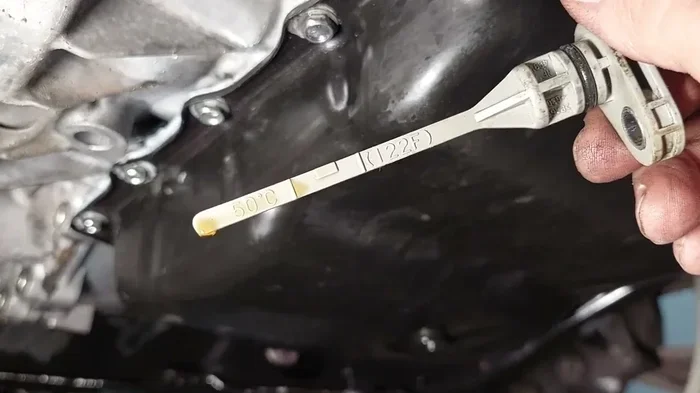
Now look at the dipstick carefully. You will see two marks or holes. These indicate the full and low levels. Some dipsticks have crosshatched patterns, while others have simple notches. Either way, the fluid should fall between these two marks.
Step 5: Read the Fluid Level
Hold the dipstick up to the light and look at where the fluid reaches. If the fluid level is between the two marks, you are good. If it is below the low mark, you need to add more fluid. If it is above the full mark, you may have overfilled, which can also cause problems.
Do not panic if the level is slightly low. Topping off is easy and inexpensive. Just make sure you use the correct fluid type.
Step 6: Check the Fluid Condition
While you have the dipstick out, take a moment to look at the fluid itself. This tells you a lot about the health of your transmission.
Healthy transmission fluid should be translucent and reddish-pink. It should not smell burnt. If the fluid looks dark brown or black, it is old and needs to be changed. If it has a burnt smell, that is a warning sign of internal transmission wear.
Also, feel the fluid between your fingers. It should feel smooth and slightly slippery. If it feels gritty or rough, there may be metal particles inside the transmission. This is a serious issue that needs immediate attention.
What Healthy vs. Bad Transmission Fluid Looks Like
Understanding what good transmission fluid looks like helps you spot problems early. Think of the fluid as the lifeblood of your transmission. Just like blood, it changes when something is wrong.
Here is a simple breakdown of what to look for:
- Healthy fluid: Reddish-pink color, translucent, smooth texture, no strong smell.
- Aged fluid: Darker red or brown, slightly less translucent, may have a mild odor.
- Bad fluid: Brown or black, opaque, gritty texture, burnt smell.
- Contaminated fluid: May contain visible particles or look milky (which could indicate coolant mixing with the fluid).
If you notice any of the bad signs, it is time to take action. A fluid change can often restore smooth operation. But if the fluid has been neglected for a long time, deeper damage may have already occurred.
Some drivers wonder whether they should change the fluid themselves or take it to a shop. For a simple fluid change, DIY is perfectly fine. But if you notice metal particles or the fluid looks extremely bad, consider visiting a professional. They can inspect the transmission internally and let you know if there is lasting damage.
How Often Should You Change Transmission Fluid?
The general recommendation for Mazda 3 transmission fluid changes is every 30,000 to 60,000 miles. However, this can vary based on driving conditions. If you drive in heavy traffic, tow heavy loads, or frequently drive in extreme heat, you may need to change it more often.
Always check your owner manual for the specific interval for your model year. Some newer Mazda 3 models use lifetime fluid, which does not need regular changes. But even lifetime fluid benefits from a periodic check to make sure it is in good condition.
Common Mistakes to Avoid
Even simple tasks can go wrong if you are not careful. Here are the most common mistakes people make when checking Mazda 3 transmission fluid:
Checking the fluid with a cold engine. This gives an inaccurate reading. Always warm the engine up first for the best results.
Using the wrong type of fluid. Not all ATF fluids are the same. Using the wrong one can damage your transmission. Always check your owner manual for the correct specification.
Overfilling the fluid. Too much fluid can cause foaming and pressure buildup. This leads to slipping gears and overheating. Add fluid in small amounts and recheck the level.
Ignoring warning signs. If you notice slipping gears, delayed shifting, or a burning smell, do not ignore them. These are signs that something is wrong, and waiting will only make it worse.
Skipping the fluid condition check. The level is only half the story. The condition of the fluid tells you about the overall health of the transmission. Always look at both the level and the color.
One more thing worth mentioning: during a routine oil change, many mechanics will also check the transmission fluid. This is a good time to have a professional take a look if you are unsure about doing it yourself. A transmission fluid check during an oil change is quick and can catch problems early.
When to See a Professional
Most of the time, checking and topping off transmission fluid is a straightforward DIY job. But there are situations where you should call in a professional.
Consider seeing a mechanic if you notice any of the following:
- The fluid is black or has a strong burnt smell
- You see metal particles in the fluid
- The transmission slips or refuses to shift gears
- You hear grinding or whining noises when driving
- The check engine light is on along with transmission warning signs
- Your Mazda 3 has a sealed transmission without a dipstick
These symptoms could indicate serious internal damage. A professional can diagnose the issue properly and recommend the right repair. Sometimes a simple fluid change solves the problem. Other times, more extensive work is needed. Either way, catching it early saves you money in the long run.
Regular maintenance is always cheaper than major repairs. Make checking Mazda 3 transmission fluid a habit, and your car will reward you with smooth, reliable performance for years to come.
Final Thoughts on Maintaining Your Mazda 3 Transmission
Taking care of your Mazda 3 does not have to be complicated. Checking the transmission fluid is one of the easiest things you can do, and it makes a huge difference. A few minutes once a month can prevent expensive repairs and keep your car driving smoothly.
Remember to always use the right fluid, check the level when the engine is warm, and pay attention to the fluid color and smell. If anything looks off, take action quickly. Your transmission is one of the most expensive parts of your car to replace. Protecting it with simple maintenance is well worth the effort.
Keep this guide handy the next time you pop the hood. With the steps outlined above, you have everything you need to check your transmission fluid like a pro. Your Mazda 3 will run better, last longer, and give you the driving experience you love.
Frequently Asked Questions
How often should I check my Mazda 3 transmission fluid?
You should check your Mazda 3 transmission fluid at least once a month. Regular checks help you catch low fluid levels early before they cause damage. It is also a good idea to check the fluid condition every time you get an oil change. This gives you a clear picture of your transmission health over time.
Can I check the transmission fluid with the engine off?
For the most accurate reading, you should check Mazda 3 transmission fluid with the engine running and warm. The fluid expands when hot, so a cold reading can give you a false level. If you check it with the engine off, you may add too much fluid. Always follow the warm-engine method for the best results.
What color should Mazda 3 transmission fluid be?
Healthy Mazda 3 transmission fluid should be reddish-pink and translucent. If the fluid turns dark brown or black, it is old and needs to be replaced. A burnt smell or gritty texture also indicates the fluid has degraded and should be changed immediately to protect the transmission.
How much does it cost to change Mazda 3 transmission fluid?
A DIY transmission fluid change typically costs between $50 and $100 for the fluid and a new filter if needed. If you take it to a shop, labor costs may bring the total to $150 to $300. The exact price depends on your model year and the type of fluid required. It is always cheaper than a transmission repair or replacement.
What happens if I overfill the transmission fluid?
Overfilling causes the fluid to foam, which reduces its lubricating ability. This can lead to overheating, slipping gears, and pressure buildup inside the transmission. If you overfill, drain the excess fluid carefully and recheck the level. Always add fluid in small amounts to avoid this problem.
Does every Mazda 3 have a transmission dipstick?
Most Mazda 3 models do have a dipstick, but some newer models use sealed transmissions that do not. If you are not sure whether your car has one, check your owner manual or look for the dipstick in the engine bay. If your vehicle has a sealed transmission, you will need a professional to check the fluid level using specialized equipment.